
Loading, please wait...
LOT 0501
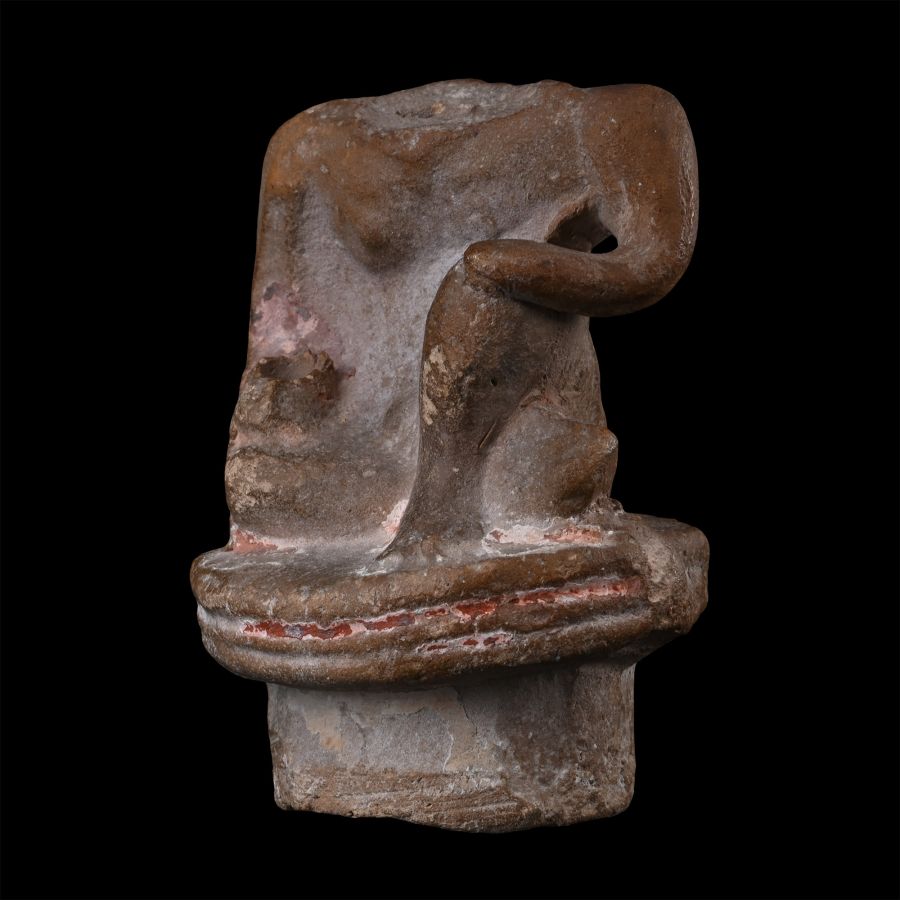
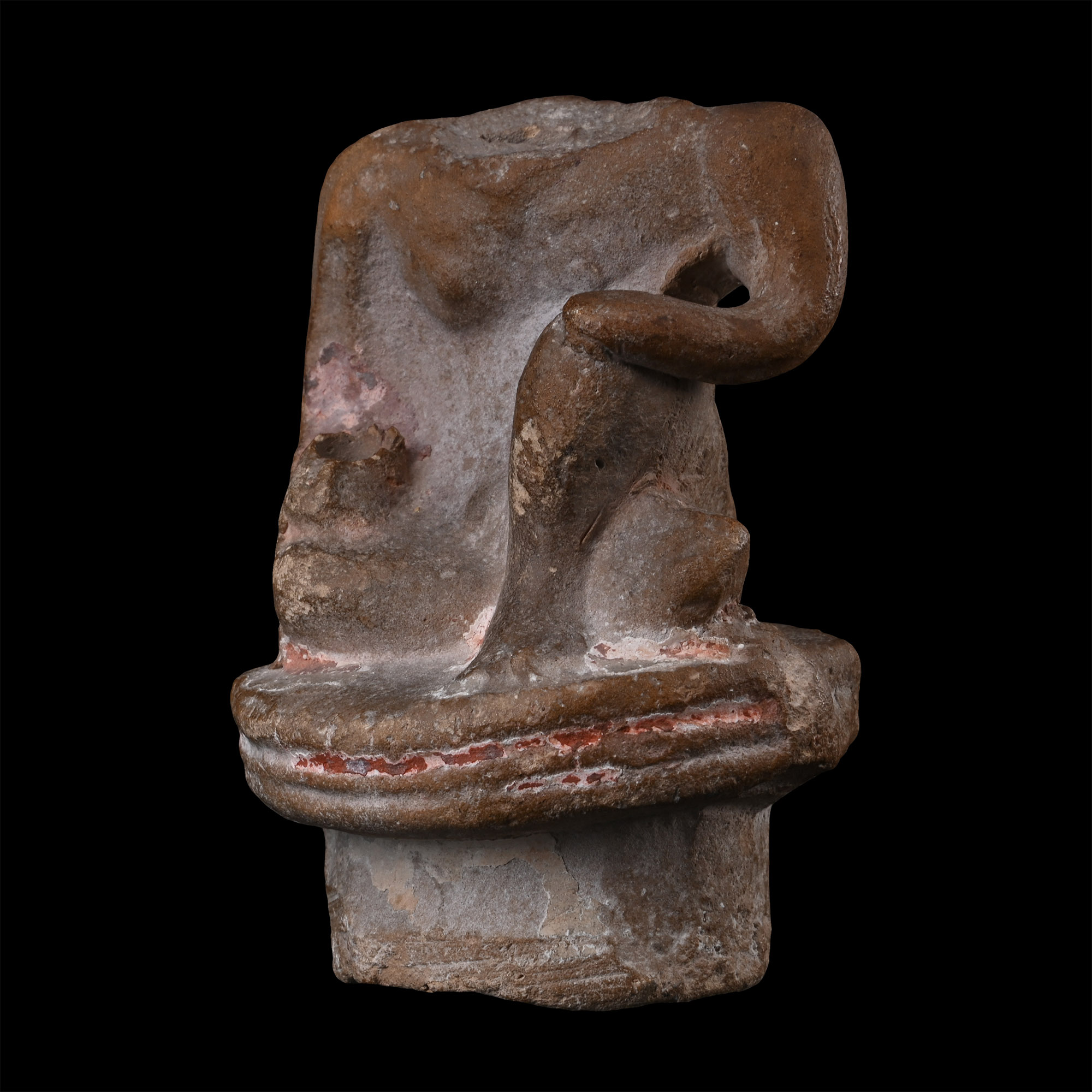
Romano-Egyptian Terracotta Seated Figure
PTOLEMAIC PERIOD, 332-30 B.C. OR LATER
3 1/2 in. (173 grams, 90 mm).
Hollow-formed lid of a jar with anthropomorphic figure crouching with left hand on the knee; right hand hollow to form a socket; head absent. [No Reserve]
ProvenancePhillips International Auctioneers & Valuers, Tribal & Antiquities Sale, 25th June 1998, no.15 (part).
Property of a West Northamptonshire, UK, gentleman.
TimeLine Auctions follows a vetting process to ensure the authenticity and legality of all items, reinforcing our commitment to integrity and responsible trading. Each antiquity, antique, and coin lot undergoes thorough examination by a vetting committee of at least ten external specialists, professional trade association members, scientists, and archaeologists: Our Vetting Process
AUCTIONS:
TimeLine is a leading auction house specialising in antiquities, ancient art, collectables, natural history, coins, medals, and books. Our auctions offer museums, collectors, historians, and enthusiasts the opportunity to acquire unique and historically significant pieces.
-
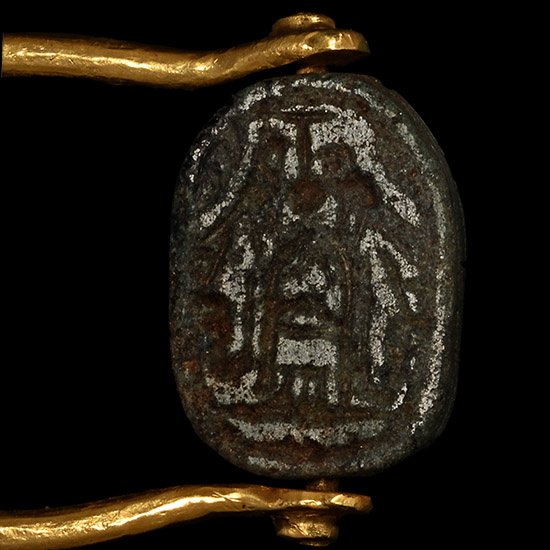
Phoenician Lapis Lazuli Scarab in Gold Swivel Ring
6th-4th century B.C. and laterEstimate: £1,000 - 1,400 (‡+bp*)
Opening Bid: £500
With lightly incised anatomical detailing to the scarab; the underside with a central cartouche flanked by two rearing crowned uraei, a pair of falcons standing above the cartouche facing a smꜣ hieroglyph symbolising union (of the two lands, Upper and Lower Egypt); set into a later gold swivel ring. 4.34 grams, 26.44 mm overall, 15.68 mm internal diameter (approximate size British J 1/2, USA 5, Europe 9.32, Japan 9)
with Bonhams, London, UK, 21 October 1999, no.36. Private collection, Europe. This lot has been checked against the Interpol Database of stolen works of art and is accompanied by a search certificate number no.12370-226696. -
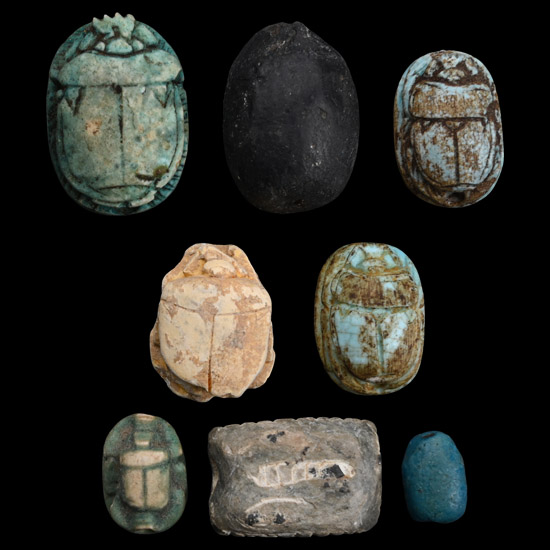
Egyptian Stone Scarab and Amulet Collection
New Kingdom-Late Period, 1550-332 B.C.Sold for (Inc. bp): £585
The group comprising scarabs, scaraboids, and other types, some with hieroglyphs on their undersides, including the throne names of Thutmose IV (Men-kheperu-re) and Ramesses II (User-maat-re Setep-en-re)., 13.65 grams total, 9-19 mm
From the collection of a gentleman, acquired on the London art market in the 1990s. -
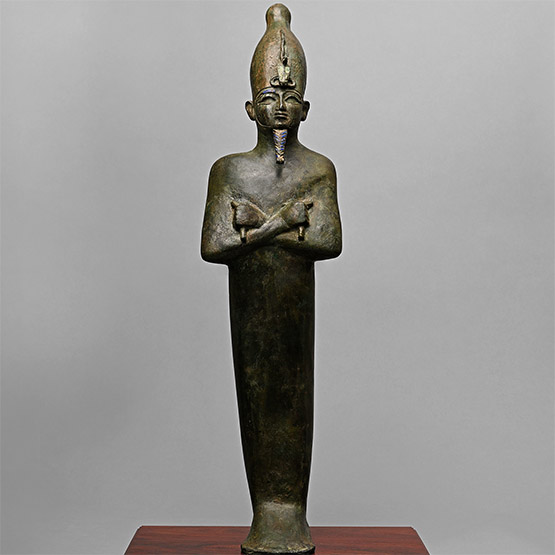
Large Egyptian Bronze Figure of Osiris with Lapis Lazuli Inlays
Late Period, 664-525 B.C.Estimate: £80,000 - 100,000 (+bp*)
Opening Bid: £40,000
Standing mummiform figure of Osiris wrapped in a body-hugging shroud; the figure wearing a tall Hedjet crown – representing the central element of Osiris’s lateral plume-flanked Atef crown; three vertical slots visible on either side of the preserved crown represent the mortices for the attachment of the separately cast plumes; a raised uraeus at the front of the crown, with a body coil on each side and a slightly undulating tail extending vertically up the crown; the broad face rendered with deeply recessed eyebrows, one still retaining a portion of lapis-lazuli inlay, almond-shaped eyes deeply recessed for inlay, a straight nose, and a small, closed mouth; once inlayed chin straps run from the temples to the chin, where a separately cast divine beard is attached, with deep chevron-like recesses, some retaining traces of blue inlay; arms crossed over the chest, with the hands emerging from the wrappings to hold the god’s traditional attributes – the crook (heka) and flail (nekhakha) – of which only the lowest portions are visible; holes for insertion of the separately fashioned upper parts present at the top of the fists; mounted on wooden base and supplied with custom fitted case. 19 kg total, the case: 89.5 x 36 x 41 cm (10.65 kg total, 69.5 cm high including stand)
with Seiyou Kobijyutsu, Osaka, Japan, 20th century. The acquisition was facilitated by Ichikawa Kiyoshi (September 1897–1976), a prominent consultant to the firm at the time. Private Japanese collection, Kumamoto, Kyushu, Japan, acquired in the 1960s by a medical doctor residing in Kumamoto, reportedly on the recommendation of Ichikawa Kiyoshi; thence by descent within the family until 2023. Accompanied by an academic report by Egyptologist Paul Whelan. The sculpture is accompanied by a Japanese wooden fitted box bearing the signature and seal (hanko) of Ichikawa Kiyoshi, supporting the attribution and authenticity. This lot has been checked against the Interpol Database of stolen works of art and is accompanied by search certificate number no.13192-250114.
As the principal god of the underworld, Osiris was worshipped continuously for more than 2,500 years, from the late Old Kingdom to the Roman period. The deity played a central role in Egyptian funerary belief, and his consistently mummiform imagery became widely incorporated into both royal and non-royal iconography. A major phase in the development of his cult occurred during the Middle Kingdom, when Abydos in Upper Egypt emerged as the principal cult centre and an important pilgrimage site for both royal and non-elite individuals. By the Late Period, the influence of the Osirian cult is clearly reflected in the material record, most notably in the widespread distribution of bronze statuettes across temple sites in Egypt. While such objects are often interpreted as expressions of personal devotion, their standardised forms and large-scale production may equally point to more formalised, institutionally mediated ritual practices.
