
Loading, please wait...
LOT 0427
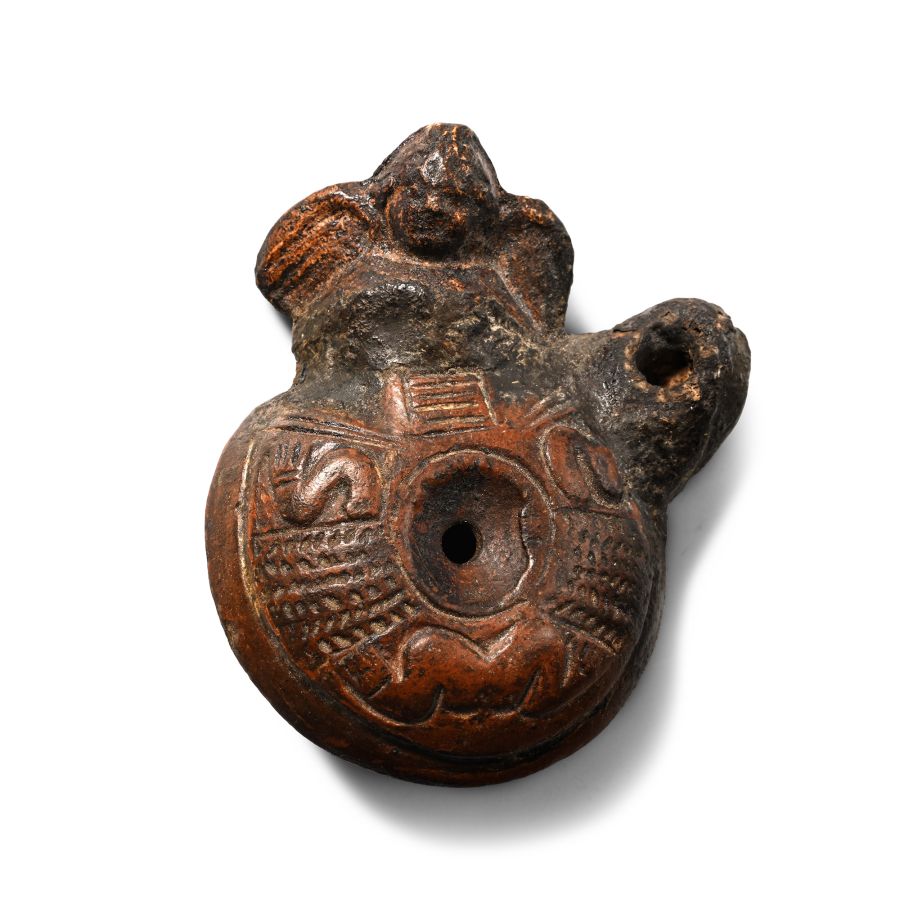
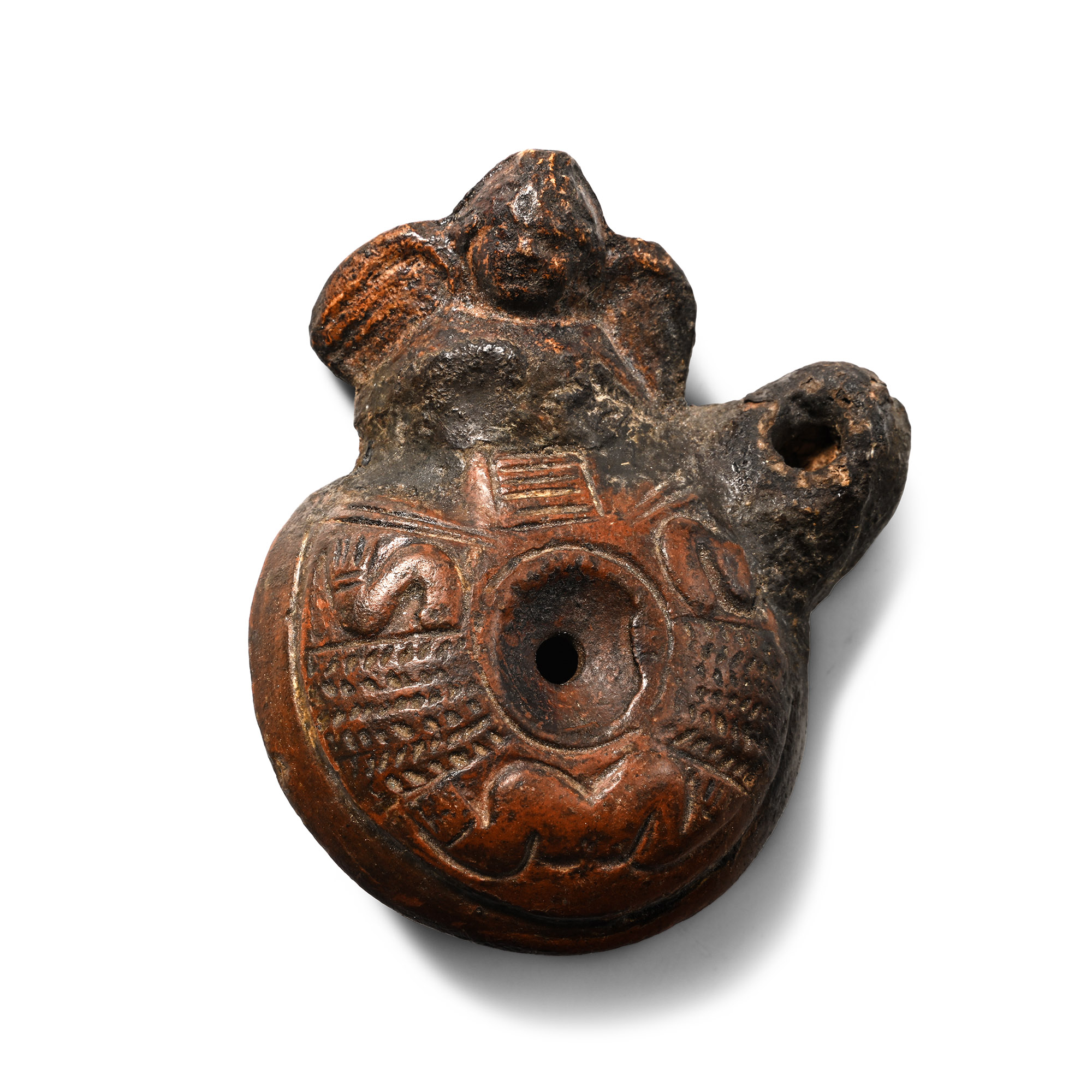
Romano-Egyptian Terracotta Oil Lamp with Eros
ROMAN PERIOD, 1ST-3RD CENTURY A.D.
3 3/8 in. (68 grams, 85 mm).
Domed body with a small filler hole surrounded by bands of herringbone decoration and zoomorphic motifs, a projecting winged bust of Eros flanking the nozzle, inked collector's number '179' on the base.
ProvenanceEx important German collection, 1960-1990.
LiteratureCf. Rosenthal, R., Sivan, R., Ancient Lamps in the Schloessinger Collection, Jerusalem, 1978, fig.594ss., for the category (plastic lamps).
CONDITIONTimeLine Auctions follows a vetting process to ensure the authenticity and legality of all items, reinforcing our commitment to integrity and responsible trading. Each antiquity, antique, and coin lot undergoes thorough examination by a vetting committee of at least ten external specialists, professional trade association members, scientists, and archaeologists: Our Vetting Process
AUCTIONS:
TimeLine is a leading auction house specialising in antiquities, ancient art, collectables, natural history, coins, medals, and books. Our auctions offer museums, collectors, historians, and enthusiasts the opportunity to acquire unique and historically significant pieces.
-
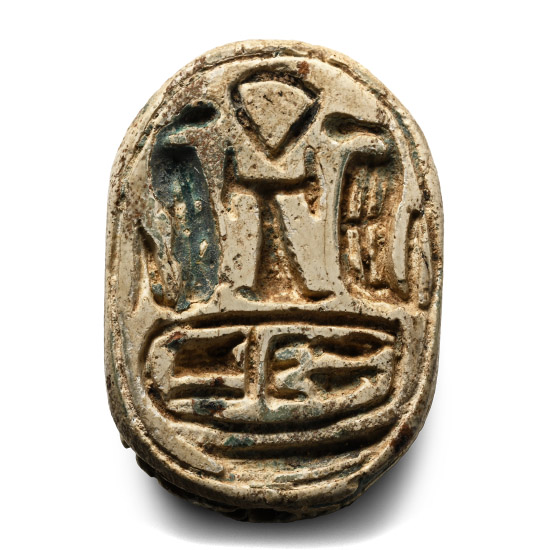
Egyptian Steatite Scarab with Cartouche
Late Period, 664-332 B.C.Sold for (Inc. bp): £117
With detailing to the carapace, mouth and legs, underside with cartouche, ankh and other symbols. 2.98 grams, 18 mm
From the private collection of a European gentleman (1942-2024), formed since the 1970s. -
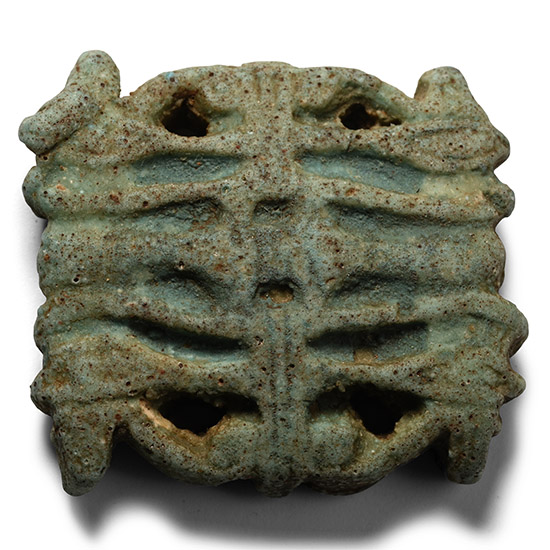
Egyptian Faience Multiple Eye of Horus Amulet
New Kingdom-Late Period, 1550-332 B.C.Estimate: £200 - 300 (+bp*)
Current Winning Bid: £5
Green glazed amulet with two wedjats at the top and the mirror image below, pierced through the centre for suspension. 11.83 grams, 33 mm
From an early 20th century UK collection. Accompanied by a previously illustrated catalogue card with provenance. -
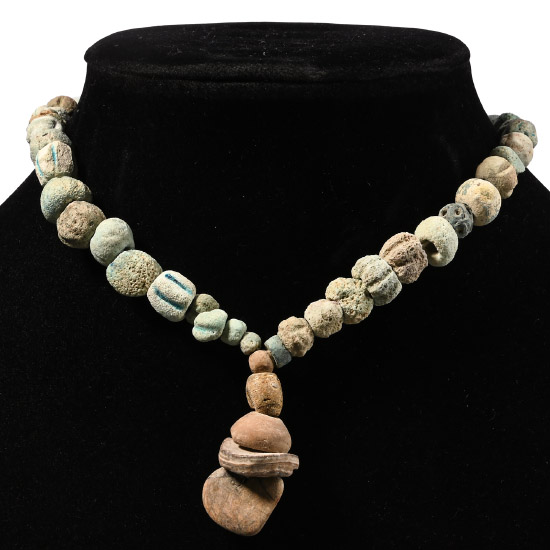
Romano-Egyptian Faience and Other Bead Necklace String
Roman Period, 30 B.C.-323 A.D.Sold for (Inc. bp): £59
Composed mainly of melon, oblate and spherical beads, with two large discoid beads as a central feature, restrung. 34 grams, 33.7 cm
Ex Ancient Art Shop, Windsor, UK, 1990s. Ex private West County, UK, collection.
