
Loading, please wait...


LOT 0509
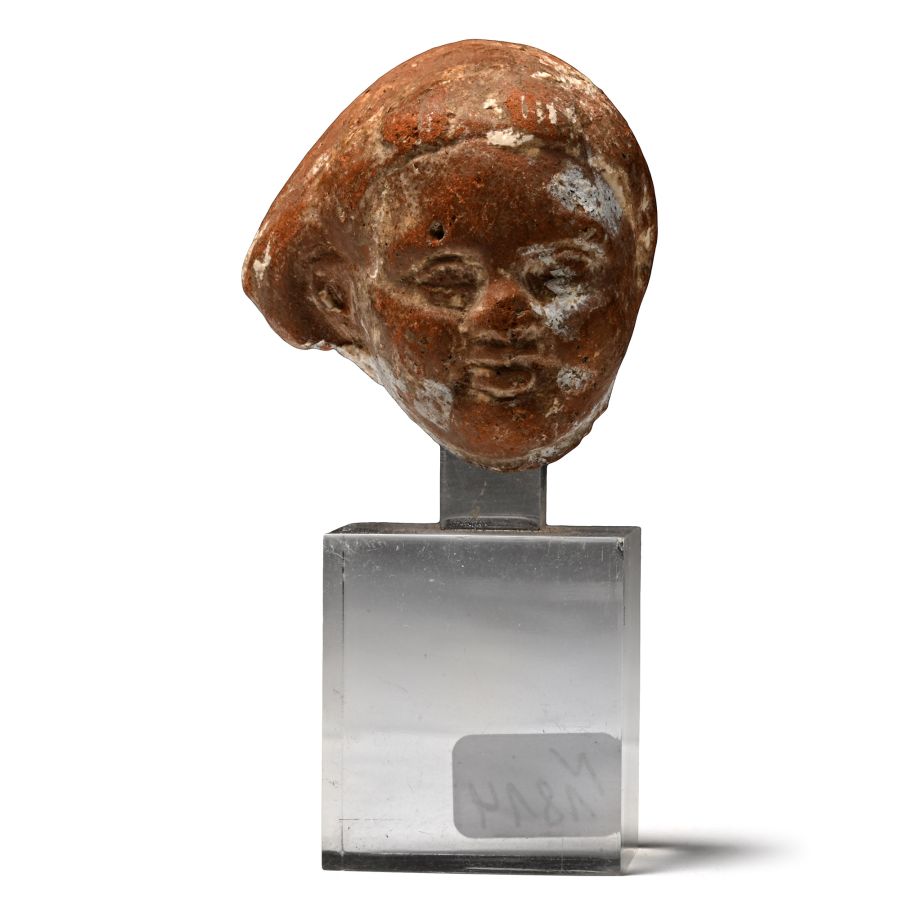
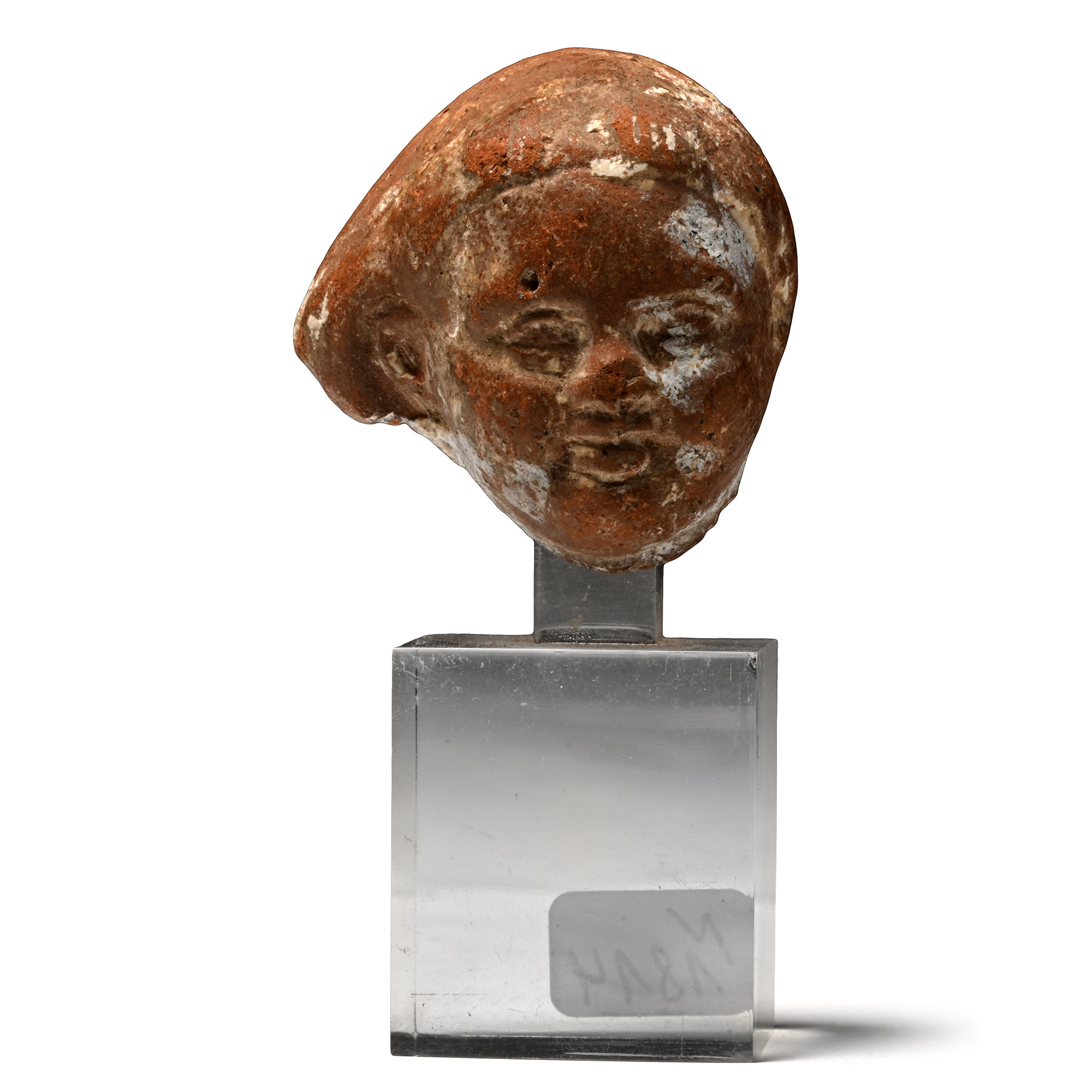
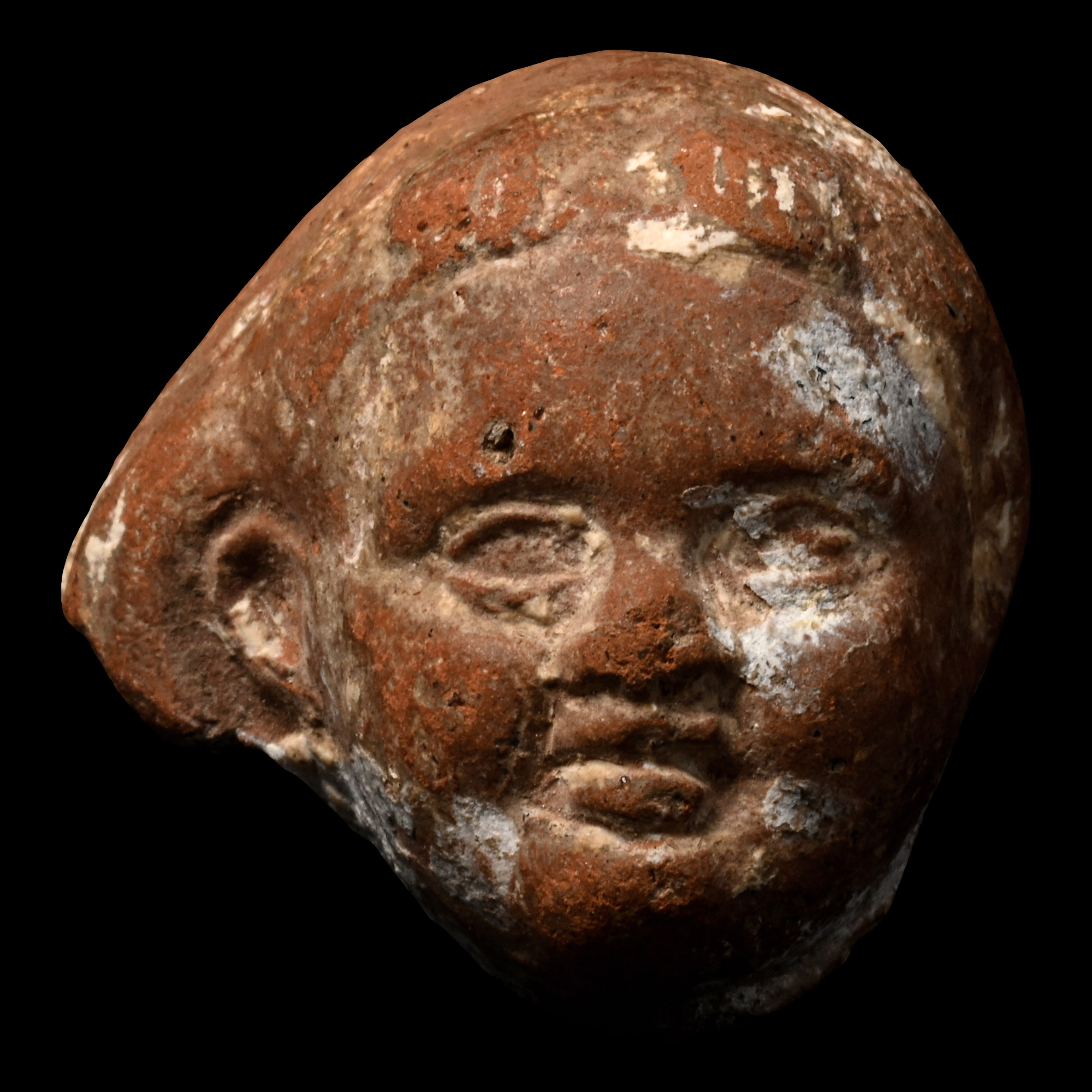
Romano-Egyptian Terracotta Head of Harpocrates
PTOLEMAIC PERIOD, 1ST CENTURY B.C.-1ST CENTURY A.D.
2 1/2 in. (36 grams total, 64 mm high including stand).
With characteristic sidelock and two tufts of hair on his forehead, here rendered as rectangular blocks of hatching; mounted on a custom-made stand.
ProvenanceEx Friedrich Hofmann, Berlin, before 1939; thence by descent.
CONDITIONTimeLine Auctions follows a vetting process to ensure the authenticity and legality of all items, reinforcing our commitment to integrity and responsible trading. Each antiquity, antique, and coin lot undergoes thorough examination by a vetting committee of at least ten external specialists, professional trade association members, scientists, and archaeologists: Our Vetting Process
AUCTIONS:
TimeLine is a leading auction house specialising in antiquities, ancient art, collectables, natural history, coins, medals, and books. Our auctions offer museums, collectors, historians, and enthusiasts the opportunity to acquire unique and historically significant pieces.
LOT 0509
Romano-Egyptian Terracotta Head of Harpocrates
Estimate £700 - 900€810 - 1,040 (for guidance only)$950 - 1,220 (for guidance only)
Opening Bid
£350 (EUR 406; USD 473) ‡+BP*
-
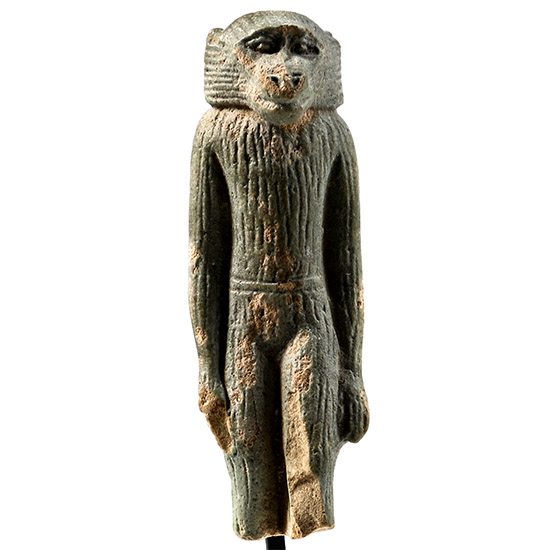
Egyptian Faience Amulet in the Shape of a Striding Monkey
Late Period, 664-332 B.C.Estimate: £1,200 - 1,700 (‡+bp*)
Opening Bid: £675
Formed as a striding African savannah monkey (Chlorocebus aethiops), or grivet, with human proportions but monkey hair texture; long arms hanging close to the body, hands extended downward; an incised belt at the waist; a suspension loop at the reverse (repaired); with a custom-made stand. 68.9 grams total, amulet: 57 mm, 13.5 cm high including stand
Private collection of an English amateur archaeologist (1849-1927), thence by descent. with Bonhams Auction, 5 October 2011, no.360. Thereafter, private collection of Erika (1934-2025) and Jakob (1927-2025) Binkert, Binningen, Switzerland; acquired in 2012 from Jean-David Cahn AG, exhibition Aegyptiaca, Basel. Thence by descent.
In the minds of the ancient Egyptians, male monkeys' behaviour may have linked them to masculinity, suggesting that, when worn as an amulet, they could have served a magical role in the reproductive cycle, facilitating birth in this life and rebirth in the afterlife. Alternatively, the prolonged care that females provide for their offspring may have linked the monkey with maternal protection and fertility. These associations may have been reinforced here by the monkey’s greenish faience, which symbolised renewal. -
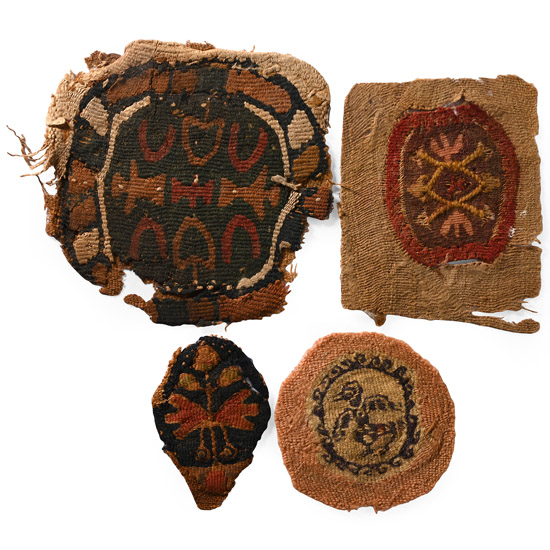
Egyptian Coptic Tunic Textile Fragments of Orbiculi with Vegetation, Animals and Geometric Ornament
Circa 6th-7th century A.D.Estimate: £80 - 100 (+bp*)
Opening Bid: £5
Featuring four medallions (orbiculi) in red, green, yellow, and dark blue wool, three decorated with floral and geometric motifs, the fourth featuring an eaglet figure with a meander border; tapestry weave, S-twist. 11.07 grams total, 6.3-10.7 cm
Acquired 1970s-1996. Property of a North American collector. London collection, 2016.
The orbiculi are realised in the tapestry technique. They were part of the decoration of a tunic, and the presence of the Imperial eagle, which is not a common pattern, could be related to a military tunic or to a tunic of an Imperial functionary. -
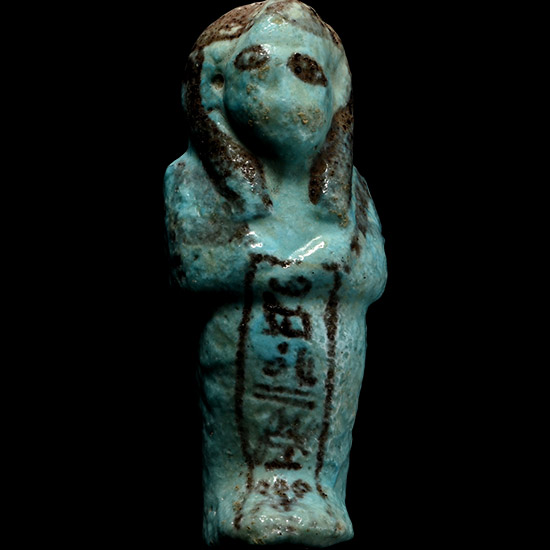
Egyptian Blue Glazed Shabti of Iset-em-khebit
Third Intermediate Period, 21st Dynasty, circa 1077-943 B.C.Estimate: £600 - 800 (‡+bp*)
Opening Bid: £320
Squat mummiform figure wearing a black-painted tripartite wig, arms crossed, holding agricultural implements and a seed bag across the back, painted in black; a hieroglyphic panel on the lower body reading: 'The Osiris, Iset-em-khebit (Ꜣs.t-m-Ꜣḫ-bı͗.t)'. 80 grams, 93 mm
Ex Carl Leonhard Burckhardt-Reinhard (1902-1965), formed since 1922, Egypt. Inherited by his son Christopher Burckhardt in 1966, Switzerland. Since then in the possession of his wife, Switzerland.
Shabtis for Iset-em-khebit were recovered from the second 'Priest's of Amun Cache' at Deir el-Bahari.
