
Loading, please wait...

LOT 0025
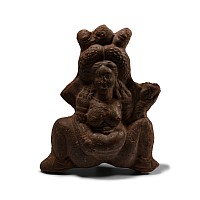
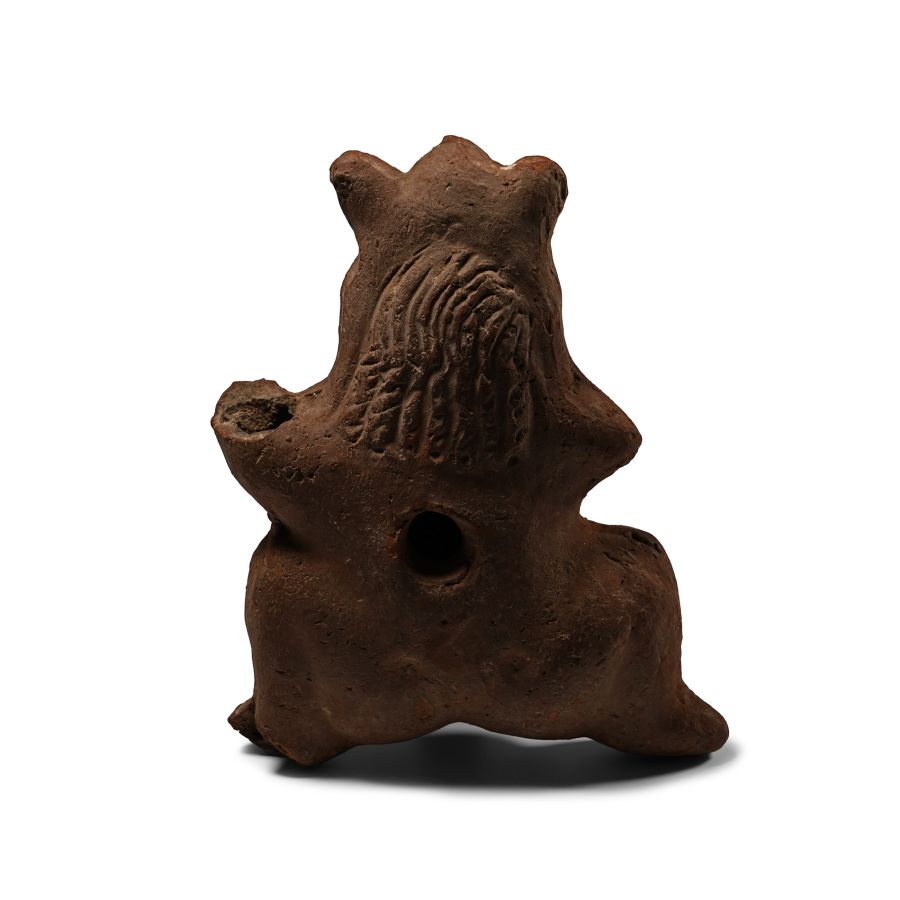
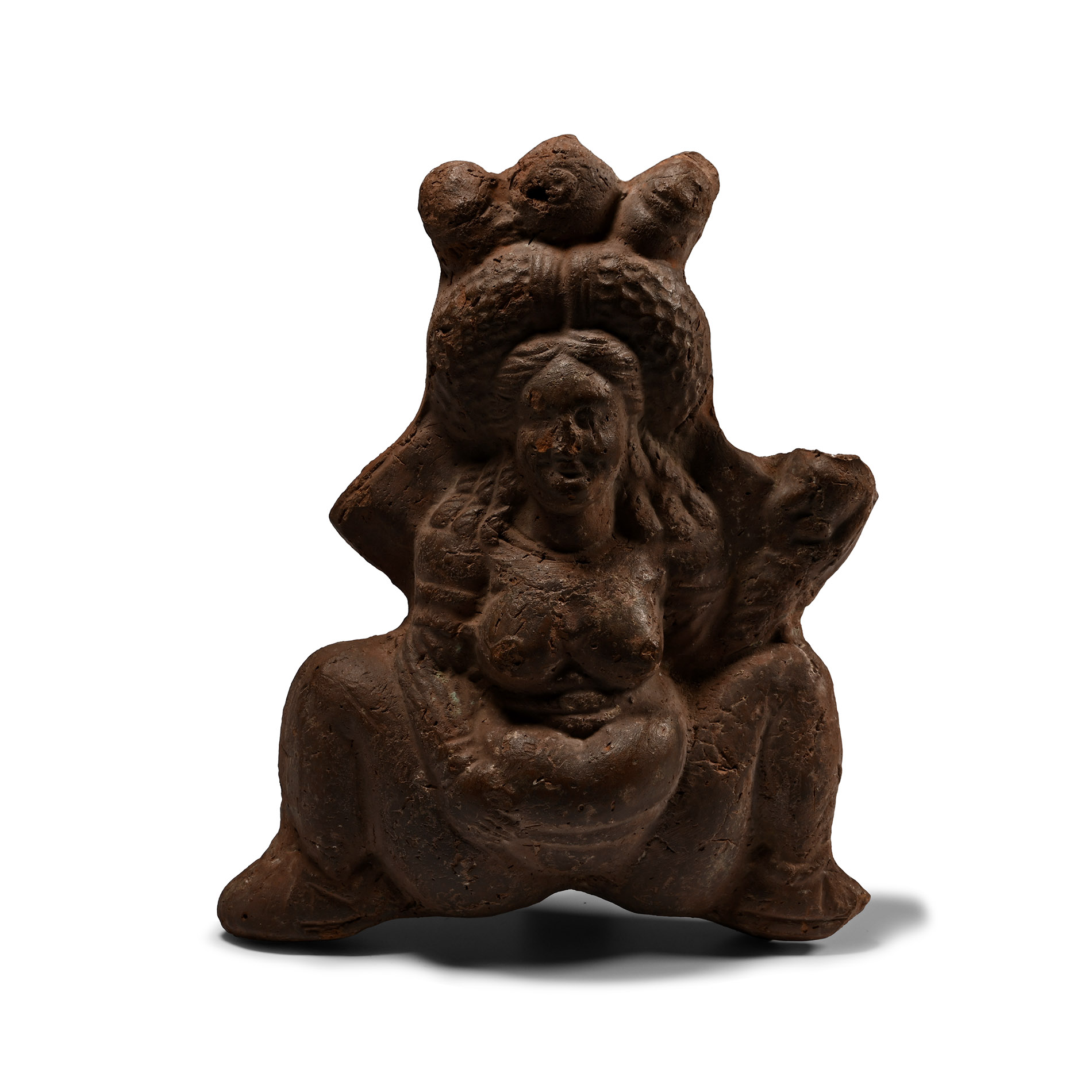
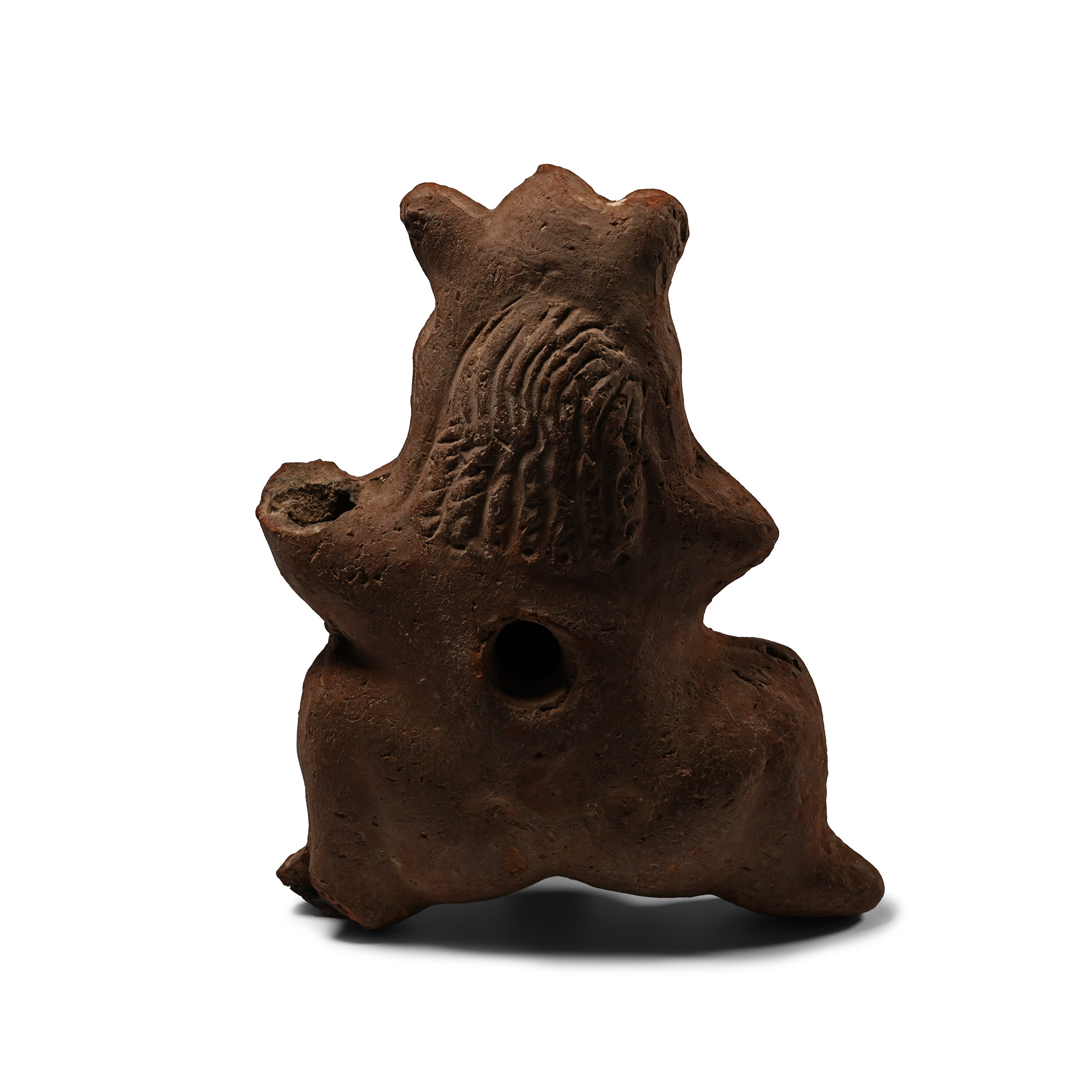
Romano-Egyptian Terracotta Figure of Baubo
PTOLEMAIC PERIOD, 2ND-1ST CENTURY B.C.
6 1/4 in. (375 grams, 15.8 cm).
The squatting figure depicted nude, a garland upon her propoloma and thick braids falling on her shoulders, her legs bent and spread wide, her right hand touching her genitals and the left hand raised holding a lotus flower.
Provenancewith Superior Galleries, Los Angeles, USA.
Ex Dr W. Benson Harer, Los Angeles, USA, March 1985.
This lot is accompanied by an illustrated lot declaration signed by the Head of the Antiquities Department, Dr Raffaele D’Amato.
Exhibited in the Robert & Frances Fullerton Museum or Art (RAFFMA), California State University from 1998-2023 (Reference No. EL01.098.1998)
LiteratureCf. Nagwa Abdelnaby, A.I., ‘Two unpublished Figurines of Women Purifying themselves in the Greco-Roman Museum of Alexandria’ in Bulletin of the Center Payrological, 38 (1), November 2021, pp.645-664, figs.3, lett. A and D.
FootnotesBaubo was a minor divinity of the Greek mythology, linked to the cult of Demeter and Persephone. The statuette belongs to the second type of Baubo figurines, widespread in the last Ptolemaic and Roman period in Egypt. The Egyptian Baubo figures are split into two groups, and this one belongs to the first group depicting a woman seating frontally whilst holding a musical instrument. In some of these figurines her right hand is touching her genitalia. Many of them were used as amulets or as ex-voto.
CONDITIONTimeLine Auctions follows a vetting process to ensure the authenticity and legality of all items, reinforcing our commitment to integrity and responsible trading. Each antiquity, antique, and coin lot undergoes thorough examination by a vetting committee of at least ten external specialists, professional trade association members, scientists, and archaeologists: Our Vetting Process
AUCTIONS:
TimeLine is a leading auction house specialising in antiquities, ancient art, collectables, natural history, coins, medals, and books. Our auctions offer museums, collectors, historians, and enthusiasts the opportunity to acquire unique and historically significant pieces.
LOT 0025
Romano-Egyptian Terracotta Figure of Baubo
Estimate £700 - 900€810 - 1,040 (for guidance only)$950 - 1,220 (for guidance only)
-
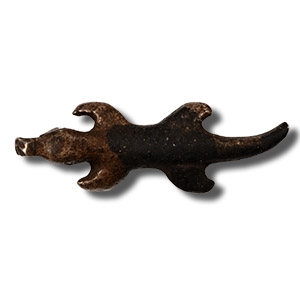
Egyptian Silver Crocodile Amulet
Late-Ptolemaic Period, 664-30 B.C.Sold for (Inc. bp): £111
Figure of a crocodile modelled in the round with pierced suspension lug. 0.49 grams, 15 mm
From an early 20th century collection. This lot is accompanied by an illustrated lot declaration signed by the Head of the Antiquities Department, Dr Raffaele D’Amato.
Crocodile amulets were worn for protective purposes to guard against dangerous creatures. -
.jpg)
Egyptian Steatite Fragmentary Pectoral with Central Scarab Element
New Kingdom, 20th Dynasty, circa 1186-1069 B.C.Sold for (Inc. bp): £1,430
Obverse with scarab carved in high-relief and wing-case recessed to accept inlays (now absent), flanked by a small female goddess wearing a tall headdress, almost certainly Nephthys, with her arms raised in supplication; column with text to her rear, covered in gold foil and perhaps to be read as 'May my name be victorious: protection..'; reverse with the upper body of a male figure facing right with both arms raised towards the remains of a recumbent Anubis on a plinth above the top of a fragmentary shield-shaped plaque with incised text beginning 'Osiris Lord of Eternity forever..'; mounted on a custom-made stand. 53 grams, 69 mm (157 grams total, 11.5 cm including stand)
Eric Pascoe (d. 2019), Calenick House, Truro, Cornwall. Lodge & Thomas, Truro, Antiques & Fine Art Two Day Auction-Including the Ron Clifford Collection of Dinky & Britain's Toys, 26-27 September 2019, no.684. Acquired by the present owner at the above sale. with Bonhams, London, 8 December 2022, no.265. This lot is accompanied by an illustrated lot declaration signed by the Head of the Antiquities Department, Dr Raffaele D’Amato.
This fragment from an elaborate pectoral may exemplify an innovative design characteristic of the Ramesside Period, during which iconographic and textual elements began to diverge from the more conventional styles of earlier pectorals. For a discussion of some of these novel pectorals, refer to Whelan, P., 'An Epithet-Laden Pectoral,' Egitto e Vicino Oriente, 46 (2023), pp.7-28. -
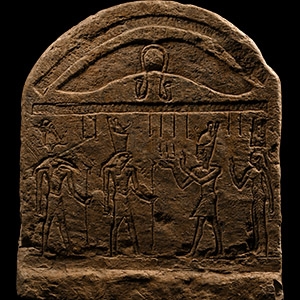
Egyptian Stone Stela with Pharaoh, Isis, Horus and Thoth
Ptolemaic Period, 3rd-2nd century B.C.Sold for (Inc. bp): £16,900
Round-topped stela with decoration on two registers; the lunette, featuring a winged sun disc with pendant uraei; the main panel with a frieze in sunk relief depicting the pharaoh wearing the double crown, facing left offering the hieroglyphic symbol for 'fields'; a goddess stands behind him, possibly Isis, wearing a tight-fitting robe and sporting a tall two-plumed headdress, with one hand raised in praise; facing the pharaoh is the falcon-headed god, possibly Horus or Her-wer, wearing a double-crown, and behind him stands the ibis-headed Thoth wearing the Atef crown, both gods hold a was-sceptre; repaired, mounted on a custom-made stand. 19.45 kg total, 55 cm including stand
Acquired in the mid-1980s-1990s. Private collection, Switzerland, thence by descent. Private collection, since the late 1990s. Accompanied by an academic report by Egyptologist Paul Whelan. This lot has been checked against the Interpol Database of stolen works of art and is accompanied by search certificate number no.12200-222172. This lot has been cleared against the Art Loss Register database, and is accompanied by an illustrated lot declaration signed by the Head of the Antiquities Department, Dr Raffaele D’Amato.
The overall tripartite composition is comparable to numerous stelae of the Ptolemaic Period and can be dated to the 3rd-2nd century B.C. The decorative lunette and/or sky bands and bold sunk relief winged sun disc are characteristic of this period, as is the fringed detailing of the female’s garment. The offering of the ‘field’ symbol is also a frequent depiction of the stelae of this period, which can be understood as a ‘catch-all’ device representing an offering of all the produce from the fields. Such stelae were often produced as stock products to which clients would have their names and other details added. Therefore, the stela is likely an example of one awaiting purchase. After the purchase, the hieroglyphic labels would be added to the figurative tableau, and a dedicatory text would be carved into the plain rectangle in the lower part. Sometimes, however, it appears that a purchaser could not afford the additional expense of a professionally engraved inscription, and so would scratch a short dedication in the lower panel as seen, for example, in the stela for Horudja from the Delta site of Tanis and now in the Musée du Louvre (inv. no. AF 11682).
