
Loading, please wait...


LOT 0410
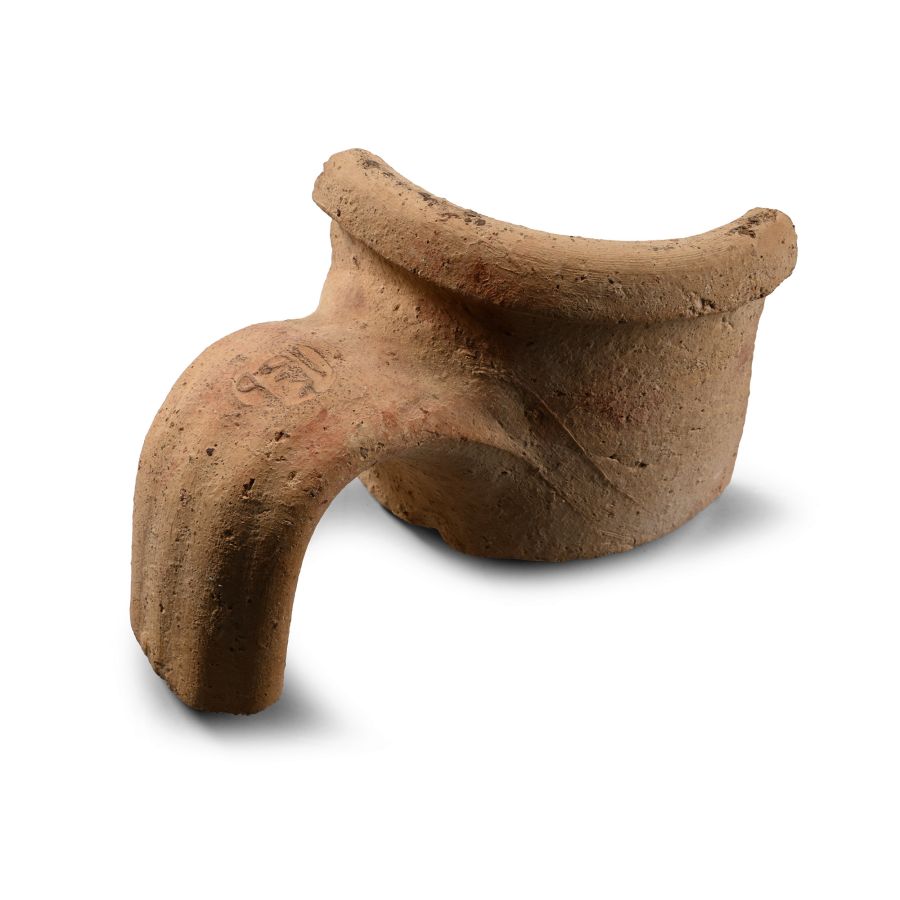
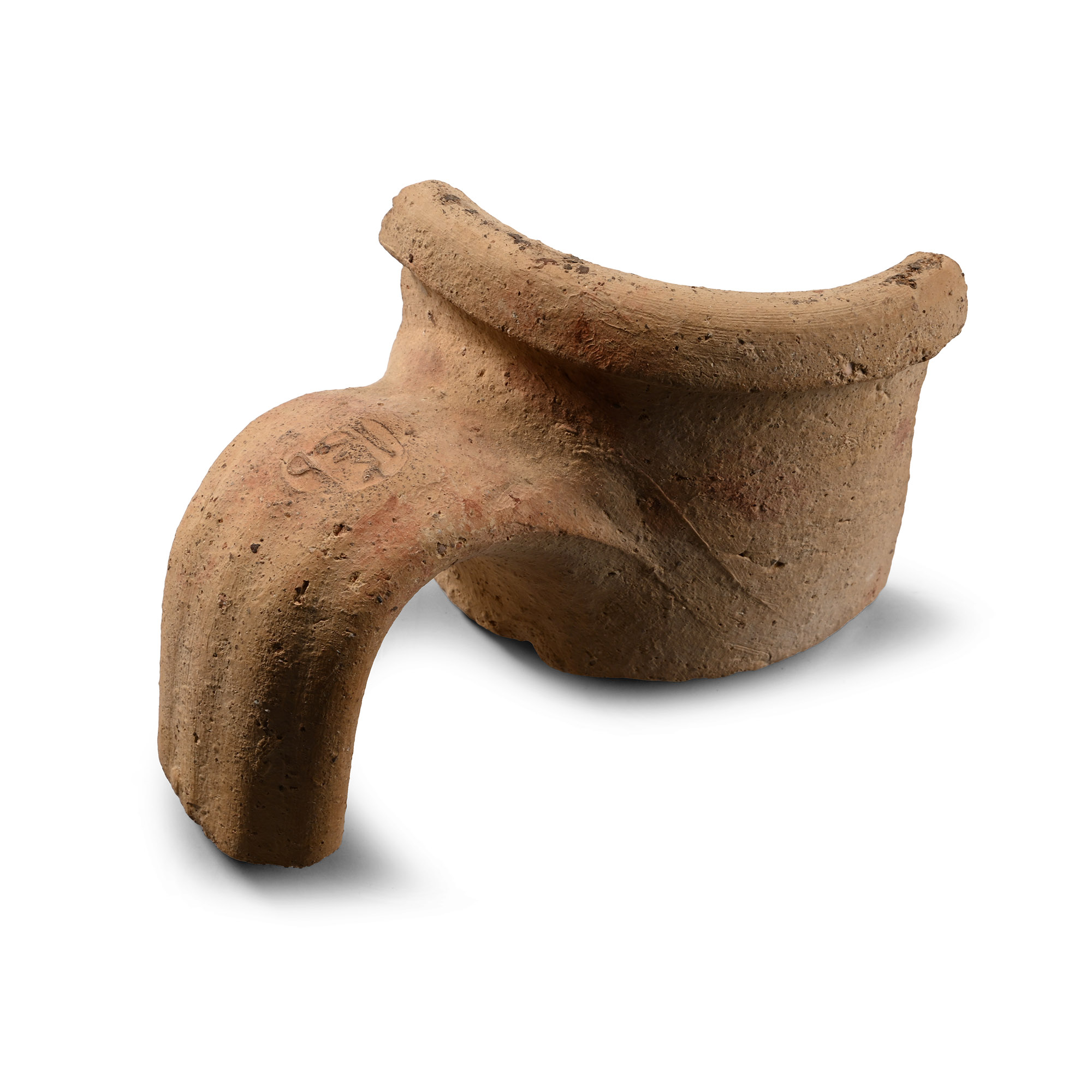
Romano-Egyptian Terracotta Amphora Handle with Stamp of Hermeros
ROMAN PERIOD, 1ST CENTURY A.D.
5 5/8in. (272 grams, 14.2 cm).
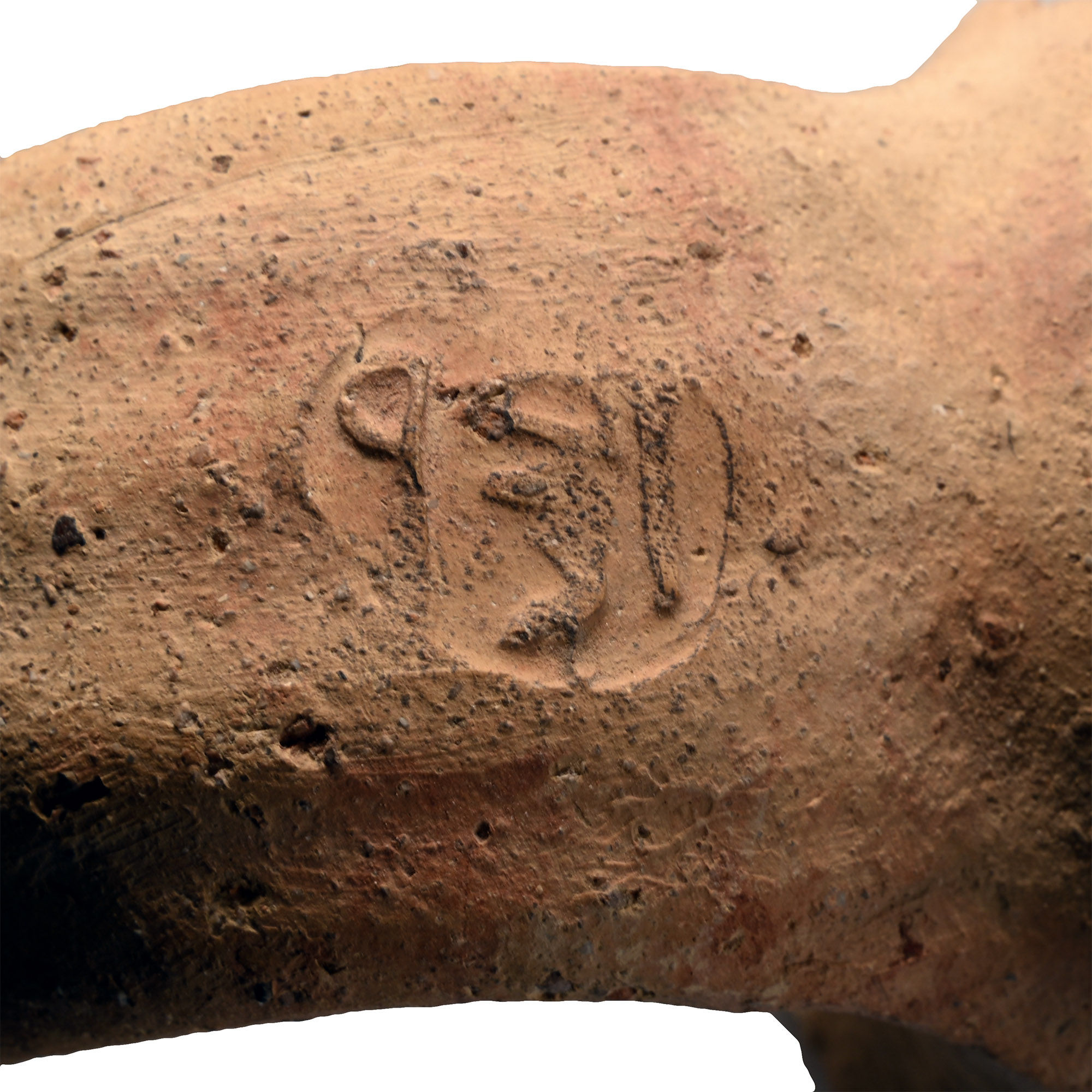
Cream-coloured ceramic vessel fragment with rolled rim and ribbed strap handle; stamped at the apex with 'I EP' monogram, reading 'I EP[ΜΕΡΟΣ] = Hermeros. [No Reserve]
ProvenanceFrom the private collection of Peter Clayton, FCILIP, Dip, Arch, FSA, FRNS, Hemel Hempstead, Hertfordshire, UK; formed since the late 1950s.
LiteratureCf. Denecker, E., Vandorpe, E., ‘Sealed amphora stoppers and tradesmen in Greco-Roman Egypt: archaeological, papyrological and inscriptional evidence’ in BABesch 82, 2007, pp.115-128, fig.4 for similar, but not identical, inscription.
FootnotesThe commercial stamp could report the name of an important Romano-Egyptian businessman, Hermeros, son of Athenion, attested at Koptos in A.D. 57. He describes himself as a merchant (εμπορος), originating from Adana (Arabia) and selling wine.
CONDITIONTimeLine Auctions follows a vetting process to ensure the authenticity and legality of all items, reinforcing our commitment to integrity and responsible trading. Each antiquity, antique, and coin lot undergoes thorough examination by a vetting committee of at least ten external specialists, professional trade association members, scientists, and archaeologists: Our Vetting Process
AUCTIONS:
TimeLine is a leading auction house specialising in antiquities, ancient art, collectables, natural history, coins, medals, and books. Our auctions offer museums, collectors, historians, and enthusiasts the opportunity to acquire unique and historically significant pieces.
LOT 0410
Romano-Egyptian Terracotta Amphora Handle with Stamp of Hermeros
Estimate £50 - 70€58 - 81 (for guidance only)$68 - 95 (for guidance only)
Opening Bid
£5 (EUR 6; USD 7) +BP*
-
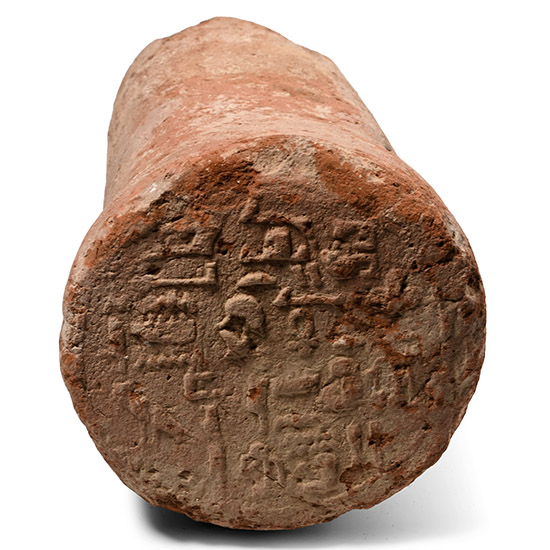
Egyptian Terracotta Funerary Cone of Ineni
New Kingdom, 18th Dynasty, circa 1514-1458 B.C.Estimate: £400 - 600 (+bp*)
Opening Bid: £5
Large portion of a tapering cone with the circular flat end impressed with four horizontal lines of hieroglyphic text reading: 'Count, overseer of the (double) granary of Amun, overseer of all the sealed things in the domain of Amun, scribe, Inen(i), true of voice'. 755 grams, 13.8 cm
Acquired from Abdoul Rassoul on the West Bank at Luxor, 1974-1980 when a guest lecturer. From the private collection of Peter Clayton, FCILIP, Dip, Arch, FSA, FRNS, Hemel Hempstead, Hertfordshire, UK; formed since the late 1950s.
Ineni enjoyed a long and highly successful career, serving under five pharaohs (Amenhotep I, Thutmosis I, Thutmosis II, Hatshepsut, and Thutmosis III). His large rock-cut tomb (TT 81) is at Sheikh Abd el-Qurna, Thebes. -
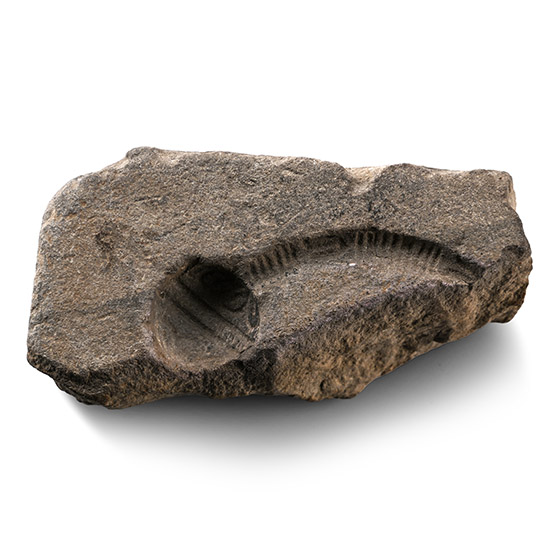
Egyptian Steatite Mould Fragment
New Kingdom, 18th Dynasty, Amarna Period, 1379-1362 B.C.Estimate: £80 - 100 (+bp*)
Opening Bid: £5
Irregular fragment with deep-cut design for an item of jewellery, ribbed shank ending in a sphere with rosette. 64 grams, 63 mm
Acquired in April 1980. From the private collection of Peter Clayton, FCILIP, Dip, Arch, FSA, FRNS, Hemel Hempstead, Hertfordshire, UK; formed since the late 1950s. Accompanied by an old handwritten information card by Peter Clayton, collection no.147. -
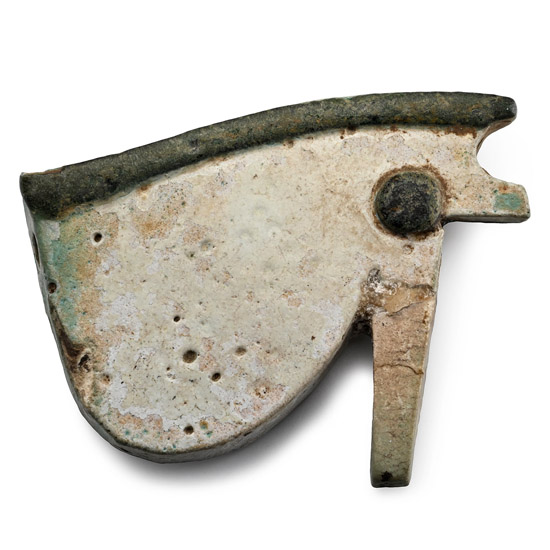
Large Egyptian Faience Eye of Horus Amulet
Third Intermediate Period, circa 1069-664 B.C.Estimate: £200 - 300 (+bp*)
Opening Bid: £100
Sizeable wedjat-eye amulet with applied black detailing to the pupil and brow. 16.5 grams, 50.4 mm
with Archaeologia, Switzerland, before 1983. Ex private North American collection. London private collection, 2016.
The wedjat-eye amulet symbolises the healed eye of the god Horus, representing both human and falcon elements. The name wedjat in ancient Egyptian means ‘the one that is sound.’ According to Egyptian mythology, Horus' eye was wounded or taken by the god Seth and later restored by Thoth. The wedjat-eye amulet was believed to protect its wearer and confer qualities of recovery and regeneration. It was highly popular and was used by both the living and the dead.
