
Loading, please wait...

LOT 0124
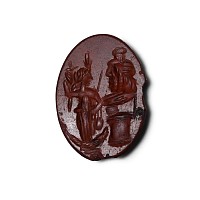
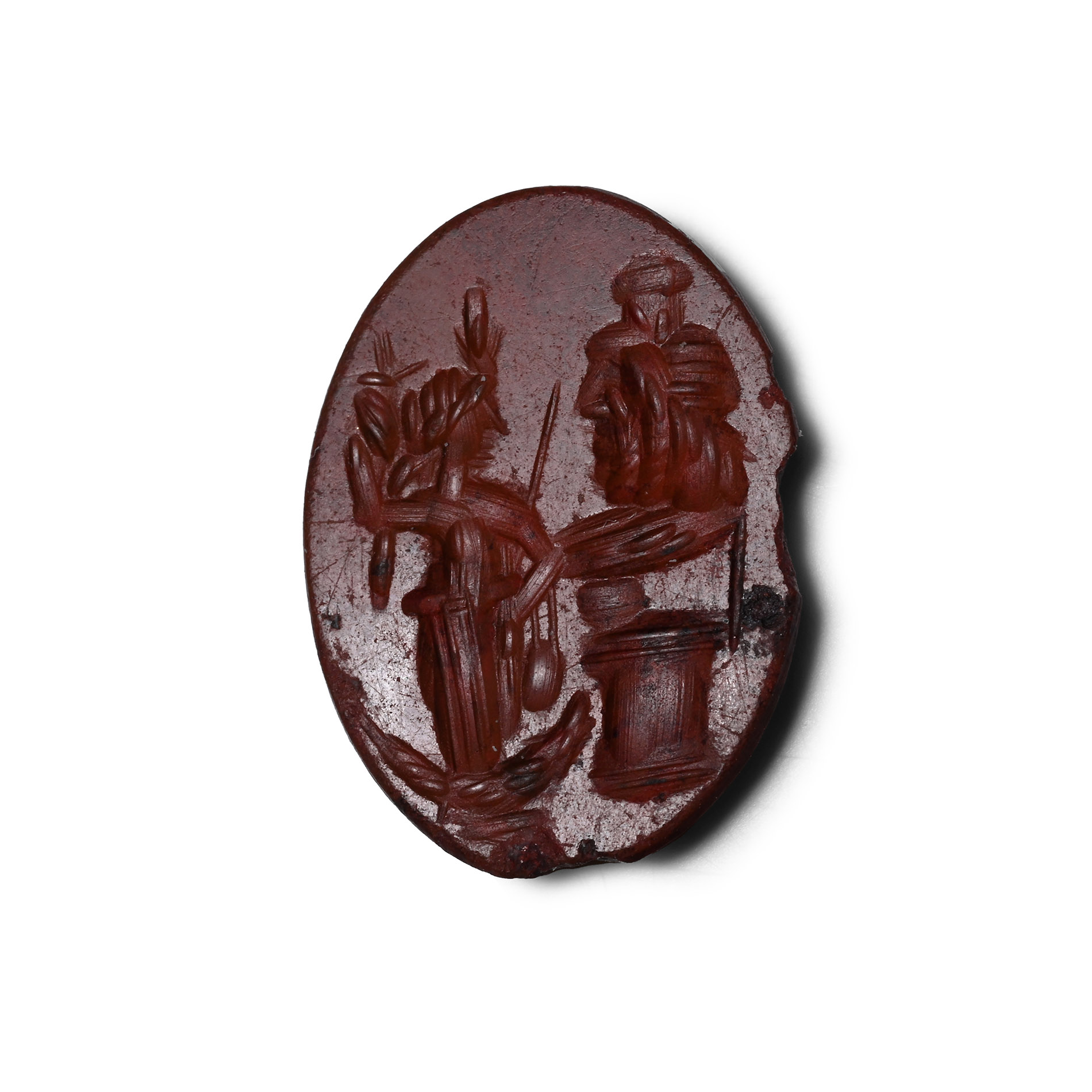
Romano-Egyptian Stone Intaglio Depicting Serapis and Isis
2ND-3RD CENTURY A.D.
5/8 in. (0.84 grams, 16 mm).
Ellipsoid jasper cloison with intaglio bust of Serapis on a pedestal, modius to the head; Isis standing in a crescent boat.
ProvenanceAcquired on the German art market, 1989-1995.
with The Museum Gallery, 19 Bury Place, London, WC1, UK, 1998-2003.
Property of a London based academic, 2003-present.
TimeLine Auctions follows a vetting process to ensure the authenticity and legality of all items, reinforcing our commitment to integrity and responsible trading. Each antiquity, antique, and coin lot undergoes thorough examination by a vetting committee of at least ten external specialists, professional trade association members, scientists, and archaeologists: Our Vetting Process
AUCTIONS:
TimeLine is a leading auction house specialising in antiquities, ancient art, collectables, natural history, coins, medals, and books. Our auctions offer museums, collectors, historians, and enthusiasts the opportunity to acquire unique and historically significant pieces.
LOT 0124
Romano-Egyptian Stone Intaglio Depicting Serapis and Isis
Sold for (Inc. bp): £598
-
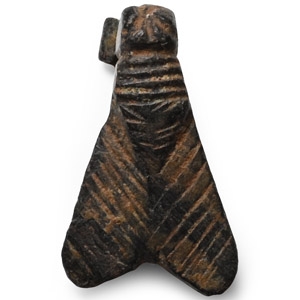
Roman Bronze Fly Brooch
4th century A.D.Sold for (Inc. bp): £52
With ribbing at the neck and delineation of the wings; catchplate to the reverse. 1.9 grams, 19 mm
From the collection of a gentleman, acquired on the London art market in the 1990s. -
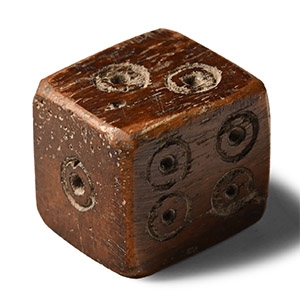
Roman Bone Dice
1st-4th century A.D.Sold for (Inc. bp): £143
Cuboid with ring-and-dot markings disposed 1:6, 2:5, 3:4. 2.21 grams, 11 mm
Acquired on the London art market in the late 1980s-1990s. From the family collection of an East London, UK, gentleman. -
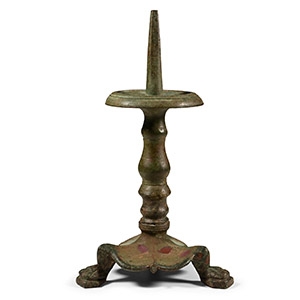
Roman Bronze Tripod Lamp Base
1st-4th century A.D.Sold for (Inc. bp): £910
Tripod base formed with lion paw feet and scooped interstitial panels, balustered stem and dished pan, central mounting spike. 1.9 kg, 28 cm
Formerly in North American collection, 1990s. From the collection of a London, UK, gentleman.
