
Loading, please wait...
LOT 0723
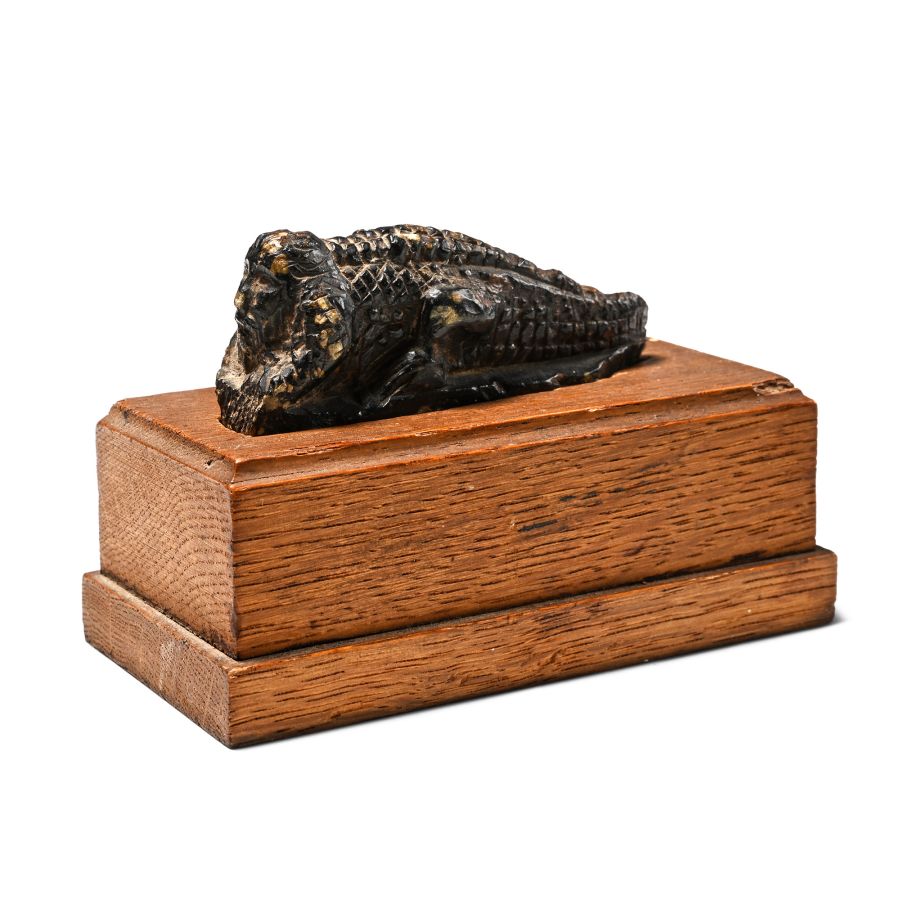
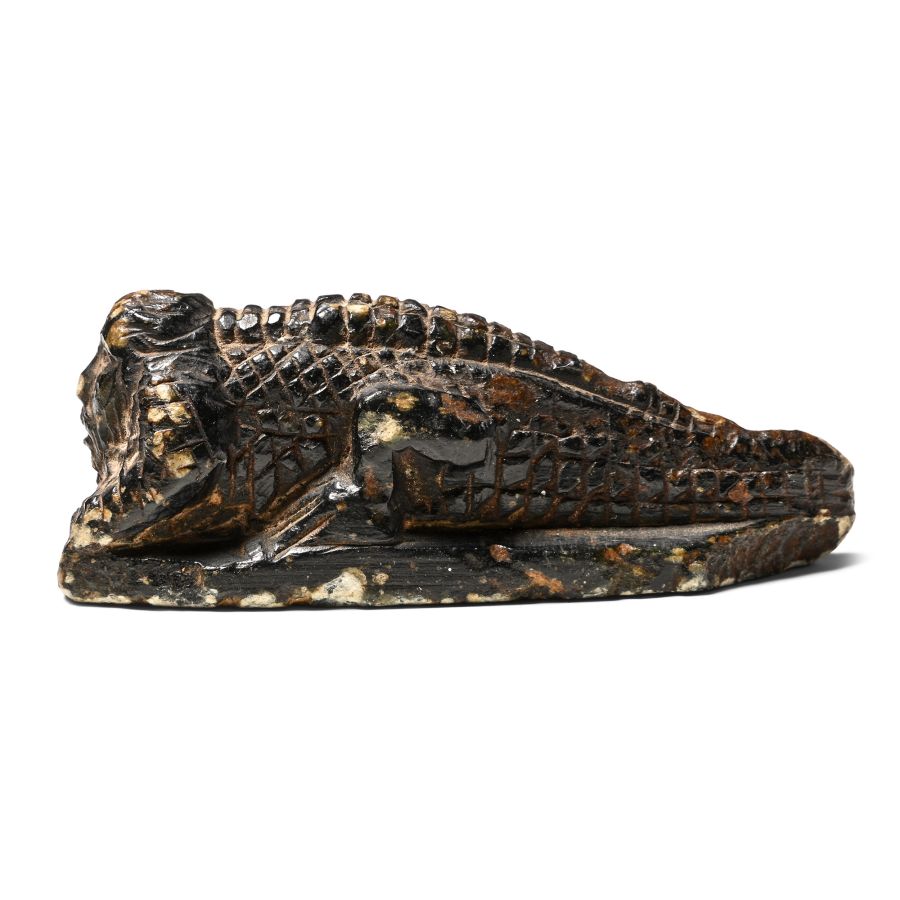
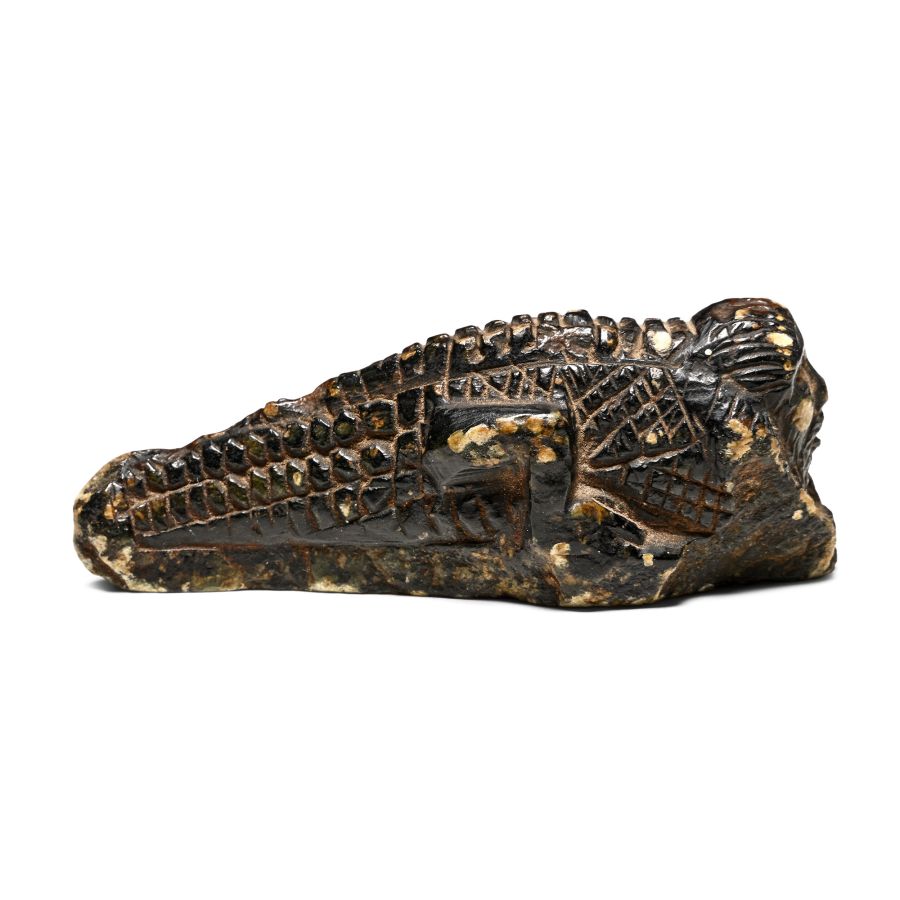
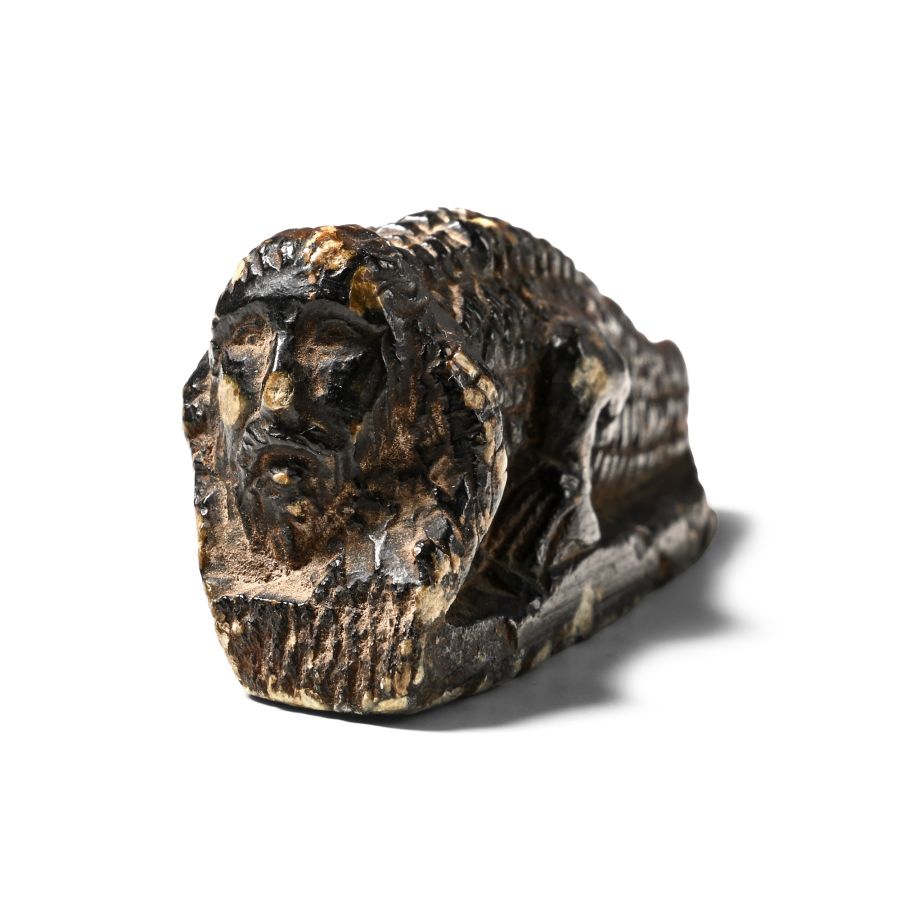
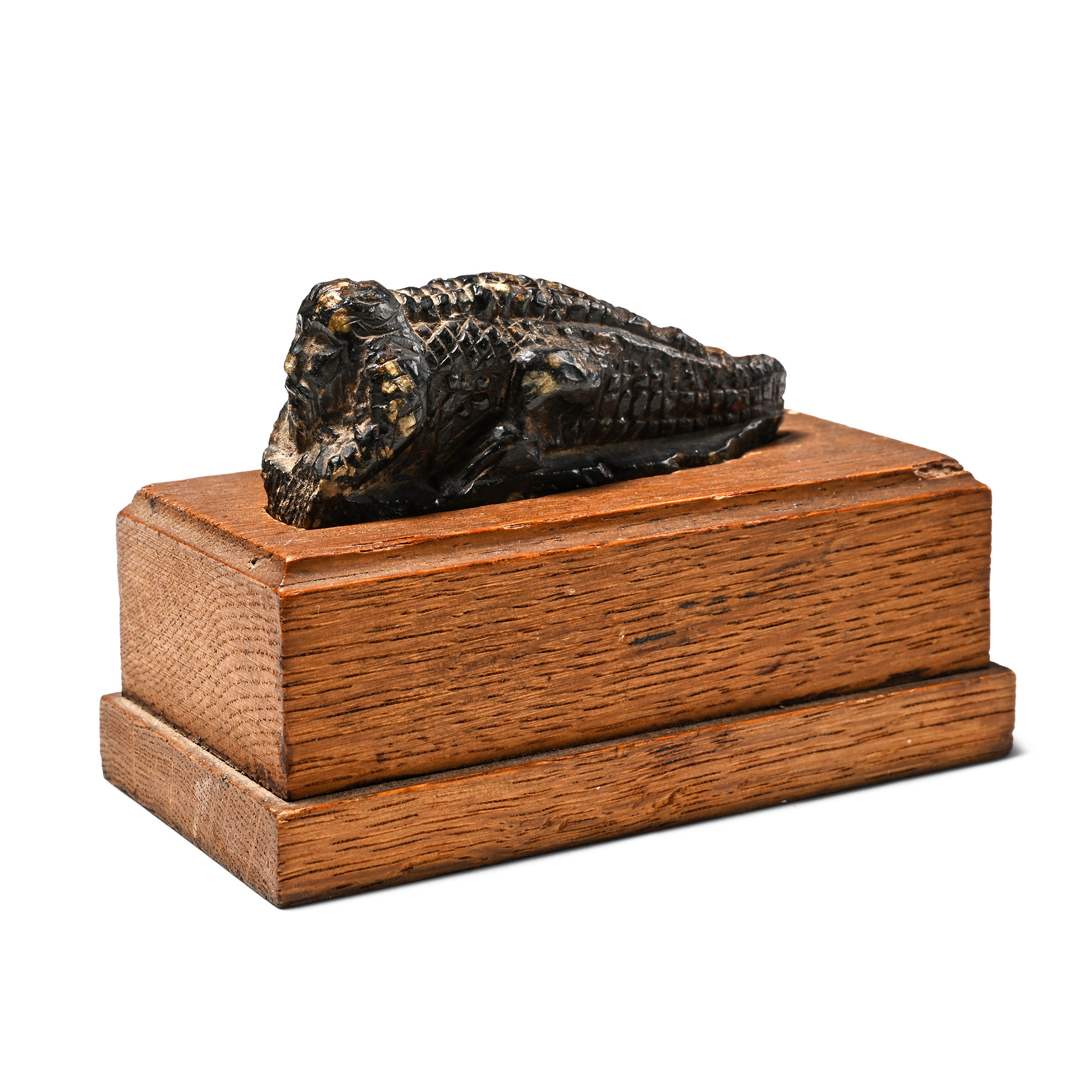
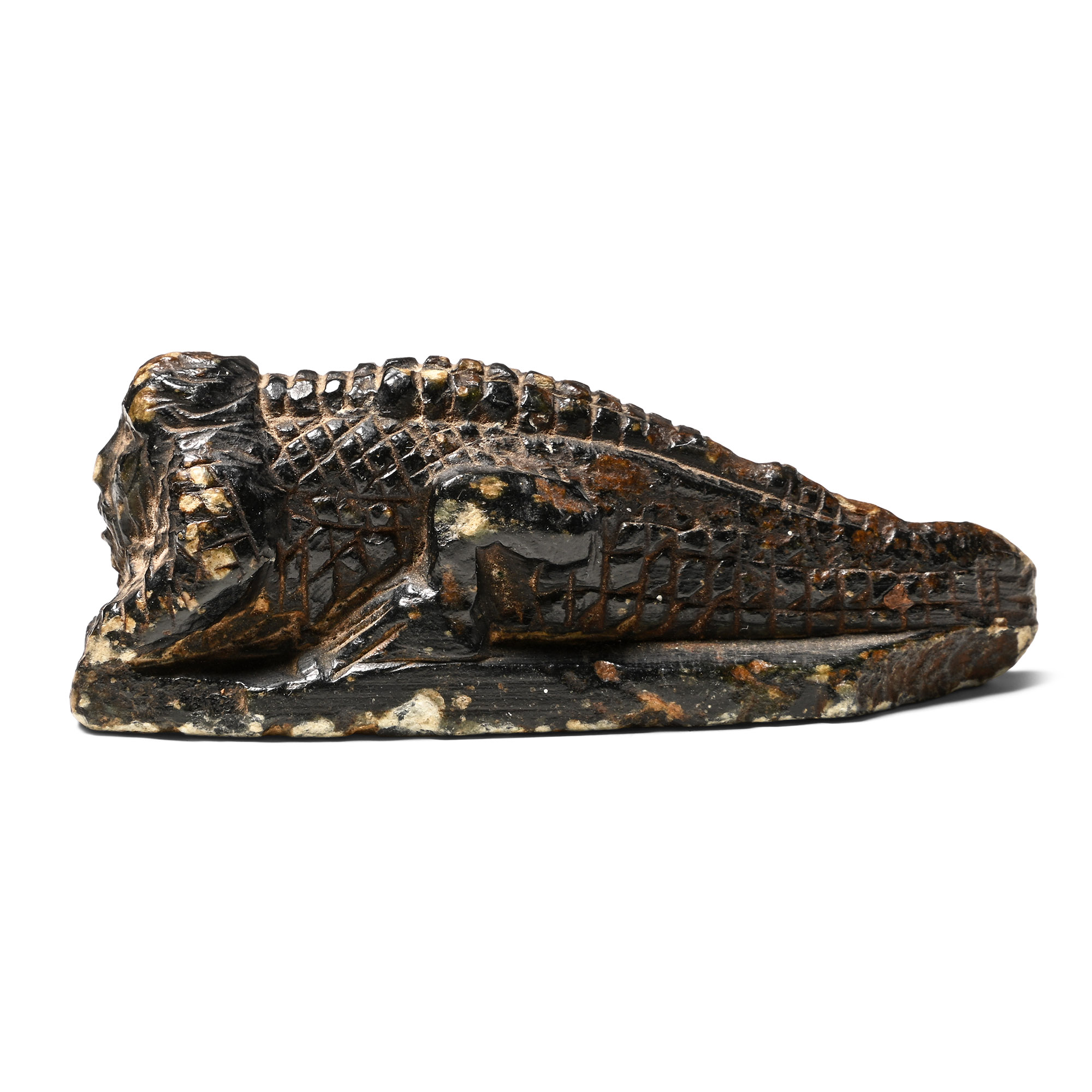
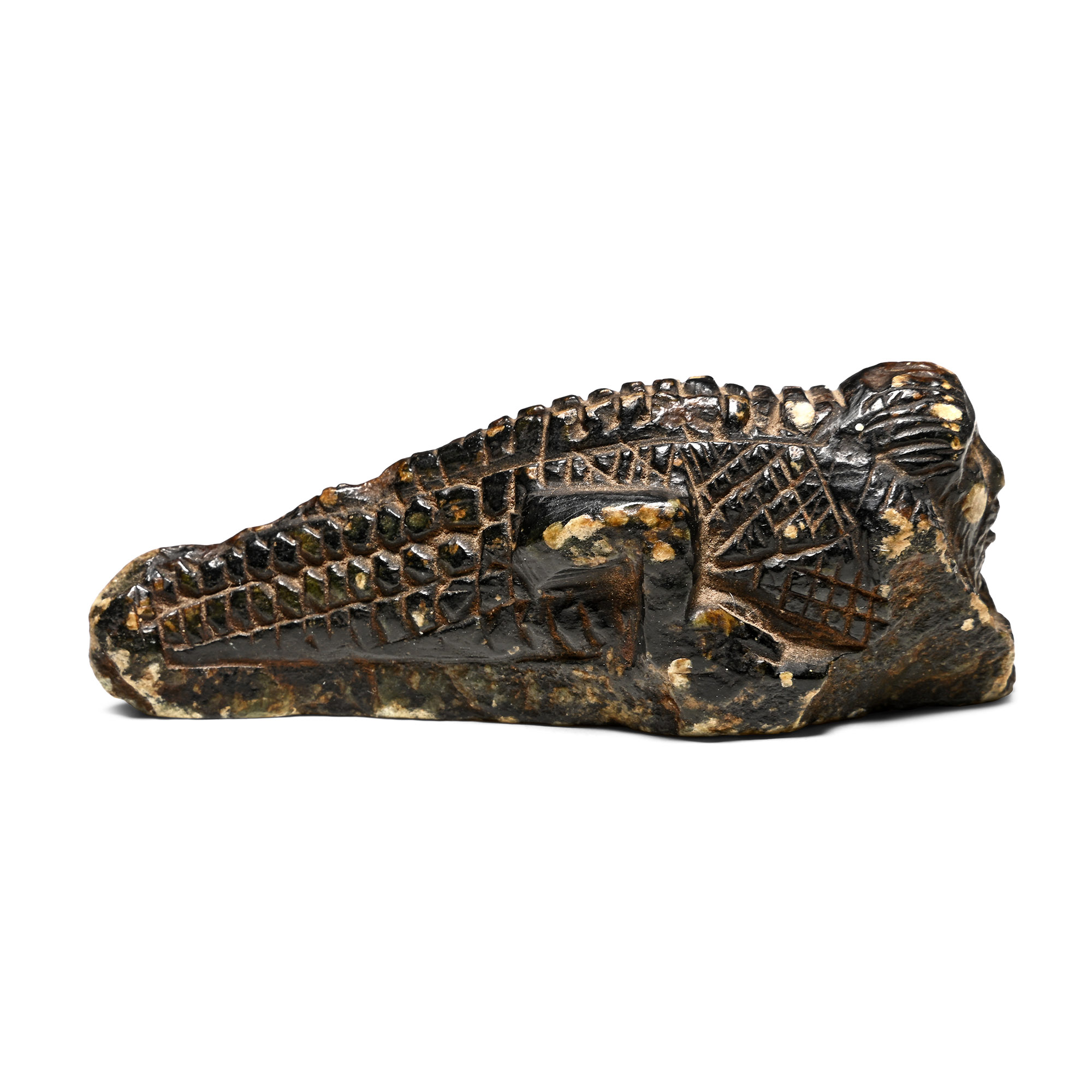
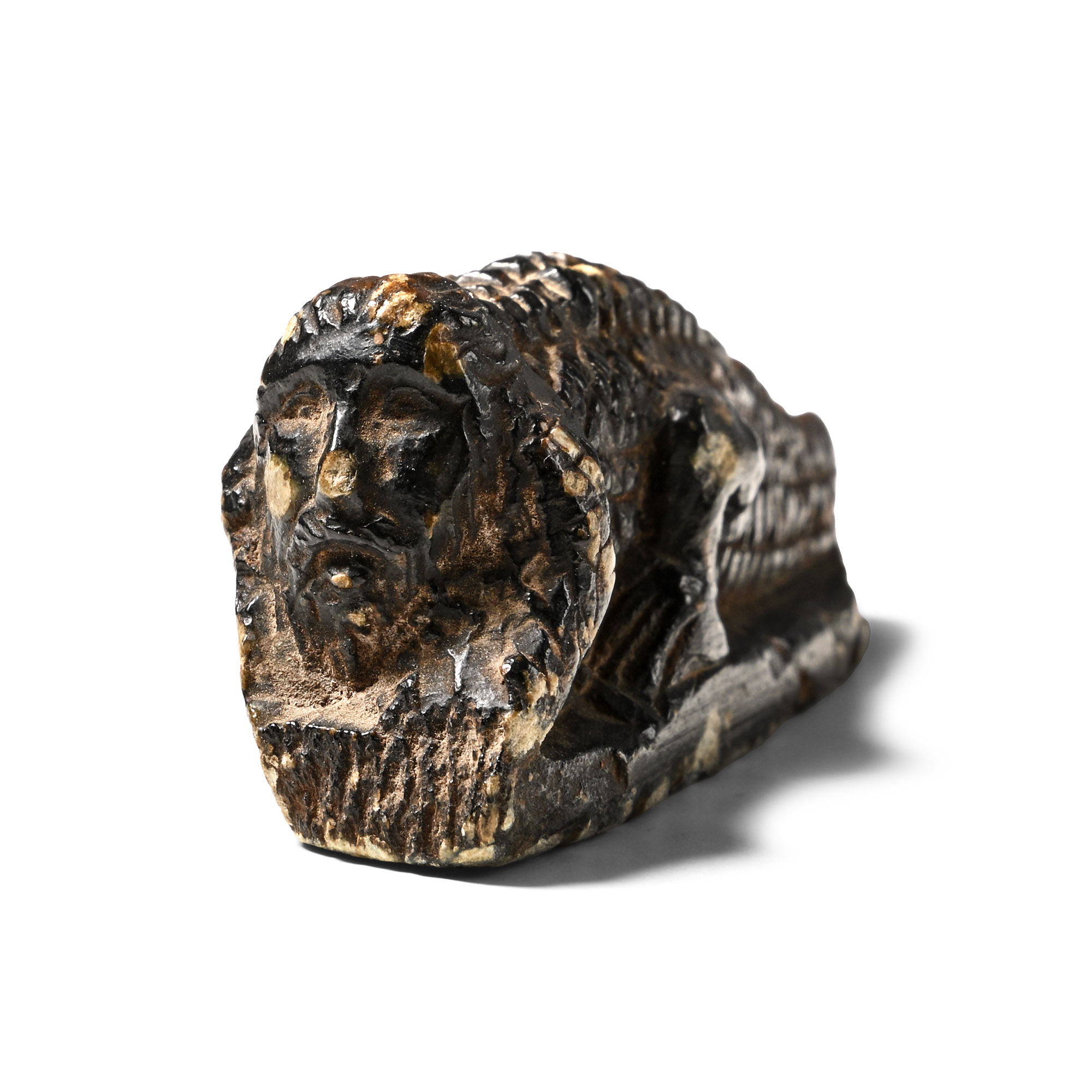
Romano-Egyptian Stone Crocodile Figure
LATE PERIOD, 664-332 B.C.
2 5/8 in. (3 5/8 in.) (40.79 grams, 68 mm wide (116 grams total, 93 mmm wide including stand)).
Carved in high relief with a flat underside, reptilian body with finely rendered scales, and a small human head, mounted on a custom-made wooden stand.
ProvenancePrivate collection.
with Mallams, Oxford, Library Sale, 2025.
Acquired by the current owner from the above.
Cf. Andrews, C., and van Dijk, J., Objects for Eternity: Egyptian Antiquities from the W. Arnold Meijer Collection, Mainz am Rhein, 2006, p. 72, no. 2.01, for an example of the type.
FootnotesThe earliest representation of a human-headed crocodile appears in a vignette from Spell 88 of the Book of the Dead dating to the reign of Ramesses II (13th century B.C.) and identifies the deceased as Sobek. Stylistically, this example appears to be from the Late Period, when amulets representing Sobek-Osiris or Sobek-Re are known.
CONDITIONTimeLine Auctions follows a vetting process to ensure the authenticity and legality of all items, reinforcing our commitment to integrity and responsible trading. Each antiquity, antique, and coin lot undergoes thorough examination by a vetting committee of at least ten external specialists, professional trade association members, scientists, and archaeologists: Our Vetting Process
AUCTIONS:
TimeLine is a leading auction house specialising in antiquities, ancient art, collectables, natural history, coins, medals, and books. Our auctions offer museums, collectors, historians, and enthusiasts the opportunity to acquire unique and historically significant pieces.
LOT 0723
Romano-Egyptian Stone Crocodile Figure
Estimate £400 - 600€460 - 700 (for guidance only)$540 - 810 (for guidance only)
Opening Bid
£200 (EUR 232; USD 270) +BP*
-
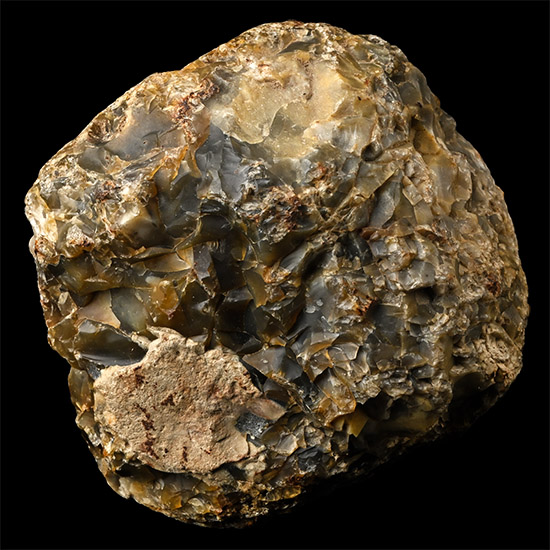
Egyptian Pecked Flint Hammerstone
Predynastic-Early Dynastic Period, circa 5,000-3,000 B.C.Estimate: £30 - 40 (+bp*)
Bids: 1 | Current Bid: £5
Fashioned from a dense flint nodule, retaining part of its original rough cortex. 140 grams, 48 mm
From the collection of A.D. Passmore (1879-1958), his collection of flints from the area of Stonehenge was donated to the Ashmolean Museum in the 1950s. From the private collection of Peter Clayton, FCILIP, Dip, Arch, FSA, FRNS, Hemel Hempstead, Hertfordshire, UK; formed since the late 1950s. Accompanied by a copy of an old handwritten information card by Peter Clayton. -
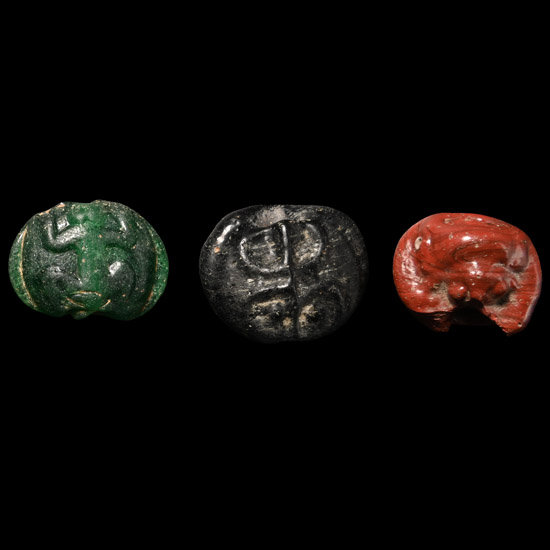
Phoenician Glass Amuletic Bead Group
Mid 1st millennium B.C.Estimate: £60 - 80 (+bp*)
Bids: 1 | Current Bid: £5
Including a grotesque mask, a squatting figure and a scorpion. 5.32 grams total, 14-16 mm
From the private collection of a European gentleman (1942-2024), formed since the 1970s. -
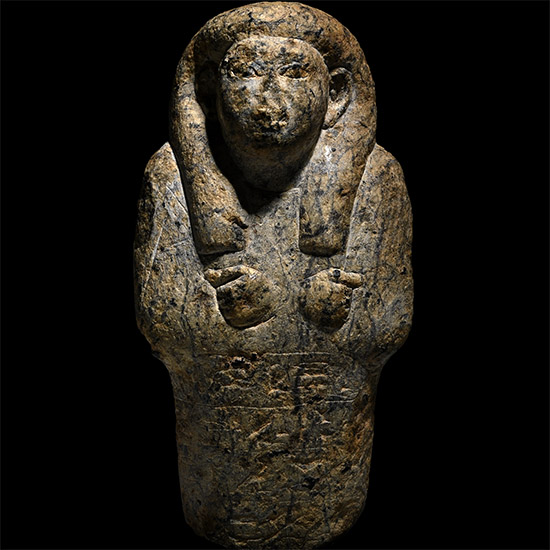
Egyptian Yellow and Black Serpentine Hieroglyphic Shabti
25th-26th Dynasty, circa 650-525 B.C.Estimate: £1,500 - 2,000 (+bp*)
Bids: 10 | Current Bid: £376
Fragment of a mummiform shabti wearing a heavy tripartite wig, with crossed hands on the chest holding faintly incised agricultural implements; four lightly incised horizontal lines of hieroglyphic text on the lower body; mounted on a custom-made stand. 455 grams total, 13.3 cm including stand
From the private collection of Peter Clayton, FCILIP, Dip, Arch, FSA, FRNS, Hemel Hempstead, Hertfordshire, UK; formed since the late 1950s.
Hardstone shabtis appear in the burials of certain high officials in the late 25th and early 26th Dynasties, after which faience became the predominant material for all shabti statuettes.
