
Loading, please wait...
LOT 0747
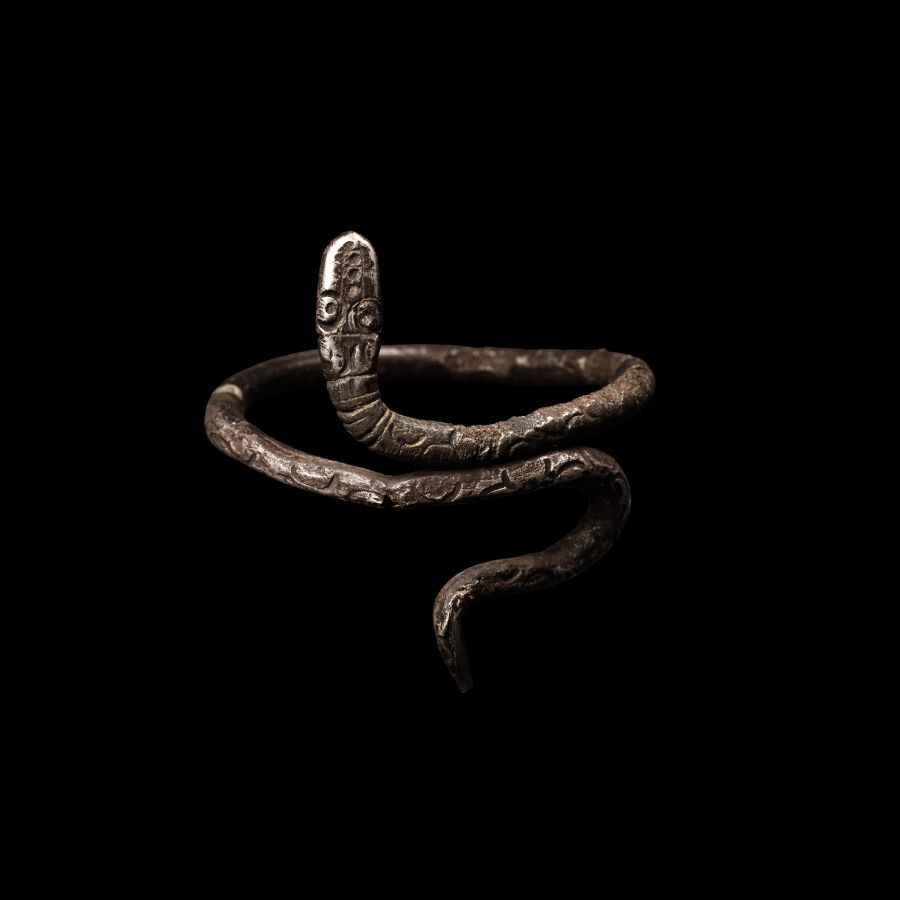
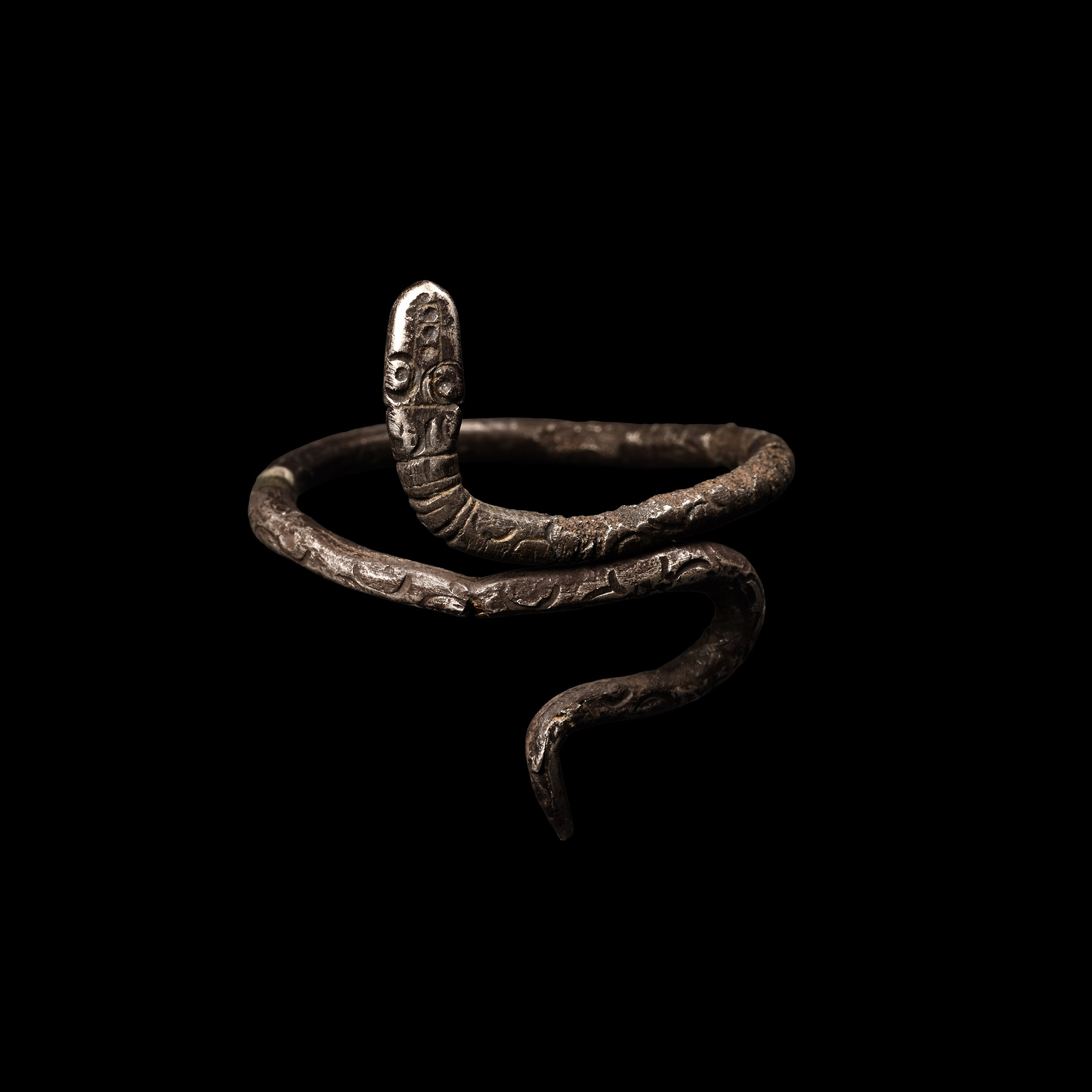
Romano-Egyptian Silver Snake Ring
1ST CENTURY B.C.-1ST CENTURY A.D.
1 in. (5.03 grams, 27.56 mm overall, 22.13 mm internal diameter (approximate size British Z, USA 12 1/2, Europe 28.77, Japan 27)).
A slender silver ring in the form of a coiled flat-headed cobra with punched head and scale detailing.
ProvenanceAcquired before 2000.
From the collection of a European gentleman living in the UK.
TimeLine Auctions follows a vetting process to ensure the authenticity and legality of all items, reinforcing our commitment to integrity and responsible trading. Each antiquity, antique, and coin lot undergoes thorough examination by a vetting committee of at least ten external specialists, professional trade association members, scientists, and archaeologists: Our Vetting Process
AUCTIONS:
TimeLine is a leading auction house specialising in antiquities, ancient art, collectables, natural history, coins, medals, and books. Our auctions offer museums, collectors, historians, and enthusiasts the opportunity to acquire unique and historically significant pieces.
-
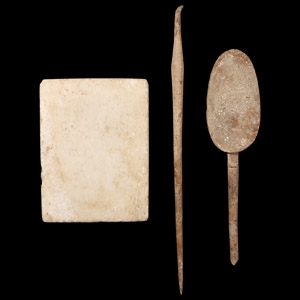
Roman Palette and Bone Implement Group
1st-4th century A.D.Estimate: £200 - 300 (‡+bp*)
Opening Bid: £100
A rectangular stone palette with bevelled edges, accompanied by a bone spoon and probe implement. 152 grams total, 7.5-15.5 cm
Acquired early 1990s. Ex private American collection; thence by descent. Private collection since 1998. -
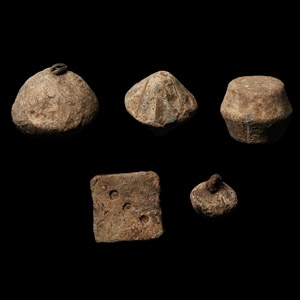
Roman Steelyard and Other Weight Group
1st-4th century A.D.Sold for (Inc. bp): £26
A group of various weights comprising three biconical steelyard weights each with the remains of the iron loop, a barrel-shaped weight with five dots to one end, and a tabular-shaped weight with three large stamped dimples to one fate surface. 478 grams total, 24-34 mm
Found Rodings, Essex, UK. Acquired on the UK antiques market between 1974-1985. Albert Ward collection, Essex, UK. -
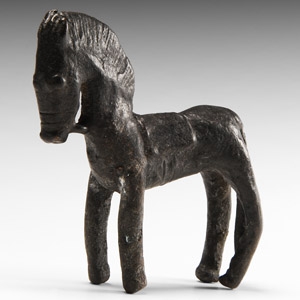
Roman Horse Figure
2nd-3rd century A.D.Sold for (Inc. bp): £143
A bronze model of a horse standing with head erect, saddlecloth, girth and bridle ring modelled integrally. 116 grams, 66 mm high
Acquired 1990s. Ex French collection.
