
Loading, please wait...
LOT 0817
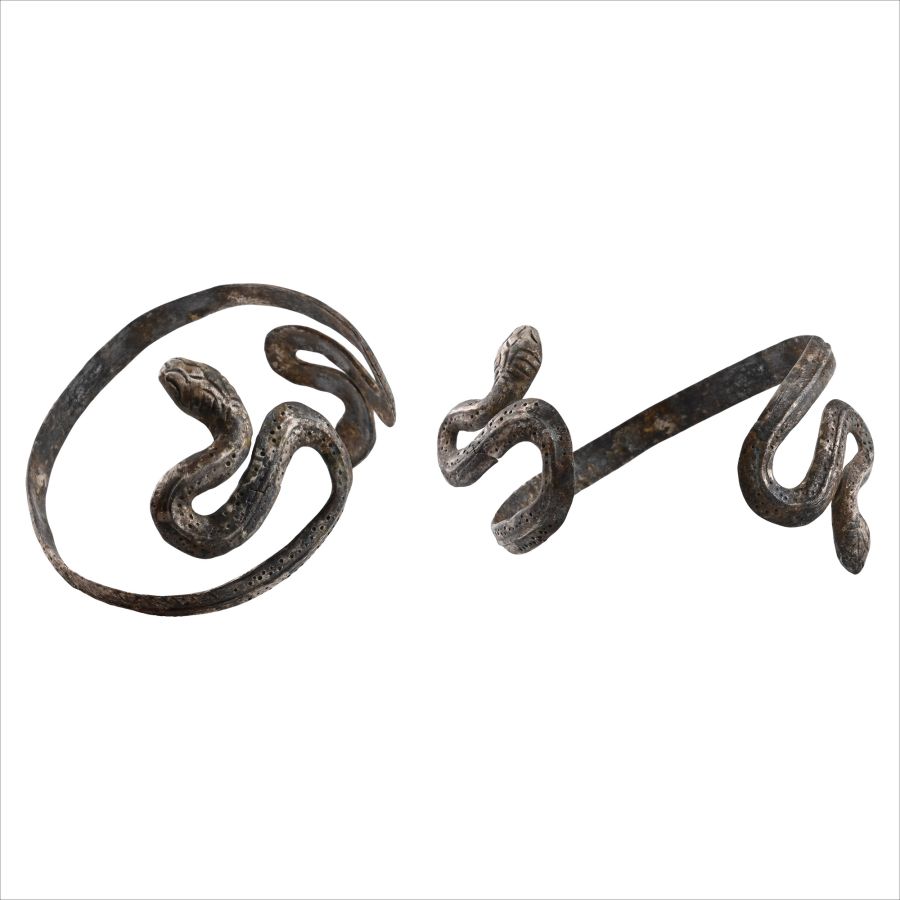
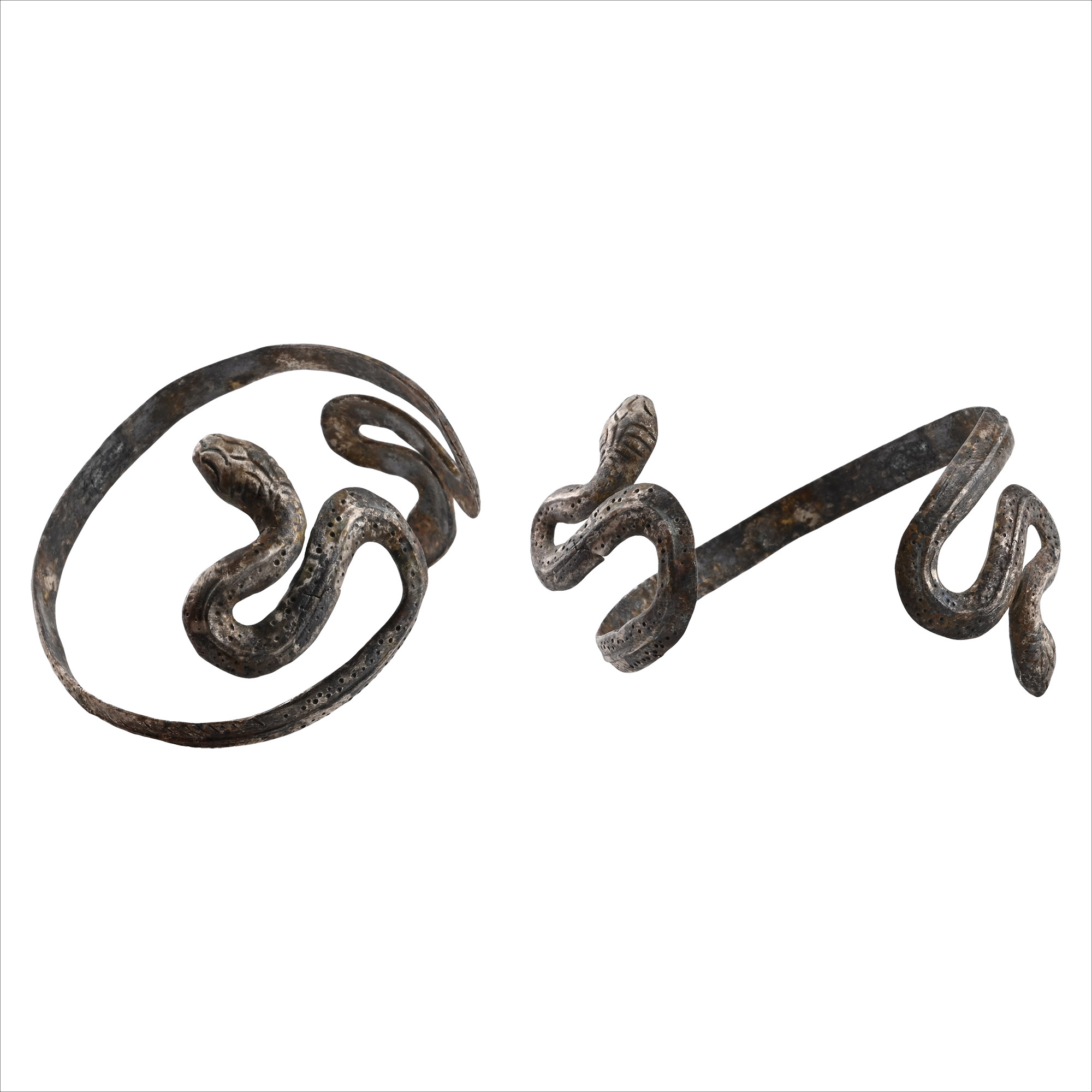
Romano-Egyptian Silver Snake Bracelet
30 B.C.-323 A.D.
2 3/4 in. (28 grams, 71 mm).
Slender D-section shank with median gusset, each end an undulating curve, piriform head with incised eyes.
ProvenanceEx German art market, 2000s.
Acquired from an EU collector living in London.
From the collection of a Surrey, UK, gentleman.
TimeLine Auctions follows a vetting process to ensure the authenticity and legality of all items, reinforcing our commitment to integrity and responsible trading. Each antiquity, antique, and coin lot undergoes thorough examination by a vetting committee of at least ten external specialists, professional trade association members, scientists, and archaeologists: Our Vetting Process
AUCTIONS:
TimeLine is a leading auction house specialising in antiquities, ancient art, collectables, natural history, coins, medals, and books. Our auctions offer museums, collectors, historians, and enthusiasts the opportunity to acquire unique and historically significant pieces.
-
.jpg)
Roman Amethyst Gemstone of Jason and the Golden Fleece
1st-2nd century A.D.Sold for (Inc. bp): £7,150
Plano-convex type with incuse image of naked Jason advancing beneath an overhanging tree with Golden Fleece suspended in its branches; supplied with a museum-quality impression. 0.79 grams, 13 mm
Private English collection, formed between the late 1970s and early 1990s. Private collection, London, UK. -
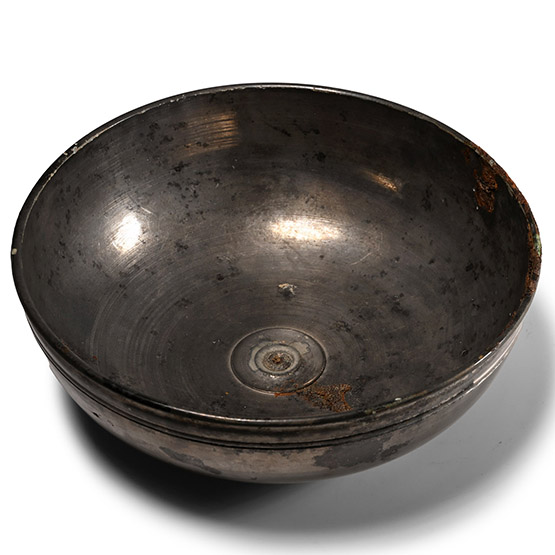
Roman Tinned Bronze Bowl
1st-3rd century A.D.Estimate: £1,200 - 1,700 (‡+bp*)
Opening Bid: £600
Hemispherical in profile with low foot, incised circumferential lines to rim; high-tin surface with silvery appearance. 177 grams, 10.3 cm
Acquired in the mid 1980s-1990s. Private collection, Switzerland, thence by descent. Private collection, since the late 1990s. This lot has been checked against the Interpol Database of stolen works of art and is accompanied by search certificate number no.12234-222176. -
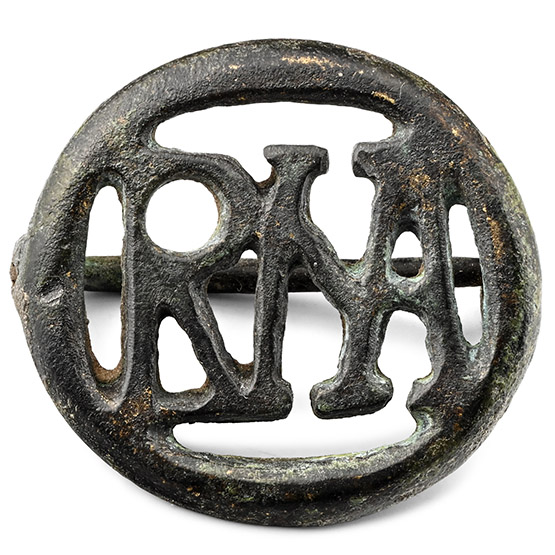
Roman Bronze ROMA Brooch
2nd-3rd century A.D.Sold for (Inc. bp): £260
Discoid body formed as an openwork monogram 'ROMA' in capitals, the M and A ligated, the O formed by the brooch frame itself; pin-lug and catch to reverse. 11.75 grams, 34 mm
Ex German art market, 2000s. Acquired from an EU collector living in London. From the collection of a Surrey, UK, gentleman.
