
Loading, please wait...

LOT 0474
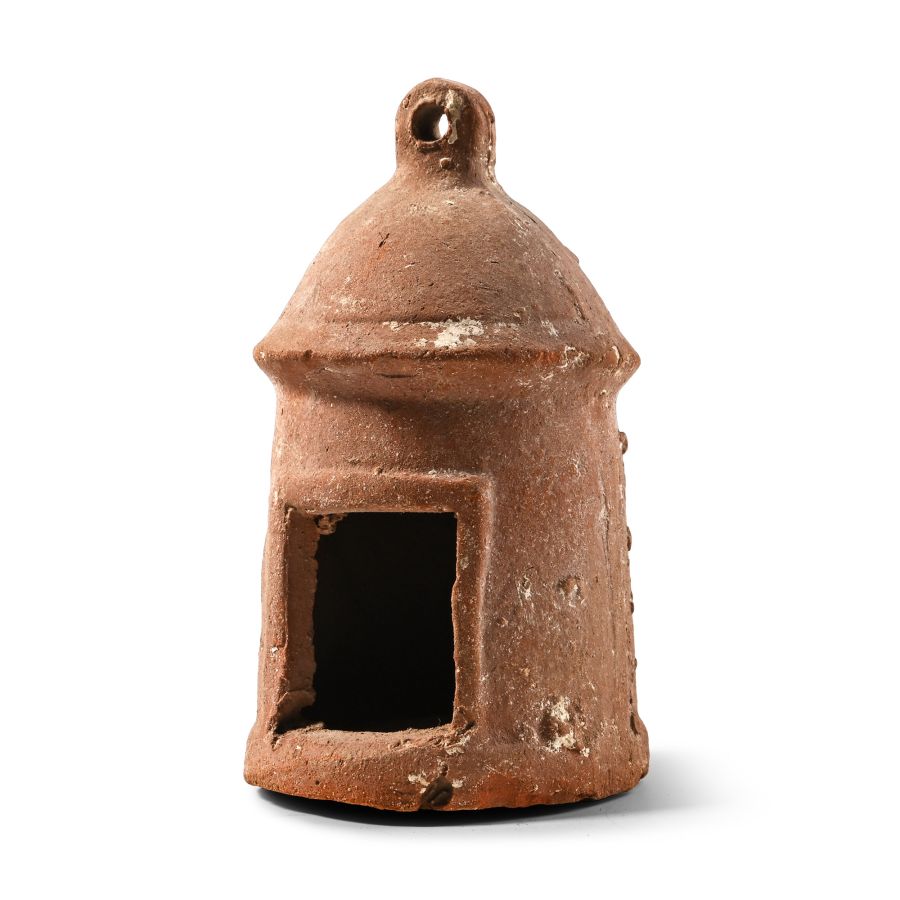
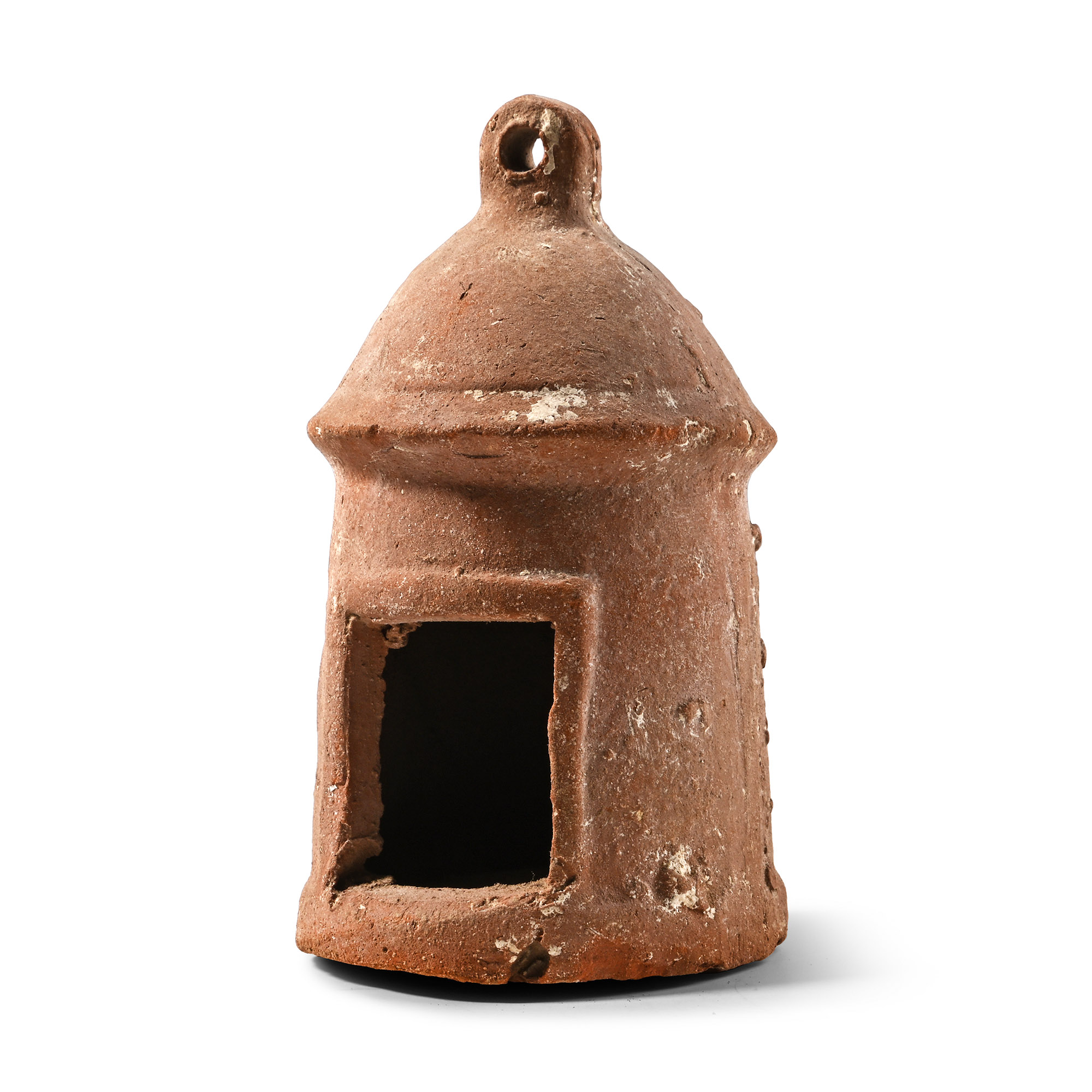
Romano-Egyptian Pottery Shrine
ROMAN PERIOD, 30 B.C.-323 A.D.
4 1/8 in. (127 grams, 10.4 cm).
Tubular type with domed 'beehive' roof and pierced lug at the apex, carinated collar and rectangular opening. [No Reserve]
ProvenanceFrom the private collection of Peter Clayton, FCILIP, Dip, Arch, FSA, FRNS, Hemel Hempstead, Hertfordshire, UK; formed since the late 1950s.
CONDITIONTimeLine Auctions follows a vetting process to ensure the authenticity and legality of all items, reinforcing our commitment to integrity and responsible trading. Each antiquity, antique, and coin lot undergoes thorough examination by a vetting committee of at least ten external specialists, professional trade association members, scientists, and archaeologists: Our Vetting Process
AUCTIONS:
TimeLine is a leading auction house specialising in antiquities, ancient art, collectables, natural history, coins, medals, and books. Our auctions offer museums, collectors, historians, and enthusiasts the opportunity to acquire unique and historically significant pieces.
LOT 0474
Romano-Egyptian Pottery Shrine
Estimate £50 - 70€58 - 81 (for guidance only)$68 - 95 (for guidance only)
Opening Bid
£5 (EUR 6; USD 7) +BP*
-
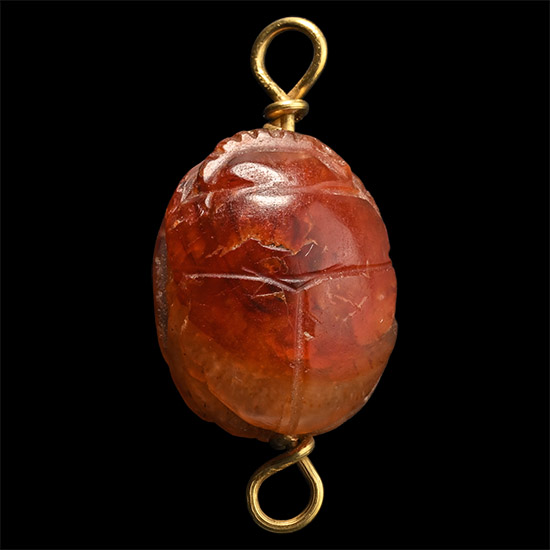
Egyptian Carnelian Scarab Mounted in Gold
Late Period, circa 664-332 B.C.Estimate: £600 - 800 (+bp*)
Opening Bid: £300
The scarab with clearly modelled clypeus, head, prothorax, elytra, and legs, with modern gold wire threaded through its longitudinal suspension hole; the underside is plain. 6.53 grams, 36 mm
Ex Belinda Elliston collection, a member of the Egyptian Exploration Society, 1940s onwards. -
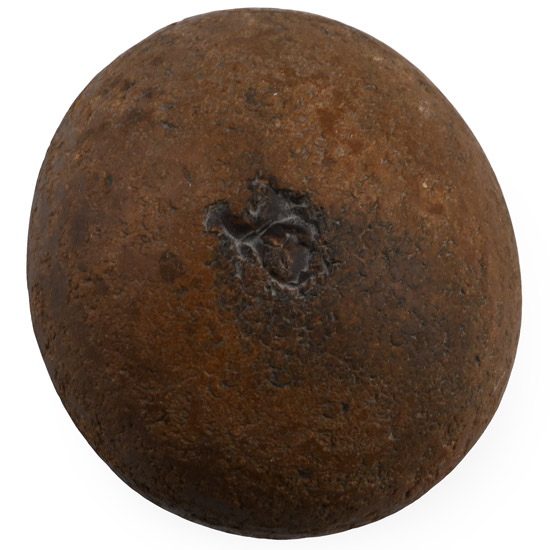
Egyptian Stone Smoothing Tool
3rd-late 1st millennium B.C.Estimate: £40 - 60 (+bp*)
Opening Bid: £5
Spherical pounder with a smooth surface. 625 grams, 86 mm
From the private collection of Peter Clayton, FCILIP, Dip, Arch, FSA, FRNS, Hemel Hempstead, Hertfordshire, UK; formed since the late 1950s. Accompanied by an old handwritten information card by Peter Clayton, collection no.134.
Stone pounders were used to shape and harden metal, as well as to pound stone architectural elements and statues. -
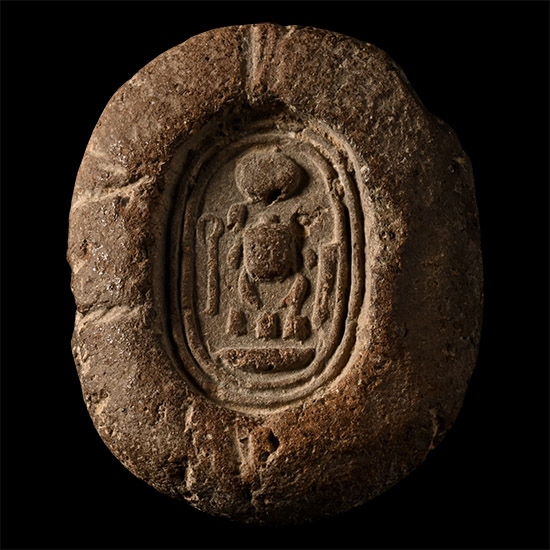
Egyptian Terracotta Mould with Impression of the Cartouche of Pharaoh Tutankhamun
New Kingdom, 18th Dynasty, circa 1342-1323 B.C.Estimate: £500 - 700 (+bp*)
Bids: 2 | Current Bid: £10
Ellipsoid in plan with an impressed cartouche for 'Tutankhamun, ruler of Hermonthis'. 6.5 grams, 29 mm
Acquired Caledonian market, November 1958, for 2 shillings and sixpence. From the private collection of Peter Clayton, FCILIP, Dip, Arch, FSA, FRNS, Hemel Hempstead, Hertfordshire, UK; formed since the late 1950s. Accompanied by an old handwritten information card by Peter Clayton, collection no.50.
Moulds like this were often used to produce faience ring bezels (cf. Seyfried, F. (ed.), In the Light of Amarna: 100 Years of the Nefertiti Discovery, Berlin, 2012, p. 100, fig. 2, for an example of a similar mould and a faience ring bezel for Akhenaten). Hermonthis, also known as Armant, was called ı͗wnu-šmꜤw by the ancient Egyptians and regarded as the southern counterpart to the solar temple complex at Heliopolis.
