
Loading, please wait...

LOT 0450
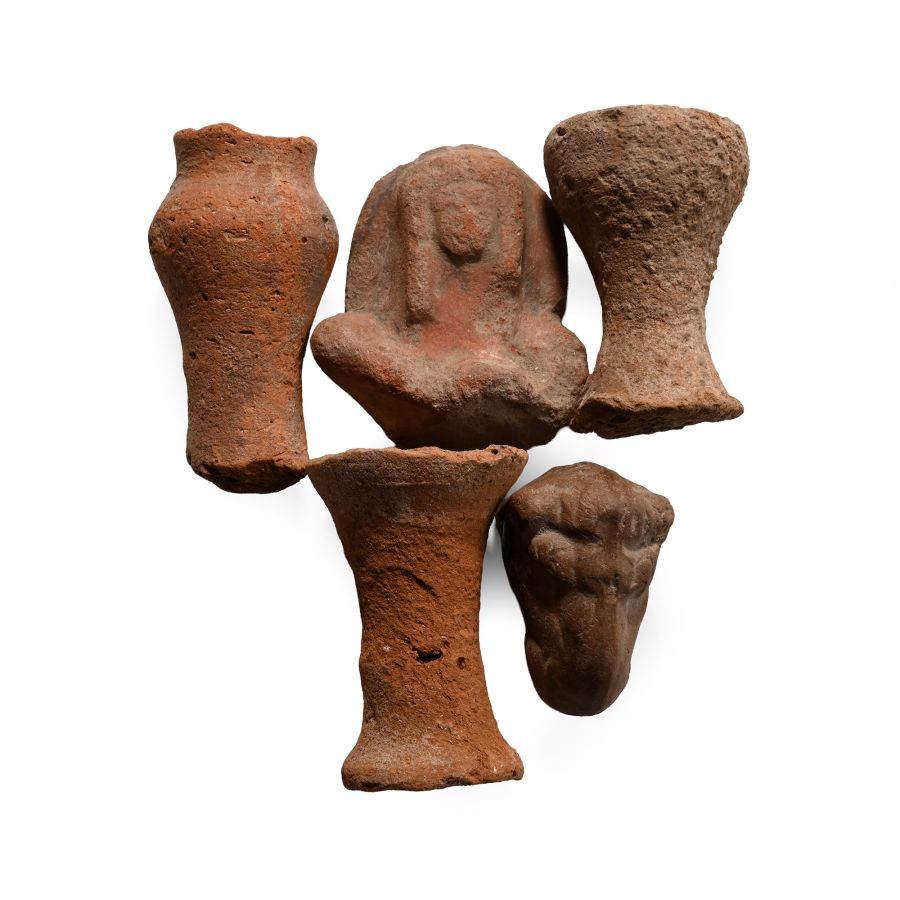
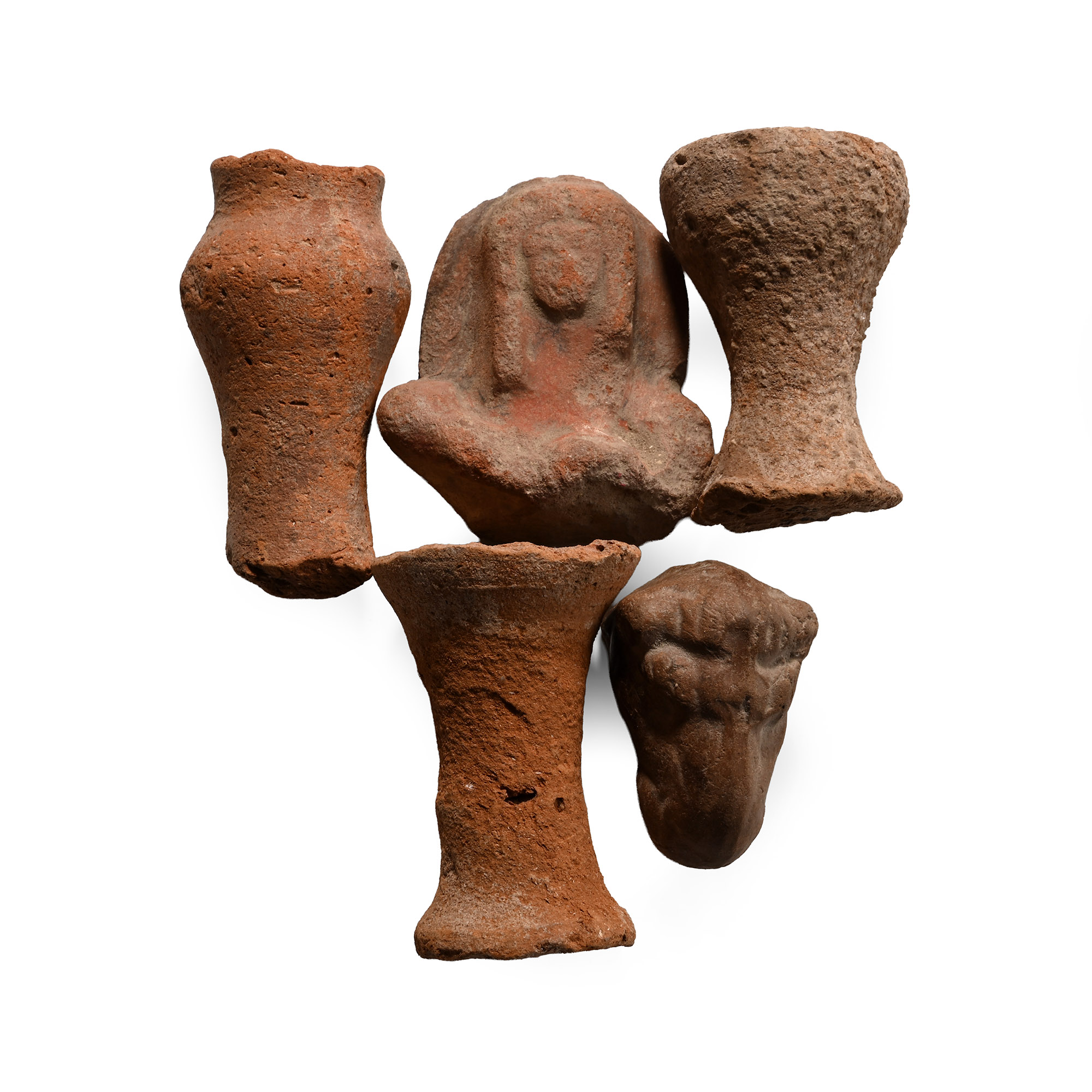
Romano-Egyptian Pottery Artefact Collection
ROMAN PERIOD, 30 B.C.-323 A.D.
1 3/4 - 2 5/8 in. (200 grams total, 46-67 mm).
Including a moulded mummiform bust, a camel's head and pottery items. [5, No Reserve]
ProvenanceFrom the private collection of Peter Clayton, FCILIP, Dip, Arch, FSA, FRNS, Hemel Hempstead, Hertfordshire, UK; formed since the late 1950s.
CONDITIONTimeLine Auctions follows a vetting process to ensure the authenticity and legality of all items, reinforcing our commitment to integrity and responsible trading. Each antiquity, antique, and coin lot undergoes thorough examination by a vetting committee of at least ten external specialists, professional trade association members, scientists, and archaeologists: Our Vetting Process
AUCTIONS:
TimeLine is a leading auction house specialising in antiquities, ancient art, collectables, natural history, coins, medals, and books. Our auctions offer museums, collectors, historians, and enthusiasts the opportunity to acquire unique and historically significant pieces.
LOT 0450
Romano-Egyptian Pottery Artefact Collection
Estimate £50 - 70€58 - 81 (for guidance only)$68 - 95 (for guidance only)
Opening Bid
£5 (EUR 6; USD 7) +BP*
-
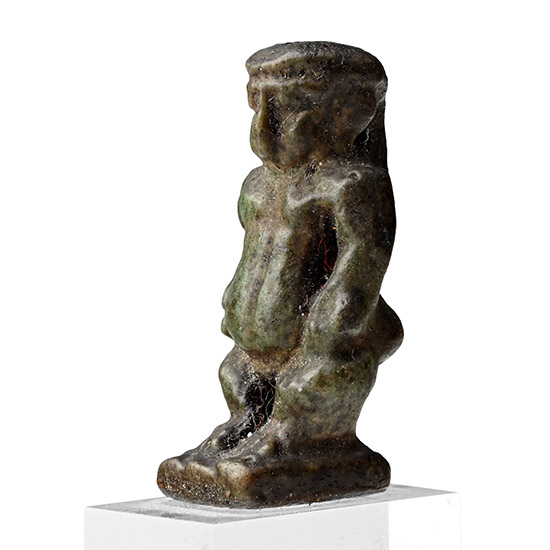
Egyptian Faiance Amulet of Pataikos
Late Period, 664-332 B.C.Estimate: £100 - 140 (‡+bp*)
Opening Bid: £45
Depicted as a naked dwarf with short limbs; pierced to rear of the neck for use as an amulet; mounted on a display stand. 7.88 grams total, 40 mm high including stand
Ex Herbert A.Cahn, Basle, 1960s.
Herodotus mentions Pataikos as a dwarf-like depiction of Ptah, although the god’s ancient Egyptian name remains unclear. These small amulets symbolise Ptah’s immense magical power, which helps protect the wearer from dangerous creatures such as snakes and crocodiles. The deity’s role in the funerary sphere is explained in Spell 164 of the Book of the Dead, where Pataikos is used to safeguard the deceased’s heart from attacks by enemies and from bodily decay. -
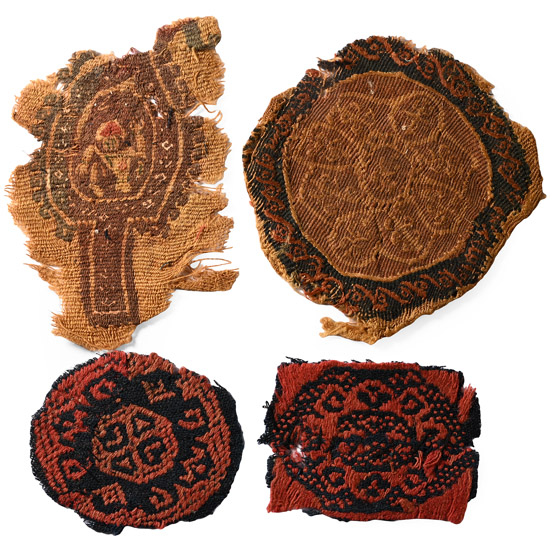
Egyptian Coptic Tunic Textile Fragments of Orbiculi with Vegetation, Figures and Geometric Ornament
Circa 6th-7th century A.D.Estimate: £80 - 100 (+bp*)
Opening Bid: £5
Comprising a tablion and an orbiculus featuring floral and geometric decoration in black and red wool (Z-twist); an orbiculus with floral and geometric decoration in yellow, brown, red, and black wool; and a heart-shaped bud in green, red, and yellow wool featuring a human figure at the centre. 11.1 grams total, 8.1-12.5 cm
Acquired 1970s-1996. Property of a North American collector. London collection, 2016.
The fragments are decorative parts of tunics. These are fabrics of great decorative finesse, with some elements displaying an unusual and extremely well-preserved colour palette. -
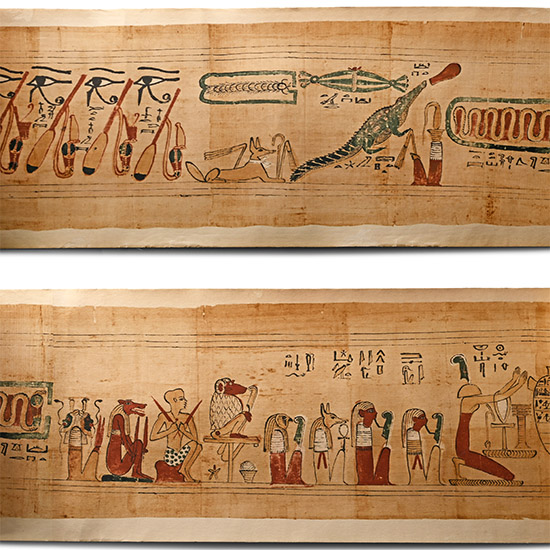
Egyptian Papyrus Museum Reproduction of Berlin 3127 in Tube
20th century A.D.Estimate: £60 - 80 (+bp*)
Opening Bid: £5
Colour reproduction of Berlin Papyrus 3127 belonging to Amun-em-wia, who lived during the 21st Dynasty (Third Intermediate Period). 312 grams total, tube: 27.5 cm high
From the private collection of Peter Clayton, FCILIP, Dip, Arch, FSA, FRNS, Hemel Hempstead, Hertfordshire, UK; formed since the late 1950s.
