
Loading, please wait...

LOT 0541
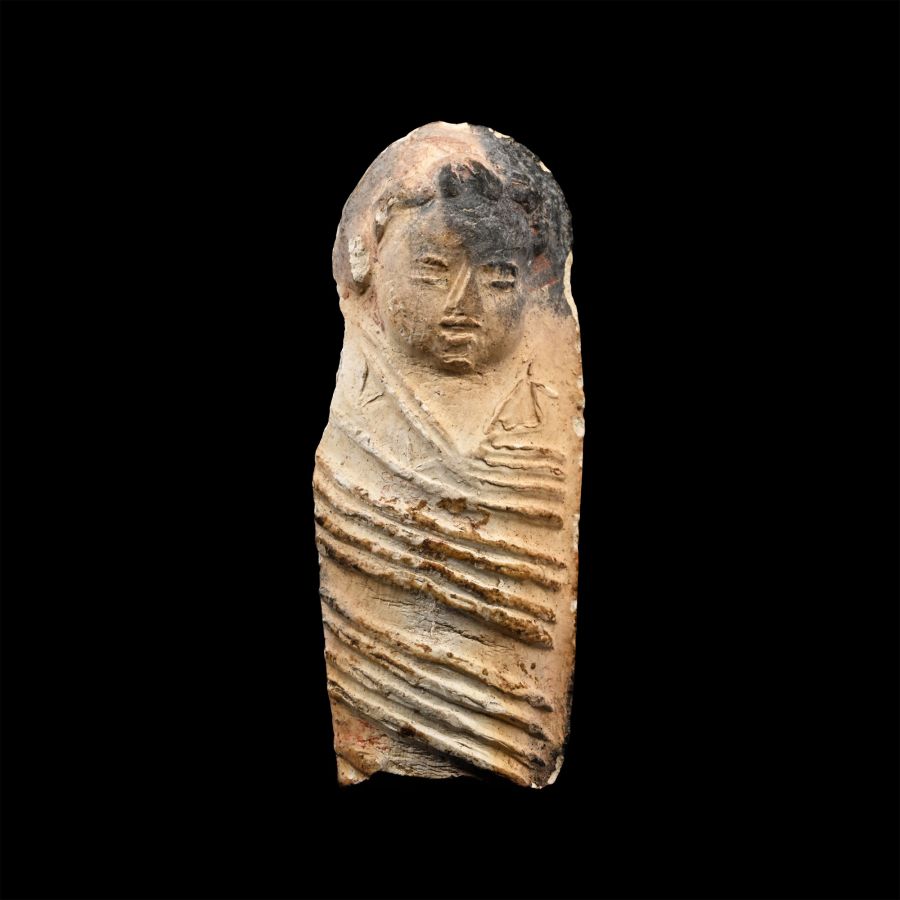
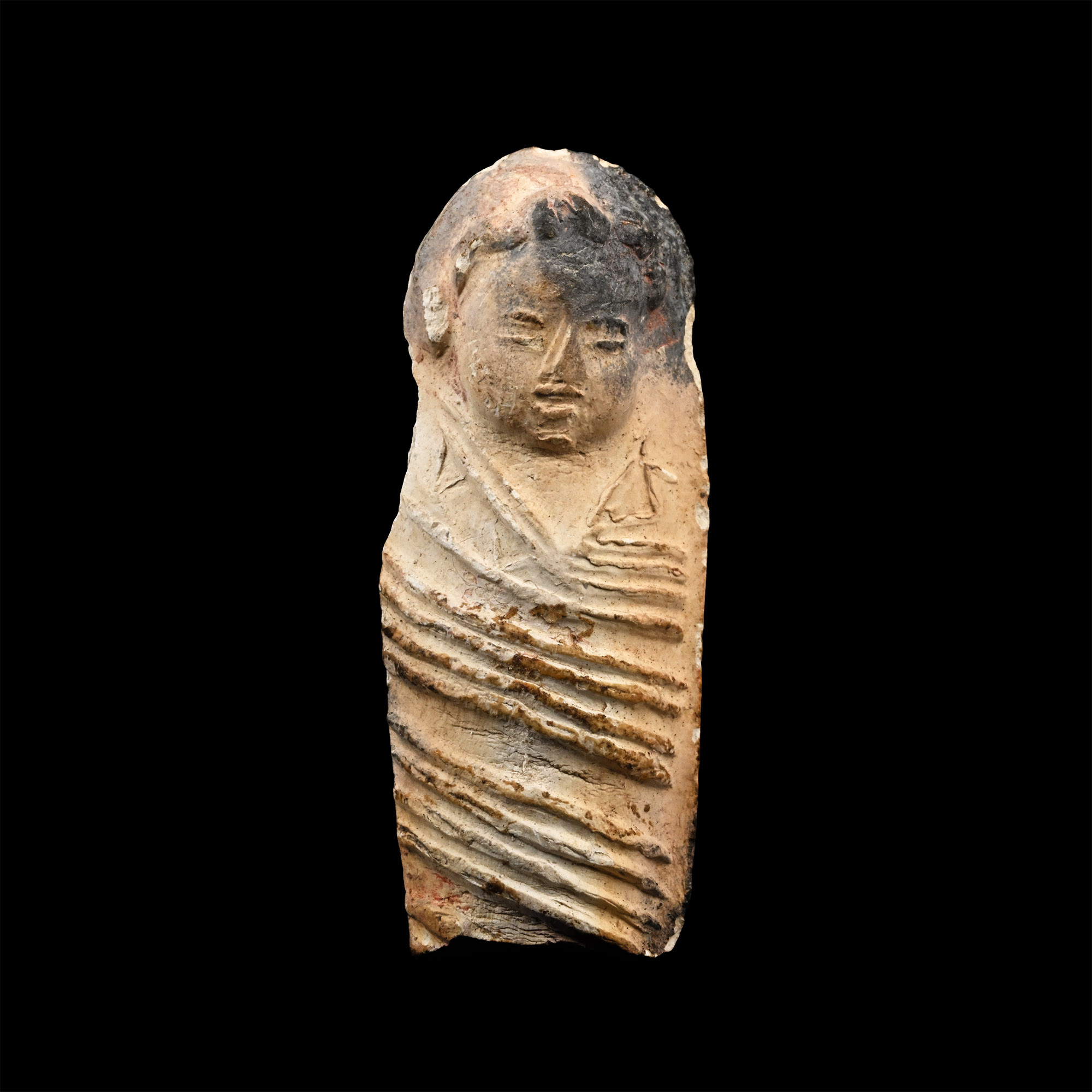
Romano-Egyptian Plaster Mummy
CIRCA 2ND CENTURY A.D.
1 3/4 in. (6.14 grams, 44 mm).
D-shaped in section with mummy wrapping to the body, exposed face with curls of hair. [No Reserve]
ProvenanceFrom the private collection of a European gentleman (1942-2024), formed since the 1970s.
LiteratureCf. Picchi, D., Rossi, M., Casali, F., Romani, D., ‘Analysis of an Egyptian Corn-Mummy by means of computed tomography’ in Maravelia, A.A. (ed.), En Quête de la Lumière / In Quest of Light. Mélanges in Honorem Ashraf A. Sadek, Oxford, 2009, pp.1-10, fig.5, for a miniature Roman mummy.
CONDITIONTimeLine Auctions follows a vetting process to ensure the authenticity and legality of all items, reinforcing our commitment to integrity and responsible trading. Each antiquity, antique, and coin lot undergoes thorough examination by a vetting committee of at least ten external specialists, professional trade association members, scientists, and archaeologists: Our Vetting Process
AUCTIONS:
TimeLine is a leading auction house specialising in antiquities, ancient art, collectables, natural history, coins, medals, and books. Our auctions offer museums, collectors, historians, and enthusiasts the opportunity to acquire unique and historically significant pieces.
LOT 0541
Romano-Egyptian Plaster Mummy
Estimate £40 - 60€46 - 70 (for guidance only)$54 - 81 (for guidance only)
-
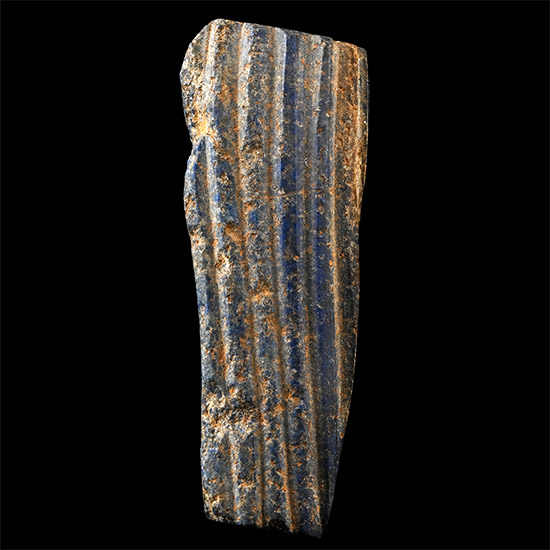
Egyptian Carved Lapis Lazuli Inlay
New Kingdom, 1550-1070 B.C.Estimate: £200 - 300 (+bp*)
Opening Bid: £5
Rectangular-section panel with tapering profile, fluting to the upper face. 23.6 grams, 48 mm
From the private collection of a European gentleman (1942-2024), formed since the 1970s.
This fragment most likely belongs to a striated skirt or wig. -
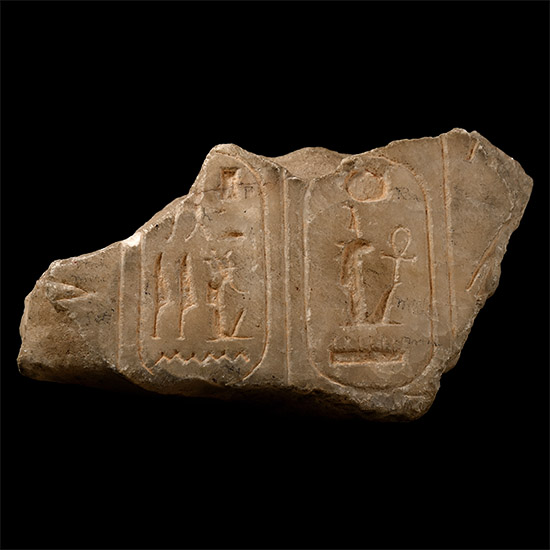
Egyptian Alabaster Fragment with Pharaoh Seti I's Cartouches
New Kingdom, 19th Dynasty, circa 1278 B.C.Estimate: £2,000 - 3,000 (+bp*)
Bids: 13 | Current Bid: £550
Thick section of alabaster with traces of four columns of hieroglyphs, including two partially preserved cartouches, one containing the birth name and epithet of Seti I, Seti mery-en-Ptah ('Seti, beloved of Ptah'), and the other his throne name, Men-Maat-Re ('Eternal is the justice of Re'). 526 grams, 13.8 cm
Received by gift from archaeologist Cyril Aldred, September 1964. From the private collection of Peter Clayton, FCILIP, Dip, Arch, FSA, FRNS, Hemel Hempstead, Hertfordshire, UK; formed since the late 1950s. Accompanied by an old handwritten information card by Peter Clayton, collection no.123. This lot has been checked against the Interpol Database of stolen works of art and is accompanied by search certificate no.13494-262900.
Peter Clayton's card suggests that the fragment may come from Seti's alabaster sarcophagus, the elaborately decorated lower half of which is in the John Soane Museum, London. The fragment may belong to the lid, which plunderers smashed in antiquity and which survives only in a relatively small number of fragments. -
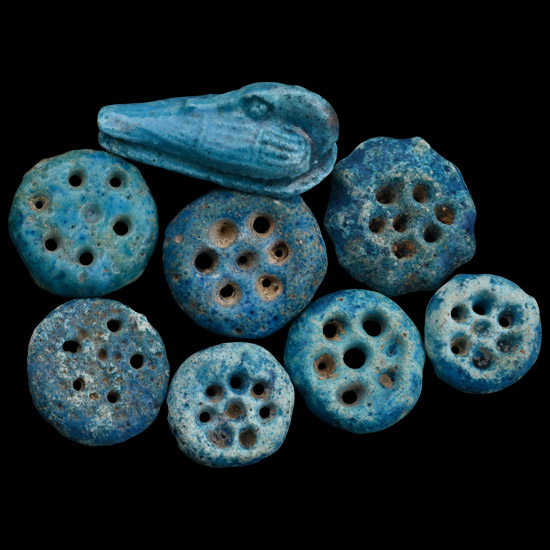
Egypto-Phoenician Faience Amulet Group
4th-2nd century B.C. and laterEstimate: £200 - 300 (+bp*)
Opening Bid: £100
Comprising flat discs with perforations and a modern trussed duck with its head laid along its spine. 18.74 grams total, 15-30 mm
From the collection of a gentleman, acquired on the London art market in the 1990s.
