
Loading, please wait...
LOT 0462
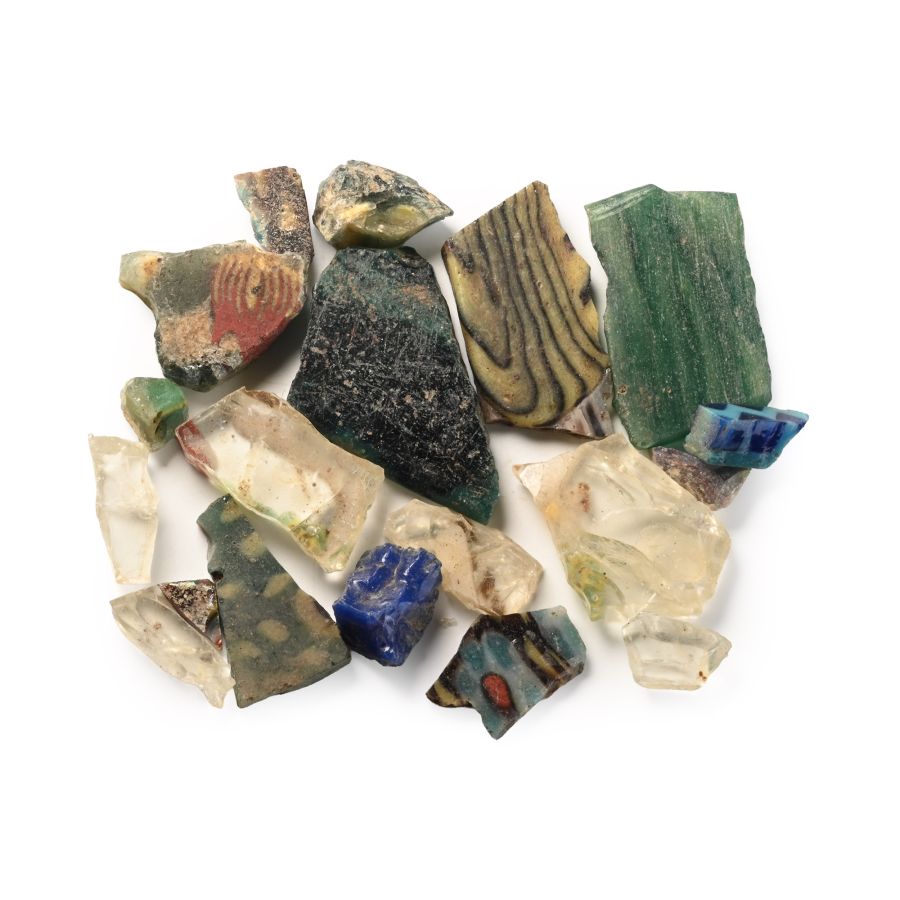
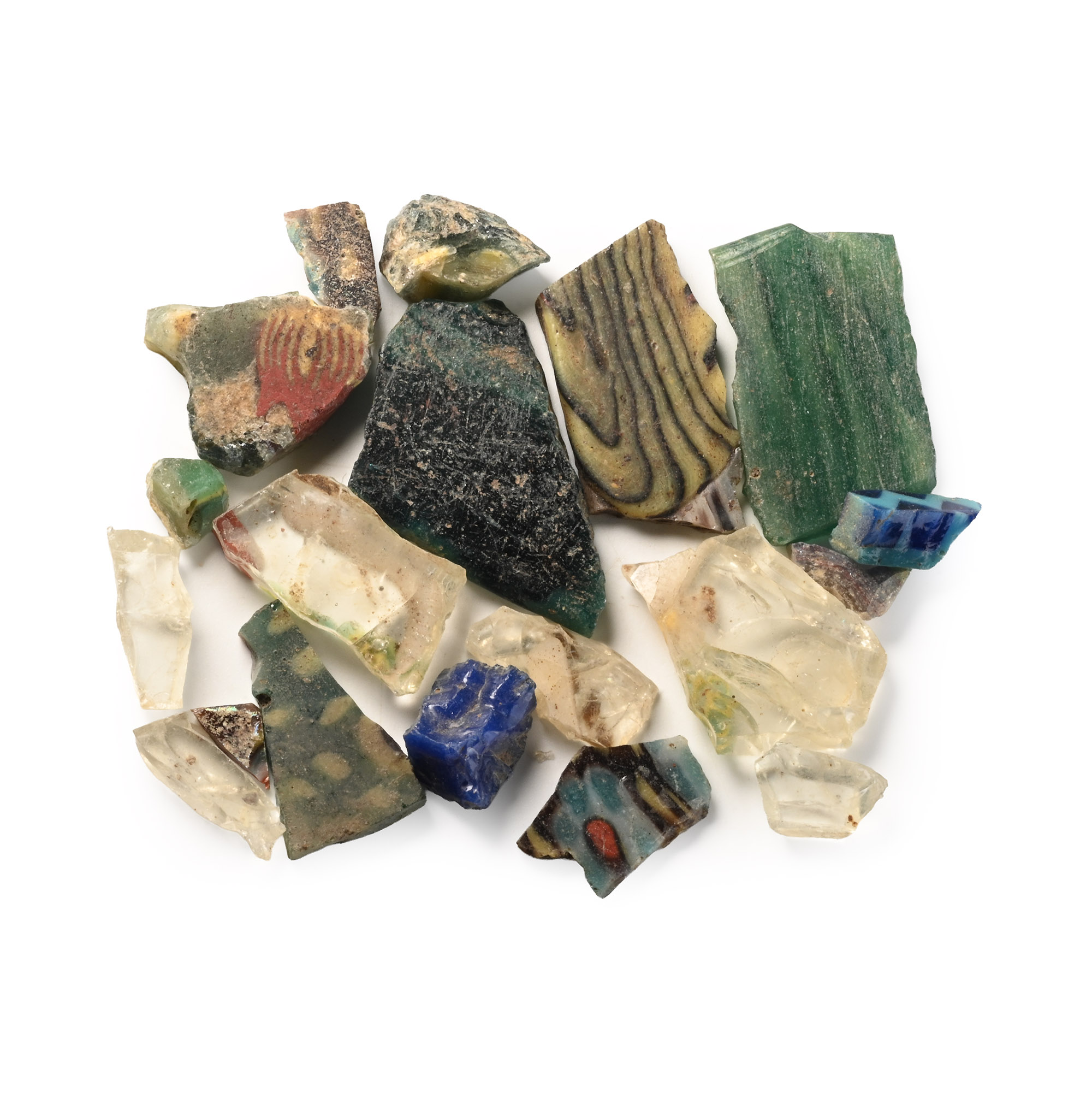
Romano-Egyptian Mosaic Glass Fragments
CIRCA 1ST CENTURY A.D.
1/4 - 1 1/8 in. (18 grams total, 5-30 mm).
Including geometric and other patterns. [19, No Reserve]
ProvenanceEx Gallery Mikazuki prior to 1984.
Propery of a London, UK, gentleman.
TimeLine Auctions follows a vetting process to ensure the authenticity and legality of all items, reinforcing our commitment to integrity and responsible trading. Each antiquity, antique, and coin lot undergoes thorough examination by a vetting committee of at least ten external specialists, professional trade association members, scientists, and archaeologists: Our Vetting Process
AUCTIONS:
TimeLine is a leading auction house specialising in antiquities, ancient art, collectables, natural history, coins, medals, and books. Our auctions offer museums, collectors, historians, and enthusiasts the opportunity to acquire unique and historically significant pieces.
-
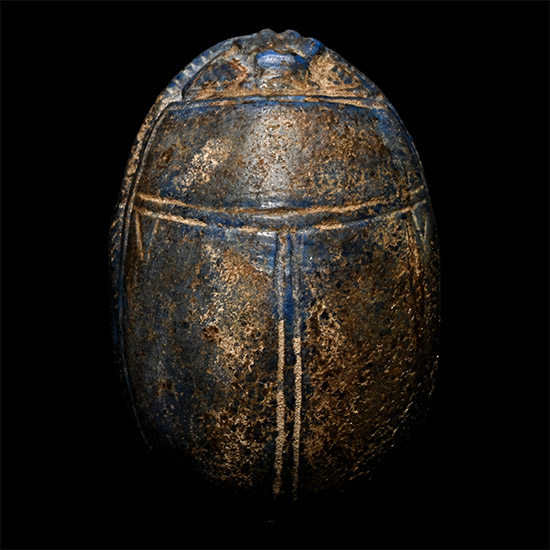
Large Egyptian Lapis Lazuli Heart Scarab
New Kingdom, 1550-1070 B.C.Estimate: £2,500 - 3,500 (+bp*)
Opening Bid: £1,000
Naturalistically modelled head, thorax, and abdomen, with elytra outlined by incised lines; front, middle, and hind legs visible at the sides and merging into an oval base plinth. 31 grams, 39 mm
Ex early 20th century collection, London, UK. This lot has been checked against the Interpol Database of stolen works of art and is accompanied by search certificate number no.13102-249410.
The scarab amulet was one of ancient Egypt’s most widespread symbols, signifying rebirth, transformation, and protection. Modelled on the dung beetle associated with the sun god Khepri—believed to roll the sun across the sky—it symbolised the cycle of life and renewal. Widely used from the early Middle Kingdom onwards, scarabs served as funerary amulets, personal charms, and seals, often inscribed with prayers or names. They reflect both spiritual beliefs and daily life in ancient Egypt. -
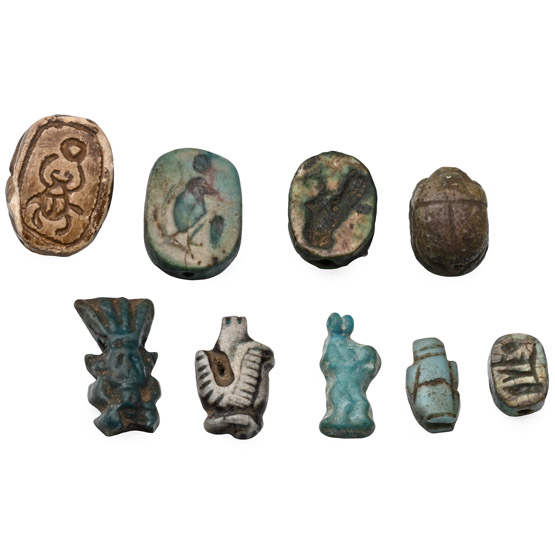
Egyptian Faience Amulet Collection
New Kingdom-Ptolemaic Period, 1550-30 B.C.Sold for (Inc. bp): £312
Comprising: four scarabs and scaraboids, three with hieroglyphs on the underside; a tabular bead with a figure of a bird on both sides; and four small amulets, including two of Bes and a uraeus. 5.79 grams total, 7-14 mm
From the Walter Thomas Gaze Cooper (1895-1980) collection; thence by descent. -
.jpg)
Historic Collection of 565 Slides of Egyptian Archaeological Sites and Artefacts
1960s-1980s A.D.Sold for (Inc. bp): £845
Housed in five linen-covered boxes, covering ancient Egypt, Tutankhamun jewellery, Nefetari, Amun Hr Khopshef, Khaemwast, Tuthmosis IV, Tye, Archaic stele, maceheads, inscriptions, pottery, sculpture, Saqqara tombs, Esna etc. 3.85 kg total, 26.5 x 16.5 x 6.5 cm each box
Property of archaeologist Stephanie Gee, N.W. London, UK, 1960s-1980s.
Stephanie Gee was a prominent archaeologist who took part in several expeditions in Egypt. She was a trusted assistant to the British-Australian archaeologist Veronica Seton-Williams, who excavated in Egypt, Britain, and the Near East. Stephanie also took part in the Tell El-Farâ'în expeditions of 1965-1968, and assisted Seton-Williams with preparing the 1966 expedition report. Their collaboration continued and Stephanie helped with the manuscript of Seton-Williams’ book ‘The Road to El-Aguzein’, a narrative account of her life that was first published in 1988.
