
Loading, please wait...
LOT 0028
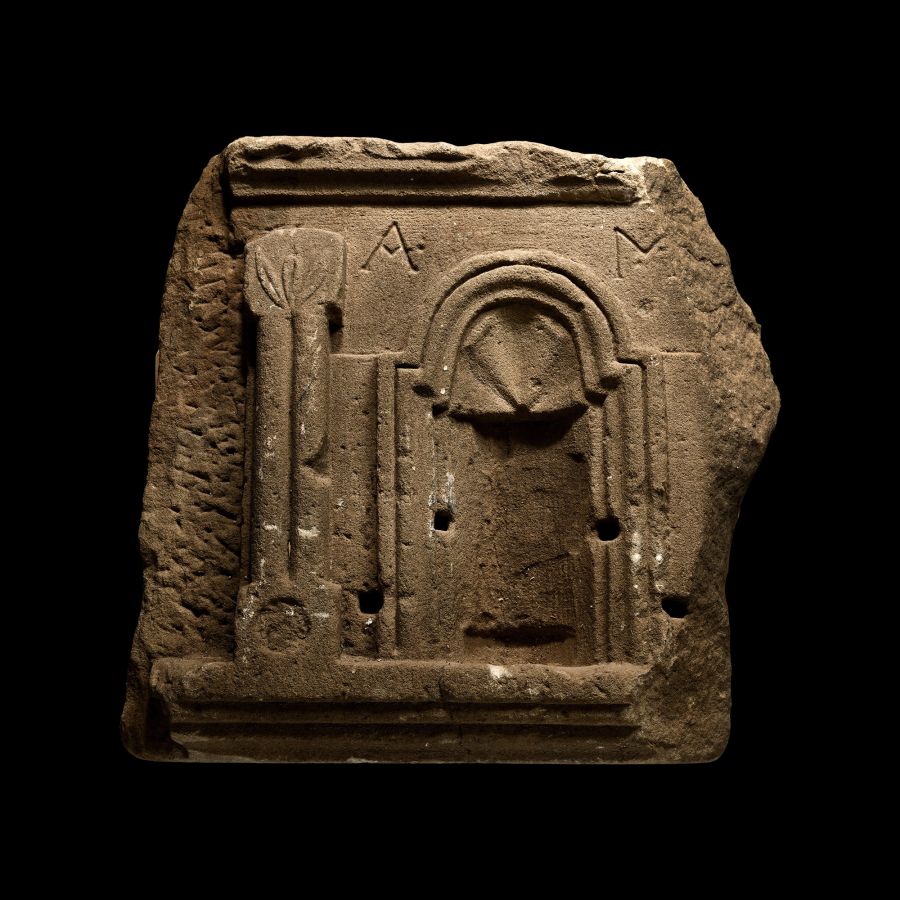
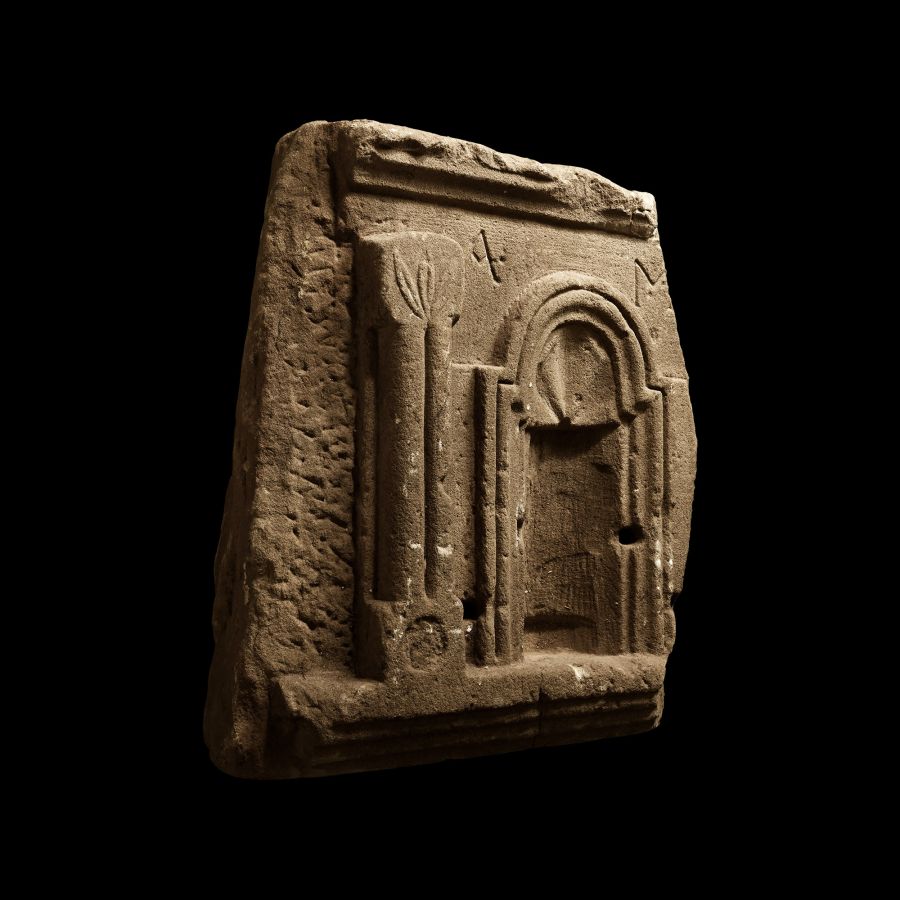
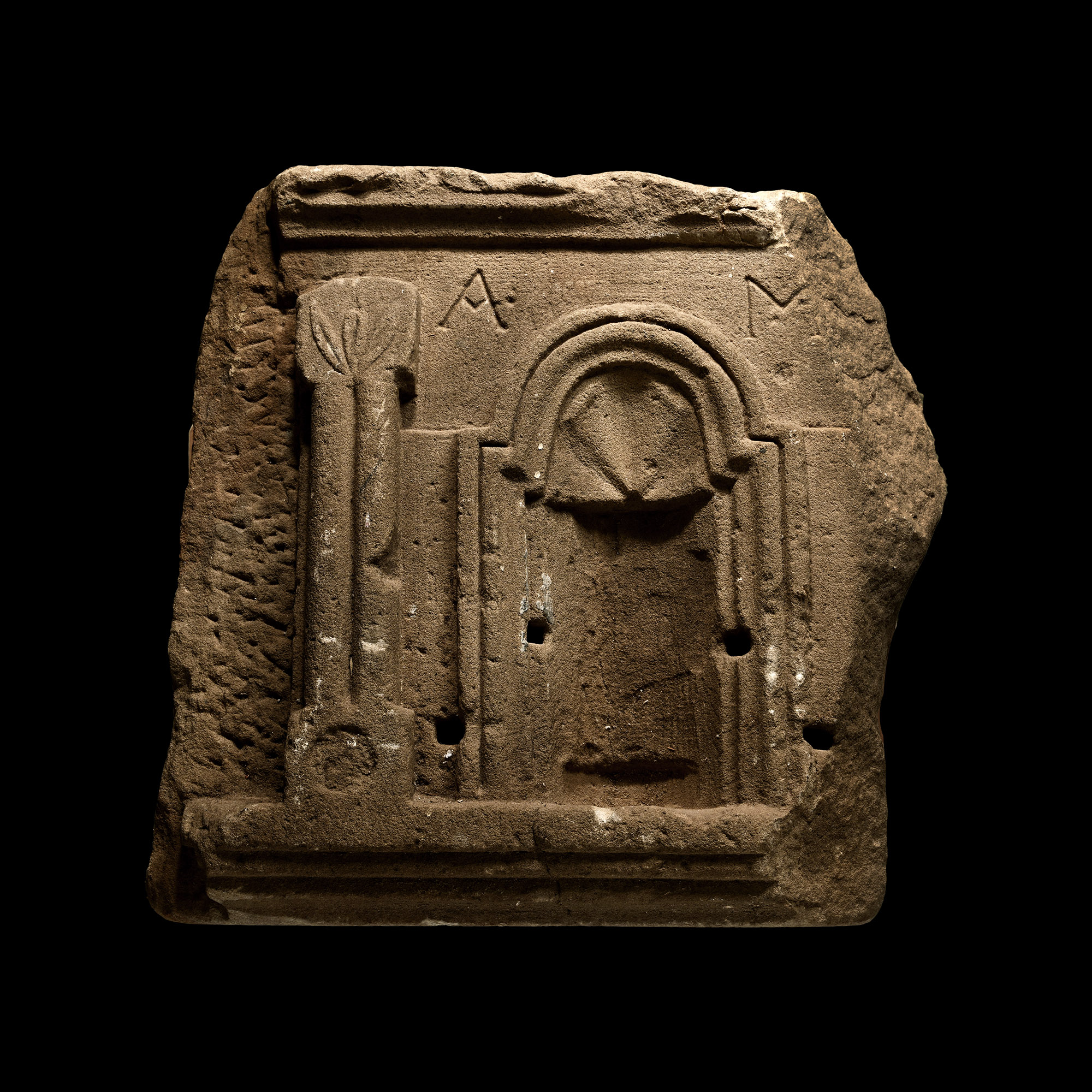
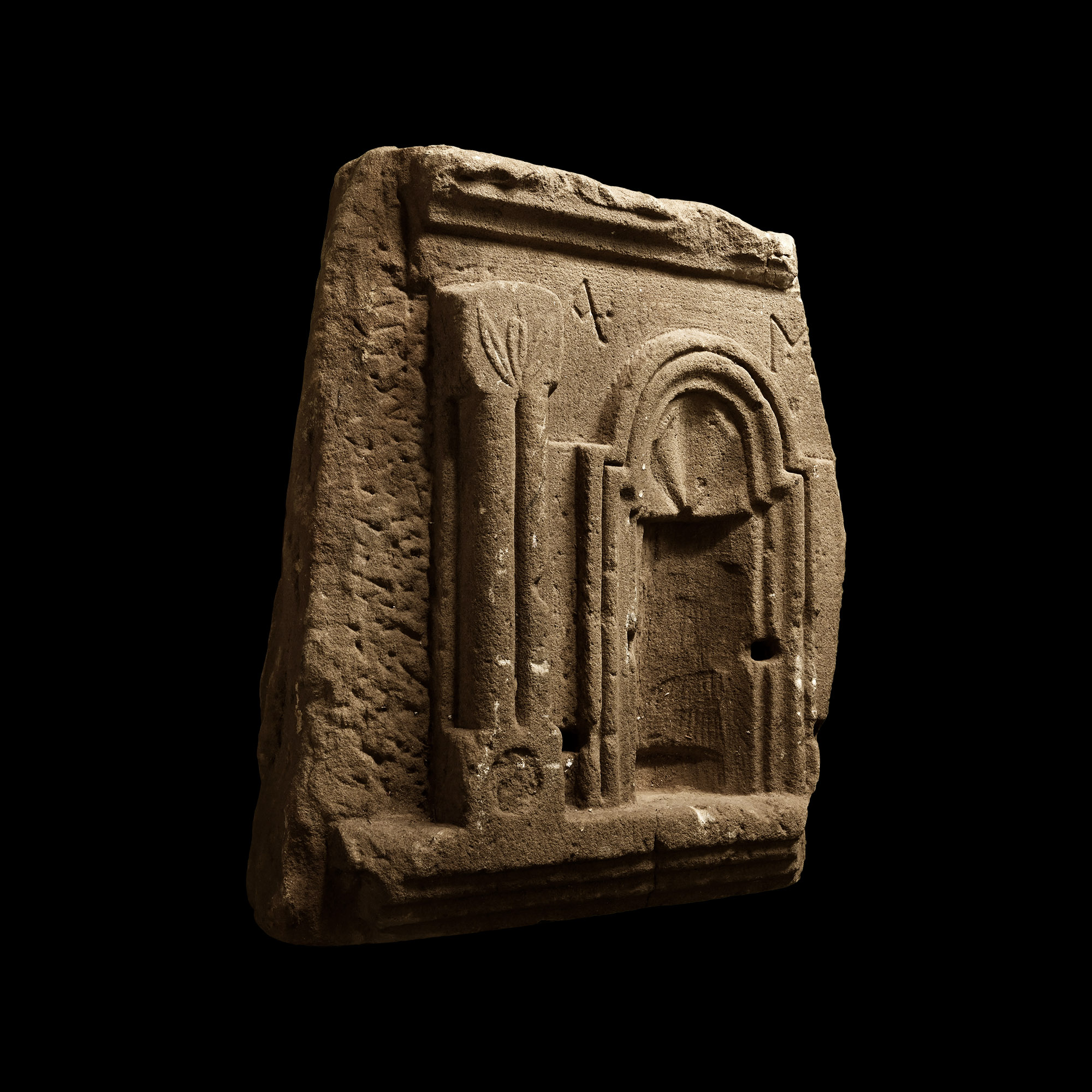
Romano-Egyptian Limestone Funerary Niche
COPTIC, 5TH-6TH CENTURY A.D.
19 1/4 in. (57.55 kg, 49 cm).
Carved architectural block fragment comprising: a shallow niche with arched top and parallel sides, with concentric mouldings to create a reveal and ledge below to accept offerings; horizontal tiered base; attachment sockets for two figurines (absent) flanking the niche; to left, a column modelled in the half-round with two parallel vertical stems, shallow roundel to the base and stylised foliage at the top; pediment above with scooped profile; above each figurine recess an incised initial, 'A' and 'M'; facing surface keyed for plaster finish.
ProvenanceFrom the estate and private collection of Matthew Upham (1962-2025), an antiques trader from Budleigh Salterton, Devon, UK.
Acquired at an estate sale at auction.
Property of a Cambridgeshire, UK, gentleman.
Accompanied by an academic report by Dr Raffaele D'Amato.
This lot has been checked against the Interpol Database of stolen works of art and is accompanied by a search certificate number no. 13297-255939.
Cf. Crum, M.W.E., Catalogue général des antiquités égyptiennes du Musée du Caire, nos.8001-8741; Coptic Monuments, Le Caire, 1902, pls.II (8414); VII (8434), XLIX-LII, LIII, LIV (complete with the image of ‘orans’) for similar monuments; Atalla, N.S., Coptic Art, Sculptures, Architecture, L'Art Copte, II, Cairo, 1989, figs. pp.35, 45, for similar carvings; Wamser, L., Die Welt von Byzanz - Europas Östliches Erbe, München, 2004, items 870-872, for similar niches.
FootnotesIn the Christian Roman Empire, the stelae in the form of aedicula, which could be funerary monuments with crosses or the images of the deceased, or devotional niches with images of saints, appear to be independent sculptures. These stelae consisted of a rectangular body surmounted by a circular arch or trapezoidal structure. At the centre of the niche, the deceased was often depicted full-length, in a praying position (orans). Devotional stelae were also placed inside a church or shrine, with images of the Virgin and Child, or saints.
CONDITIONTimeLine Auctions follows a vetting process to ensure the authenticity and legality of all items, reinforcing our commitment to integrity and responsible trading. Each antiquity, antique, and coin lot undergoes thorough examination by a vetting committee of at least ten external specialists, professional trade association members, scientists, and archaeologists: Our Vetting Process
AUCTIONS:
TimeLine is a leading auction house specialising in antiquities, ancient art, collectables, natural history, coins, medals, and books. Our auctions offer museums, collectors, historians, and enthusiasts the opportunity to acquire unique and historically significant pieces.
-
.jpg)
Egyptian Steatite Bust in a Gold Pendant
Ptolemaic-Roman Period, 2nd century B.C.-2nd century A.D.Sold for (Inc. bp): £1,300
Fragment of a carved panel or vessel depicting a female bust, possibly a queen or Isis, modelled in half-round relief, wearing a loosely draped tunic, a tiered wesekh collar, and a heavy curled, tripartite wig; reverse with lotus flower ropework and other ornamentation; mounted in a later gold suspension frame. 8.75 grams, 38 mm
Private collection, Southern France, 1970s. Acquired on the English art market.
This fragment likely originates from an elaborately decorated bowl belonging to a specific group thought to have been made in Alexandria (cf. Page-Gasser, M., Wiese, A.B., Ägypten: Augenblicke der Ewigkeit, Mainz, 1997, for a complete example). The purpose of these bowls is unclear, but they may have been used as votive offerings in sanctuaries. -
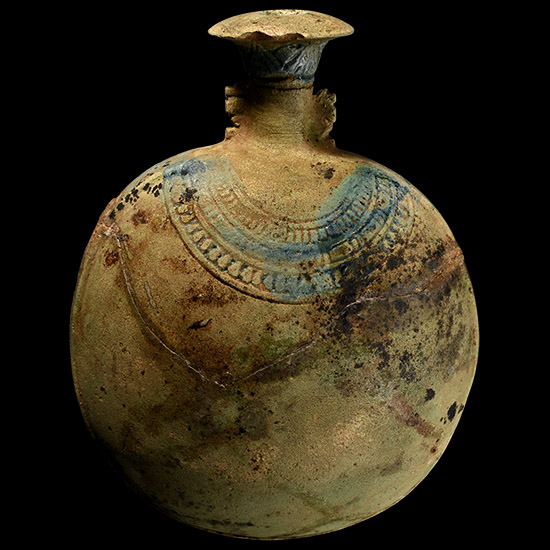
Egyptian Glazed Faience New Year Flask with Baboons
Late Period, 664-332 B.C.Estimate: £2,000 - 3,000 (+bp*)
Opening Bid: £1,000
Lentoid body with segmented collars and blue detailing around the shoulders, neck with papyrus stalk detailing and a domed rim; addorsed stylised baboons flanking the neck. 263 grams, 16 cm
Acquired on the UK art market, 1990s. Private collection, New York, USA. This lot has been checked against the Interpol Database of stolen works of art and is accompanied by search certificate number no.13350-255452.
The concept of renewal is expressed through the form, decoration, and inscriptions of this type of flask. Their rounded bodies evoke the sun disc, symbolising daily rebirth, while the squatting baboons flanking the mouth allude to those that greeted the rising sun each morning. The blue collar decoration, including floral motifs, as seen here, symbolises the renewal of the agricultural cycle through the annual Nile inundation. The papyrus-capital spout reinforces this theme of regeneration. Although traditionally dated exclusively to the 26th Dynasty, examples recovered from Late Period and early Ptolemaic contexts indicate that their popularity actually endured for several centuries. -
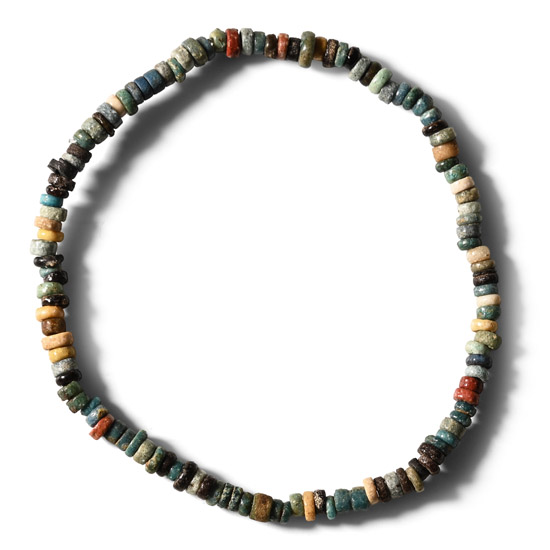
Egyptian Faience Mummy Bead Bracelet
Late Period, 664-332 B.C.Sold for (Inc. bp): £182
Composed of blue, cream, black, green and red annular beads, restrung with an elasticated string. 2.23 grams, 18 cm
Ex Ancient Art Shop, Windsor, UK, 1990s. Ex private collection.
