
Loading, please wait...
LOT 0477
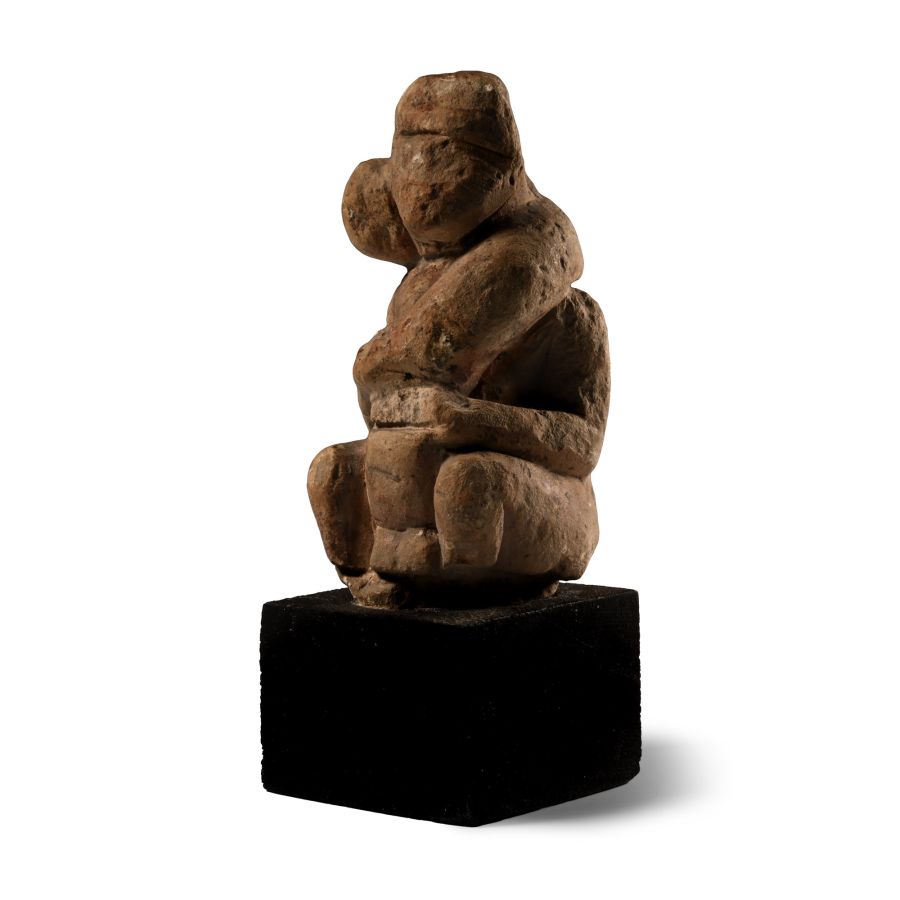
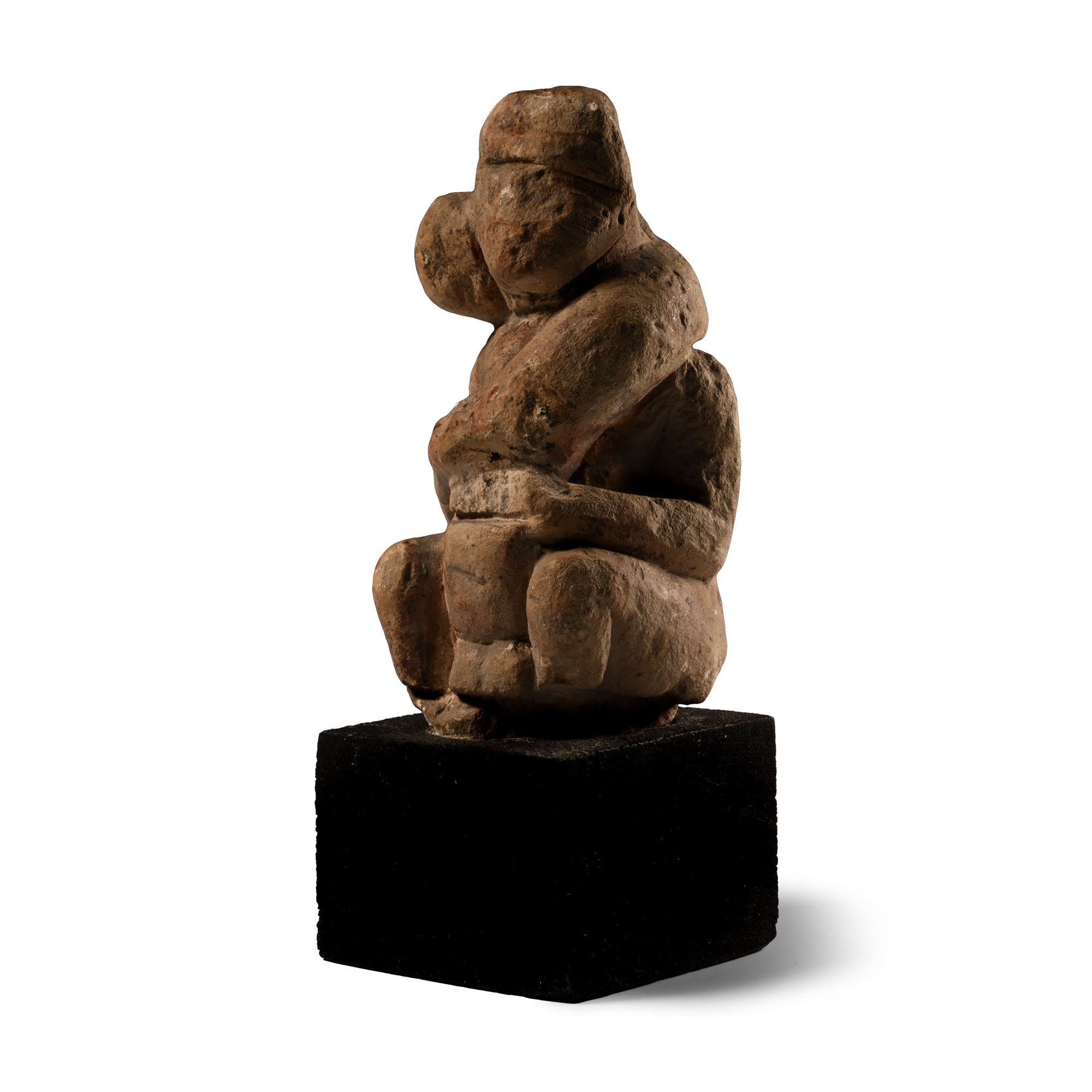
Romano-Egyptian Limestone Figure of a Seated Male with Gigantic Phallus
1ST CENTURY B.C.-2ND CENTURY A.D.
4 in. (5 in.) (207 grams, 10.1 cm (235 grams total, 12.8 cm including stand)).
Modelled in the round seated figure with phallus slung over his shoulders; mounted on a custom-made stand. [No Reserve]
ProvenanceThe Erotica Collection Christian von Faber-Castell, Küsnacgt ZH, Switzerland, since the late 1970s.
This lot is accompanied by an illustrated lot declaration signed by the Head of the Antiquities Department, Dr Raffaele D’Amato.
Christian von Faber-Castell (born 1950) is a renowned German entrepreneur and art collector, best known as a member of the prominent Faber-Castell family, famed for their iconic writing instruments. A passionate advocate for art and culture, Christian von Faber-Castell curated an extensive and diverse private collection of erotica, spanning centuries and cultures. His collection reflects a deep appreciation for the interplay of beauty, sensuality, and artistic expression, bringing together rare and unique works that explore themes of intimacy and human connection. Pieces from this collection have been featured in notable exhibitions and are celebrated for their artistic and historical significance. This offering represents a rare opportunity to acquire works from one of the most fascinating and eclectic private collections of its kind.
CONDITIONTimeLine Auctions follows a vetting process to ensure the authenticity and legality of all items, reinforcing our commitment to integrity and responsible trading. Each antiquity, antique, and coin lot undergoes thorough examination by a vetting committee of at least ten external specialists, professional trade association members, scientists, and archaeologists: Our Vetting Process
AUCTIONS:
TimeLine is a leading auction house specialising in antiquities, ancient art, collectables, natural history, coins, medals, and books. Our auctions offer museums, collectors, historians, and enthusiasts the opportunity to acquire unique and historically significant pieces.
LOT 0477
Romano-Egyptian Limestone Figure of a Seated Male with Gigantic Phallus
Sold for (Inc. bp): £72
-
Egyptian Miniature Stone Alabastron
Late Old Kingdom, circa 2300 B.C.Sold for (Inc. bp): £260
The body with rounded shoulders, convex outer face and pointed base, everted rim; accompanied by a custom-made display base. 34.2 grams, 48 mm high (48.9 grams, 55 mm including stand)
Acquired in Europe before 1994. European collection. This lot is accompanied by an illustrated lot declaration signed by the Head of the Antiquities Department, Dr Raffaele D’Amato. -
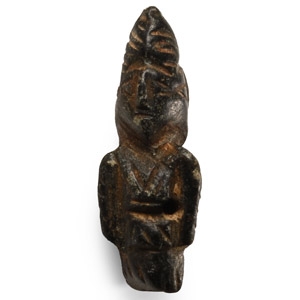
Phoenician Steatite Multi-Bodied Astarte Amulet
Circa 6th century B.C.Estimate: £100 - 140 (+bp*)
Opening Bid: £50
Carved as three radiating figures with conical headdress; the hair, limbs and other features shared by the three separate personae; pierced for suspension. 1.70 grams, 23 mm
From the collection of Mr S.M., London, UK, formed from 1969-1999. This lot is accompanied by an illustrated lot declaration signed by the Head of the Antiquities Department, Dr Raffaele D’Amato. -
.jpg)
Egyptian Limestone Relief with the Figure of the God Hapi
Late-Ptolemaic Period, circa 664-30 B.C.Sold for (Inc. bp): £3,640
A relief depicting the upper half of the Nile divinity facing right, sporting a slender beard with curved end, wearing a tripartite wig surmounted by a floral crown in the form of a clump of papyrus with bent buds, and an elaborate multi-strand beaded broad collar; the pendulous breast characteristic of this type of figure; with both upper arms angled right towards traces of a libation vase and possible stem of a lotus flower; traces of a vertical register line behind the figure’s head; mounted on a custom-made display stand. 10.85 kg total, 38.5 cm high including stand
From the estate of the late designer Anthony Powell (1935-2021). This lot has been checked against the Interpol Database of stolen works of art and is accompanied by search certificate no.12497-230640. This lot has been cleared against the Art Loss Register database, and is accompanied by an illustrated lot declaration signed by the Head of the Antiquities Department, Dr Raffaele D’Amato.
Representations of fecundity figures can be traced from the Old Kingdom through to the Roman Period. These figures serve as divine embodiments of Egypt’s fertile productivity and are commonly depicted in series on the lower registers of temple walls, symbolising the fertility of each province. Historically, they have often been mistakenly referred to as the ‘Nile God’; however, the term Hapi, which sometimes identifies these figures, actually refers to the inundation rather than the River Nile itself, highlighting the source of Egypt’s fertility.
