
Loading, please wait...
LOT 0045
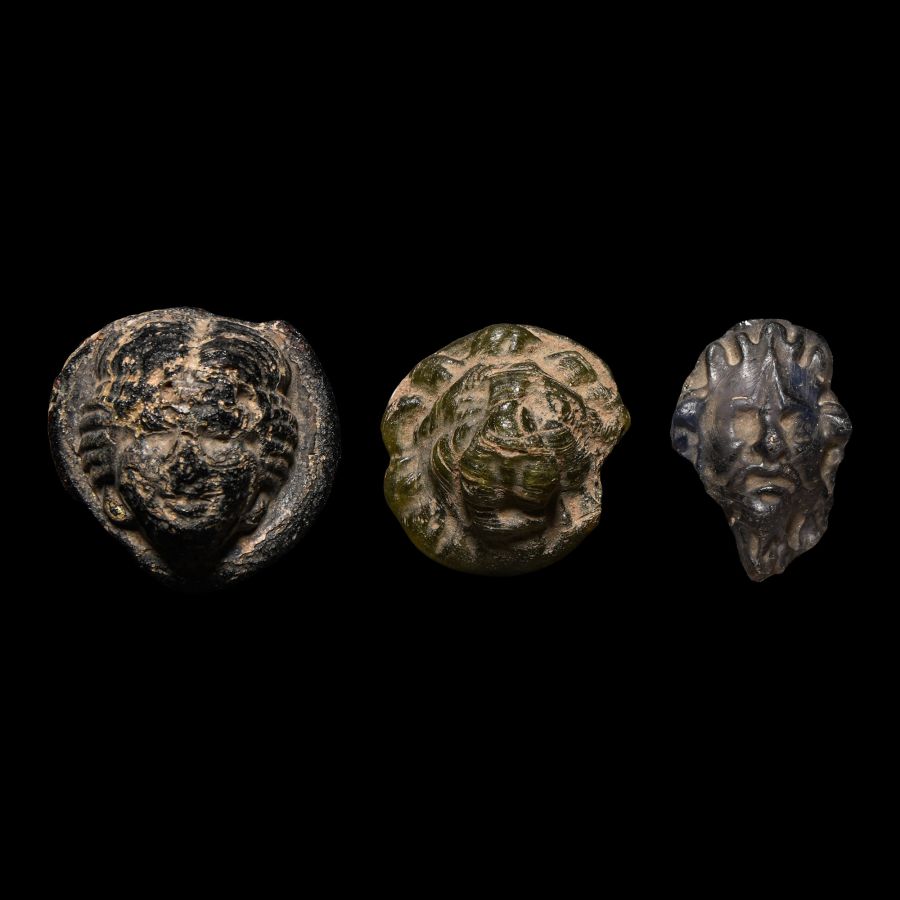
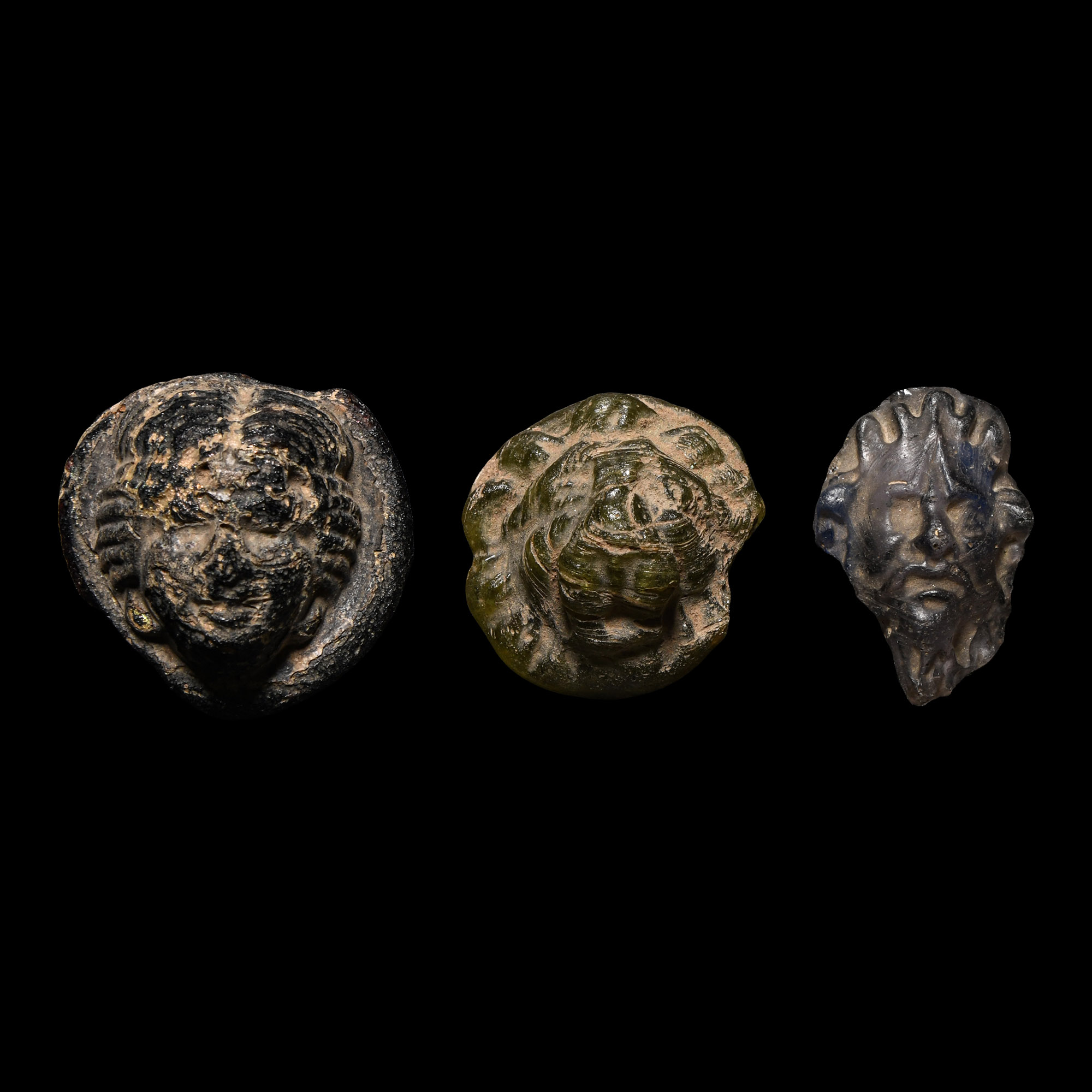
Romano-Egyptian Glass Head Collection
ROMAN PERIOD, 30 B.C.-323 A.D.
1 1/4 - 1 3/8 in. (61 grams total, 32-36 mm).
Three glass faces including a lion head and two male portrait heads. [3, No Reserve]
ProvenanceAcquired 1970s-1996.
Property of a North American collector.
London collection, 2016.
Cf. Andrews, C., Amulets of Ancient Egypt, London, 1994, fig.15.
FootnotesThese appear to have been blown or pressed when semi-molten into a hollowed reverse-shaped mould form.
CONDITIONTimeLine Auctions follows a vetting process to ensure the authenticity and legality of all items, reinforcing our commitment to integrity and responsible trading. Each antiquity, antique, and coin lot undergoes thorough examination by a vetting committee of at least ten external specialists, professional trade association members, scientists, and archaeologists: Our Vetting Process
AUCTIONS:
TimeLine is a leading auction house specialising in antiquities, ancient art, collectables, natural history, coins, medals, and books. Our auctions offer museums, collectors, historians, and enthusiasts the opportunity to acquire unique and historically significant pieces.
-
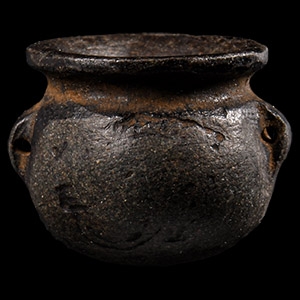
Egyptian Hardstone Miniature Vessel
Late Period, 664-332 B.C.Sold for (Inc. bp): £208
Carved storage vessel with everted rim and strap handles. 5.3 grams, 18 mm
Acquired 1970s-1996. Property of a North American collector. London collection, 2016. -
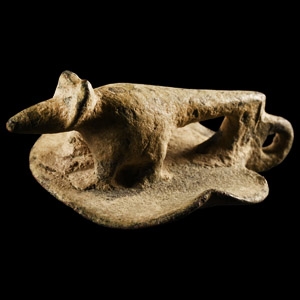
Romano-Egyptian Bronze Shrew Balsamarium Lid
Roman Period, 30 B.C.-323 A.D.Estimate: £200 - 300 (+bp*)
Opening Bid: £111
Modelled in the round with naturalistic detailing, ears upright and tail straight, on a circular lid with hinge loop to the rear, possibly from a balsamarium or other high-status container. 19.4 grams, 43 mm
‘The Ancient Menagerie Collection’ formerly the property of a Cambridgeshire lady, collected since the 1990s and acquired from auctions and dealers throughout Europe and the USA, now ex London collection. -
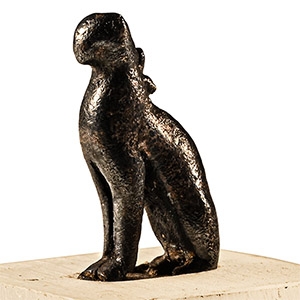
Egyptian Silver Bastet Cat Goddess
Late Period, 664-332 B.C.Estimate: £800 - 1,000 (‡+bp*)
Opening Bid: £400
Modelled seated on an oblong base; accompanied by a custom-made display base. 1.27 grams, 13 mm high (6.02 grams total, 33 mm including stand)
Ex Mrs Zimmermann Koutoulakis, December 1977. Ex R. Liechti (1934-2010) Geneva, Switzerland, collection between 1950-1990s.
