
Loading, please wait...
LOT 0591
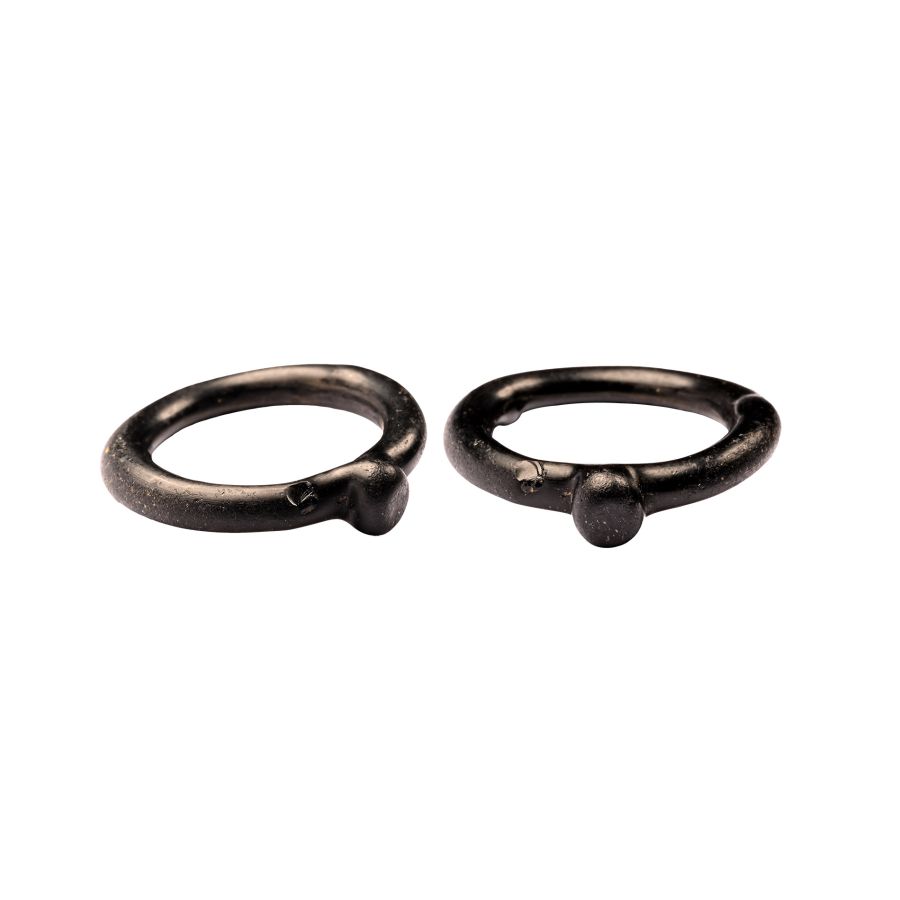
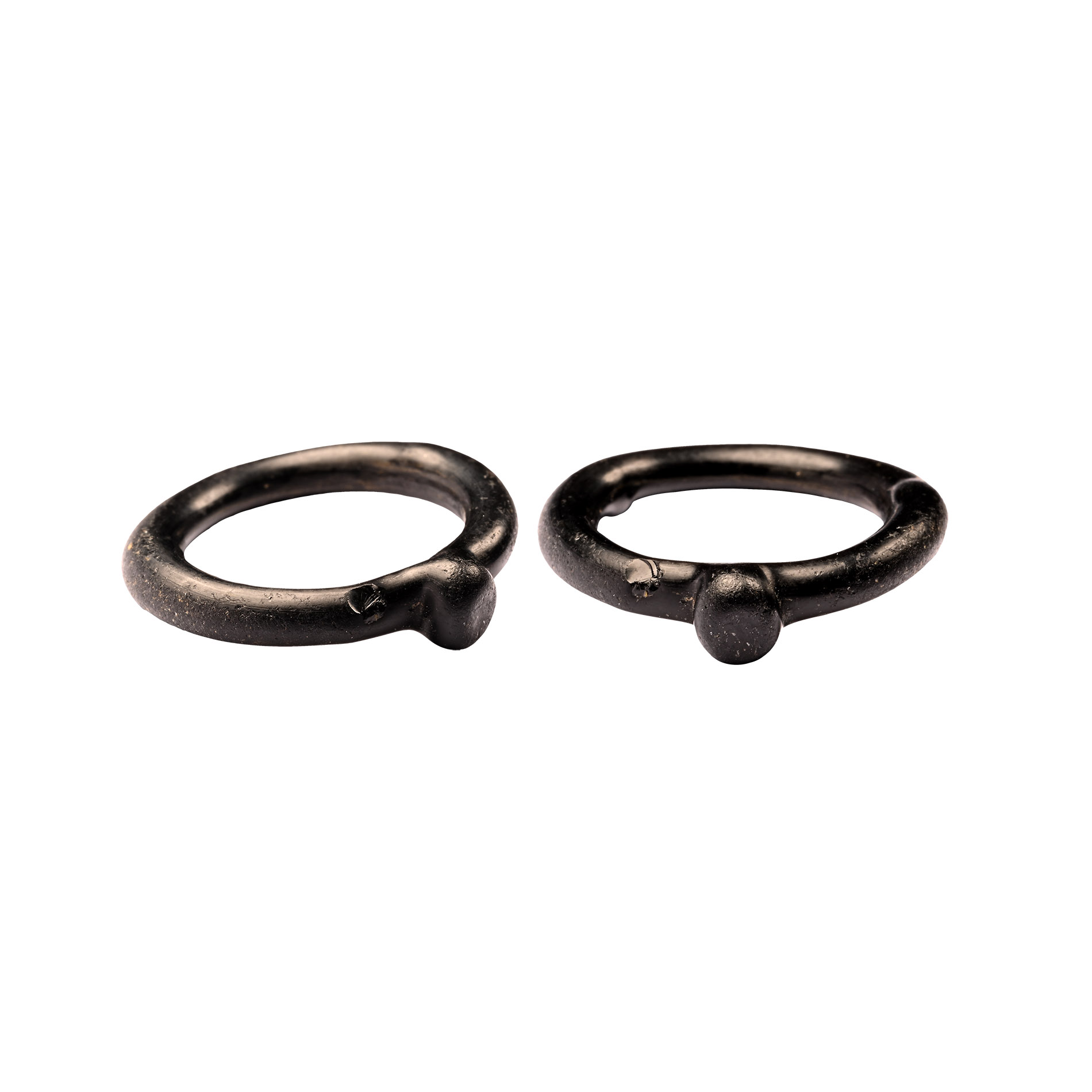
Romano-Egyptian Glass Finger Ring
1ST CENTURY B.C.-1ST CENTURY A.D.
3/4 in (1.01 grams, 21.56 mm overall, 14.33 mm internal diameter (approximate size British F 1/2, USA 3, Europe 4.3, Japan 4)).
An opaque black glass finger ring composed of a hoop of sub-circular cross-section and integral oval knop. [No Reserve]
ProvenancePrivate collection formed since in the 1940s.
UK art market.
Property of an Essex gentleman.
TimeLine Auctions follows a vetting process to ensure the authenticity and legality of all items, reinforcing our commitment to integrity and responsible trading. Each antiquity, antique, and coin lot undergoes thorough examination by a vetting committee of at least ten external specialists, professional trade association members, scientists, and archaeologists: Our Vetting Process
AUCTIONS:
TimeLine is a leading auction house specialising in antiquities, ancient art, collectables, natural history, coins, medals, and books. Our auctions offer museums, collectors, historians, and enthusiasts the opportunity to acquire unique and historically significant pieces.
-
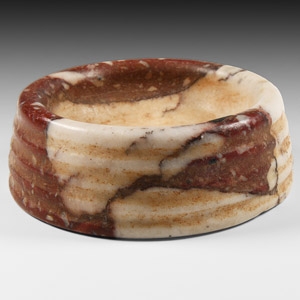
Roman Veined Porphyry Dish
1st-2nd century A.D.Sold for (Inc. bp): £494
A shallow mottled 'red' and 'white' marble dish, possibly porphyry marble, with gently sloping gusseted sidewall. 134 grams, 65 mm wide
French collection, 1960s-early 2000s. From an important Paris gallery, France. -
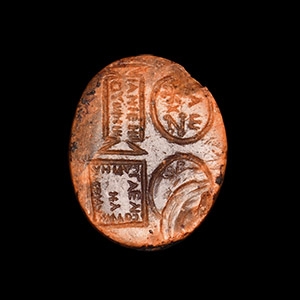
Roman Epigraphic Gemstone with Symbols
4th-5th century A.D.Sold for (Inc. bp): £910
An epigraphic gem of oval shape, with a smooth surface on one side and inscriptions of a magical-Christian nature engraved in tondos and tabulae ansatae on the other side, one bearing the Greek letters Α and ω (Alpha and Omega) above the letters I and X. 0.84 grams, 17 mm
Acquired before 1988. Ex family collection, by descent, Geneva.
The letter Alfa and Omega (A W) are a clear link with a Christian cult, especially in this case in which the two letters are incised over the other two letter Iota and Chi IX, initials of the Greek Iesus Xριστός 'Christ'. The letters Alpha and Omega are symbols of eternity of the Divine Figure (I am the Alpha and the Omega, the First and the Last, the Beginning and the End, Revelation, 22.13). -
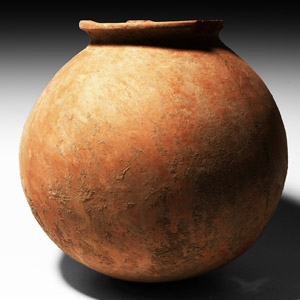
Roman Redware Jar
1st-4th century A.D.Sold for (Inc. bp): £117
A bulbous redware jar with short neck and everted rim; rim chipped. 2.2 kg, 24 cm high
Acquired 1980-2015. Ex Abelita family collection.
