
Loading, please wait...
LOT 0453
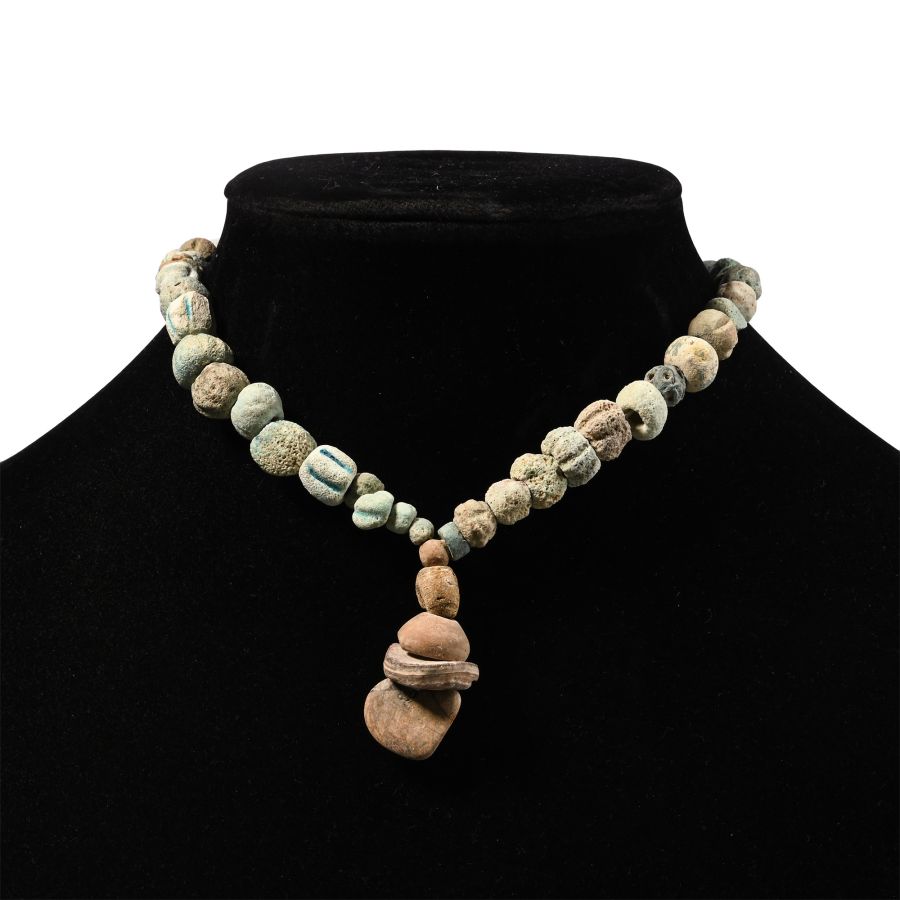
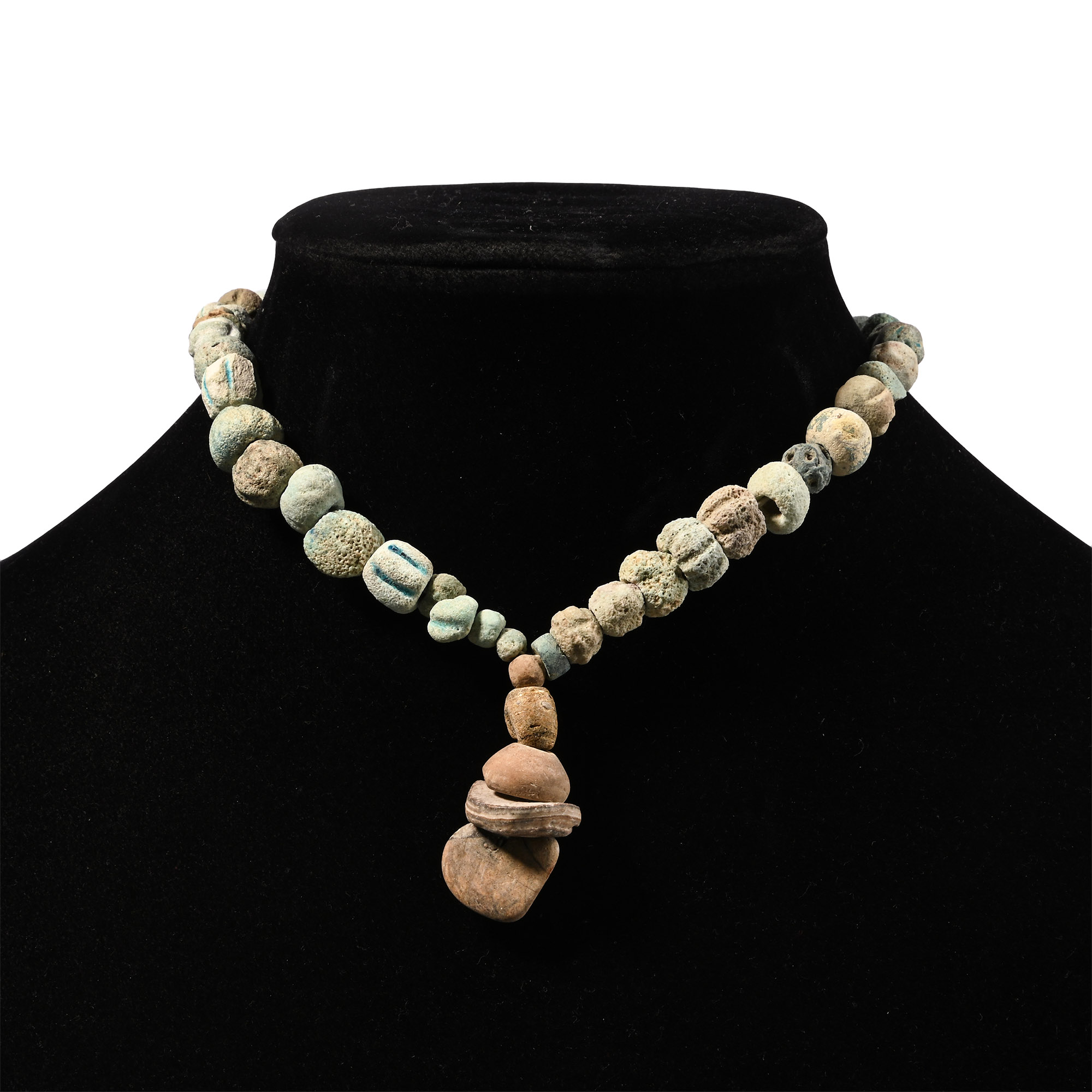
Romano-Egyptian Faience and Other Bead Necklace String
ROMAN PERIOD, 30 B.C.-323 A.D.
13 1/4 in. (34 grams, 33.7 cm).
Composed mainly of melon, oblate and spherical beads, with two large discoid beads as a central feature, restrung. [No Reserve]
ProvenanceEx Ancient Art Shop, Windsor, UK, 1990s.
Ex private West County, UK, collection.
TimeLine Auctions follows a vetting process to ensure the authenticity and legality of all items, reinforcing our commitment to integrity and responsible trading. Each antiquity, antique, and coin lot undergoes thorough examination by a vetting committee of at least ten external specialists, professional trade association members, scientists, and archaeologists: Our Vetting Process
AUCTIONS:
TimeLine is a leading auction house specialising in antiquities, ancient art, collectables, natural history, coins, medals, and books. Our auctions offer museums, collectors, historians, and enthusiasts the opportunity to acquire unique and historically significant pieces.
-
.jpg)
Egyptian Steatite Scarab Collection
Hyksos Period and New Kingdom, 18th-13th century B.C.Sold for (Inc. bp): £910
Each with a domed carapace, two with a figure on the underside surrounded by hieroglyphs, two inscribed with hieroglyphic signs. 15 grams total, 18-24 mm
Acquired in Europe before 1992. Ex private collection, UK.
The term ‘Hyksos’ comes from the Egyptian phrase ‘heka khasuwt’, which means ‘rulers of foreign (hill) lands’. The 15th Dynasty was governed by these Hyksos during the Second Intermediate Period. They were not of Egyptian origin but were believed to be Canaanites, and their names were carved on their scarabs. -
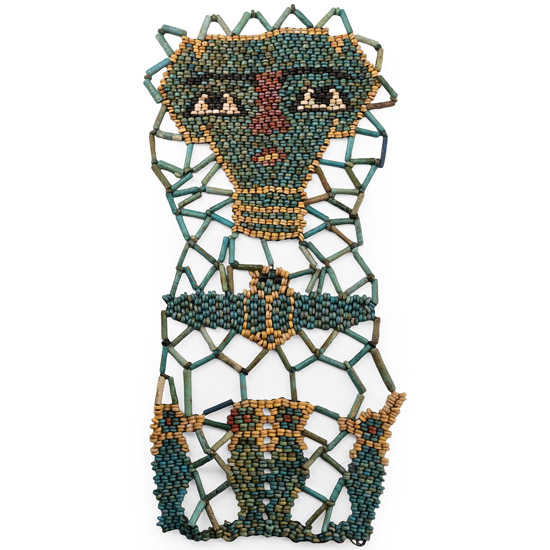
Egyptian Faience Mummy Bead Mask
Late Period-Ptolemaic Period, circa 664-30 B.C.Sold for (Inc. bp): £546
Openwork beaded panel depicting a mummy mask with tripartite beard, a winged scarab below with the Four Sons of Horus, Hapy, Imsety, Qebehsenuef, and Duamutef below; restrung. 40.7 grams, 22 cm
From the collection of Mariaud de Serres, Paris, France, 1980s-1990s. Accompanied by a previously illustrated catalogue card with provenance. -
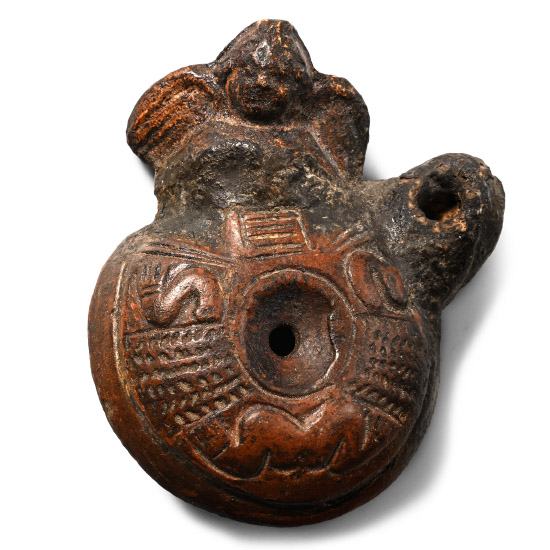
Romano-Egyptian Terracotta Oil Lamp with Eros
Roman Period, 1st-3rd century A.D.Sold for (Inc. bp): £228
Domed body with a small filler hole surrounded by bands of herringbone decoration and zoomorphic motifs, a projecting winged bust of Eros flanking the nozzle, inked collector's number '179' on the base. 68 grams, 85 mm
Ex important German collection, 1960-1990.
