
Loading, please wait...
LOT 0712
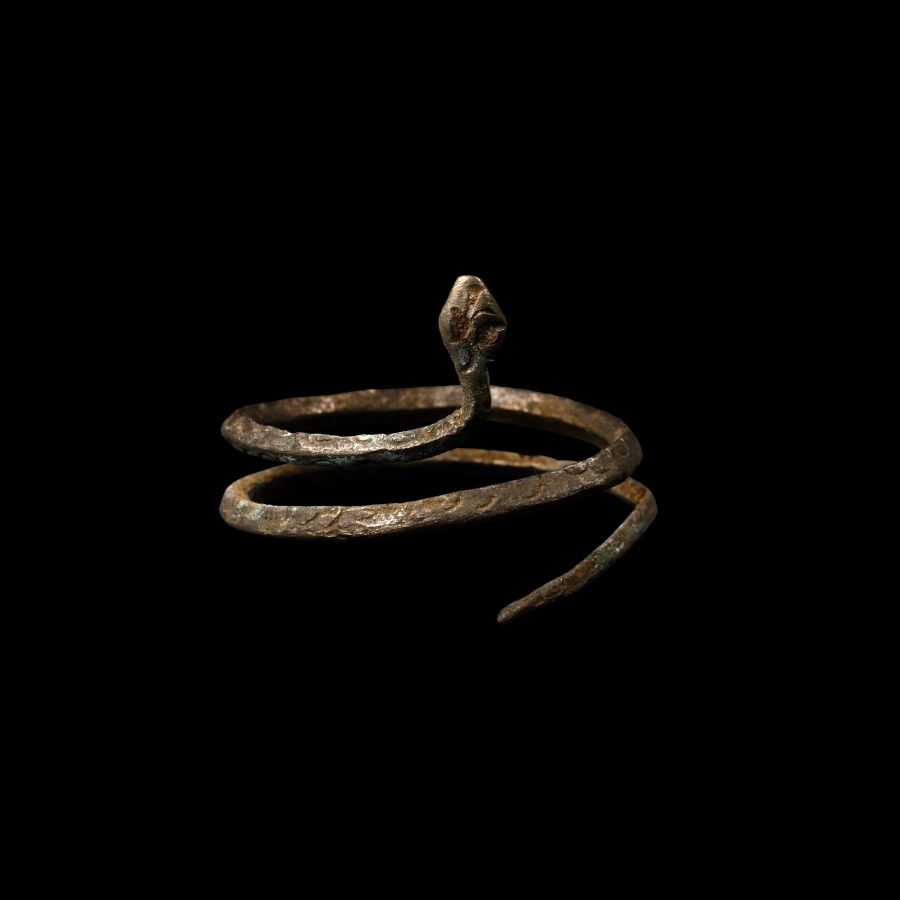
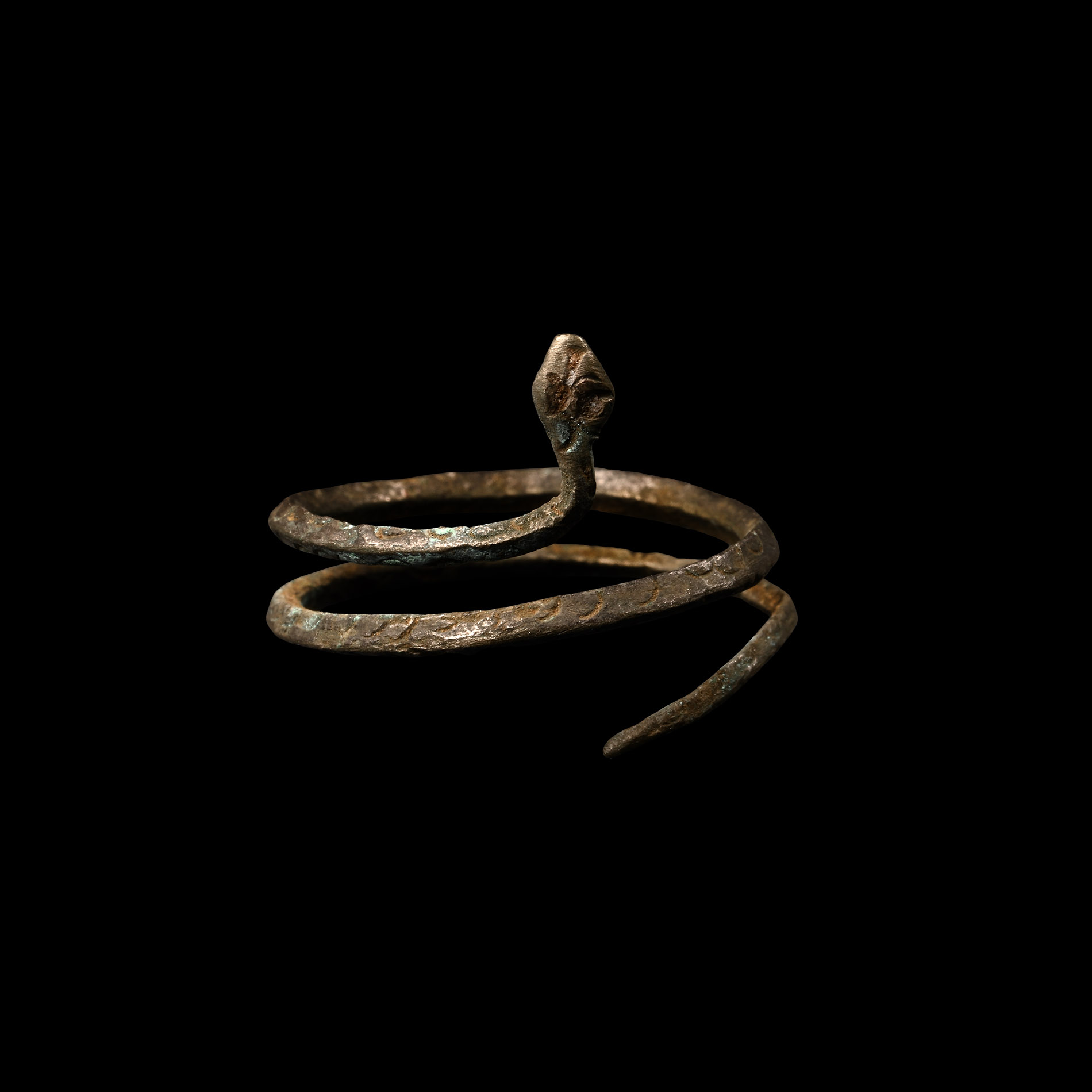
Romano-Egyptian Coiled Snake Ring
1ST CENTURY B.C.-1ST CENTURY A.D.
1 in. (2.40 grams, 24.19 mm overall, 19.91 mm internal diameter (approximate size British R, USA 8 1/2, Europe 18 3/4, Japan 18)).
A zoomorphic copper-alloy ring composed of a slender, square-section coiled body with one tapering terminal and one terminal formed as a stylised snake's head with simple punched detailing. [No Reserve]
ProvenanceAcquired before 2000.
From the collection of a European gentleman living in the UK.
TimeLine Auctions follows a vetting process to ensure the authenticity and legality of all items, reinforcing our commitment to integrity and responsible trading. Each antiquity, antique, and coin lot undergoes thorough examination by a vetting committee of at least ten external specialists, professional trade association members, scientists, and archaeologists: Our Vetting Process
AUCTIONS:
TimeLine is a leading auction house specialising in antiquities, ancient art, collectables, natural history, coins, medals, and books. Our auctions offer museums, collectors, historians, and enthusiasts the opportunity to acquire unique and historically significant pieces.
-
.jpg)
Roman Magical Gnostic Gemstone
2nd-3rd century A.D.Estimate: £1,000 - 1,400 (+bp*)
Opening Bid: £550
An ellipsoid bifacial haematite gemstone with intaglio scenes: obverse with a reaper holding a sickle and cutting down a crop; reverse with a bird, wings spread beneath a glyph. 7.37 grams, 26.8 mm
Acquired in the late 1980s-early 1990s. Important North West London collection. -
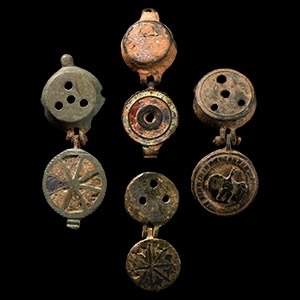
Roman Seal Box Collection
2nd-3rd century A.D.Estimate: £500 - 700 (+bp*)
Opening Bid: £250
A mixed group of bronze seal boxes and parts, one with a spread-eagle motif in high-relief. 30.7 grams total, 25-46 mm
Acquired in the late 1980s-early 1990s. Important North West London collection. -
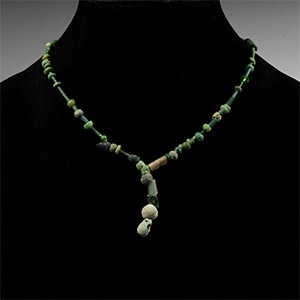
Roman and Other Bead Necklace
6th-4th century B.C. and laterSold for (Inc. bp): £39
A restrung group of mainly glass and faience beads of various types, sizes and dates, including tubular, facetted, spherical, coin, biconical and other types, in various shades of green. 10.5 grams, 70.5 cm long
Acquired 1980-2015. Ex Abelita family collection.
