
Loading, please wait...
LOT 0593
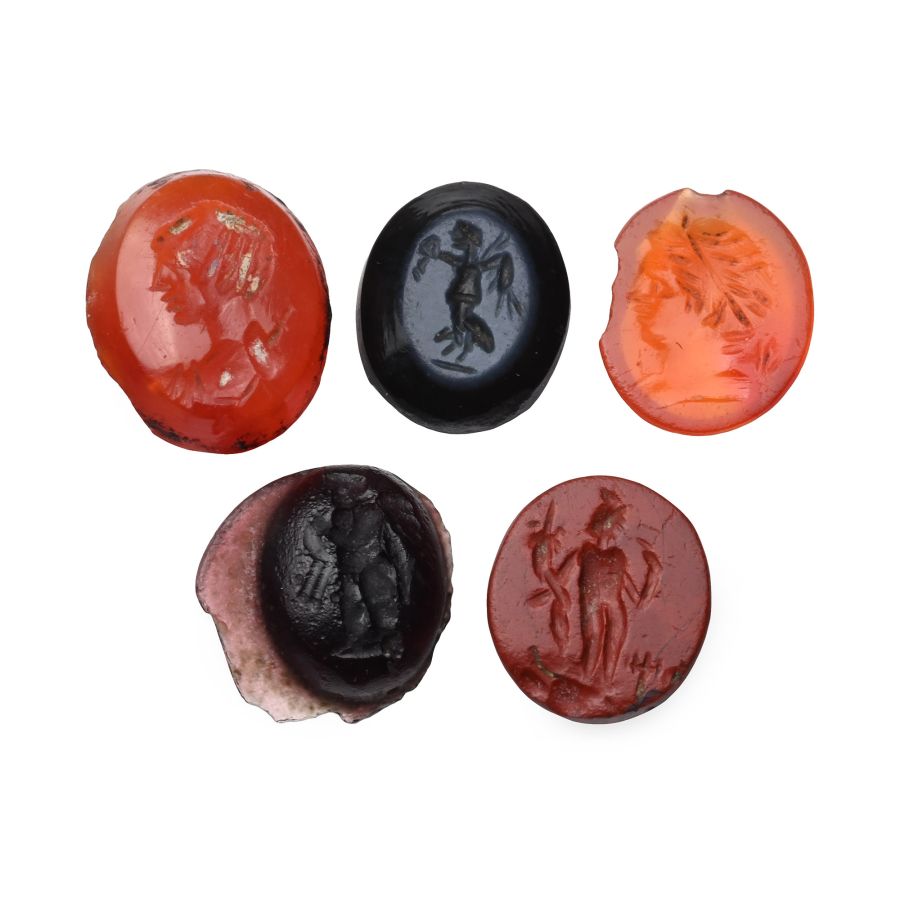
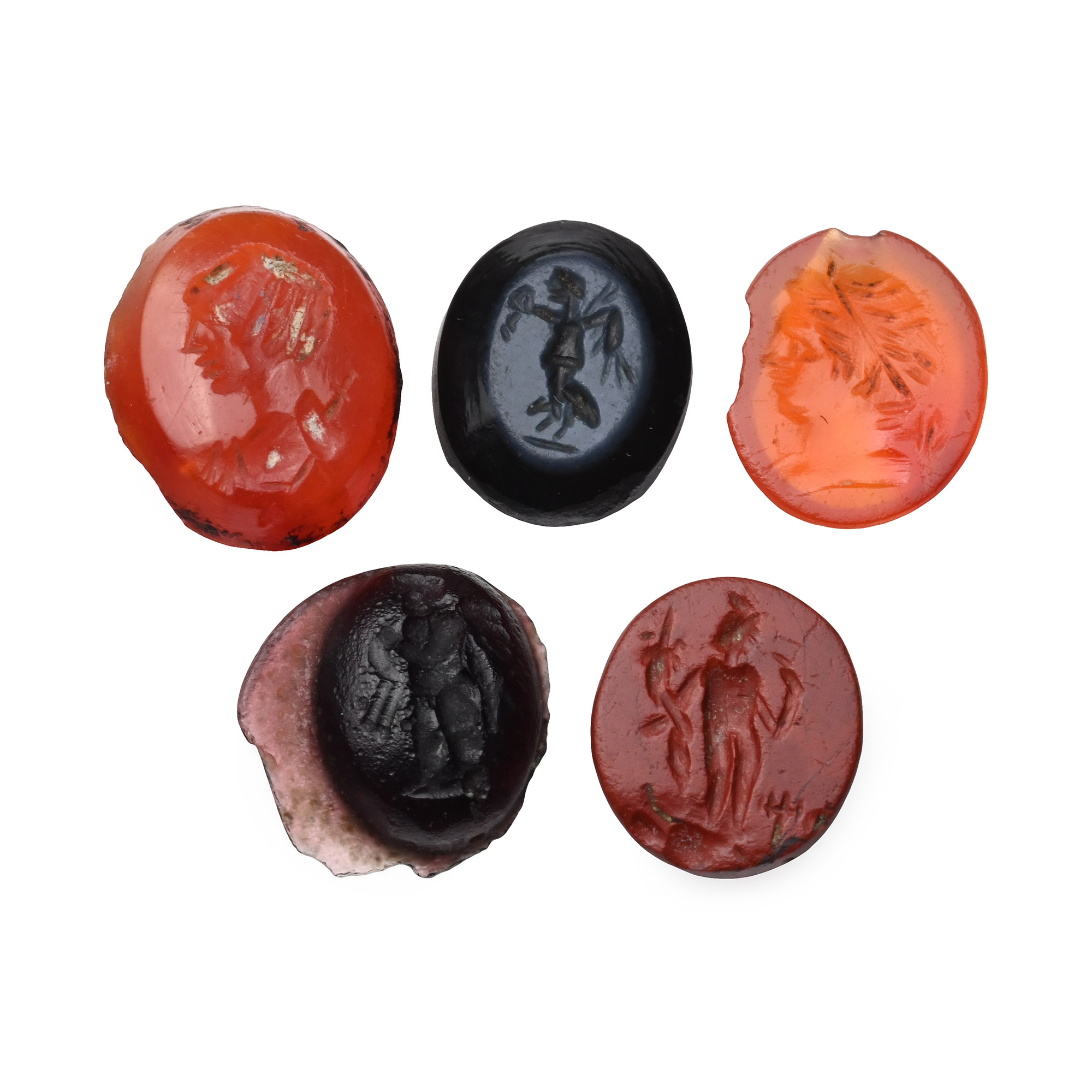
Romano-Egyptian Carved Gemstone Collection
1ST-3RD CENTURY A.D.
3/8 in. (1.86 grams total, 9-11 mm).
Comprising: an oval intaglio with a female profile bust; a red jasper intaglio with a standing figure holding a cornucopia; a translucent carnelian intaglio with a profile bust; a glass intaglio with a putto; a banded agate intaglio with a winged figure. [5, No Reserve]
ProvenanceUK private collection assembled 1970s-90s, and thence to the liquidated state of above.
CONDITIONTimeLine Auctions follows a vetting process to ensure the authenticity and legality of all items, reinforcing our commitment to integrity and responsible trading. Each antiquity, antique, and coin lot undergoes thorough examination by a vetting committee of at least ten external specialists, professional trade association members, scientists, and archaeologists: Our Vetting Process
AUCTIONS:
TimeLine is a leading auction house specialising in antiquities, ancient art, collectables, natural history, coins, medals, and books. Our auctions offer museums, collectors, historians, and enthusiasts the opportunity to acquire unique and historically significant pieces.
LOT 0593
Romano-Egyptian Carved Gemstone Collection
Estimate £400 - 600€460 - 700 (for guidance only)$540 - 810 (for guidance only)
Opening Bid
£5 (EUR 6; USD 7) +BP*
-
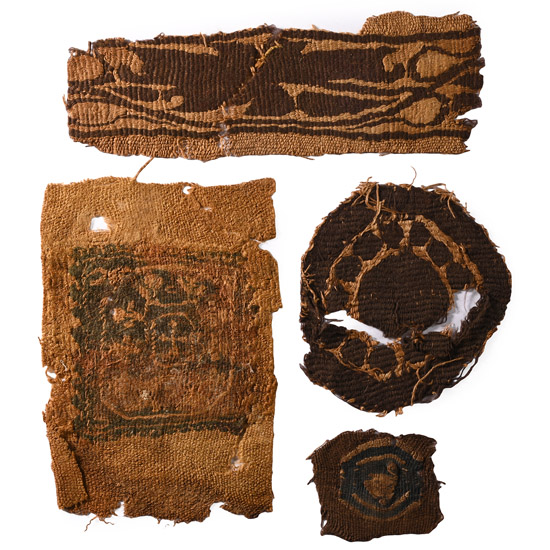
Egyptian Coptic Tunic Textile Fragments of Orbiculi, Segementa and Tablia with Animals, Geometric and Cross Decoration
Circa 4th-7th century A.D.Estimate: £80 - 100 (+bp*)
Opening Bid: £5
Comprising: an orbiculus in purple wool and coarse linen, S-torsion; a tabula in purple wool and coarse linen, on a brown linen background, S-torsion, embroidered with a central cross, the borders decorated with meanders; a broad segmentum in purple wool and coarse linen, on a brown linen background, S-torsion; a small orbiculus with vegetal ornaments. 11 grams total, 5.2-18.5 cm
Acquired 1970s-1996. Property of a North American collector. London collection, 2016.
The tabula, or tablion, was a square embroidery decorating tunics or mantles. The Christian elements, like the cross at the centre of our tabula, began to decorate garments from the 4th century onwards. -
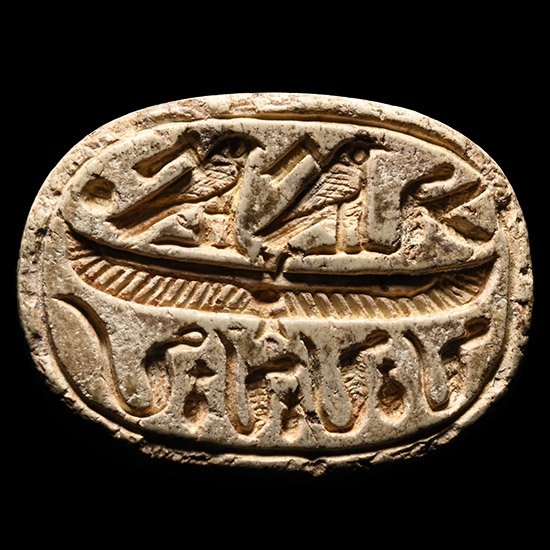
Egyptian Steatite Scarab with Religious Motifs
Late Period, 664-332 B.C.Estimate: £200 - 300 (‡+bp*)
Opening Bid: £100
Plano-convex in section, with a segmented upper face; the underside features an incuse design of a winged scarab, two perching Horus falcons, and a winged uraeus above, with a frieze of four cobras interspersed with three nefer signs below; supplied with an impression. 3.53 grams, 19 mm
Acquired from Derek Content, 24 June 1975. Private collection of Kal Noselson, New York, acquired between 1976 and the late 1990s; thence by descent. Accompanied by an original handwritten invoice from Derek Content, dated 24 June 1975. -
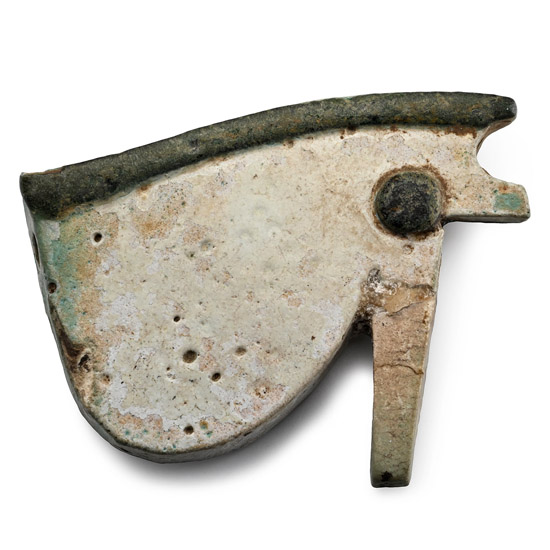
Large Egyptian Faience Eye of Horus Amulet
Third Intermediate Period, circa 1069-664 B.C.Estimate: £200 - 300 (+bp*)
Opening Bid: £100
Sizeable wedjat-eye amulet with applied black detailing to the pupil and brow. 16.5 grams, 50.4 mm
with Archaeologia, Switzerland, before 1983. Ex private North American collection. London private collection, 2016.
The wedjat-eye amulet symbolises the healed eye of the god Horus, representing both human and falcon elements. The name wedjat in ancient Egyptian means ‘the one that is sound.’ According to Egyptian mythology, Horus' eye was wounded or taken by the god Seth and later restored by Thoth. The wedjat-eye amulet was believed to protect its wearer and confer qualities of recovery and regeneration. It was highly popular and was used by both the living and the dead.
