
Loading, please wait...
LOT 0423
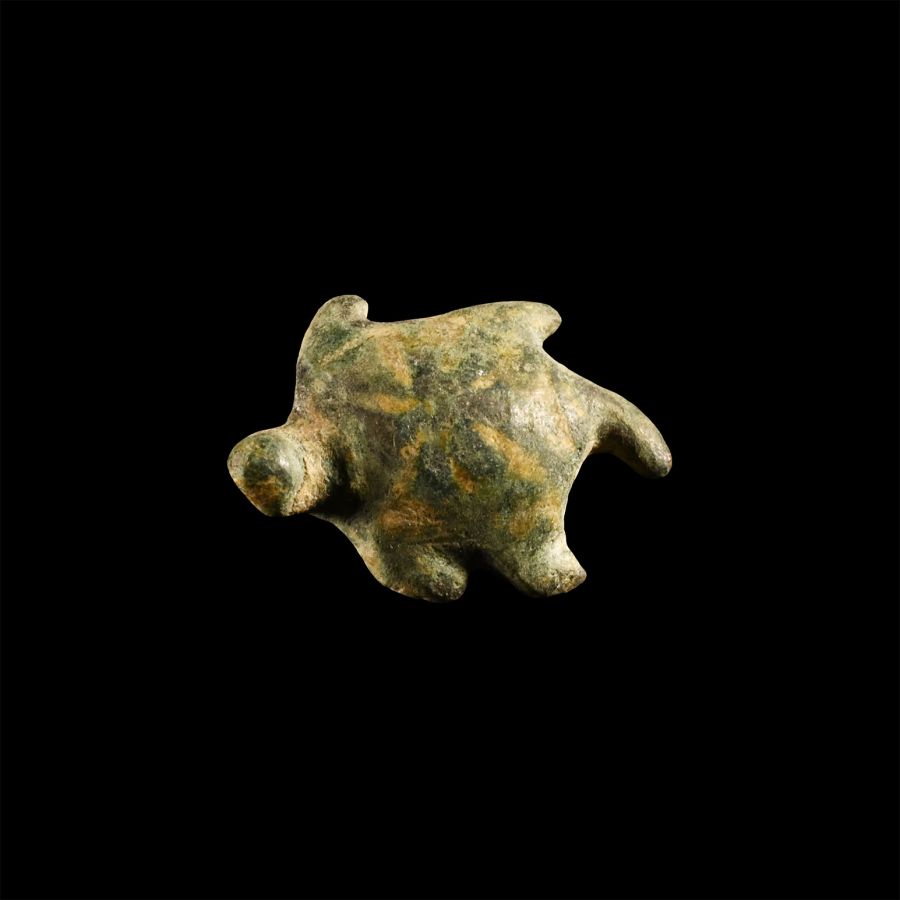
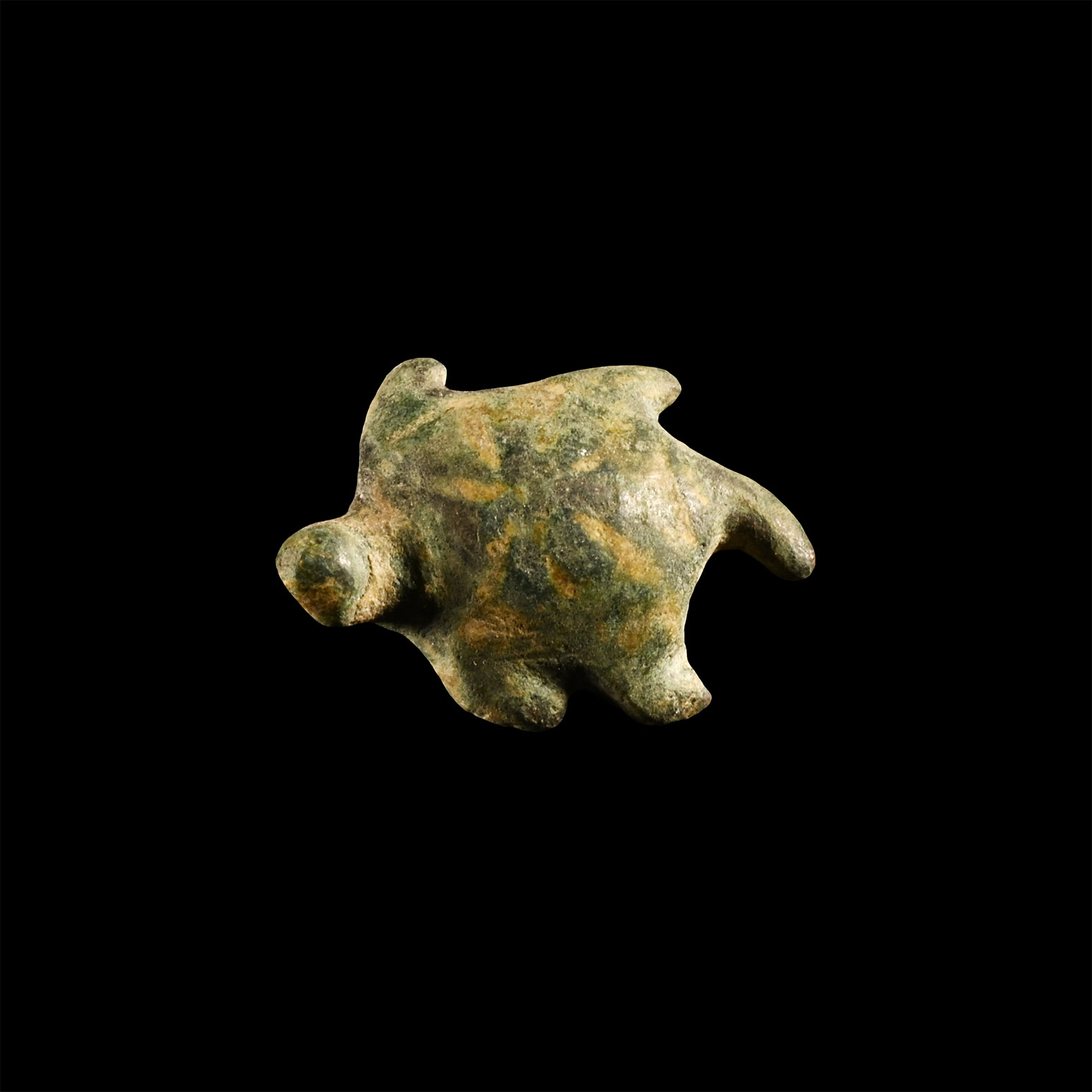
Romano-Egyptian Bronze Turtle Statuette
ROMAN PERIOD, 30 B.C.-323 A.D.
1 in. (8.03 grams, 24 mm).
Modelled in the round with naturalistic detailing.
Provenance‘The Ancient Menagerie Collection’ formerly the property of a Cambridgeshire lady, collected since the 1990s and acquired from auctions and dealers throughout Europe and the USA, now ex London collection.
CONDITIONTimeLine Auctions follows a vetting process to ensure the authenticity and legality of all items, reinforcing our commitment to integrity and responsible trading. Each antiquity, antique, and coin lot undergoes thorough examination by a vetting committee of at least ten external specialists, professional trade association members, scientists, and archaeologists: Our Vetting Process
AUCTIONS:
TimeLine is a leading auction house specialising in antiquities, ancient art, collectables, natural history, coins, medals, and books. Our auctions offer museums, collectors, historians, and enthusiasts the opportunity to acquire unique and historically significant pieces.
-
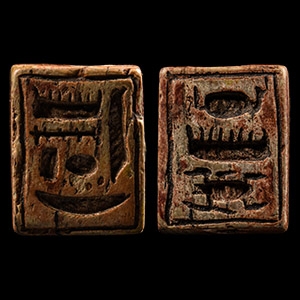
Egyptian Tabular Glazed Steatite Spacer Bead with Hieroglyphs
Late Period, 664-332 B.C. or laterSold for (Inc. bp): £130
Bifacial with incised border to each face, one with throne name of Tuthmoses III and the other with hieroglyphs. 2.25 grams, 16 mm
Acquired 1970s-1996. Property of a North American collector. London collection, 2016. -
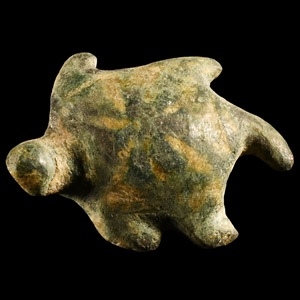
Romano-Egyptian Bronze Turtle Statuette
Roman Period, 30 B.C.-323 A.D.Sold for (Inc. bp): £98
Modelled in the round with naturalistic detailing. 8.03 grams, 24 mm
‘The Ancient Menagerie Collection’ formerly the property of a Cambridgeshire lady, collected since the 1990s and acquired from auctions and dealers throughout Europe and the USA, now ex London collection. -
.jpg)
Egyptian Faience Ushabti of a Prince, Sem Priest of Ptah Khaemwaset
Late New Kingdom, 19th Dynasty, 1279 -1213 B.C.Sold for (Inc. bp): £2,600
Decorated using turquoise glaze and painted face, collar and hand detailing, wearing short wig and Sidelock of Youth (typical of a Sem priest); column of hieroglyphs to the lower body reading 'King's son, Sem priest of Ptah Khaemwaset, true of voice'; accompanied by a custom-made display stand. 55 grams, 11.6 cm (159 grams total, 13 cm high including stand)
Acquired on the London art market, early 1980s. Private European collection. Accompanied by an academic report by Egyptologist Paul Whelan. This lot has been checked against the Interpol Database of stolen works of art and is accompanied by search certificate number no.11837-206506.
There are various short inscriptions found on faience shabtis of Khaemwaset. The inscription on this shabti is notable for including the uncommon possessive element 'of Ptah' following the writing of 'Sem(-priest)'. It features on none of the inscriptions on the 43 published faience shabtis in the Louvre, but is found on an alabaster shabti of Khaemwaset in the Vatican's Museo Gregoriano Egizio (inv.no.19332). Also, the arm sign serving as a phonetic complement in the writing of his name is fairly uncommon on his faience shabtis, although it is found, for instance, in the inscriptions on two in the Louvre (inv.nos. N 456 A and N 768.14) and on another in the Amasis Collection (inv.no.S-1577).
