
Loading, please wait...
LOT 0470
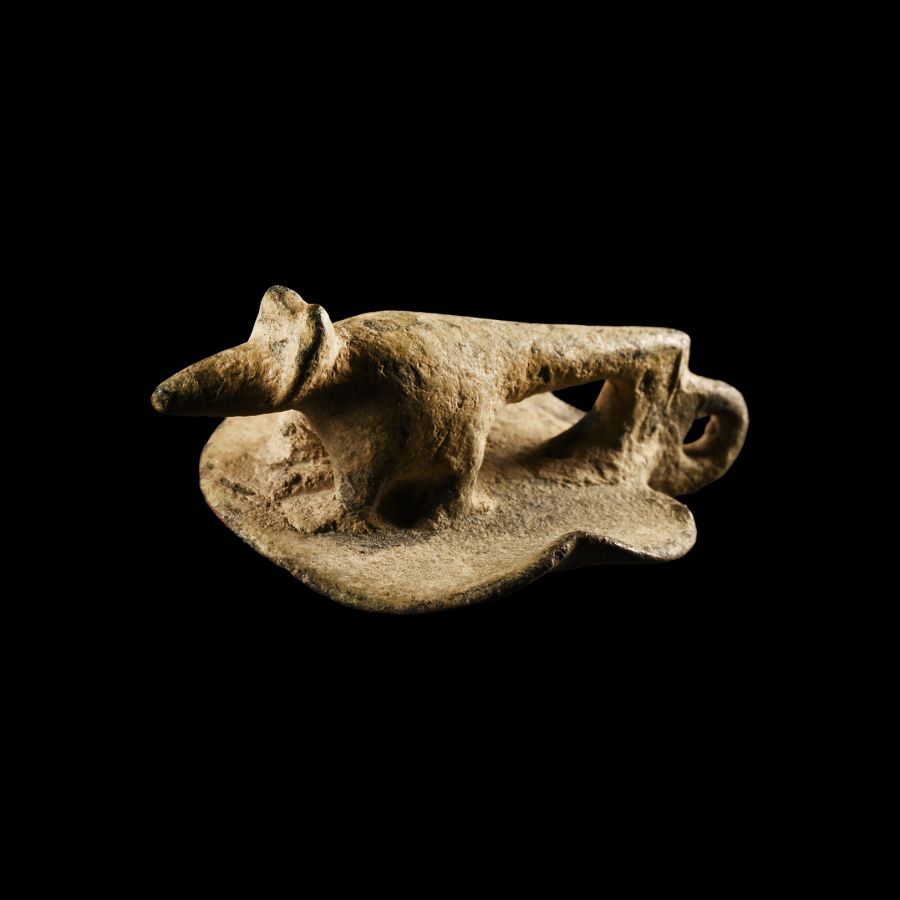
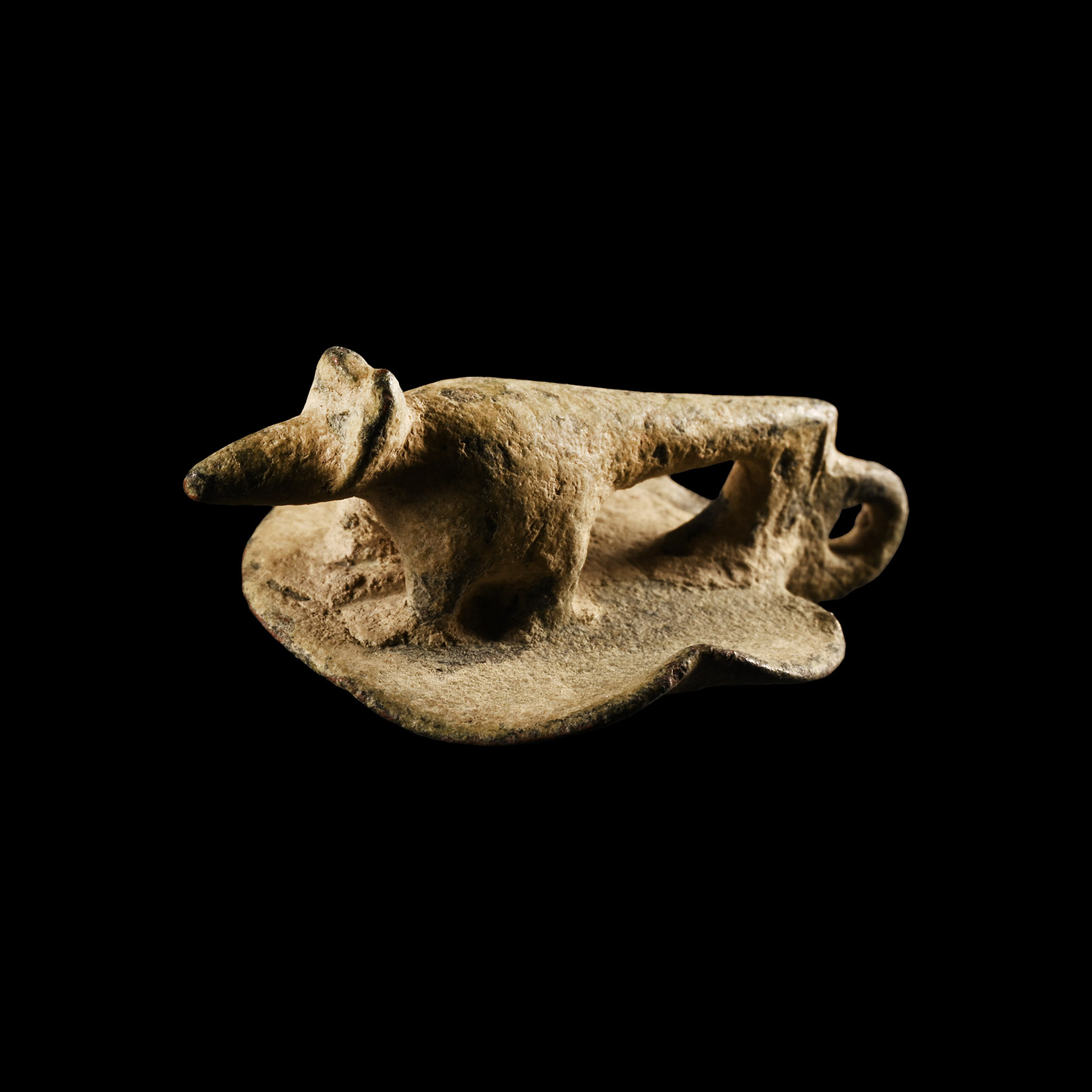
Romano-Egyptian Bronze Shrew Balsamarium Lid
ROMAN PERIOD, 30 B.C.-323 A.D.
1 3/4 in. (19.4 grams, 43 mm).
Modelled in the round with naturalistic detailing, ears upright and tail straight, on a circular lid with hinge loop to the rear, possibly from a balsamarium or other high-status container.
Provenance‘The Ancient Menagerie Collection’ formerly the property of a Cambridgeshire lady, collected since the 1990s and acquired from auctions and dealers throughout Europe and the USA, now ex London collection.
CONDITIONTimeLine Auctions follows a vetting process to ensure the authenticity and legality of all items, reinforcing our commitment to integrity and responsible trading. Each antiquity, antique, and coin lot undergoes thorough examination by a vetting committee of at least ten external specialists, professional trade association members, scientists, and archaeologists: Our Vetting Process
AUCTIONS:
TimeLine is a leading auction house specialising in antiquities, ancient art, collectables, natural history, coins, medals, and books. Our auctions offer museums, collectors, historians, and enthusiasts the opportunity to acquire unique and historically significant pieces.
LOT 0470
Romano-Egyptian Bronze Shrew Balsamarium Lid
Estimate £200 - 300€230 - 350 (for guidance only)$270 - 410 (for guidance only)
-
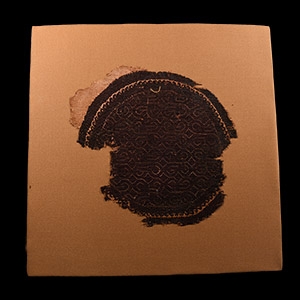
Egyptian Mounted Coptic Textile
Circa 5th-7th century A.D.Sold for (Inc. bp): £72
Composed of a medallion (orbiculus) decorated with geometric interlaced patterns on a purple background, framed by a minute recurring spiral, surrounded by an external circle. 149 grams, 36.5 x 36.5 cm
Acquired 1970s-1996. Property of a North American collector. London collection, 2016.
Tapestry technique on natural linen. It is highly probable that this tapestry was part of a tunic decoration, an orbiculus, medallion in purple applied to the shoulders and the lower part of the garment, front and back. -
.jpg)
Egyptian Painted Wooden Mummy Mask
4th-3rd century B.C.Estimate: £5,000 - 7,000 (‡+bp*)
Opening Bid: £2,500
Displaying semi-naturalistic detailing in relief, beneath a band of headdress ornament composed of rows of architectural dot-and-dash and zig-zag patterns over a segmental panel, possible hieroglyphs to the top tier; attachment pegs to the sides of the face and through the head; extensive remains of painted black pigmentation and composition fill to the eyes. 677 grams, 36 cm
From a French estate, acquired between 1960 and 1980. with SAS Cornette de Saint Cyr Auction, Paris, Vente 882, Mobilier et Objets d'art, 2 December 2014, lot 69. Accompanied by a copy of a French cultural passport no.167062. Accompanied by an academic report by Dr Alberto Maria Pollastrini. This lot has been checked against the Interpol Database of stolen works of art and is accompanied by search certificate no.11807-206837. -
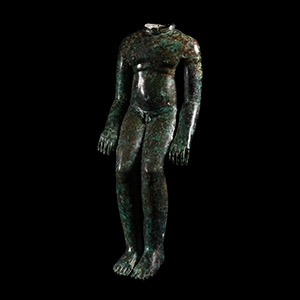
Large Egyptian Bronze Body of Horus-Harpocrates
Ptolemaic Period, 332-30 B.C.Estimate: £800 - 1,000 (+bp*)
Opening Bid: £400
The nude body with legs held together and arms by his side, semi-naturalistic anatomical detailing; cleaned. 993 grams, 22.5 cm high
Collection of Brugsch Pasha (1842-1930). with Hotel Drouot, Paris, 30 September 1997, lot 643. Ex property of Mr Naudy. Property of a French collector. This lot has been checked against the Interpol Database of stolen works of art and is accompanied by search certificate no.11601-198618. Accompanied by a scholarly note by Egyptologist Paul Whelan.
Horus, son of Isis and Osiris, was considered a solar deity who overcame darkness and defeated the chaotic forces of his evil uncle, the god Seth. Egyptian Pharaohs considered themselves to be reincarnations of Horus. In his youthful form, Horus the child embodies the new sun and all associated benefits. In Graeco-Roman Egypt he became Harpocrates, son of Serapis and Isis, the deity-symbol of rebirth and fertility, perhaps the most popular deity to be represented in Ptolemaic and Roman Egypt.
