
Loading, please wait...
LOT 0457
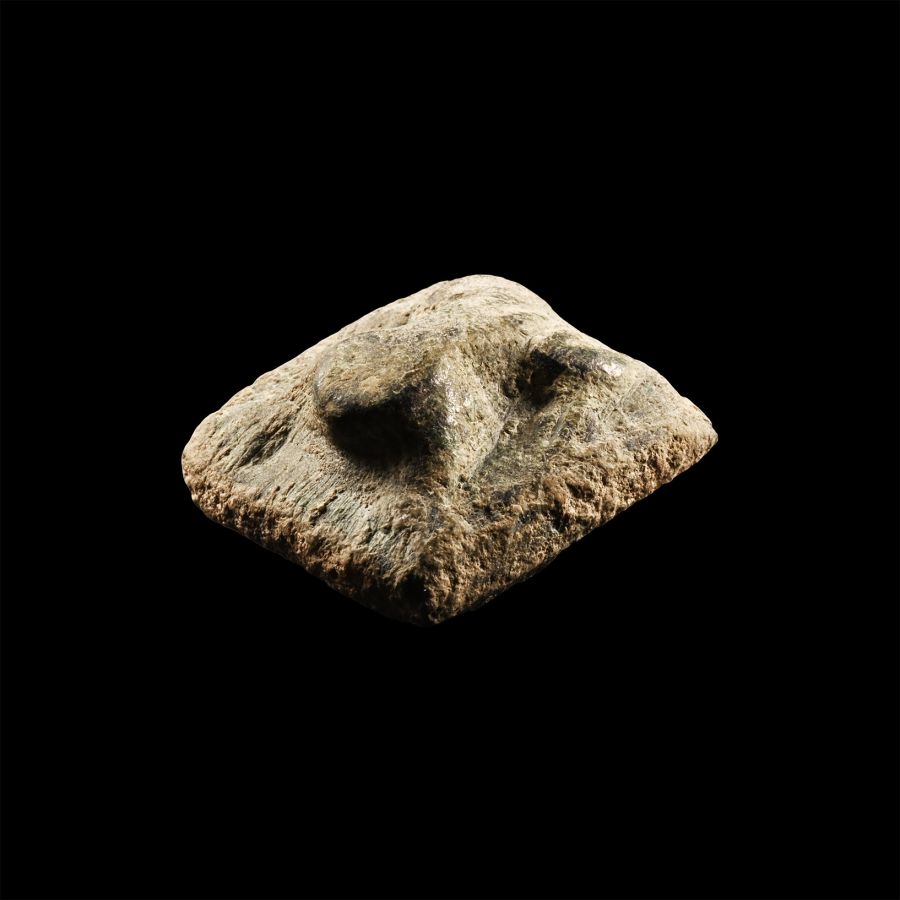
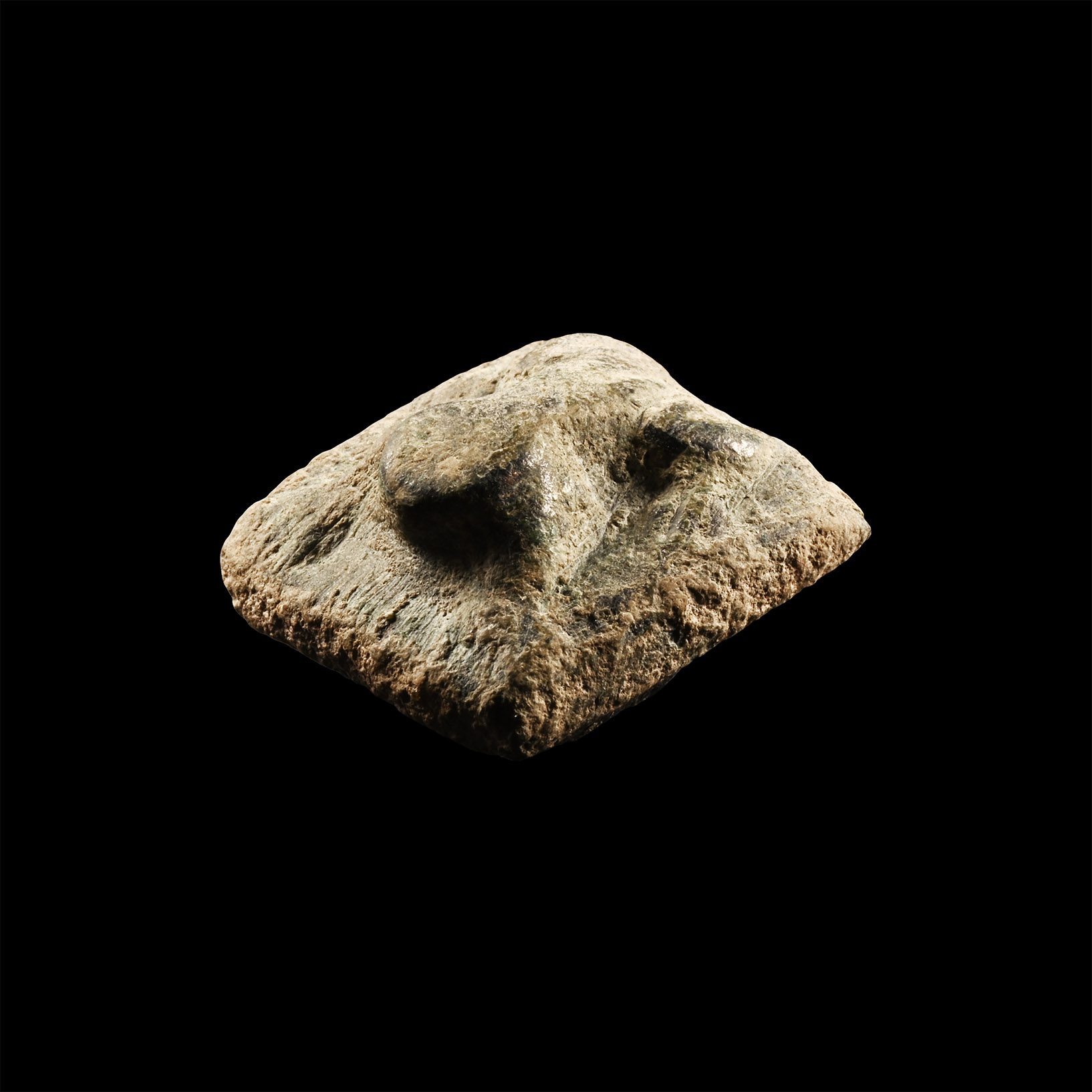
Romano-Egyptian Bronze Crouching Frog Weight
ROMAN PERIOD, 30 B.C.-323 A.D.
1in. (24.8 grams, 25 mm).
Modelled in the round with naturalistic detailing, on a tabular base.
Provenance‘The Ancient Menagerie Collection’ formerly the property of a Cambridgeshire lady, collected since the 1990s and acquired from auctions and dealers throughout Europe and the USA, now ex London collection.
CONDITIONTimeLine Auctions follows a vetting process to ensure the authenticity and legality of all items, reinforcing our commitment to integrity and responsible trading. Each antiquity, antique, and coin lot undergoes thorough examination by a vetting committee of at least ten external specialists, professional trade association members, scientists, and archaeologists: Our Vetting Process
AUCTIONS:
TimeLine is a leading auction house specialising in antiquities, ancient art, collectables, natural history, coins, medals, and books. Our auctions offer museums, collectors, historians, and enthusiasts the opportunity to acquire unique and historically significant pieces.
LOT 0457
Romano-Egyptian Bronze Crouching Frog Weight
Estimate £100 - 140€120 - 160 (for guidance only)$140 - 190 (for guidance only)
-
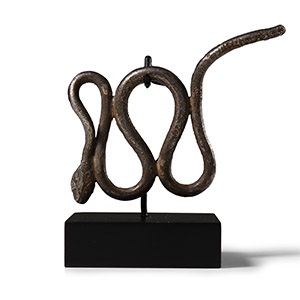
Egyptian Silver Snake Appliqué
Roman Period, 30 B.C.-323 A.D.Estimate: £600 - 800 (+bp*)
Opening Bid: £333
With its body forming meandering loops, stylised detailing to the head and tail; remains of mounting lug to the reverse of the head. 40.6 grams, 73 mm
‘The Ancient Menagerie Collection’ formerly the property of a Cambridgeshire lady, collected since the 1990s and acquired from auctions and dealers throughout Europe and the USA, now ex London collection. -

Egyptian Steatite Apotropaic Pataikos Dwarf Amulet Figure
Saite Period, 664-525 B.C.Sold for (Inc. bp): £2,600
Carved naturalistically in the round with a scarab beetle to the top of the naked figure's bald head; repaired; accompanied by an old customised collector's box. 27 grams, 60 mm high
Property of a European Gentleman. with Christie's, New York, 5-6 December 2001, lot 265. Accompanied by an academic report by Egyptologist Paul Whelan. This lot has been checked against the Interpol Database of stolen works of art and is accompanied by search certificate number no.11842-206821.
The distinctive folds of skin, and the belly swell of his slightly chubby body mark this as the work of a skilled artisan. -
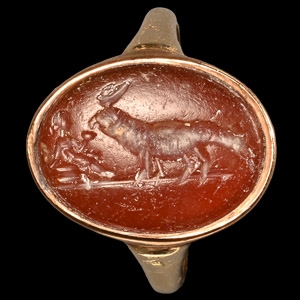
Egypto-Roman Red Carnelian Soknopaios Gemstone in Gold Ring
1st-2nd century A.D.Sold for (Inc. bp): £5,200
The 19th century ring with D-section hoop expanding at the shoulders; the oval intaglio engraved with a seated woman offering food or drink from a cup to a creature with the body of a crocodile and a falcon head; accompanied by a custom-made display case and impression. 5.23 grams, 23.98 mm overall, 18.87 mm internal diameter (approximate size British Q 1/2, USA 8 1/4, Europe 18.12, Japan 17)
Acquired in the 1980s. with Christie's, Ancient Jewellery, 7 December 2006, lot 277. Accompanied by an academic report by Dr Raffaele D’Amato. This lot has been checked against the Interpol Database of stolen works of art and is accompanied by a search certificate number no.11779-204569.
An important creator god, Soknopaios is depicted here with the crocodile body of Sobek and the falcon head of Re. It has been suggested that the falcon head of Soknopaios alludes to association with the goddess Isis's son Horus. It can also depict an image of the so-called ‘nine shaped one’ (εννεάμορφος), a figure mentioned several times in the magical rituals written in Greek but with a strong Egyptian religious background. This deity is often understood as the bios (i.e. an incarnation) of the supreme god Amun-Re, often accompanied by a surrounding ouroboros serpent.
