
Loading, please wait...
LOT 0475
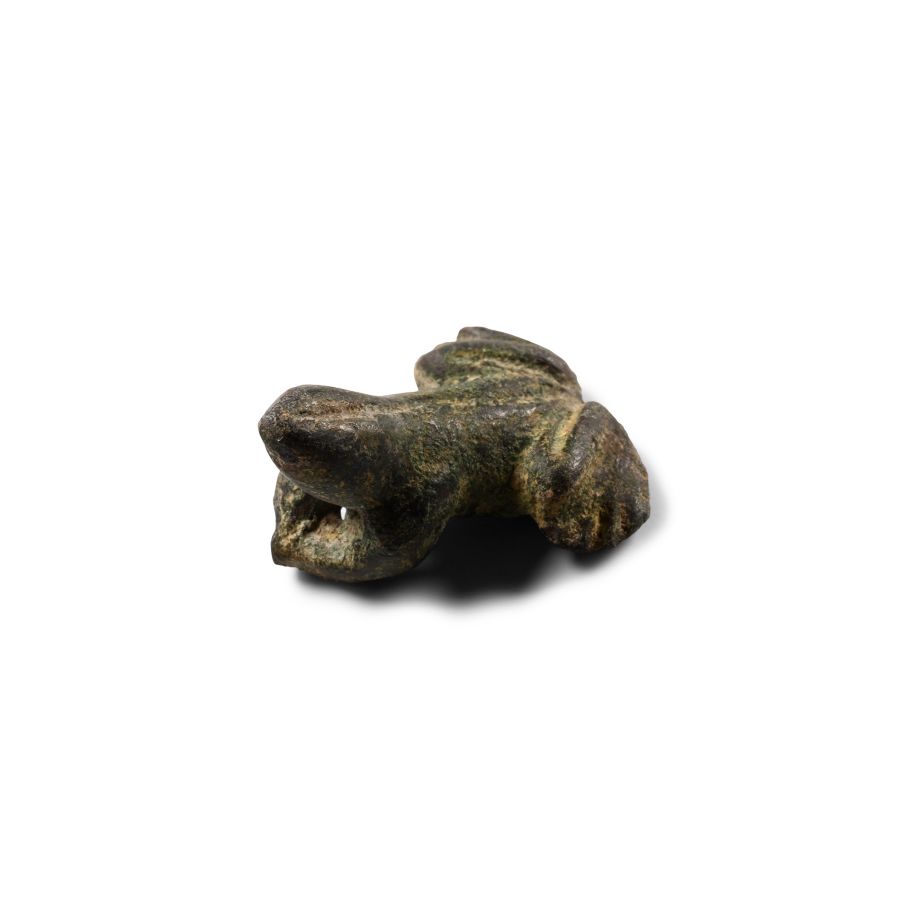
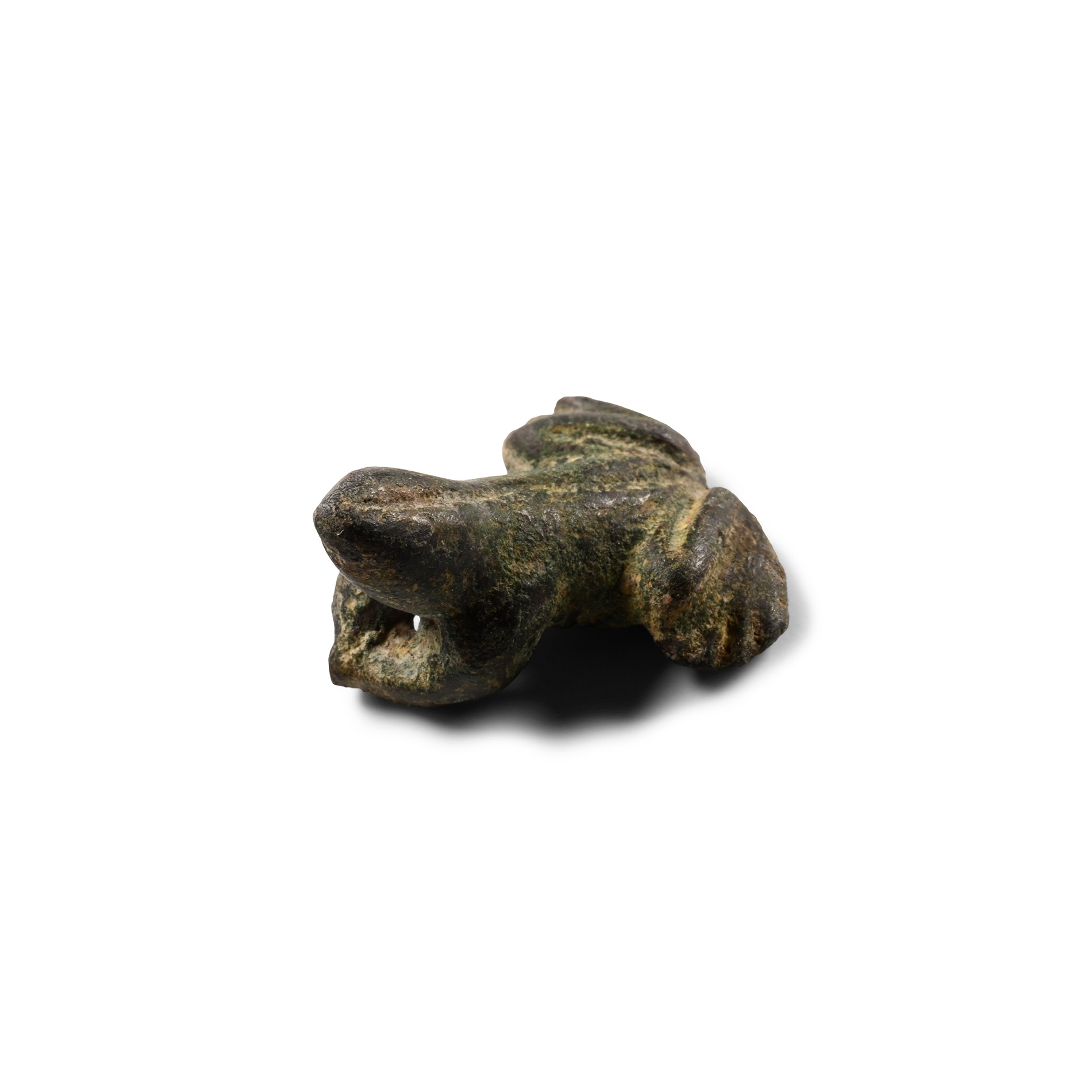
Romano-Egyptian Bronze Crouching Frog Statuette
ROMAN PERIOD, 30 B.C.-323 A.D.
1 in. (10.1 grams, 23 mm).
Modelled in the round with naturalistic detailing, head raised.
Provenance‘The Ancient Menagerie Collection’ formerly the property of a Cambridgeshire lady, collected since the 1990s and acquired from auctions and dealers throughout Europe and the USA, now ex London collection.
LiteratureCf. Petrie, W.M.F., Glass Stamps and Weights. Ancient Weights and Measures. Illustrated by the Egyptian Collection in University College, London, London, 1974, pl.IX, for similar examples.
FootnotesThis may be a weight, since small bronze statuettes of various animals including frogs were used as counterbalances on scales.
CONDITIONTimeLine Auctions follows a vetting process to ensure the authenticity and legality of all items, reinforcing our commitment to integrity and responsible trading. Each antiquity, antique, and coin lot undergoes thorough examination by a vetting committee of at least ten external specialists, professional trade association members, scientists, and archaeologists: Our Vetting Process
AUCTIONS:
TimeLine is a leading auction house specialising in antiquities, ancient art, collectables, natural history, coins, medals, and books. Our auctions offer museums, collectors, historians, and enthusiasts the opportunity to acquire unique and historically significant pieces.
-
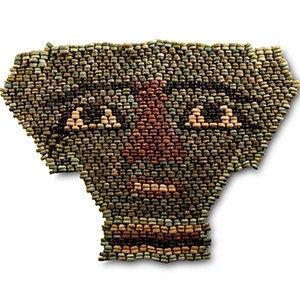
Egyptian Faience Mummy Bead Face Mask
Late Dynastic-Ptolemaic Period, 664-30 B.C.Sold for (Inc. bp): £169
In various colours representing a mummy face mask with false beard; restrung. 41.9 grams, 14.5 cm wide
Acquired 1970s onwards. Private collection of Michael O'Hara, Cambridgeshire, UK. Ex private collection of Benjamin Hyde-Smith, Hertfordshire, UK -
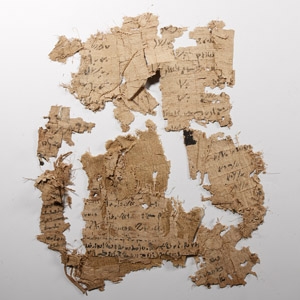
Egyptian Papyrus Fragment Group
Circa 100 B.C.Sold for (Inc. bp): £468
Comprising fragments of papyrus manuscript with inked text in Demotic script. 32 grams, 29 x 21 cm
Acquired 1970s-1996. Property of a North American collector. London collection, 2016. -
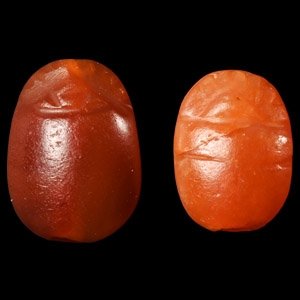
Egyptian Carnelian Scarab Group
Late Period, 664-332 B.C.Sold for (Inc. bp): £221
One with segmented carapace and leg detailing; one with head elements only. 1.61 grams total, 10-12 mm
Acquired 1970s-1996. Property of a North American collector. London collection, 2016.
