
Loading, please wait...
LOT 0464
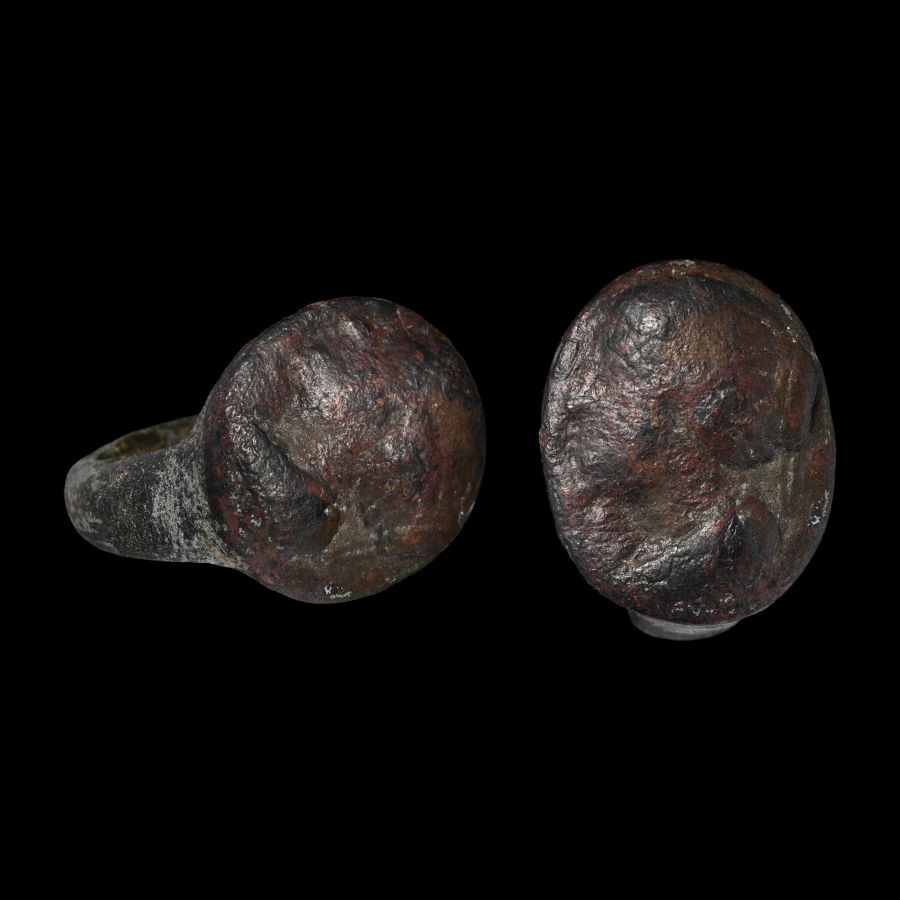
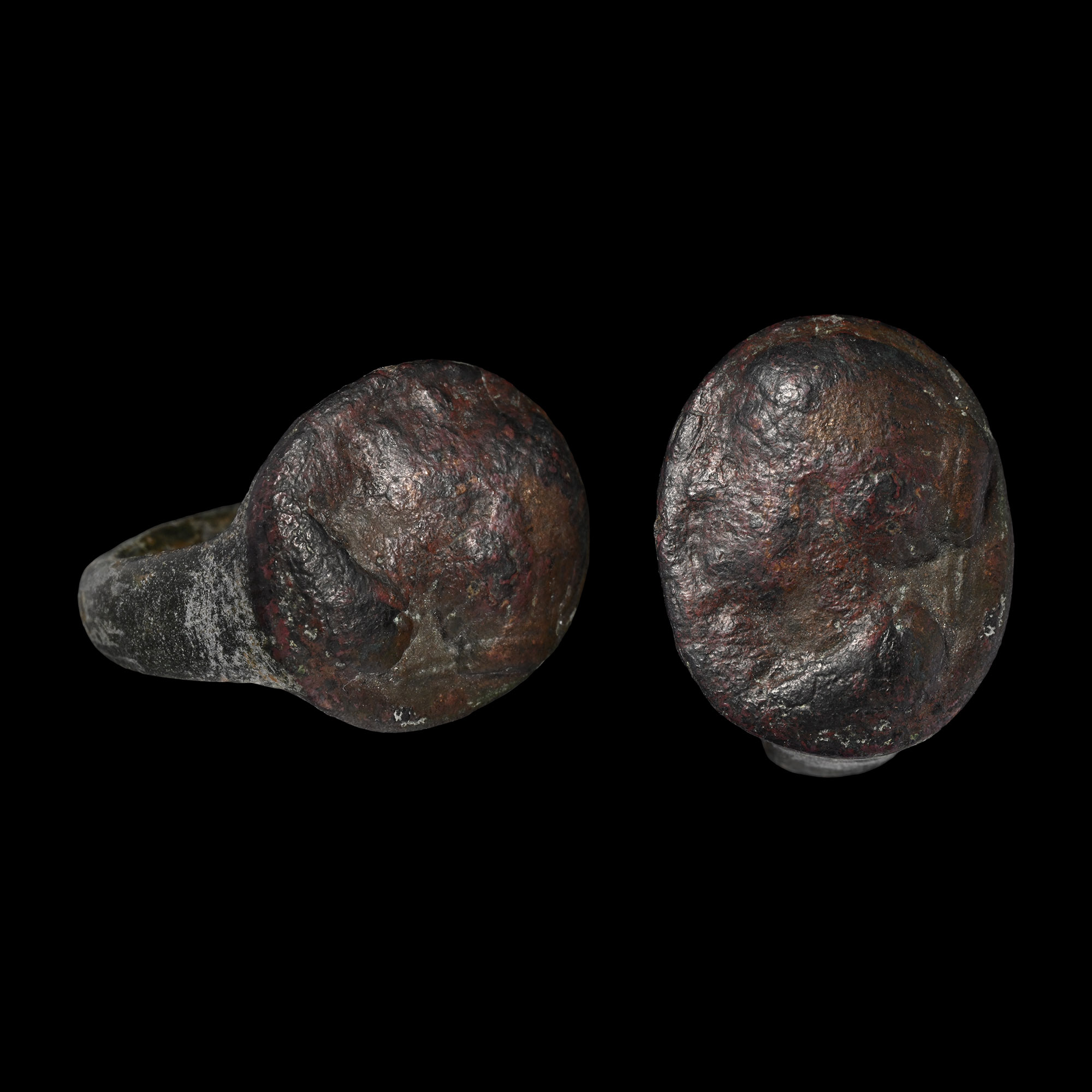
Romano-Egyptian Bronze 'Cleopatra' Ring
PTOLEMAIC PERIOD, CIRCA 1ST CENTURY B.C.
1 in. (11.66 grams, 24.82 mm overall, 17.22 mm internal diameter (approximate size British M 1/2, USA 6 1/4, Europe 13.09, Japan 12)).
Thick rounded hoop with ellipsoid bezel, low-relief female profile bust with hair dressed in a chignon. [No Reserve]
ProvenanceFrom the private collection of Mr Brian Edwards, New Malden, Surrey, UK, formed from the late 1970s-early 1980s; thence by descent.
Accompanied by the original collector's data sheet(s) with reference no.A127.
Cf. Petrie, W.M.F., Objects of Daily Use, Warminster, 1972, pl. XIII, nos. 154-156, for similar rings with female-profile bezel.
CONDITIONTimeLine Auctions follows a vetting process to ensure the authenticity and legality of all items, reinforcing our commitment to integrity and responsible trading. Each antiquity, antique, and coin lot undergoes thorough examination by a vetting committee of at least ten external specialists, professional trade association members, scientists, and archaeologists: Our Vetting Process
AUCTIONS:
TimeLine is a leading auction house specialising in antiquities, ancient art, collectables, natural history, coins, medals, and books. Our auctions offer museums, collectors, historians, and enthusiasts the opportunity to acquire unique and historically significant pieces.
-
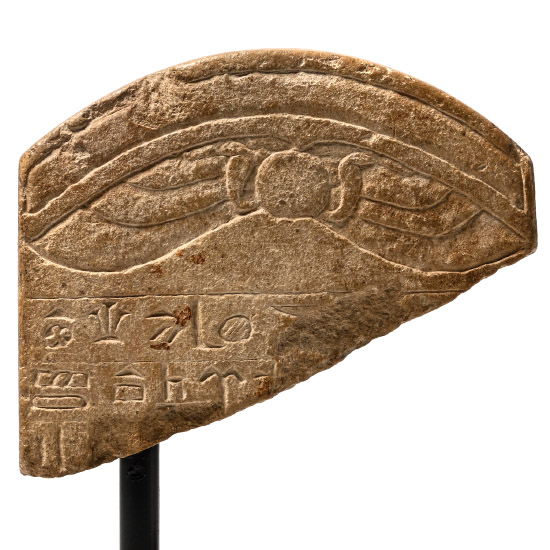
Egyptian Bifacial Magical Stela with Bes
Ptolemaic Period, circa 280-180 B.CSold for (Inc. bp): £4,160
Upper portion of an arch-top limestone stele fragment with two dressed faces; the obverse lunette features a winged sun disc flanked by uraei and two partial rows of incised pseudo-hieroglyphs below; the reverse displays the head of the god Bes in high relief, with traces of the head of the young Horus immediately below, who would have been depicted grasping the two partially preserved snakes and a scorpion carved in raised relief to the right; mounted on a custom-made display stand. 450 grams total, 11.6 cm high including stand
Frossart Collection, France, by the 19th century. Private collection, London, UK.
Although fragmentary, this stela is easily recognisable as a Horus cippus or magical stela. They were used to heal ailments caused by snake or scorpion venom. Ancient Egyptians believed that water poured over these cippi would turn into a healing liquid that the afflicted could drink or apply to their bodies. -
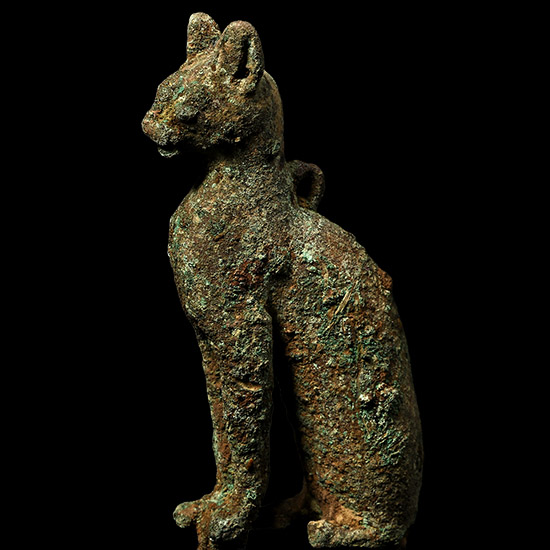
Egyptian Bronze Seated Cat Statuette
Late Period, 664-332 B.C.Sold for (Inc. bp): £1,040
Bastet in squatting pose, ears pricked and alert with her tail wrapped close to right side of her body, two short lugs beneath for attachment to a separate base, and a suspension loop behind the shoulders. 74 grams, 87 mm
Acquired on the UK art market, 1990s. Private collection, New York, USA. -
.jpg)
Egyptian Steatite Scarab Collection
Hyksos Period and New Kingdom, 18th-13th century B.C.Sold for (Inc. bp): £910
Each with a domed carapace, two with a figure on the underside surrounded by hieroglyphs, two inscribed with hieroglyphic signs. 15 grams total, 18-24 mm
Acquired in Europe before 1992. Ex private collection, UK.
The term ‘Hyksos’ comes from the Egyptian phrase ‘heka khasuwt’, which means ‘rulers of foreign (hill) lands’. The 15th Dynasty was governed by these Hyksos during the Second Intermediate Period. They were not of Egyptian origin but were believed to be Canaanites, and their names were carved on their scarabs.
