
Loading, please wait...
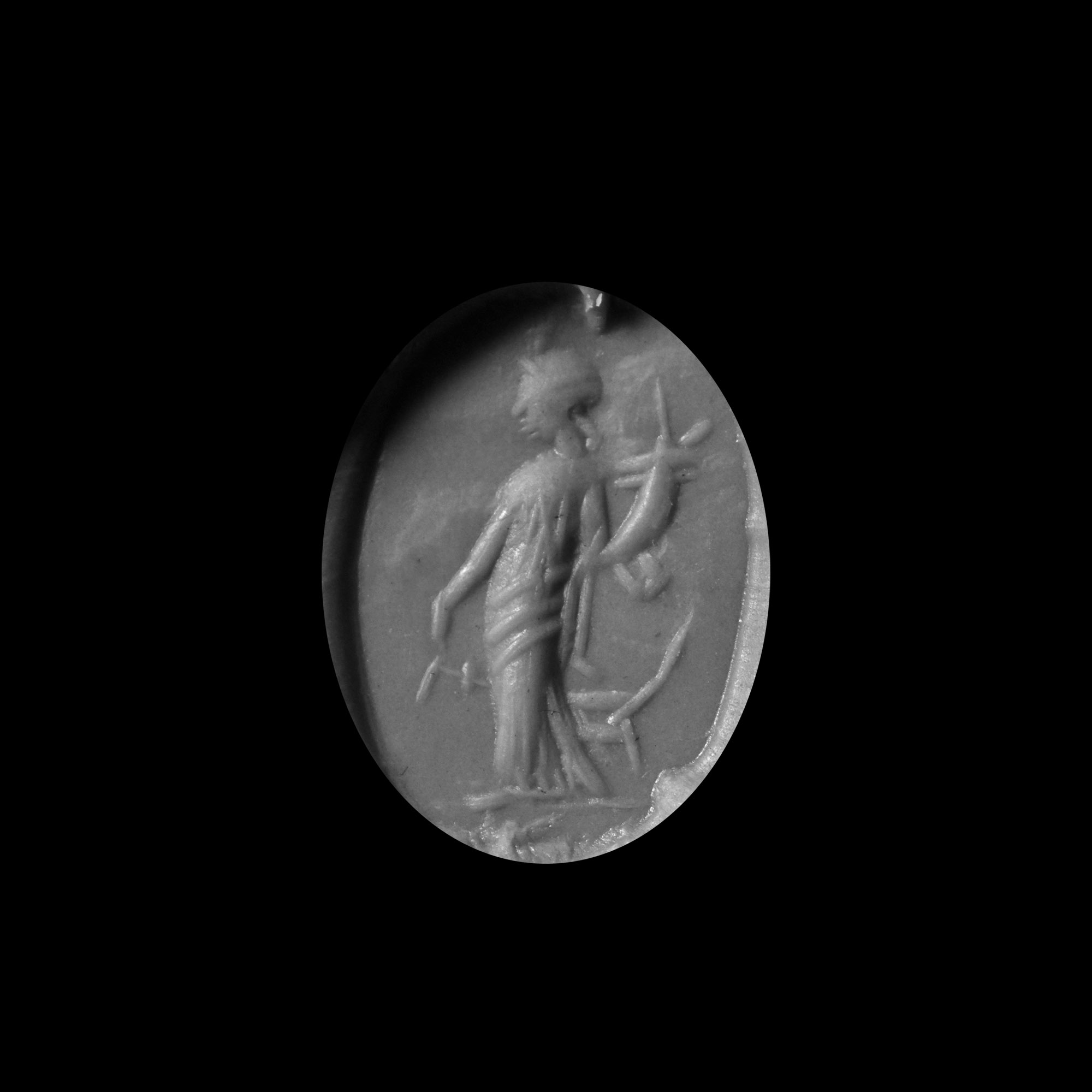
LOT 0031
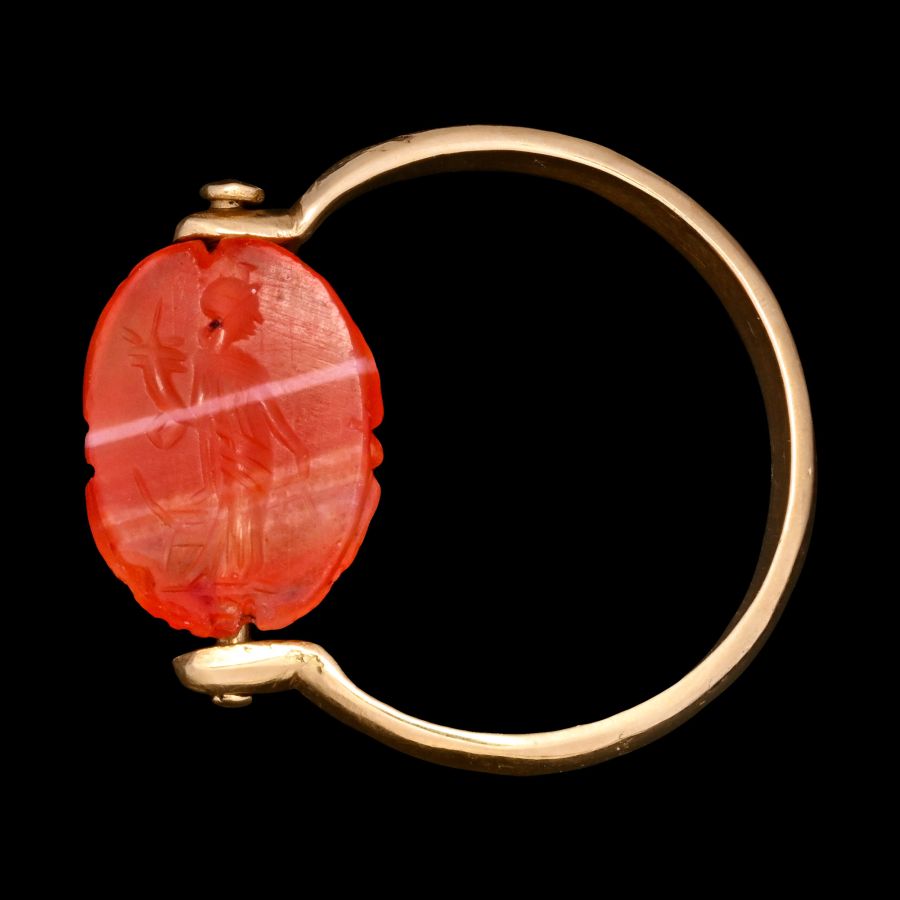
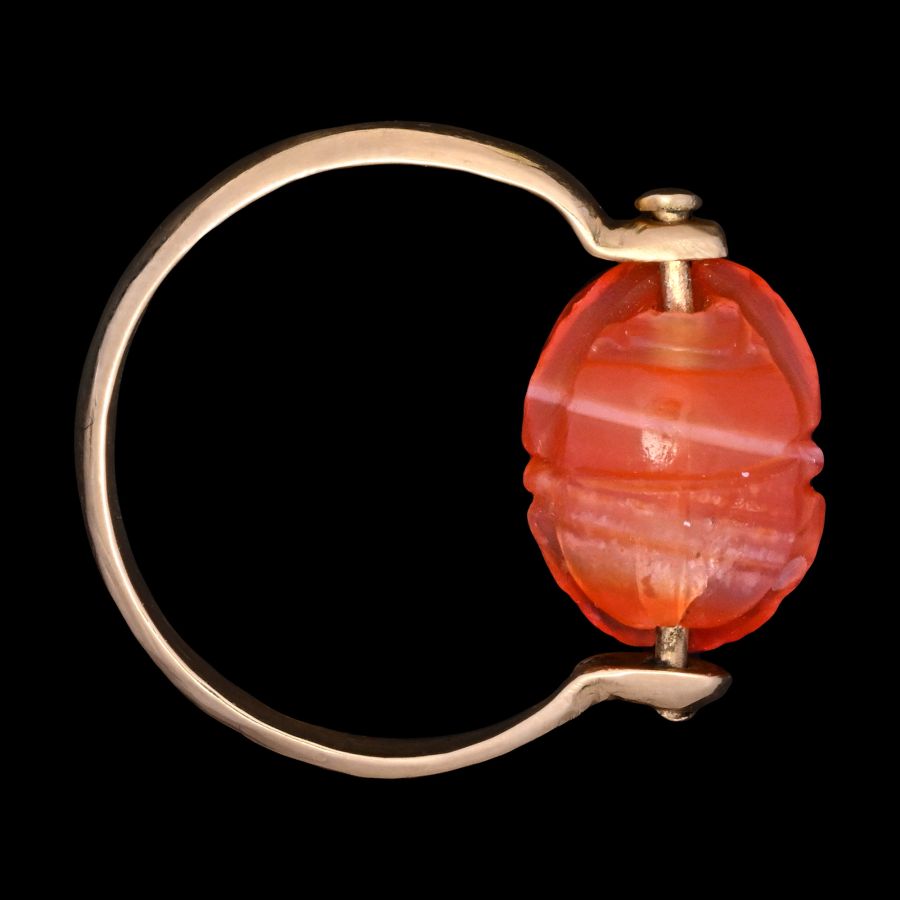
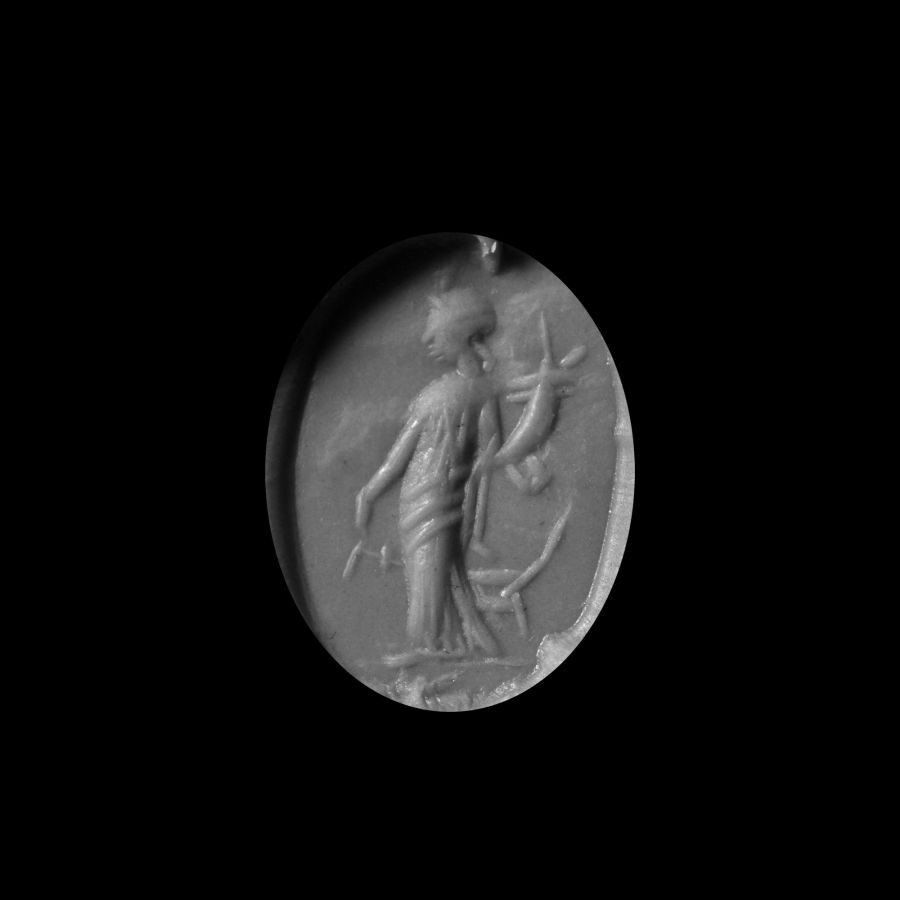
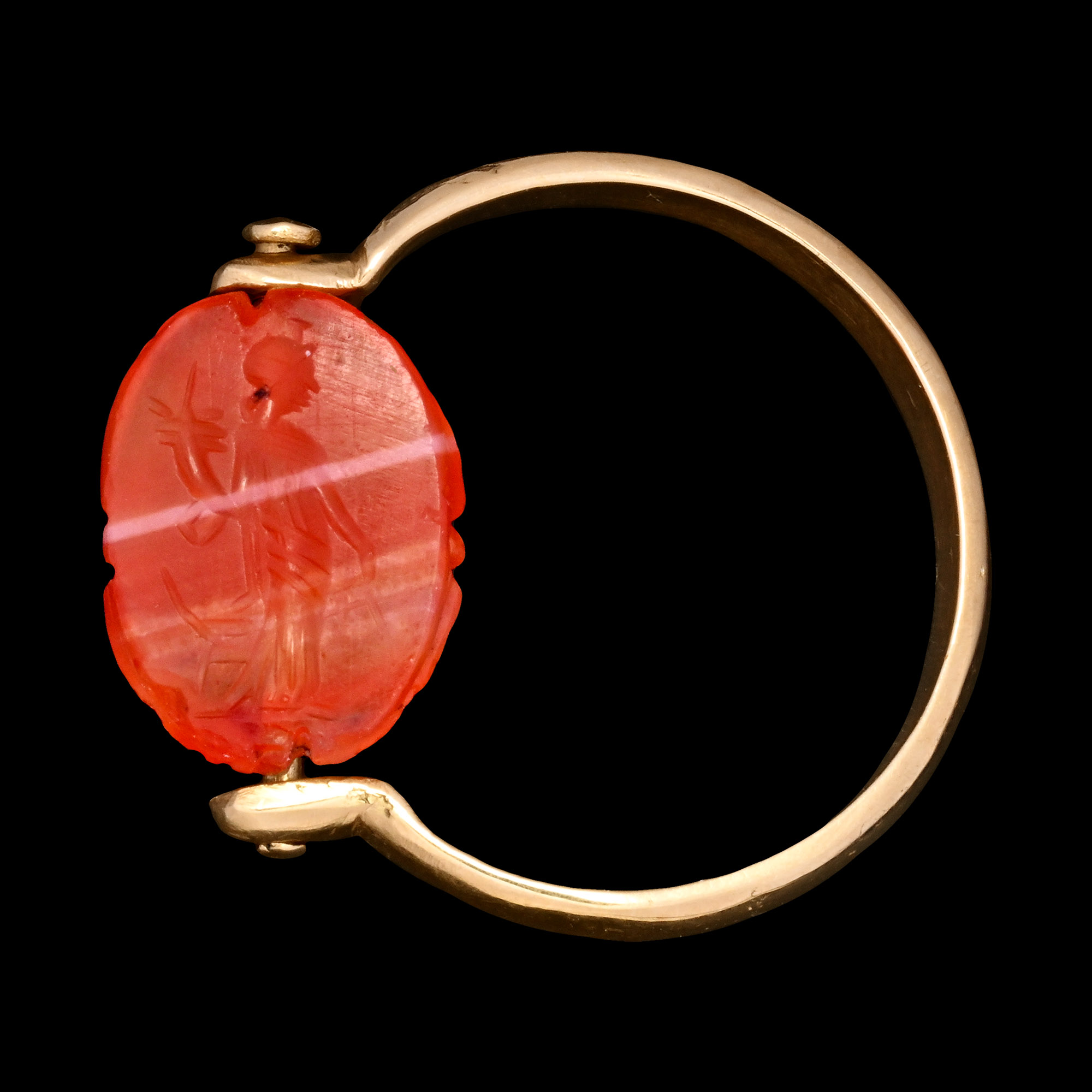
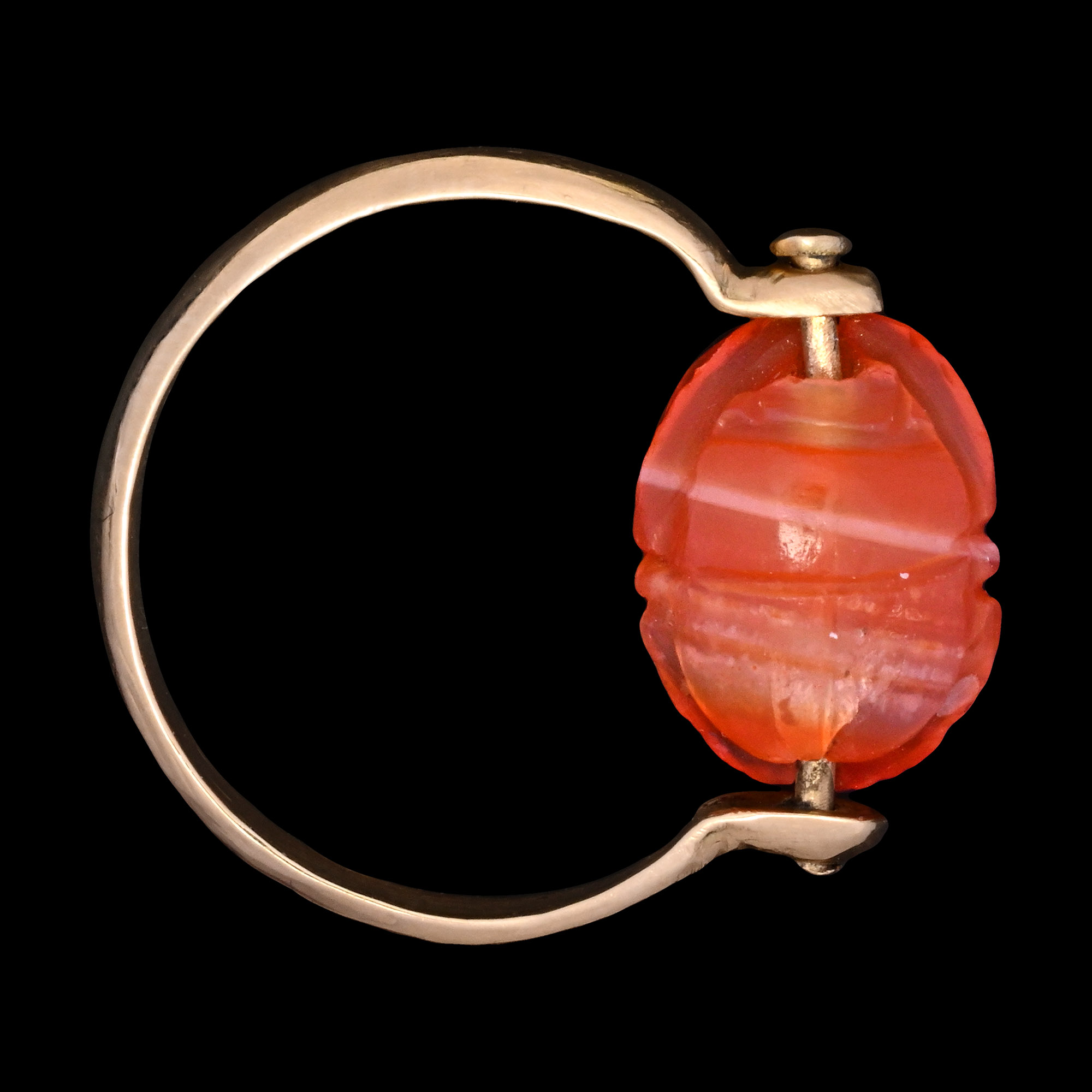
Romano-Egyptian Agate Scarab Engraved with the Goddess Fortuna Mounted in a Gold Ring
1ST CENTURY B.C.-1ST CENTURY A.D.
7/8 in. (4.34 grams, 22.63 mm overall, 19.34 mm internal diameter (approximate size British N, USA 6 1/2, Europe 13.72, Japan 13)).
Scarab with incuse image to the underside of Fortuna with cornucopia and ship's rudder; in later gold swivel ring.
ProvenancePrivate collection, Europe.
Acquired on the English art market.
TimeLine Auctions follows a vetting process to ensure the authenticity and legality of all items, reinforcing our commitment to integrity and responsible trading. Each antiquity, antique, and coin lot undergoes thorough examination by a vetting committee of at least ten external specialists, professional trade association members, scientists, and archaeologists: Our Vetting Process
AUCTIONS:
TimeLine is a leading auction house specialising in antiquities, ancient art, collectables, natural history, coins, medals, and books. Our auctions offer museums, collectors, historians, and enthusiasts the opportunity to acquire unique and historically significant pieces.
LOT 0031
Romano-Egyptian Agate Scarab Engraved with the Goddess Fortuna Mounted in a Gold Ring
Sold for (Inc. bp): £1,170
-
.jpg)
Egyptian Steatite Bust in a Gold Pendant
Ptolemaic-Roman Period, 2nd century B.C.-2nd century A.D.Sold for (Inc. bp): £1,300
Fragment of a carved panel or vessel depicting a female bust, possibly a queen or Isis, modelled in half-round relief, wearing a loosely draped tunic, a tiered wesekh collar, and a heavy curled, tripartite wig; reverse with lotus flower ropework and other ornamentation; mounted in a later gold suspension frame. 8.75 grams, 38 mm
Private collection, Southern France, 1970s. Acquired on the English art market.
This fragment likely originates from an elaborately decorated bowl belonging to a specific group thought to have been made in Alexandria (cf. Page-Gasser, M., Wiese, A.B., Ägypten: Augenblicke der Ewigkeit, Mainz, 1997, for a complete example). The purpose of these bowls is unclear, but they may have been used as votive offerings in sanctuaries. -
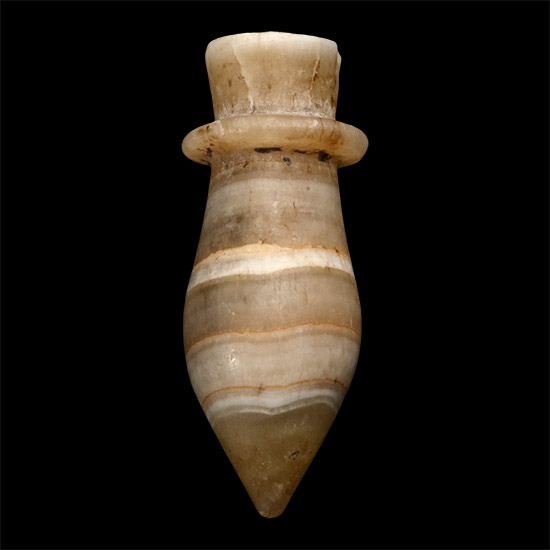
Romano-Egyptian Alabaster Alabastron
1st century B.C.-1st century A.D.Sold for (Inc. bp): £1,300
Small alabastron in banded Egyptian calcite-alabaster, pointed ovoid body and tall neck divided by a broad annular collar and finished with a plain straight rim. 7.71 grams, 44 mm
Acquired on the European art market in 1990s. English private collection.
A well-attested type produced from the Twenty-Seventh Dynasty through the Ptolemaic period and continuing into the early Julio-Claudian era. -
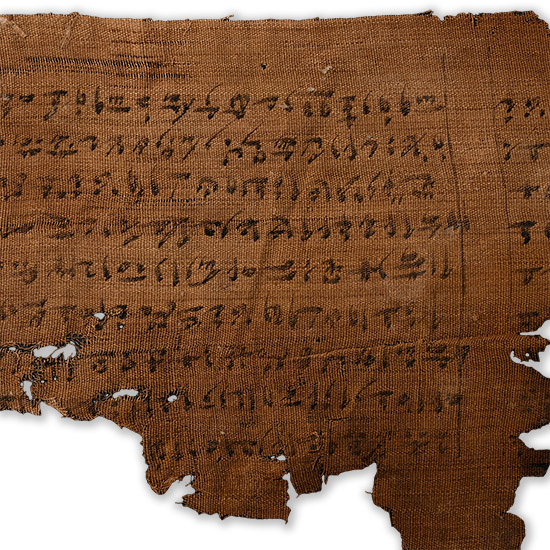
Egyptian Funerary Linen Fragment with Hieratic Text from the Book of the Dead for Ta-sherit-n-ta-ihet
Graeco-Roman Period, circa 3rd century B.C.-2nd century A.D.Sold for (Inc. bp): £1,690
Bearing a portion of Chapter 17, a spell written in late hieratic script executed in black ink on woven linen, consistent with funerary bandages of the Graeco-Roman period; the inscription identifies the owner as a woman named Ta-sherit-n-ta-ihet, with her mother named Iset-(m-)khebit; as is typical for funerary manuscripts of this period, the father’s name is not recorded. 5.08 grams, 22 cm wide
Found inside an 18th-century Bible and believed to be a souvenir acquired in the 19th century. From the private collection of a North American lady. An academically identified and unpublished fragment, offering potential for further scholarly study and publication. Accompanied by a report in progress dated 28 April 2026 by Holly Lund.
Spell 17 is among the most important and widely transmitted compositions in the Book of the Dead, concerned with cosmology, divine knowledge, and the transformation of the deceased in the afterlife. Even in fragmentary form, such texts provide valuable insight into funerary belief and scribal practice during the later phases of ancient Egyptian religion. This description was prepared using information provided by Dr Ann-Katrin Gill, Academic Assistant at the Egyptological Institute, University of Leipzig, and a separate assessment by Steve Vinson, Professor and Director of Graduate Studies in the Department of Middle Eastern Languages and Cultures at Indiana University, Bloomington. The linen fragment may derive from a nineteenth-century mummy unwrapping, a practise widely attested in this period.
