
Loading, please wait...
LOT 0982
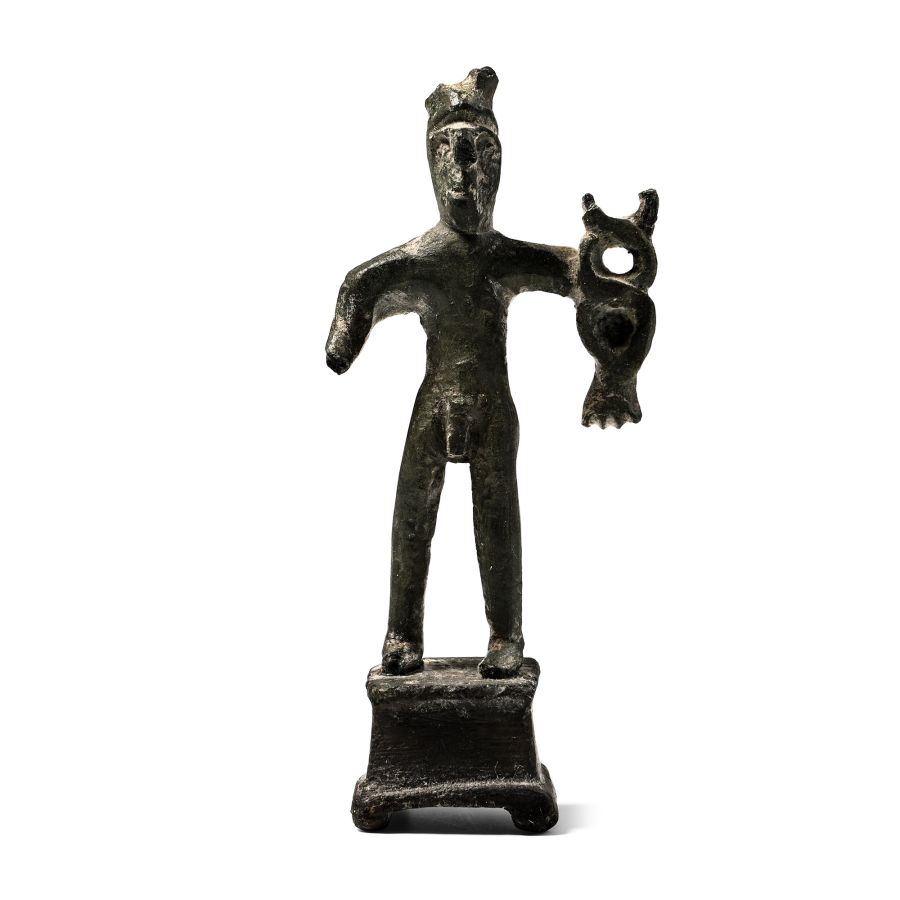
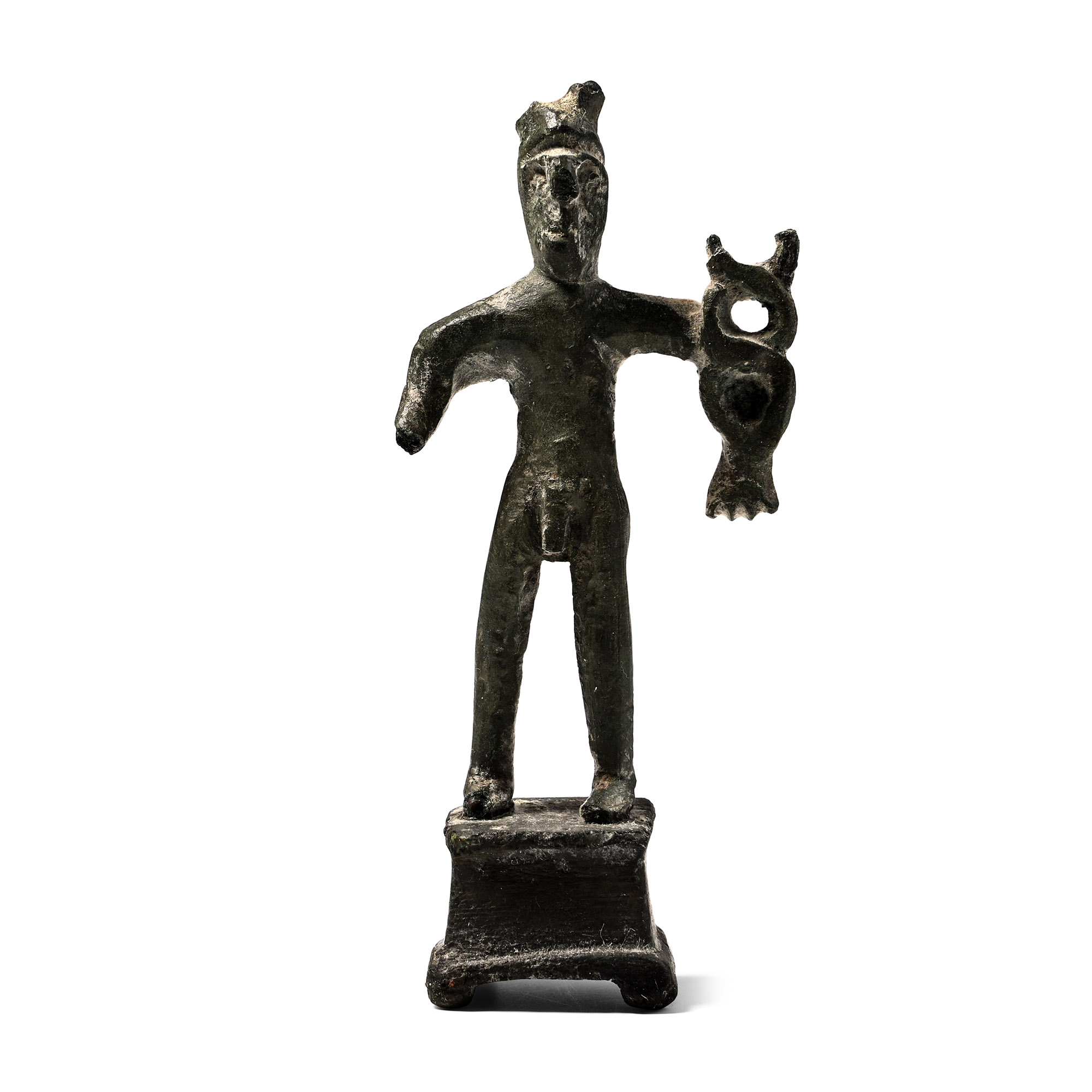
Romano-Celtic Bronze Statuette of the God Mercury
2ND-4TH CENTURY A.D.
3 1/2 in. (53.7 grams, 88 mm).
Modelled nude and standing on a pedestal, holding a caduceus in his outstretched left hand and wearing a winged hat. [No Reserve]
ProvenanceFrom the private collection of a European gentleman (1942-2024), formed since the 1970s.
LiteratureCf. Rolland, H., Bronzes Antiques de Haute Provence, Paris, 1965, items 50,55, for type.
CONDITIONTimeLine Auctions follows a vetting process to ensure the authenticity and legality of all items, reinforcing our commitment to integrity and responsible trading. Each antiquity, antique, and coin lot undergoes thorough examination by a vetting committee of at least ten external specialists, professional trade association members, scientists, and archaeologists: Our Vetting Process
AUCTIONS:
TimeLine is a leading auction house specialising in antiquities, ancient art, collectables, natural history, coins, medals, and books. Our auctions offer museums, collectors, historians, and enthusiasts the opportunity to acquire unique and historically significant pieces.
-
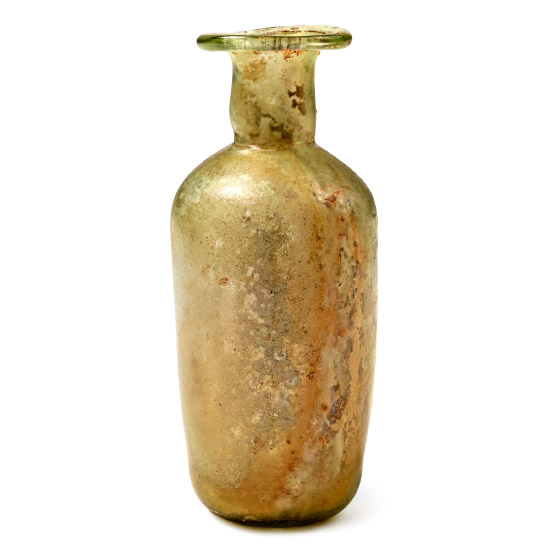
Roman Iridescent Glass Bottle
3rd-4th century A.D.Sold for (Inc. bp): £124
Cylindrical body with dimple base and a tubular neck with a flared rim. 27.2 grams, 91 mm
Acquired in the 1990s from London dealerships and auction houses. From the Lonson collection. -
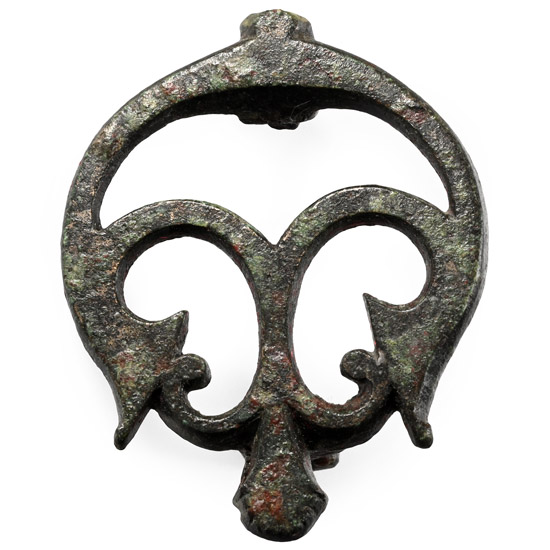
Roman Bronze Trumpet Plate Brooch
3rd-4th century A.D.Sold for (Inc. bp): £39
Openwork brooch formed of two opposing trumpet motifs with scrolls, pin-lugs and a catchplate on the reverse. 11.7 grams, 38 mm
From the private coin collection of a West London, UK, gentleman, formed since the mid 1980s. -
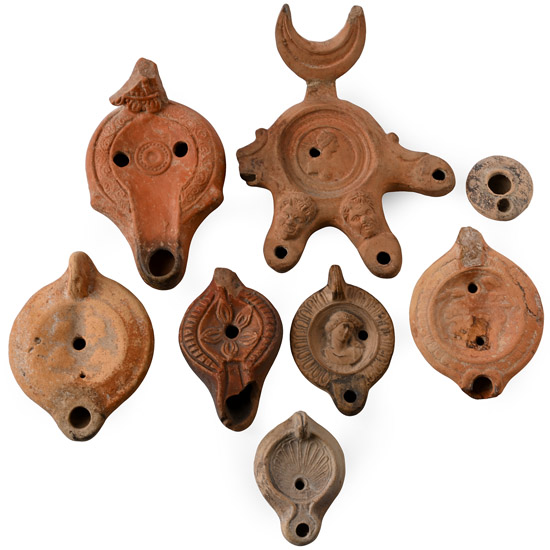
Roman Terracotta Oil Lamp Collection
2nd-19th century A.D.Sold for (Inc. bp): £650
Comprising eight lamps, including one with four nozzles and a crescentic reflector, one wth a bust of a young woman, and one with a five-petalled flower. 867 grams tptal, 4.5-17 cm
From an important collection of lamps, Germany, 1970s.
