
Loading, please wait...
LOT 0297
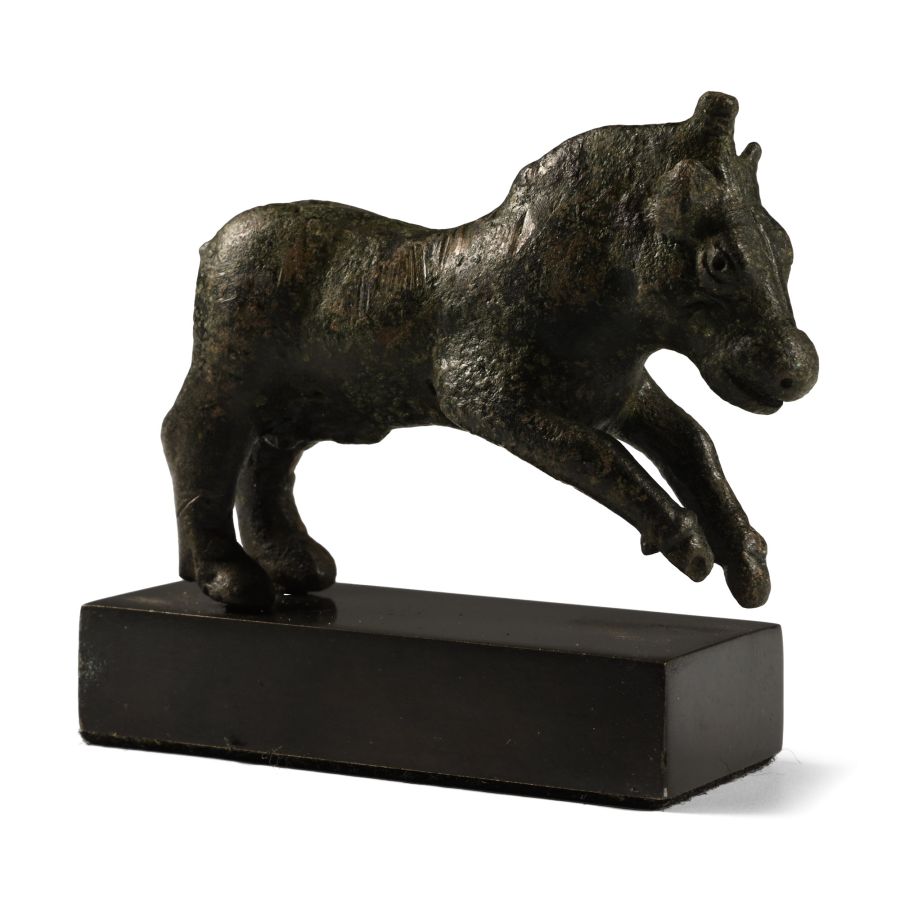
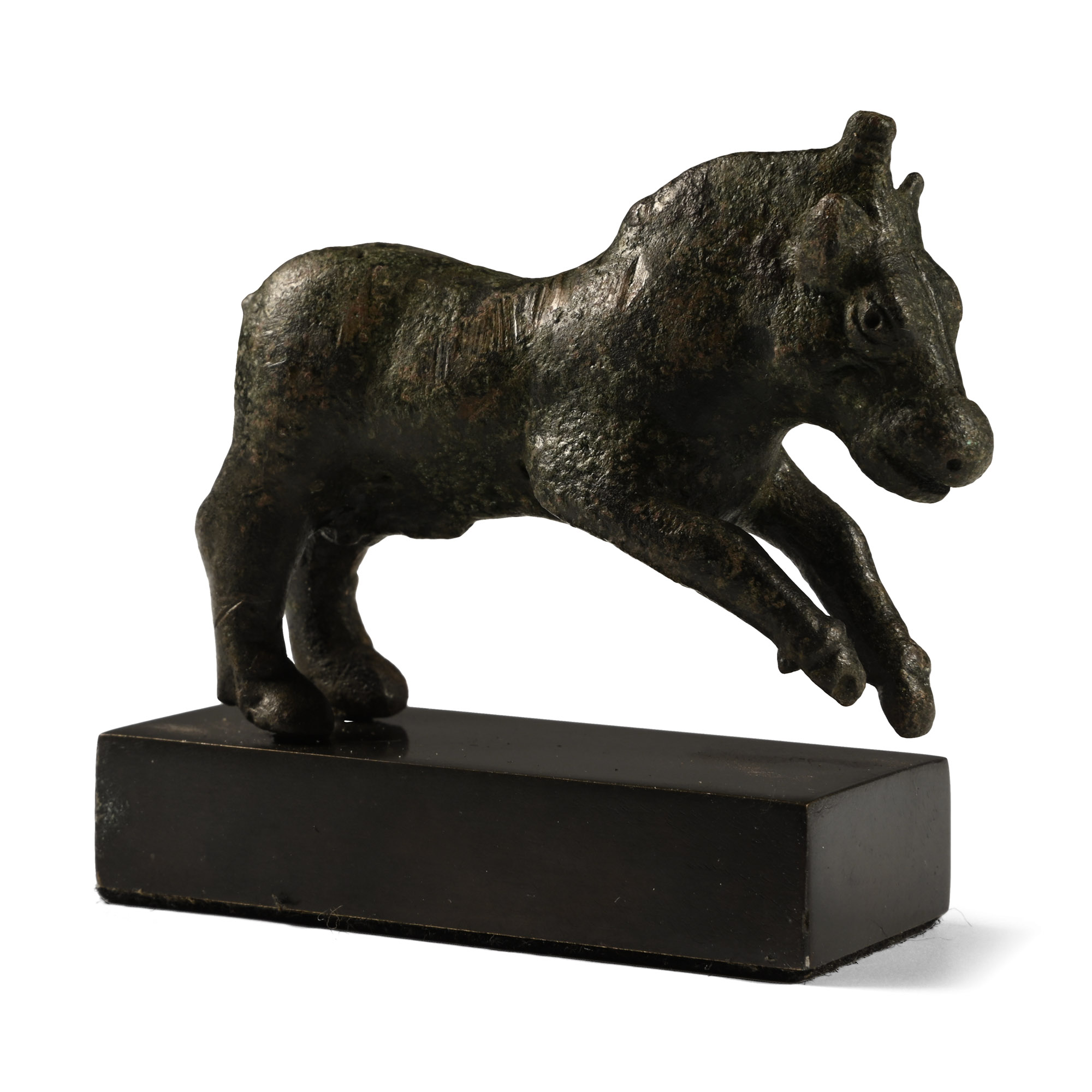
Romano-Celtic Bronze Leaping Boar Statuette
1ST CENTURY B.C.-1ST CENTURY A.D.
3 in. (165 grams total, 74 mm wide).
Modelled in the round in a dynamic pose with fierce facial features and partially open mouth; ridge of bristles to the spine; mounted on a custom-made stand.
ProvenanceFound Hampshire, UK, in the 1980s.
From the collection of David Miller and a Cambridge, UK, collection, 2000s.
This lot has been checked against the Interpol Database of stolen works of art and is accompanied by search certificate number no.12512-231450.
This lot has been cleared against the Art Loss Register database, and is accompanied by an illustrated lot declaration signed by the Head of the Antiquities Department, Dr Raffaele D’Amato.
See Boucher, S. & Tassinari, S., Musée de la Civilisation Gallo-Romaine a Lyon: Bronzes Antiques I. Inscriptions, Statuaire, Vaisselle, Lyon, 1976, item 19, for type; Boucher, S., Recherches sur les bronzes figures de Gaule Pre-Romaine et Romaine, 1976, Rome, pl.66, fig.316, for type.
FootnotesThe small statuettes of boars found in Roman Britain and Gaul were likely used as votive figurines for cult places. They were widespread in the Roman provinces of Celtic origin. However, one cannot exclude the fact that many boars found in Britain belong to the pre-conquest era. One of the few types of bronze figurines that are known to precede the arrival of the Romans is, in fact, that of the boars.
CONDITIONTimeLine Auctions follows a vetting process to ensure the authenticity and legality of all items, reinforcing our commitment to integrity and responsible trading. Each antiquity, antique, and coin lot undergoes thorough examination by a vetting committee of at least ten external specialists, professional trade association members, scientists, and archaeologists: Our Vetting Process
AUCTIONS:
TimeLine is a leading auction house specialising in antiquities, ancient art, collectables, natural history, coins, medals, and books. Our auctions offer museums, collectors, historians, and enthusiasts the opportunity to acquire unique and historically significant pieces.
LOT 0297
Romano-Celtic Bronze Leaping Boar Statuette
Estimate £4,000 - 6,000€4,640 - 6,960 (for guidance only)$5,400 - 8,100 (for guidance only)
-
Iron Age Celtic Bronze Artefact Group
1st century B.C.-1st century A.D.Sold for (Inc. bp): £26
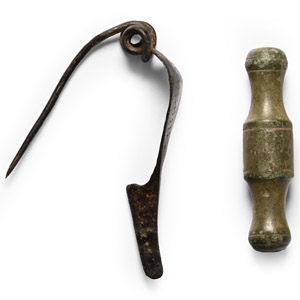
Comprising: a bow brooch with integral spring and pin, flat-section bow with stamped decoration; a toggle with rounded finials. 21.2 grams total, 40-51 mm
From the collections of Norfolk and Gloucestershire, UK, gentlemen. Property of a private collector, West London, UK. This lot is accompanied by an illustrated lot declaration signed by the Head of the Antiquities Department, Dr Raffaele D’Amato. -
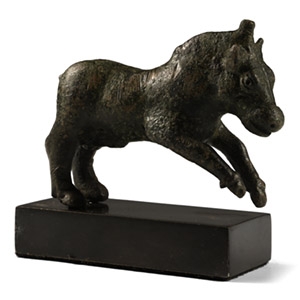
Romano-Celtic Bronze Leaping Boar Statuette
1st century B.C.-1st century A.D.Estimate: £4,000 - 6,000 (+bp*)
Opening Bid: £1,784
Modelled in the round in a dynamic pose with fierce facial features and partially open mouth; ridge of bristles to the spine; mounted on a custom-made stand. 165 grams total, 74 mm wide
Found Hampshire, UK, in the 1980s. From the collection of David Miller and a Cambridge, UK, collection, 2000s. This lot has been checked against the Interpol Database of stolen works of art and is accompanied by search certificate number no.12512-231450. This lot has been cleared against the Art Loss Register database, and is accompanied by an illustrated lot declaration signed by the Head of the Antiquities Department, Dr Raffaele D’Amato.
The small statuettes of boars found in Roman Britain and Gaul were likely used as votive figurines for cult places. They were widespread in the Roman provinces of Celtic origin. However, one cannot exclude the fact that many boars found in Britain belong to the pre-conquest era. One of the few types of bronze figurines that are known to precede the arrival of the Romans is, in fact, that of the boars. -
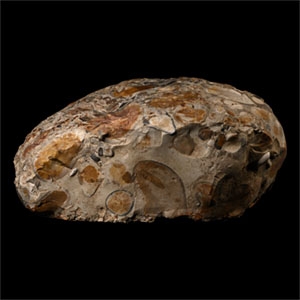
'The Great Horkesley' Late Iron Age Celtic to Early Roman Puddingstone Quern
Britain, 10-160 A.D.Sold for (Inc. bp): £98
Large fragment from a quern with ground conical hollow to the upper face; puddingstone matrix with many inclusions. 4.6 kg, 23.5 cm
Found Great Horkesley, Essex, UK, on Monday 1st April 2024. Accompanied by a copy of the British Museum's Portable Antiquities Scheme (PAS) report no.SF-4DB848. This lot is accompanied by an illustrated lot declaration signed by the Head of the Antiquities Department, Dr Raffaele D’Amato.
