
Loading, please wait...
LOT 1709
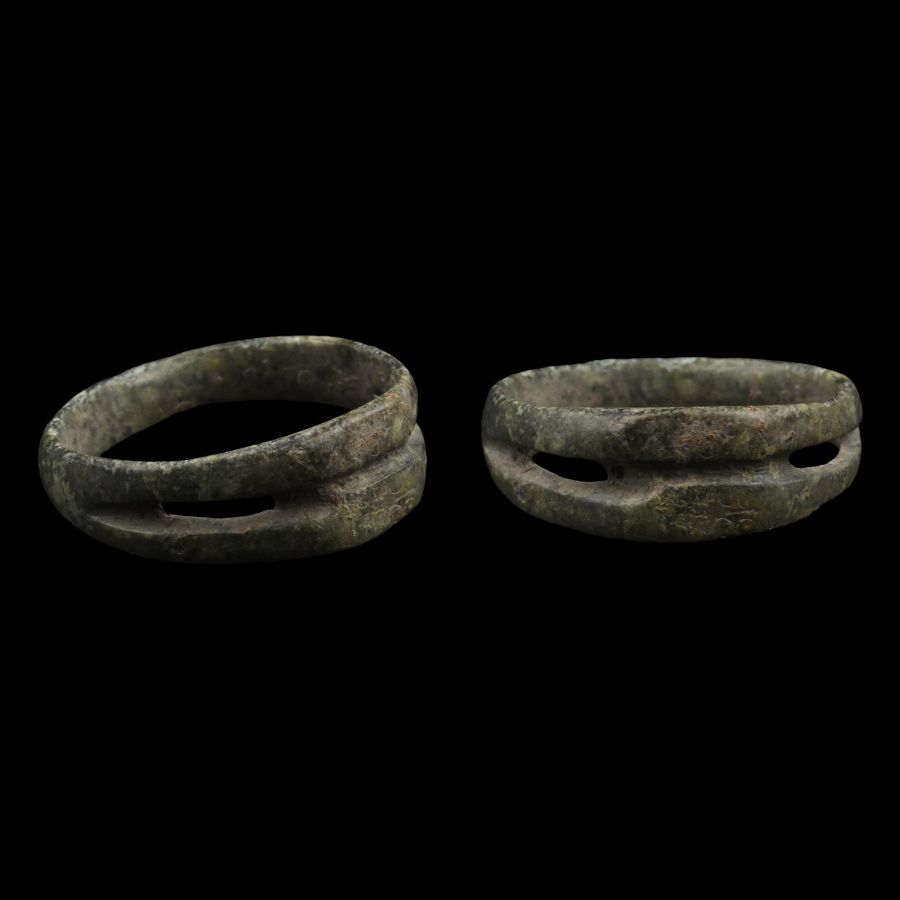
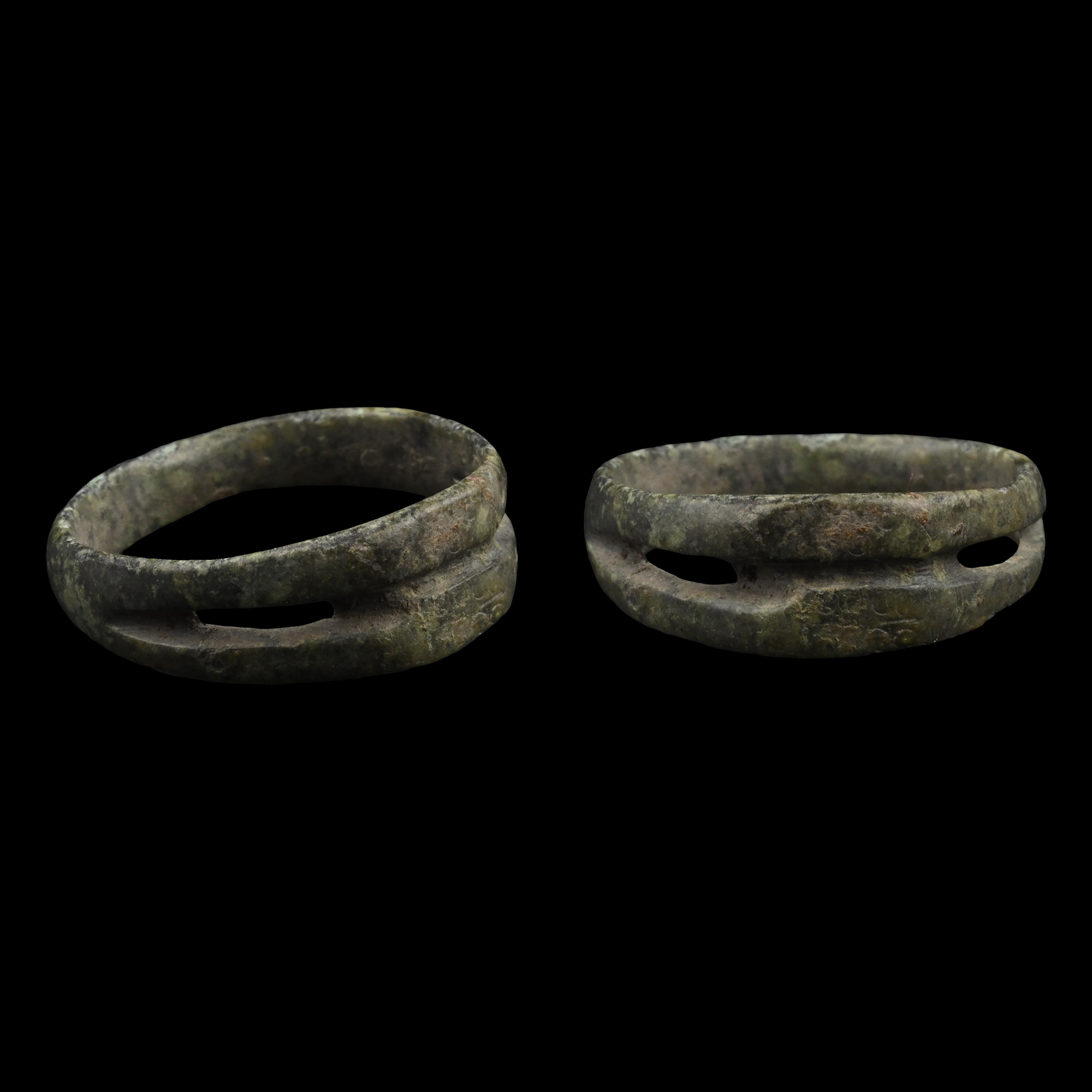
Romano-Celtic Bronze Double Bezel Ring
1ST CENTURY B.C.-2ND CENTURY A.D.
1 in. (3.38 grams, 23.00 mm overall, 17.62 mm internal diameter (approximate size British P, USA 7 1/2, Europe 16.23, Japan 15)).
Comprising a D-section hoop with the bezel formed of two rods joined at the centre. [No Reserve]
ProvenanceAcquired on the UK and EU art market before 2000.
From the private collection of a Surrey, UK, gentleman.
Cf. Henkel, F., Die Romische Fingerringe der Rheinlande, Berlin, 1913, item 1042, pl.XLI, for the type.
FootnotesA similar ring was found in Cologne, Luxembourg Strasse, this type of ring often being found in gold.
CONDITIONTimeLine Auctions follows a vetting process to ensure the authenticity and legality of all items, reinforcing our commitment to integrity and responsible trading. Each antiquity, antique, and coin lot undergoes thorough examination by a vetting committee of at least ten external specialists, professional trade association members, scientists, and archaeologists: Our Vetting Process
AUCTIONS:
TimeLine is a leading auction house specialising in antiquities, ancient art, collectables, natural history, coins, medals, and books. Our auctions offer museums, collectors, historians, and enthusiasts the opportunity to acquire unique and historically significant pieces.
-
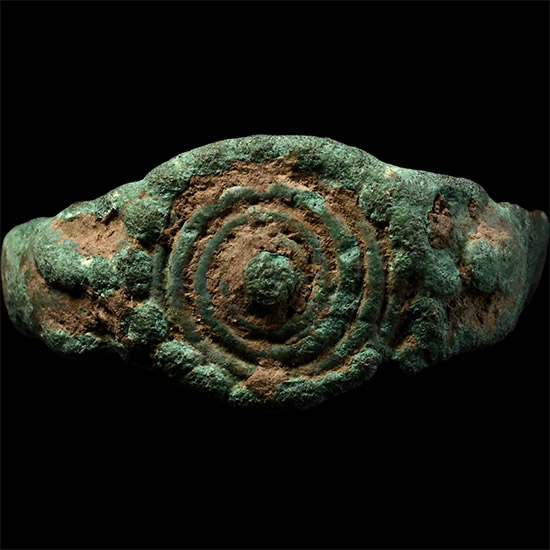
British Celtic Bronze Ring with Concentric Design
1st century B.C.-1st century A.D.Sold for (Inc. bp): £59
Flat-section hoop and a discoid bezel with a low-relief concentric circle motif, a raised pellet at the centre. 2.25 grams, 21.70 mm overall, 17.82 mm internal diameter (approximate size British O 1/2, USA 7 1/4, Europe 15.61, Japan 15)
Found Norfolk, UK. Acquired on the UK and EU art market before 2000. From the private collection of a Surrey, UK, gentleman.
Similar types of Celto-Roman bronze rings were found in the Thames in spoil heaps dating to the 1st century A.D. The most prolific finger rings in use throughout the Roman occupation were in bronze, and some forms were borrowed from Celtic arts and patterns. -
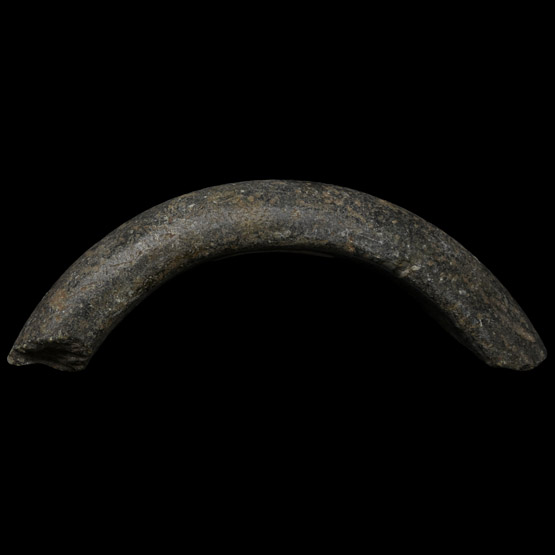
Celtic Shale Bracelet Fragment
Iron Age, 4th-1st century B.C.Sold for (Inc. bp): £39
Plano-convex in section and curved in profile with polished faces; old collector's label to inner face' Broch / Nordwall / Caithness'. 70 grams, 10.5 cm
From the private collection of a West Midlands lady collector. -
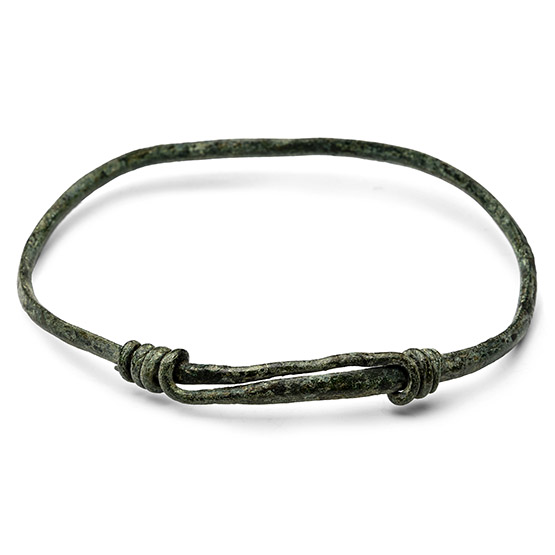
Celtic Bronze Adjustable Bracelet
Iron Age, circa 2nd century B.C.-1st century A.D.Estimate: £100 - 140 (+bp*)
Opening Bid: £50
Formed from a single lentoid-section rod with the ends wound around the shank in a sliding knot. 22.2 grams, 88 mm
From the collection of a late Gloucestershire, UK, collector.
