Loading, please wait...

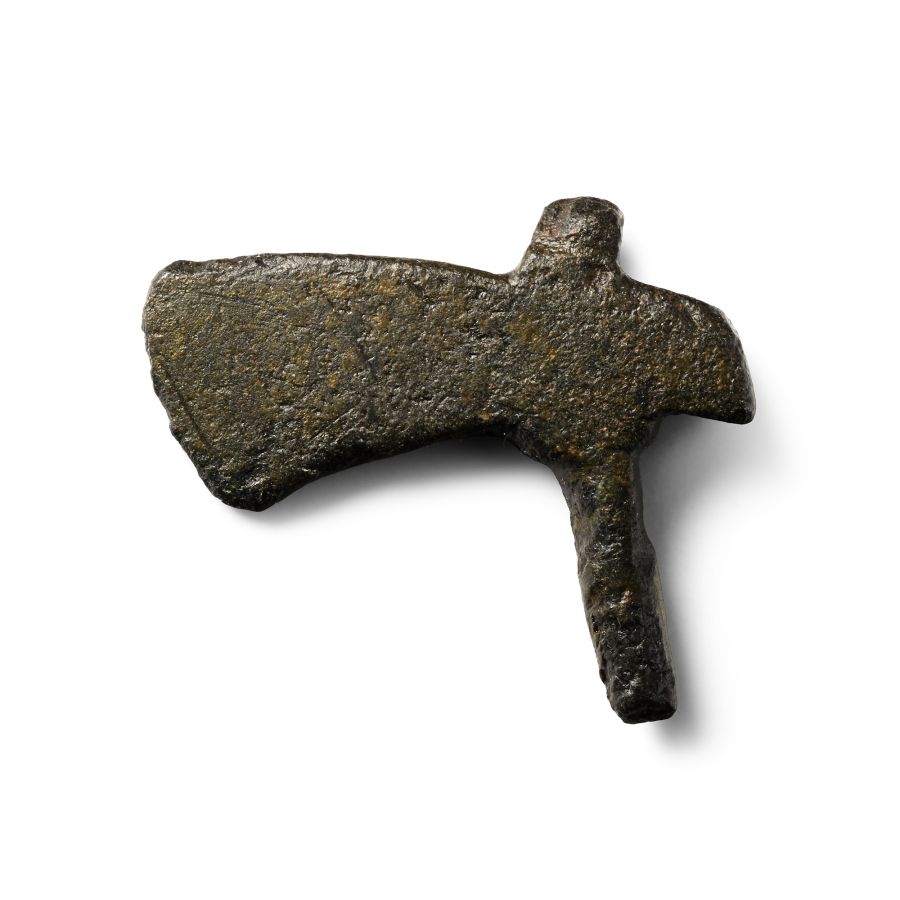
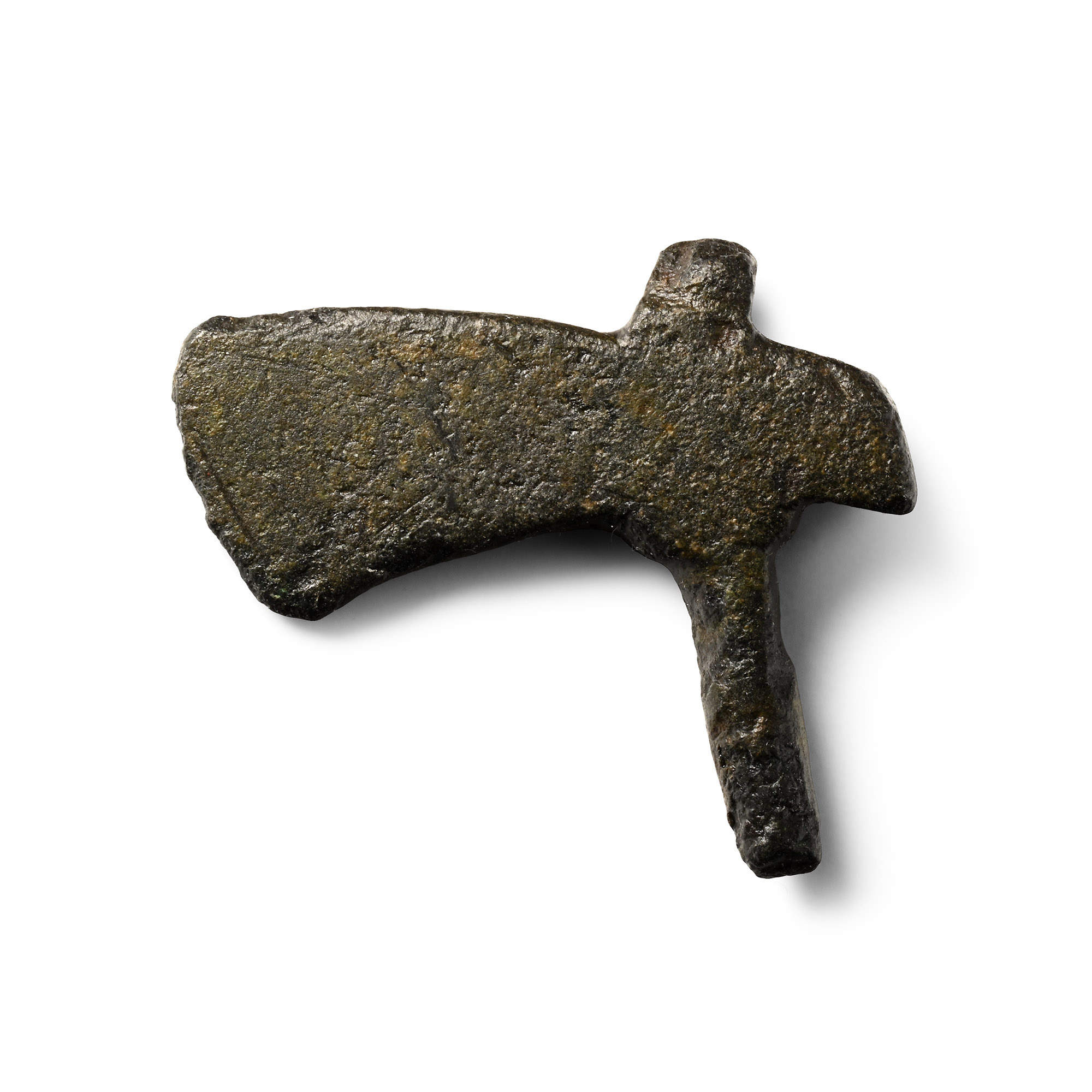
Romano-British Votive Miniature Axehead Romano-British Votive Miniature Axehead Romano-British Votive Miniature Axehead
Use mousewheel to zoom in and out, click to enlarge
Details

LOT 0845

Romano-British Votive Miniature Axehead

ENGLAND, 1ST-3RD CENTURY A.D.

7/8 in. (4.19 grams, 23 mm).

With curved blade stepped at the socket and short shaft beneath. [No Reserve]

Provenance

Found Slipton, Northamptonshire, UK.
Recorded with UKDFD no.36185.

CONDITION
VETTING:

TimeLine Auctions follows a vetting process to ensure the authenticity and legality of all items, reinforcing our commitment to integrity and responsible trading. Each antiquity, antique, and coin lot undergoes thorough examination by a vetting committee of at least ten external specialists, professional trade association members, scientists, and archaeologists: Our Vetting Process


AUCTIONS:

TimeLine is a leading auction house specialising in antiquities, ancient art, collectables, natural history, coins, medals, and books. Our auctions offer museums, collectors, historians, and enthusiasts the opportunity to acquire unique and historically significant pieces.

LOT 0845

Romano-British Votive Miniature Axehead

Estimate £30 - 40€35 - 46 (for guidance only)$41 - 54 (for guidance only)

Current bid: £5 +BP*
(1 Bid, Reserve met)

Sign in to Bid

Please enter a e-mail
Please enter a password
Or Create Account here.
Please confirm to accept TC and Privacy policy

(1 Bid, Reserve met)   |   Current bid: £5
RELATED LOTS
  • Silver Roman Coin and Framed Limited Edition Print
    Silver Roman Coin and Framed Limited Edition Print
    3rd century A.D. and later

    Estimate: £40 - 60 (+bp*)

    Opening Bid: £5

    The coin of Emperor Severus Alexander (222-235 A.D.) mounted on 22 carat gold foil, framed with an art print signed by the artist David McAllister, depicting scenes of Roman military activity; limited edition number 7/1150. 1.26 kg, 49.5 x 37.5 cm


    UK gallery, early 2000s. Accompanied by a previous numbered certificate of authenticity.

    David McAllister's exciting design is a 'one of a kind' work that portrays the might and riches of the Roman civilisation. This limited edition print is a celebration of the award-winning artist's lifetime dedication to historical paintings of the ancient world. To enhance appreciation of this rare and historic work, each print is signed and numbered by the artist.

    Lot Details

  • Roman Bronze Cupid Statuette
    Roman Bronze Cupid Statuette
    2nd-3rd century A.D. or later

    Estimate: £200 - 300 (+bp*)

    Opening Bid: £100

    Depicting a naked winged Cupid in a dynamic pose, right arm extended, left arm against the body, with the right leg extended backwards and the left leg firmly placed on the high pedestal, a dove or a torch might originally have been held in his hands; head modelled with well-sculpted facial details and straggly hair covering his ears, a top-knot at the top of his head at the end of a pair of braids; possibly once forming part of a larger group, probably centred around a statuette of Venus. 47.8 grams, 78 mm


    Ex South London collection; acquired before 1980.

    Lot Details

  • Roman Gold Ring with Nicolo Gemstone of a Bearded Bacchus as a Herm
    Roman Gold Ring with Nicolo Gemstone of a Bearded Bacchus as a Herm
    1st century A.D. ring: 3rd-4th century A.D.

    Estimate: £3,500 - 4,500 (+bp*)

    Opening Bid: £1,750

    The intaglio deeply carved to depict a profile of Bacchus, set within a closed-back bezel; the band formed as a triple-twisted rope with granules and beadwork upon the shoulders. 5.90 grams, 22.20 mm overall, 16.36 x 13.99 mm internal diameter (approximate size British I, USA 4 1/4, Europe 7.44, Japan 7)


    Acquired on the European art market. This lot has been checked against the Interpol Database of stolen works of art and is accompanied by search certificate number no.13342-257959.

    The band formed as a triple-twisted rope with granules, and beadwork upon the shoulders is typical of the 3rd to 4th centuries AD. However, the image of the bearded Bacchus remains attached to the original Greek iconography, as seen on the Ermae of the classical period.

    Lot Details