
Loading, please wait...


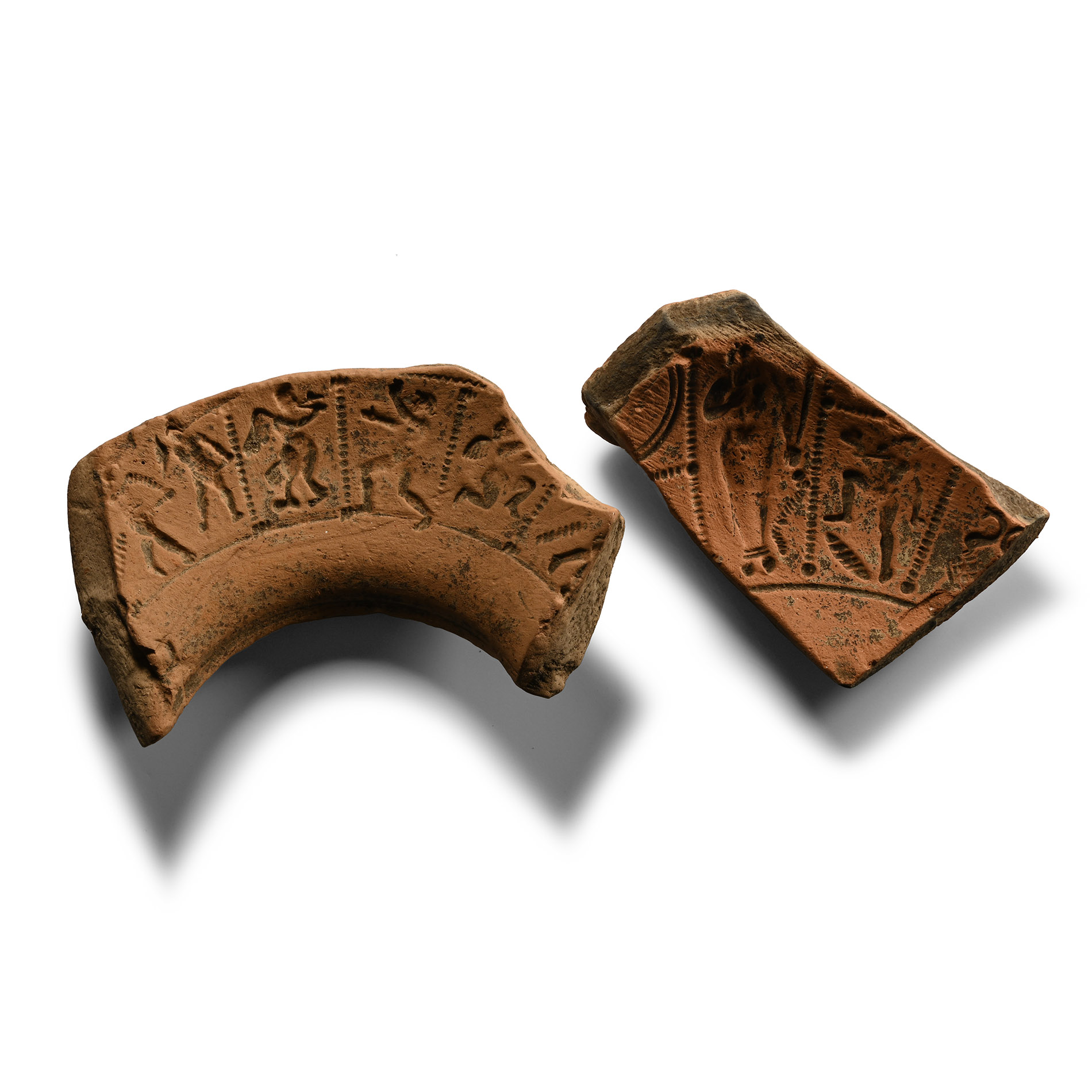
LOT 0913
Romano-British Potter's Bowl Mould Fragments with Winged Gods and Goddesses
3RD-4TH CENTURY A.D.
3 1/2 - 4 1/2 in. (180 grams total, 8.8-11.5 mm).
Fragments of a terracotta mould for the production of decorated bowls; each with incuse frieze of figures in active poses, some with daggers, and billeted lines between. [2, No Reserve]
ProvenanceFound Leicestershire, UK.
Acquired from a collector in 2012.
Ian Wilkinson collection, Nottinghamshire, UK, formed since 1985.
This lot is accompanied by an illustrated lot declaration signed by the Head of the Antiquities Department, Dr Raffaele D’Amato.
TimeLine Auctions follows a vetting process to ensure the authenticity and legality of all items, reinforcing our commitment to integrity and responsible trading. Each antiquity, antique, and coin lot undergoes thorough examination by a vetting committee of at least ten external specialists, professional trade association members, scientists, and archaeologists: Our Vetting Process
AUCTIONS:
TimeLine is a leading auction house specialising in antiquities, ancient art, collectables, natural history, coins, medals, and books. Our auctions offer museums, collectors, historians, and enthusiasts the opportunity to acquire unique and historically significant pieces.
LOT 0913
Romano-British Potter's Bowl Mould Fragments with Winged Gods and Goddesses
Sold for (Inc. bp): £143
-
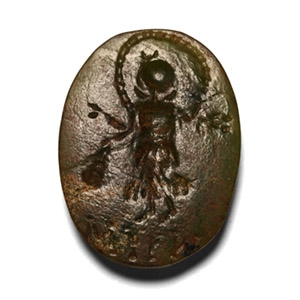
Roman Gnostic Magical Gemstone with Goddess Selene
3rd century A.D.Sold for (Inc. bp): £1,690
An oval-shaped amuletic peridot gemstone intaglio with bevelled edge, engraved with facing figure of goddess Selene advancing left, wearing a peplos with billowing veil or shawl above, crescent at neck and to head, holding a torch; Greek inscription 'MY' and inversed 'MI' below; supplied with a museum-quality impression. 3.07 grams, 21 mm
Acquired 1979-1999. London collection of the late Mr S.M., thence by descent. Acquired on the UK art market. Private collection, London, UK. This lot is accompanied by an illustrated lot declaration signed by the Head of the Antiquities Department, Dr Raffaele D’Amato. -
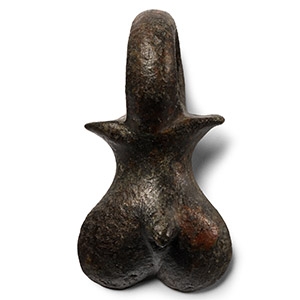
Roman Bronze Phallic Pendant
1st-2nd century A.D.Sold for (Inc. bp): £117
Formed as stylised male genitalia with emphasised testes, substantial suspension loop above. 18.1 grams, 37.4 mm
Ex German art market, 2000s. Acquired from an EU collector living in London. From the collection of Surrey, UK, gentleman. This lot is accompanied by an illustrated lot declaration signed by the Head of the Antiquities Department, Dr Raffaele D’Amato. -
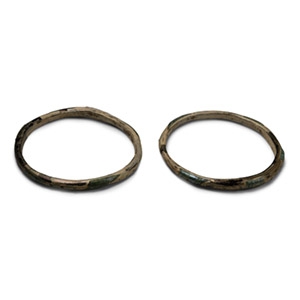
Roman Iridescent Glass Bangle Pair
3rd-4th century A.D.Sold for (Inc. bp): £85
Each a slender D-section hoop with some iridescent surface. 10.3 grams total, 60 mm each
From an old English collection. Acquired from Helios Gallery in 2011. Ian Wilkinson collection, Nottinghamshire, UK, formed since 1985. This lot is accompanied by an illustrated lot declaration signed by the Head of the Antiquities Department, Dr Raffaele D’Amato.
The mass production of glass in ancient Rome prompted the development of glass jewellery of unique qualities. The ancient Romans considered jewellery to be an essential accessory, being a public display of the wealth of high social classes. Recent excavations have provided better information on the use of glass for necklaces and bracelets, and in some cases it has been possible to understand the exact arrangement of the jewellery.
