
Loading, please wait...

LOT 0647
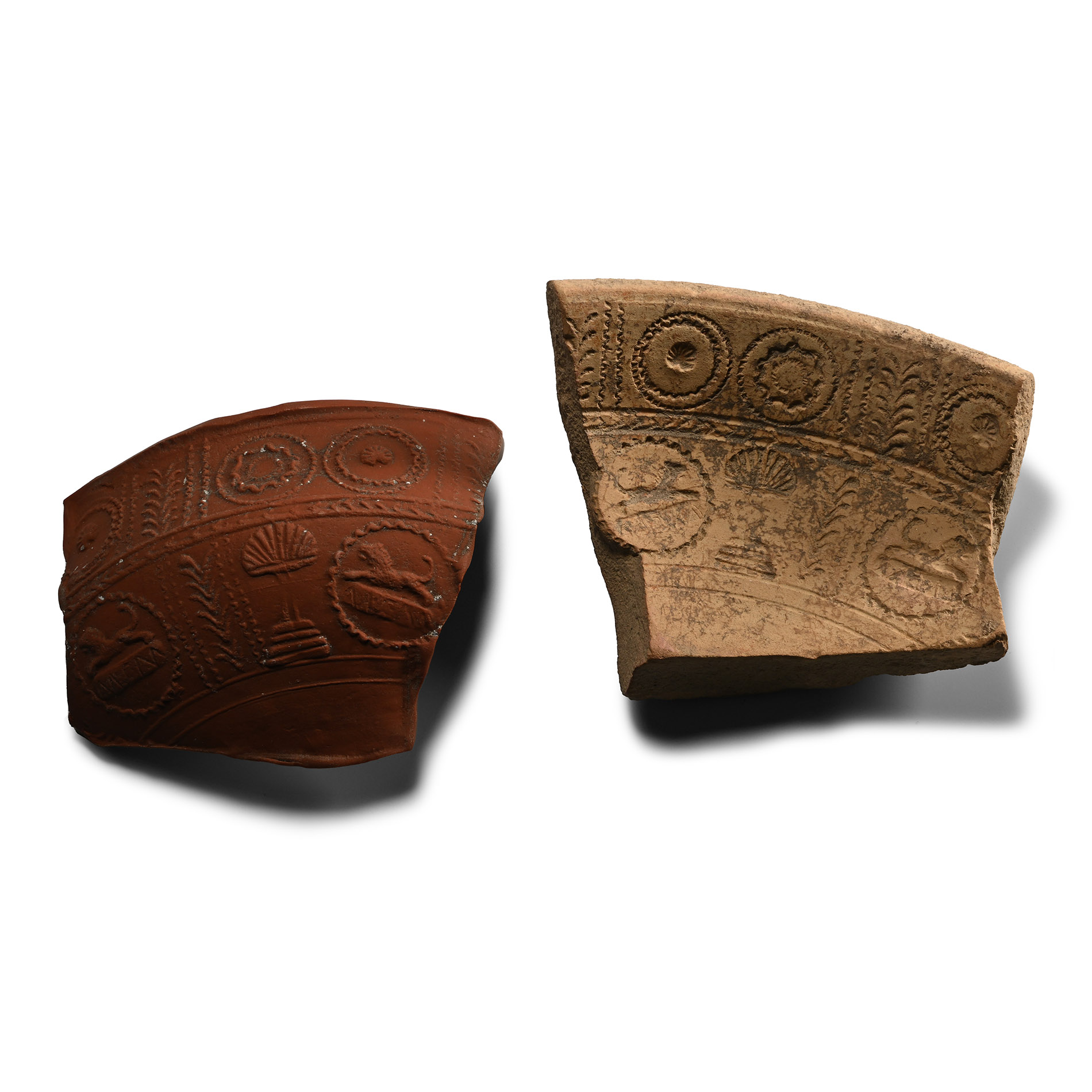
Romano-British Potter's Bowl Mould Fragment with Lions
3RD-4TH CENTURY A.D.
4 - 4 3/8 in. (227 grams total, 10.4-11 cm).
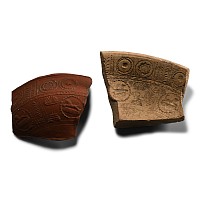
Fragment of a potter's mould for the production of decorative tableware, with upper band of rosettes, fronds and other motifs within frilled borders, and on the angled body frond, shell and repeated motif of a leaping lion on a base with 'M·C·M' legend; supplied with a modern impression from the mould. [No Reserve]
ProvenanceFound Suffolk, UK.
From an old English collection.
Ian Wilkinson collection, Nottinghamshire, UK, formed since 1985.
This lot is accompanied by an illustrated lot declaration signed by the Head of the Antiquities Department, Dr Raffaele D’Amato.
The lion was also the badge of several Roman legions, such as XVI Flavia Firma, XIII Gemina, XVI Gallica.
CONDITIONTimeLine Auctions follows a vetting process to ensure the authenticity and legality of all items, reinforcing our commitment to integrity and responsible trading. Each antiquity, antique, and coin lot undergoes thorough examination by a vetting committee of at least ten external specialists, professional trade association members, scientists, and archaeologists: Our Vetting Process
AUCTIONS:
TimeLine is a leading auction house specialising in antiquities, ancient art, collectables, natural history, coins, medals, and books. Our auctions offer museums, collectors, historians, and enthusiasts the opportunity to acquire unique and historically significant pieces.
-
Roman Redware Footed Dish Fragment with Maker's Mark
4th century A.D.Sold for (Inc. bp): £39
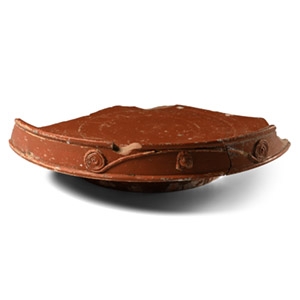
Comprising a large portion of a shallow round dish with ring foot, a shoe-shaped maker's mark 'GELLI' to the centre. 220 grams, 17.6 cm
Ex German art market, 2000s. Acquired from an EU collector living in London. From the collection of Surrey, UK, gentleman. This lot is accompanied by an illustrated lot declaration signed by the Head of the Antiquities Department, Dr Raffaele D’Amato. -
Eastern Roman Garnet Gemstone with Jugate Horses
3rd-4th century A.D.Sold for (Inc. bp): £156
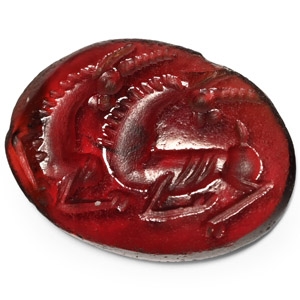
Plano-convex in section with engraved pair of quadrupeds each with its forelegs bent beneath the body, neck arched and head facing towards the rump; supplied with a museum-quality impression. 0.79 grams, 13 mm
From the Fadel family collection, London, UK, 1970s. This lot is accompanied by an illustrated lot declaration signed by the Head of the Antiquities Department, Dr Raffaele D’Amato. -
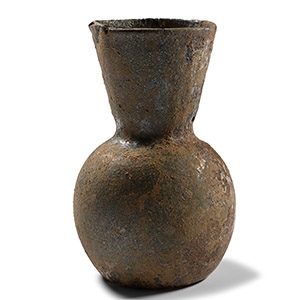
Roman Glass Vessel
1st-4th century A.D.Sold for (Inc. bp): £39
With a bulbous body, broad flared neck, recess to base; extensive iridescence, repaired. 47 grams, 10 cm
Ex London art market 1990s. From a London, UK, collection. This lot is accompanied by an illustrated lot declaration signed by the Head of the Antiquities Department, Dr Raffaele D’Amato.
