
Loading, please wait...


LOT 0957
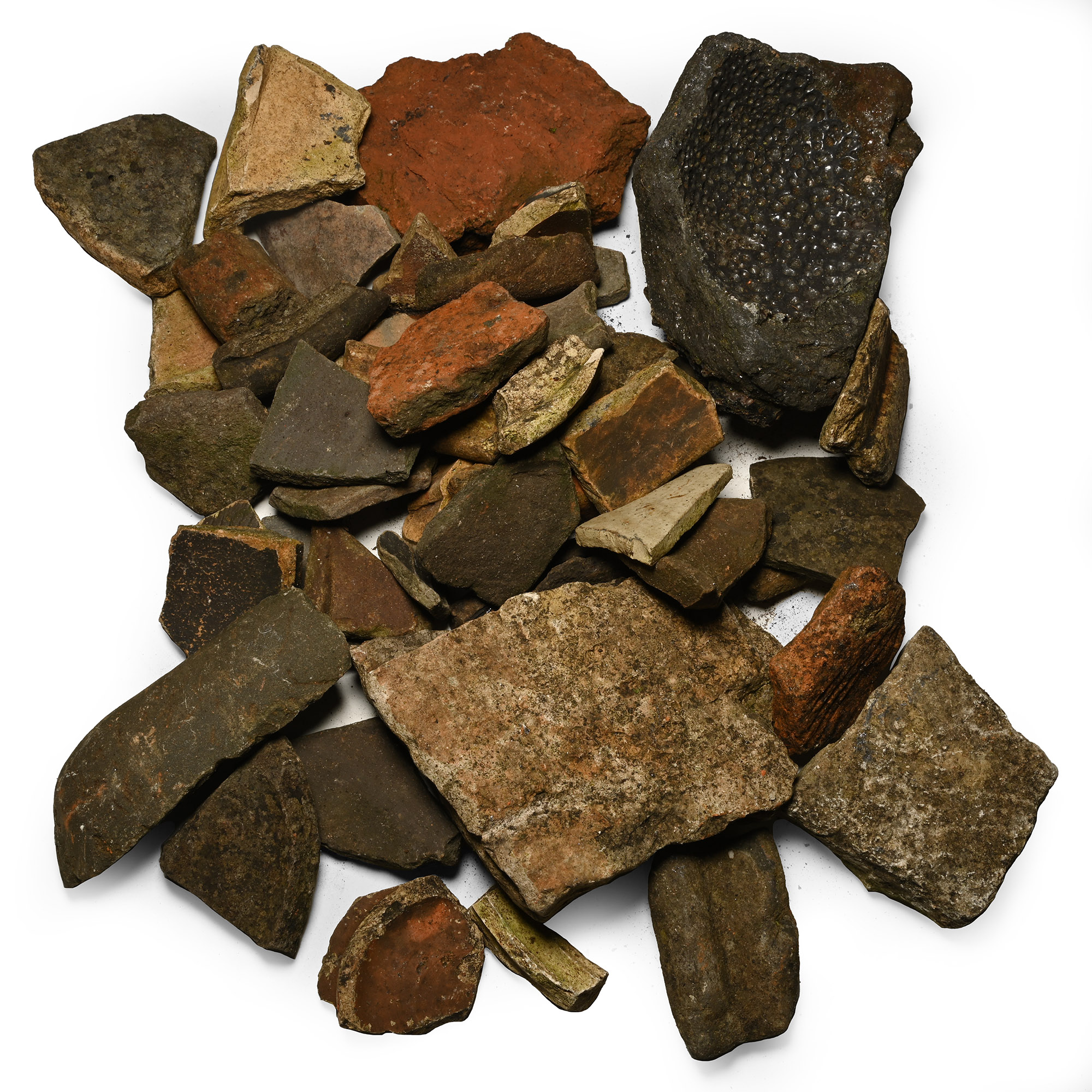
Romano-British Mixed Pottery and Other Sherd Group from Crocololana
3RD-4TH CENTURY A.D.
15/8 - 5 7/8 in. (4.41 kg total, 4.3-15 mm).
Including fragments of tile, jug handle and other items. [51, No Reserve]
ProvenanceFound whilst fieldwalking near Roman settlement of 'Crocololana', Borough, Lincolnshire, UK, 2003-2005.
Ian Wilkinson collection, Nottinghamshire, UK, formed since 1985.
This lot is accompanied by an illustrated lot declaration signed by the Head of the Antiquities Department, Dr Raffaele D’Amato.
TimeLine Auctions follows a vetting process to ensure the authenticity and legality of all items, reinforcing our commitment to integrity and responsible trading. Each antiquity, antique, and coin lot undergoes thorough examination by a vetting committee of at least ten external specialists, professional trade association members, scientists, and archaeologists: Our Vetting Process
AUCTIONS:
TimeLine is a leading auction house specialising in antiquities, ancient art, collectables, natural history, coins, medals, and books. Our auctions offer museums, collectors, historians, and enthusiasts the opportunity to acquire unique and historically significant pieces.
LOT 0957
Romano-British Mixed Pottery and Other Sherd Group from Crocololana
Sold for (Inc. bp): £7
-
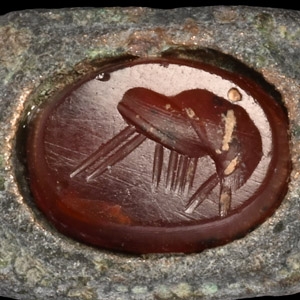
Roman Bronze Ring with Bird Gemstone
2nd-3rd century A.D.Sold for (Inc. bp): £221
With inset carnelian gemstone, incuse profile bird motif. 4.77 grams, 20.24 mm overall, 16.39 mm internal diameter (approximate size British J, USA 4 3/4, Europe 8.69, Japan 8)
Ex German art market, 2000s. Acquired from an EU collector living in London. From the collection of Surrey, UK, gentleman. This lot is accompanied by an illustrated lot declaration signed by the Head of the Antiquities Department, Dr Raffaele D’Amato. -
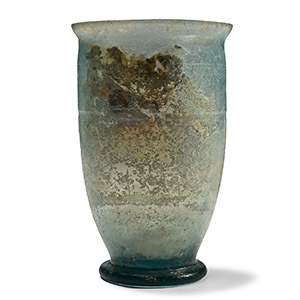
Roman Glass Goblet with Cut Design
Circa 100-300 A.D.Estimate: £700 - 900 (+bp*)
Opening Bid: £350
Translucent with straight sides narrowing to the dimpled base, flared and rolled rim, the body decorated with two horizontal ribbed lines. 104 grams, 10.5 cm
Swiss private collection, Basel. Before that in a Swiss private collection, Bern. Previously with Sayd & Fayez Barakat & Sons, Bethlehem and Jerusalem. Accompanied by a certificate of authenticity from Shaher Barakat, Jerusalem. This lot is accompanied by an illustrated lot declaration signed by the Head of the Antiquities Department, Dr Raffaele D’Amato.
The Hebrew word 'zekhukhith' (glass) appeared in the Old Testament, but it was frequently used in the Mishnaic Hebrew and in correlation with the Aramaic 'zegugita'. In the Talmudic times white and coloured, transparent glasses were very valuable. This magnificent goblet was found on Mons Scopus, in Jerusalem and it shows the skill and the capacity of the Roman glass blowers of the time. After the establishment and unification of the Roman Empire under Augustus (27 B.C.), glass manufacturing quickly travelled throughout the Empire, and with the ease of production, glass entered the same sphere of use and popularity as metal and clay vessels. -
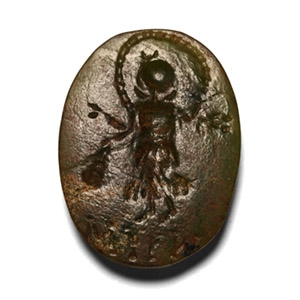
Roman Gnostic Magical Gemstone with Goddess Selene
3rd century A.D.Sold for (Inc. bp): £1,690
An oval-shaped amuletic peridot gemstone intaglio with bevelled edge, engraved with facing figure of goddess Selene advancing left, wearing a peplos with billowing veil or shawl above, crescent at neck and to head, holding a torch; Greek inscription 'MY' and inversed 'MI' below; supplied with a museum-quality impression. 3.07 grams, 21 mm
Acquired 1979-1999. London collection of the late Mr S.M., thence by descent. Acquired on the UK art market. Private collection, London, UK. This lot is accompanied by an illustrated lot declaration signed by the Head of the Antiquities Department, Dr Raffaele D’Amato.
