
Loading, please wait...
LOT 0777
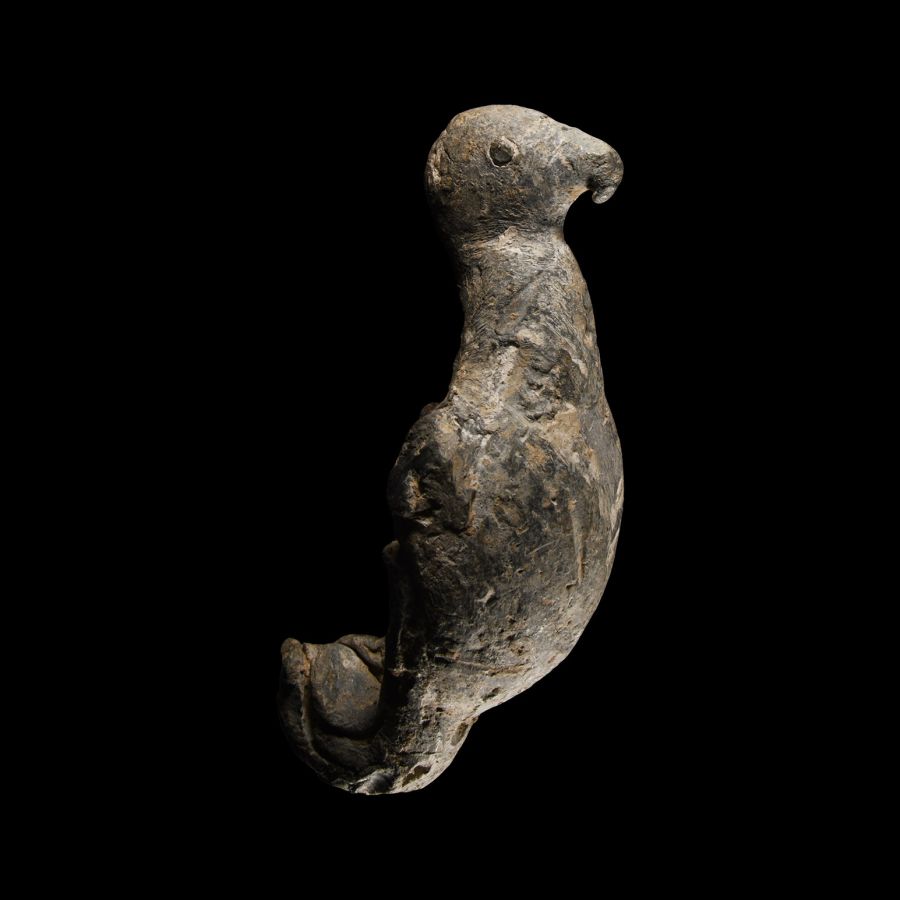
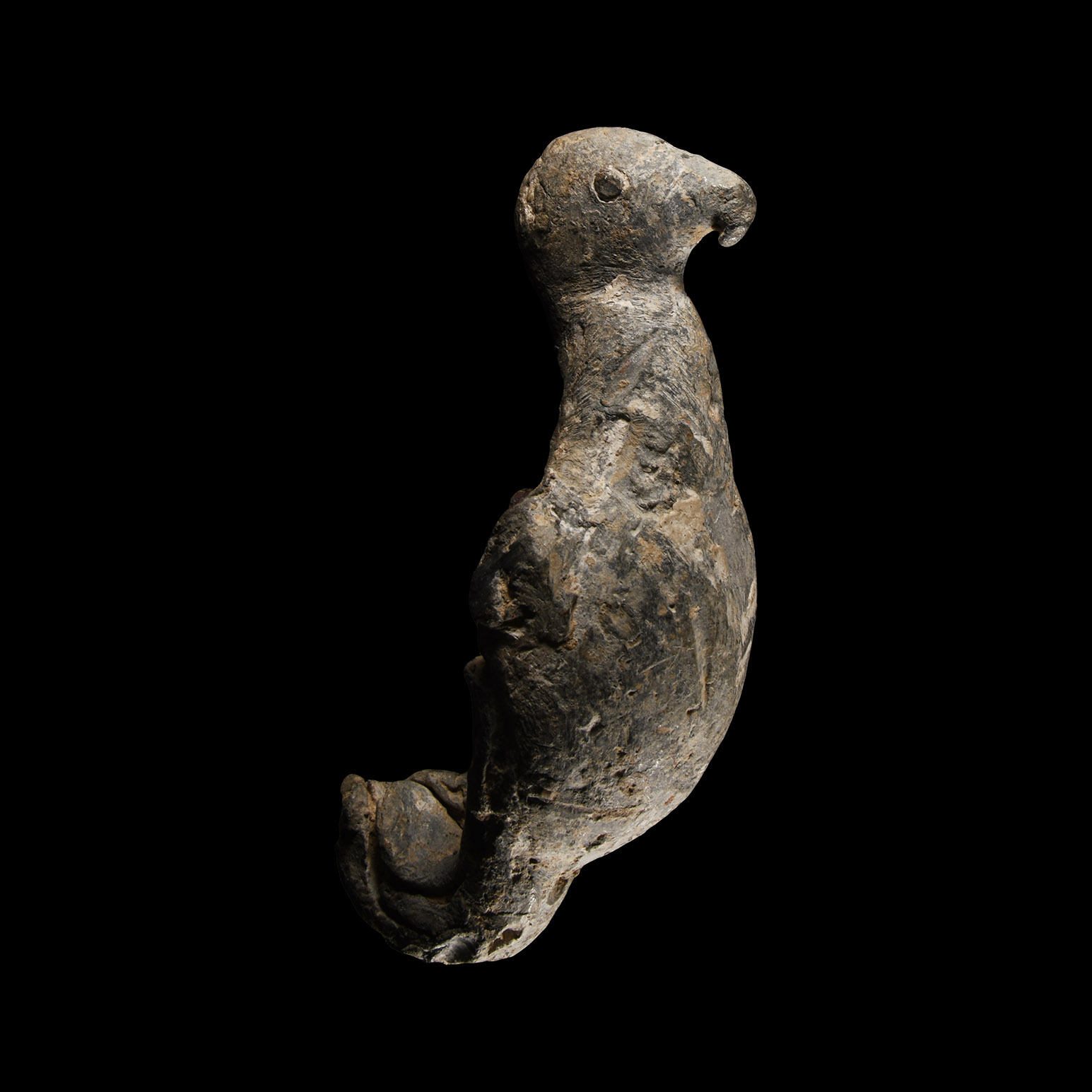
Romano-British Lead Bird Steelyard Weight
1ST-4TH CENTURY A.D.
4 3/8 in. (700 grams, 11.2 cm).
Formed with stub wings, a hooked beak and circular eyes, tail folded under the body,tail feathers and a speckled or ruffled breast underlined by moulded textures; iron loop embedded in the reverse face. [No Reserve]
ProvenanceEx Nigel Mills, London, UK.
LiteratureCf. for a similar dove in copper-alloy on the British Museum's Portable Antiquities Scheme see no.NLM-7DDF63.
FootnotesThe iron loop of the back may suggest this was attached to a vessel or other receptacle. Greek mythology associated the small white bird with Aphrodite, the goddess of love (known in Roman mythology as Venus). Venus is often depicted with doves fluttering around her or resting on her hand.
CONDITIONTimeLine Auctions follows a vetting process to ensure the authenticity and legality of all items, reinforcing our commitment to integrity and responsible trading. Each antiquity, antique, and coin lot undergoes thorough examination by a vetting committee of at least ten external specialists, professional trade association members, scientists, and archaeologists: Our Vetting Process
AUCTIONS:
TimeLine is a leading auction house specialising in antiquities, ancient art, collectables, natural history, coins, medals, and books. Our auctions offer museums, collectors, historians, and enthusiasts the opportunity to acquire unique and historically significant pieces.
-
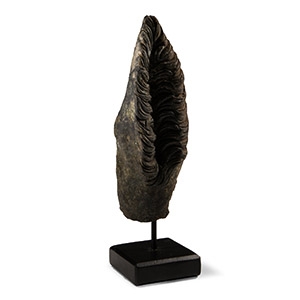
Larger Than Life-Size Roman Bronze Satyr's Ear
1st-3rd century A.D.Sold for (Inc. bp): £1,690
Probably from a colossal statue of Silenus or a satyr, detailed and naturalistic rendering of a left ear, conical shape with accurate depiction of the internal hair. 767 grams, 18.5 cm
Acquired in Europe before 1995. Private collection, Europe.
In the mythology of ancient Greece and in the Graeco-Roman literary world, satyrs were a community of beings who lived mostly in woods, surrounded by nature, and often together with nymphs. In the most ancient period they were imagined by the Greeks like Sileni, in human form, but with the ears, tail and sometimes hooves of horses. Seilenoi were depicted as fat, elderly, white-haired men, with snub noses, balding heads, and the ears and tails of asses. They were sometimes covered in fluffy white hair and occasionally sported a pair of ox horns. -
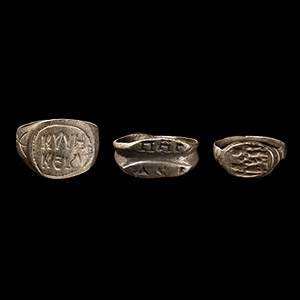
Silver Ring Group
Roman, 1st-4th century A.D. and laterSold for (Inc. bp): £715
One with expanded shoulders and bezel inscribed with text in a roundel; an oval bezel engraved with a figural scene; a 'twin' bezel composed of two elliptical plaques, each bearing inscribed letters. 8.68 grams total, 17-19 mm
Acquired on the UK art market. Property of a Ruislip, UK, gentleman, by inheritance. -
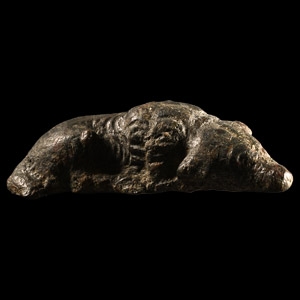
Roman Bronze Lying Dog Statuette
1st-4th century A.D.Sold for (Inc. bp): £130
Modelled in the round with naturalistic detailing, lying slightly curled, possibly asleep. 17.2 grams, 37 mm
‘The Ancient Menagerie Collection’ formerly the property of a Cambridgeshire lady, collected since the 1990s and acquired from auctions and dealers throughout Europe and the USA, now ex London collection.
