
Loading, please wait...
LOT 0736
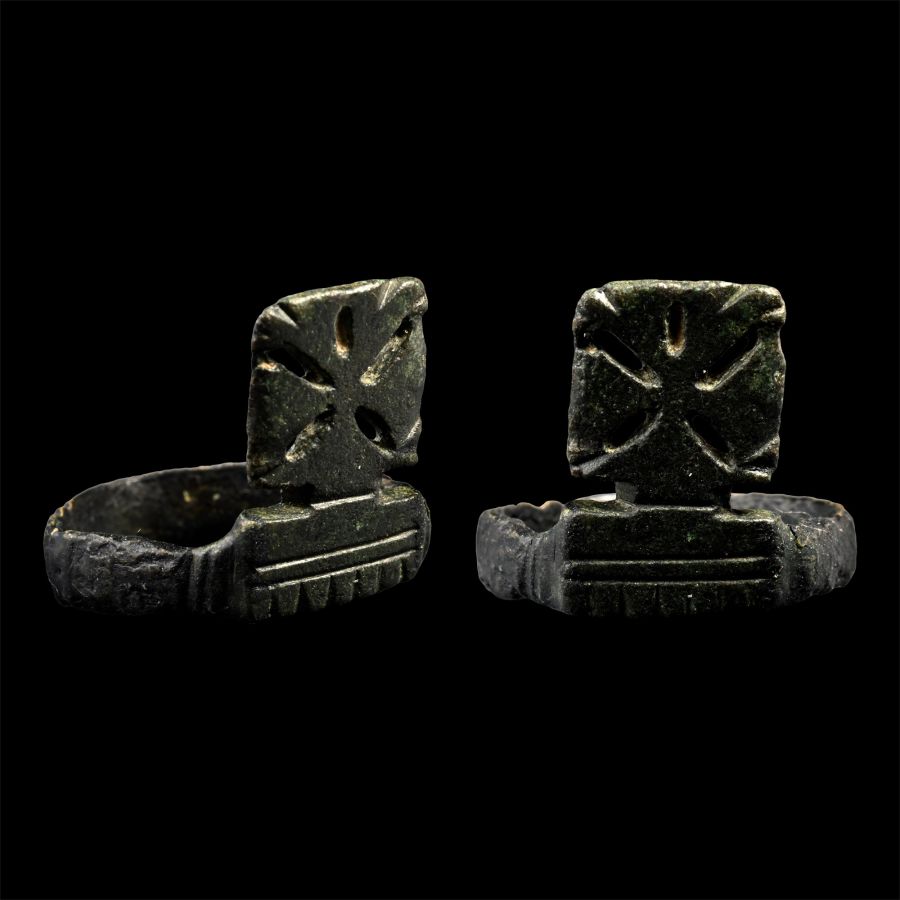
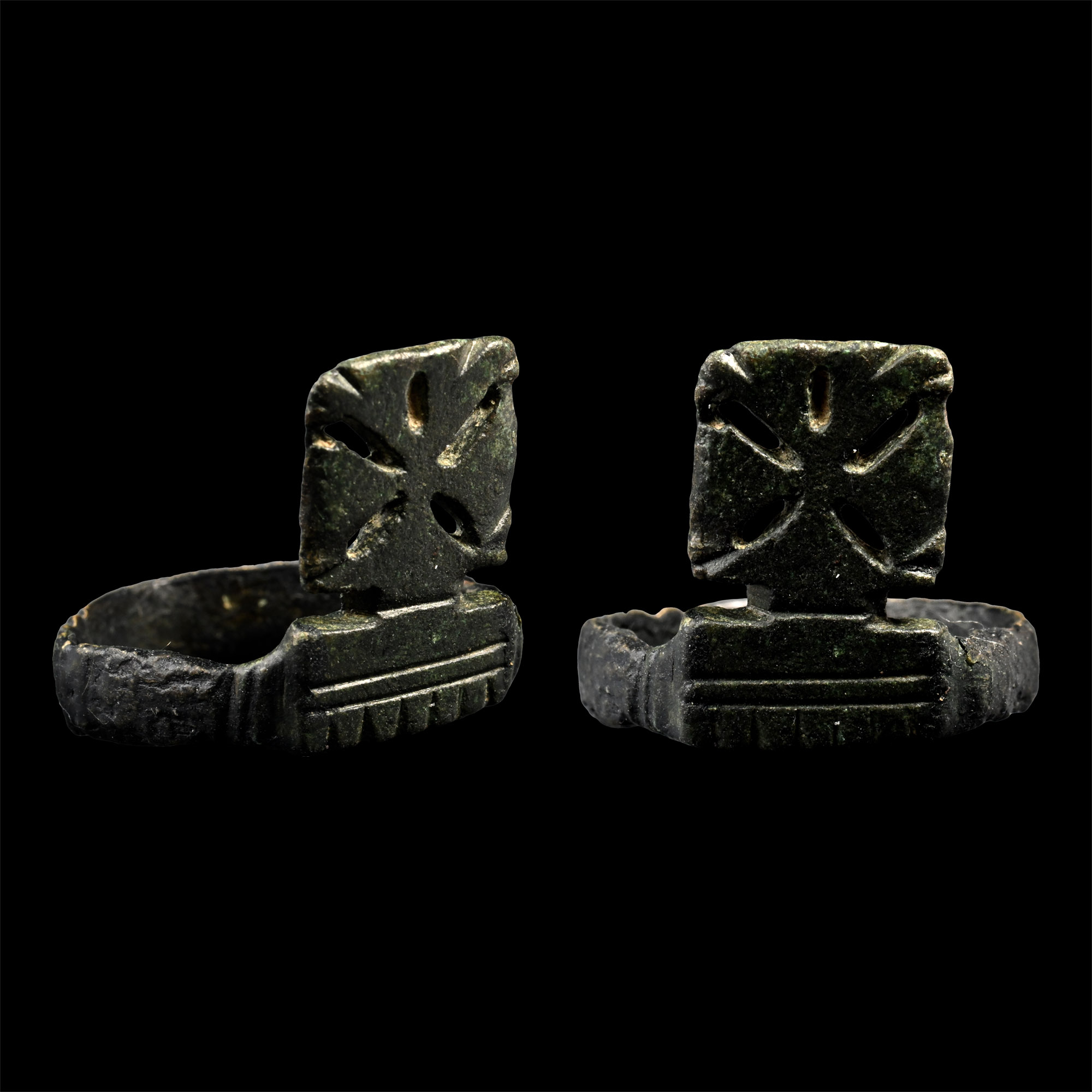
Romano-British Key Ring with Saltire Cross
4TH CENTURY A.D.
1 in. (5.98 grams, 25.50 mm overall, 21.47 mm internal diameter (approximate size British U 1/2, USA 10 1/4, Europe 23.15, Japan 22)).
Comprising a large D-section hoop with 'faux twist' decoration and a rectangular panel at the base, rectangular section bezel with linear decoration expanding to an openwork shank with saltire cross. [No Reserve]
ProvenanceFound near Ragby, Lincolnshire, UK
This lot is accompanied by an illustrated lot declaration signed by the Head of the Antiquities Department, Dr Raffaele D'Amato.
Cf. similar example with tetragammata crux in PAS KENT-FEA94D, Guiraud type 5e.
FootnotesRotary type ring-keys are recorded from excavations in Colchester and associated with small boxes and caskets of personal possessions, rather than doors or cupboards.
CONDITIONTimeLine Auctions follows a vetting process to ensure the authenticity and legality of all items, reinforcing our commitment to integrity and responsible trading. Each antiquity, antique, and coin lot undergoes thorough examination by a vetting committee of at least ten external specialists, professional trade association members, scientists, and archaeologists: Our Vetting Process
AUCTIONS:
TimeLine is a leading auction house specialising in antiquities, ancient art, collectables, natural history, coins, medals, and books. Our auctions offer museums, collectors, historians, and enthusiasts the opportunity to acquire unique and historically significant pieces.
-
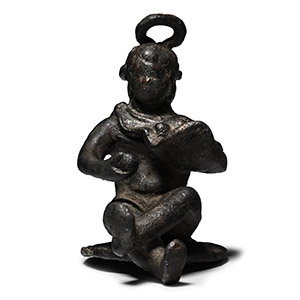
Roman Vessel Lid with Male Youth Wearing a Chlamys
1st-3rd century A.D.Sold for (Inc. bp): £520
Discoid base supporting a seated youth with legs crossed, wearing a chlamys, his left hand supporting fruit in the folds of the cloth and right hand holding one; base pierced; transverse wire to sides of the head, ring above. 366 grams, 80 mm
From the collection of a gentleman, acquired on the London art market in the 1990s. This lot is accompanied by an illustrated lot declaration signed by the Head of the Antiquities Department, Dr Raffaele D'Amato. -
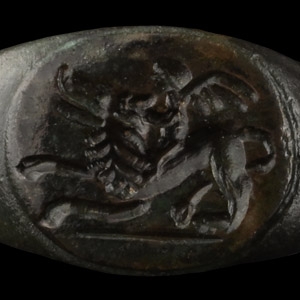
Roman Bronze Ring with Cupid Riding a Lion
2nd-3rd century A.D.Sold for (Inc. bp): £195
Incuse ribbing to the shoulders, ellipsoid plaque with incuse crouching lion and winged putto or Cupid above. 5.55 grams, 20.18 mm overall, 16.51 mm internal diameter (approximate size British G, USA 3 1/4, Europe 4.92, Japan 4)
Ex German art market, 2000s. Acquired from an EU collector living in London. From the collection of a Surrey, UK, gentleman. This lot is accompanied by an illustrated lot declaration signed by the Head of the Antiquities Department, Dr Raffaele D'Amato. -
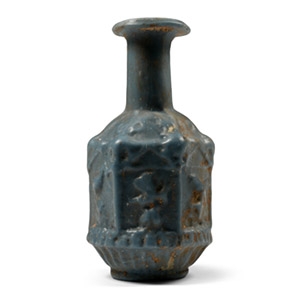
Roman Sidonian Opaque Light Blue Glass Flask
1st century A.D.Estimate: £3,000 - 4,000 (‡+bp*)
Opening Bid: £1,667
Hexagonal in plan with tall tubular neck and flared and folded rim, disc base with moulding seams; broad sloping shoulder above a sidewall of panels each with a low-relief avian image (bird in flight, bird perching on a branch, etc.). 31 grams, 80 mm
Ex private collection, Israel. Acquired from Archaeological Center, Auction 60, no.204. Private collection. Accompanied by a copy of the relevant Archaeological Center online catalogue page. This lot has been checked against the Interpol Database of stolen works of art and is accompanied by a search certificate number no.12530-232177. This lot has been cleared against the Art Loss Register database, and is accompanied by an illustrated lot declaration signed by the Head of the Antiquities Department, Dr Raffaele D'Amato.
