
Loading, please wait...

LOT 0881
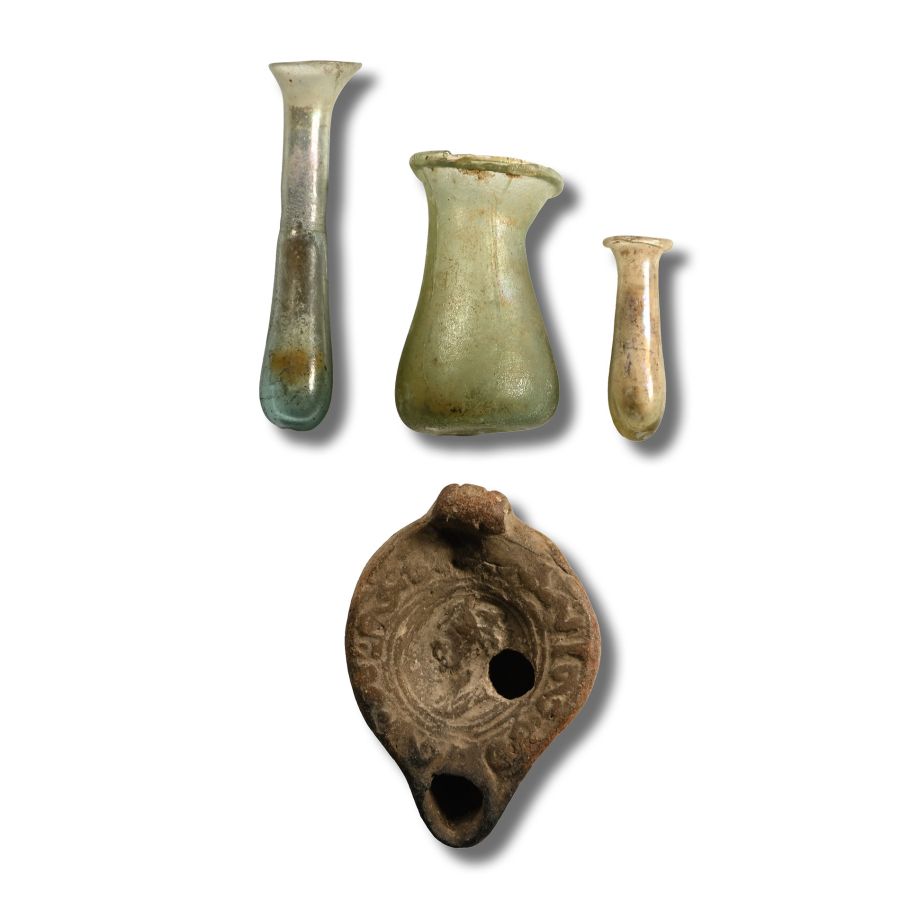
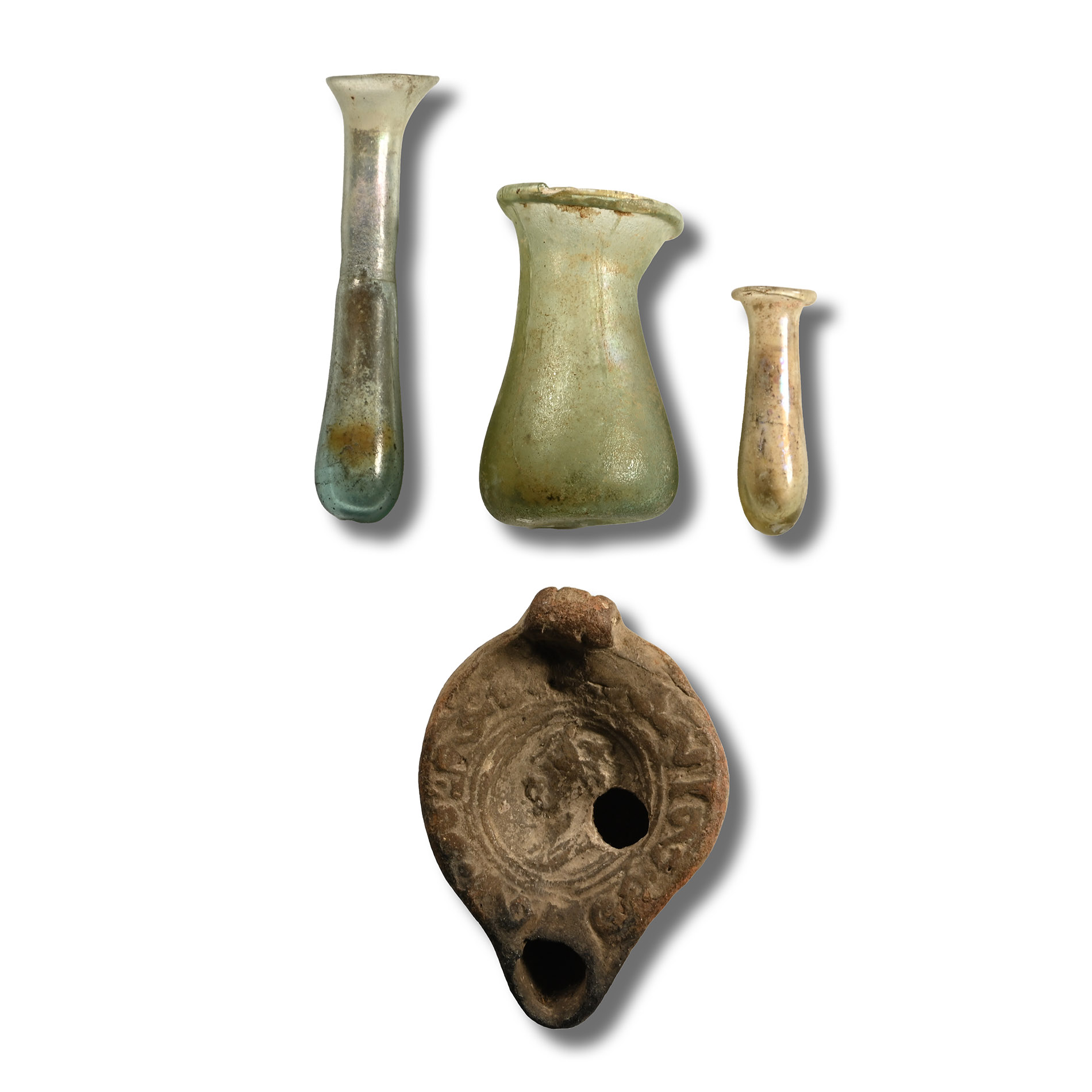
Romano-British Glass Vessel and Terracotta Oil Lamp Group
1ST-2ND CENTURY AD.
1 5/8 - 3 in. (71 grams total, 41-75 mm).
Comprising: a small unguentarium with iridescent surface; a small flask with rolled rim; terracotta oil lamp with lug handle. [4, No Reserve]
ProvenanceFrom an old collection formed before WWII, and believed to have been found at Worcester, UK.
Acquired from Alan Cherry, Bournemouth, UK, in 2007.
Ian Wilkinson collection, Nottinghamshire, UK, formed since 1985.
This lot is accompanied by an illustrated lot declaration signed by the Head of the Antiquities Department, Dr Raffaele D’Amato.
TimeLine Auctions follows a vetting process to ensure the authenticity and legality of all items, reinforcing our commitment to integrity and responsible trading. Each antiquity, antique, and coin lot undergoes thorough examination by a vetting committee of at least ten external specialists, professional trade association members, scientists, and archaeologists: Our Vetting Process
AUCTIONS:
TimeLine is a leading auction house specialising in antiquities, ancient art, collectables, natural history, coins, medals, and books. Our auctions offer museums, collectors, historians, and enthusiasts the opportunity to acquire unique and historically significant pieces.
LOT 0881
Romano-British Glass Vessel and Terracotta Oil Lamp Group
Sold for (Inc. bp): £117
-
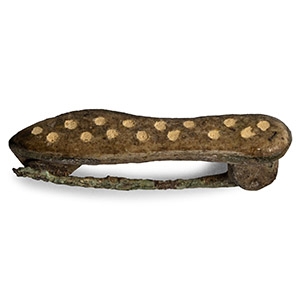
Roman Enamelled Bronze Slipper Plate Brooch
2nd century A.D.Sold for (Inc. bp): £117
Shoe-shaped with white studs, pin, pin-lugs and catchplate to the reverse. 3.58 grams, 31 mm
Acquired on the London art market in the late 1980s-1990s. From the family collection of an East London, UK, gentleman. This lot is accompanied by an illustrated lot declaration signed by the Head of the Antiquities Department, Dr Raffaele D’Amato. -
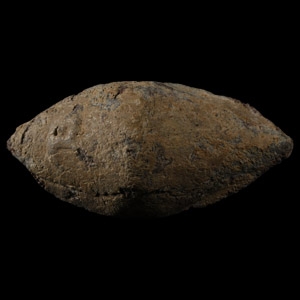
Roman Julius Caesar 'Battle of Munda' Lead Slingshot
45 B.C.Sold for (Inc. bp): £130
A biconical facetted lentoid-section lead sling shot (glans), inscription monogram a combination of letters 'C', 'A' and 'E', for 'C A E S' referring to Julius Caesar. 44.4 grams, 39 mm
Acquired on the UK art market. Property of a gentleman collector. Accompanied by an academic paper by military specialist Dr Raffaele D'Amato, dated 4th May 2022 and titled 'Roman Res Publica - Lead Slingshots (glandes) of Caesarian Age - 45 B.C circa'. This lot is accompanied by an illustrated lot declaration signed by the Head of the Antiquities Department, Dr Raffaele D’Amato.
The shot (type IIb of the Völling classification) is marked with the abbreviated name of Julius Caesar; it was used in quantity at the Battle of Monda (or Munda) against the last fellows of Pompey, the leaders of the Optimates, on the 17th March 45 BC. Similar shots were used in the Caesar's wars; slingers of Caesar's age were part of the light infantry. Caesar speaks of his Balearic slingers during the conquest of Gaul. They wore a short tunic, with leather or rope sandals to the feet, and a warm overcoat which could also have been used to store projectiles. They also used a satchel to carry very deadly lead-like stones or bullets. -
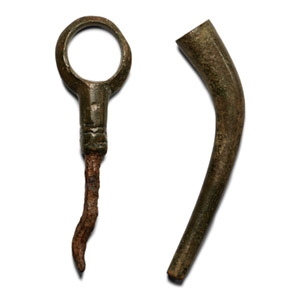
Roman Bronze Trumpet Mouth Piece and Handle
1st-4th century A.D.Sold for (Inc. bp): £20
Curved and tapering tube for a trumpet; bronze annular fitting with hooked iron shank. 70 grams total, 92-94 mm
Acquired from Ancient & Oriental in the 1990s. Ian Wilkinson collection, Nottinghamshire, UK, formed since 1985. This lot is accompanied by an illustrated lot declaration signed by the Head of the Antiquities Department, Dr Raffaele D’Amato.
