
Loading, please wait...

LOT 0683
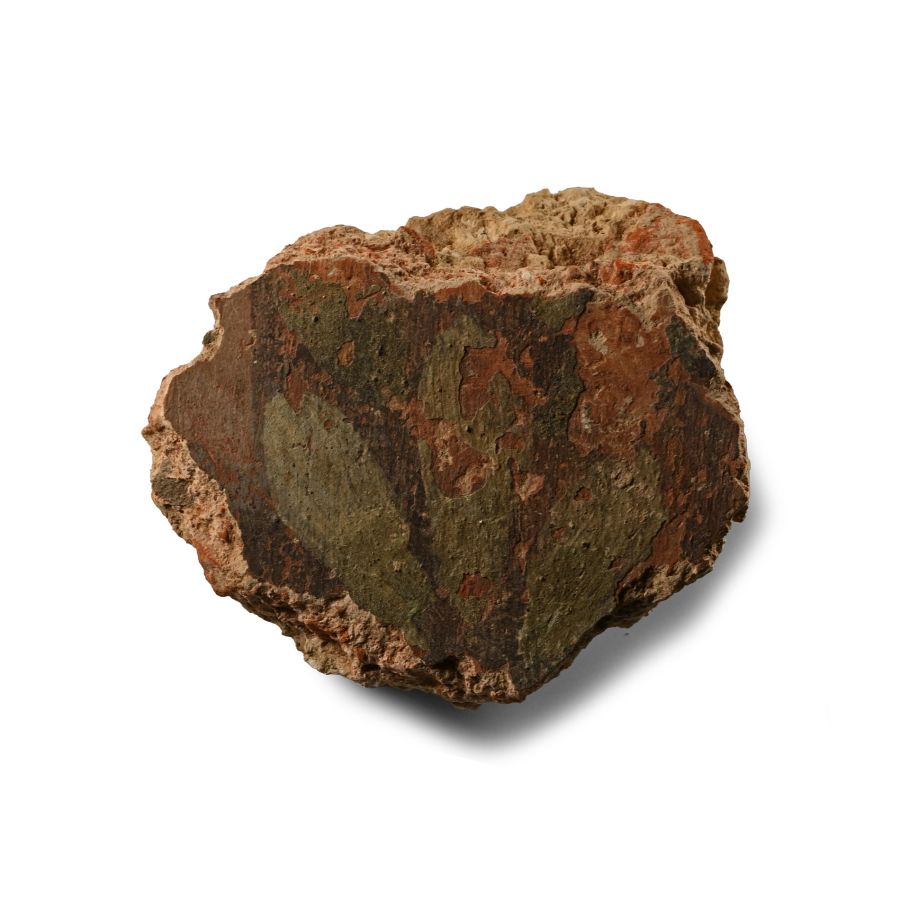
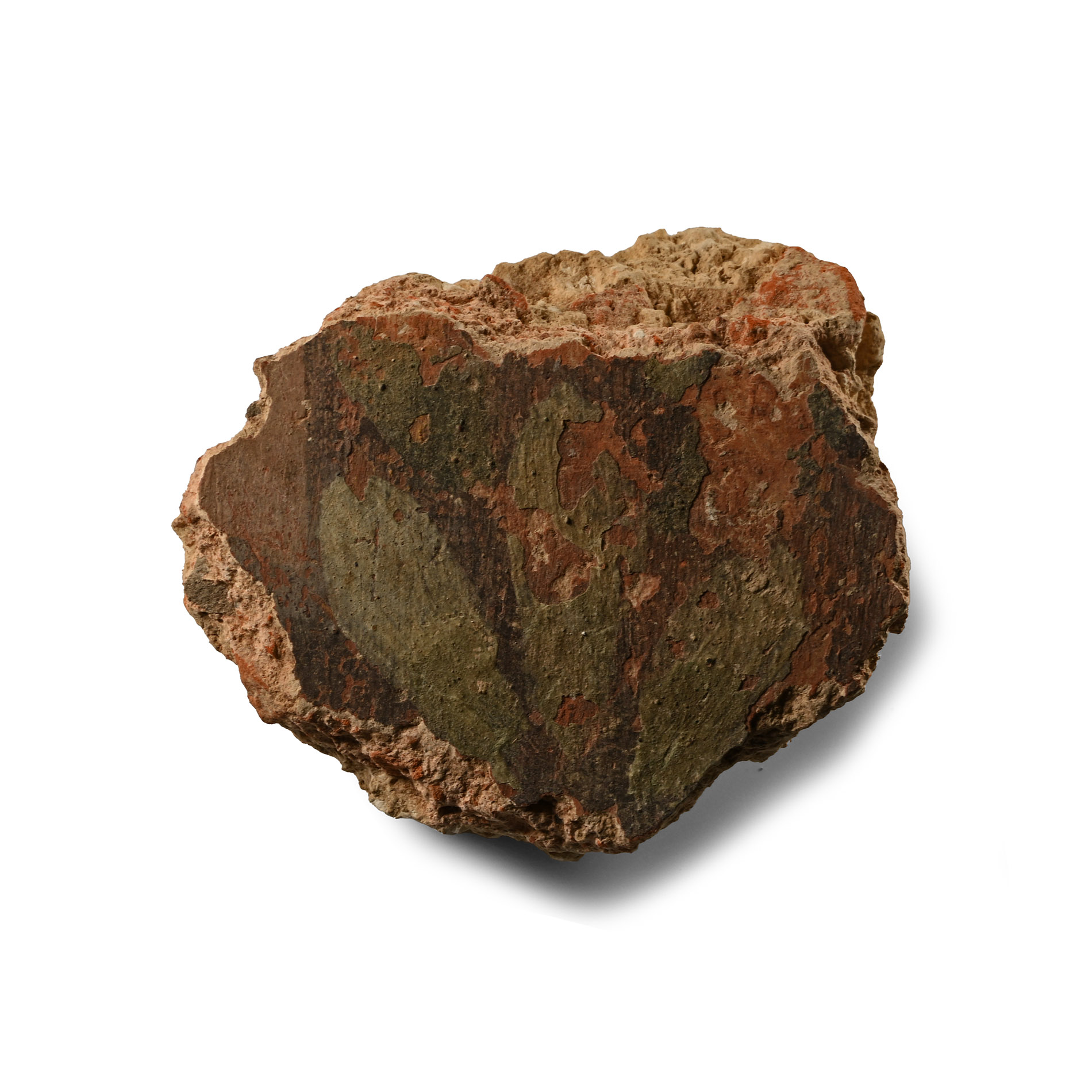
Romano-British Fresco Wall Plaster with Turquoise Petalled Flower
3RD-4TH CENTURY A.D.
3 1/8 in. (159 grams, 80 mm).
Fragment of plaster with inclusions, dressed face with red painted field and painted flower (perhaps a snowdrop Galanthus). [No Reserve]
ProvenanceFound Leicestershire, UK.
Acquired from a collector in 2012.
Ian Wilkinson collection, Nottinghamshire, UK, formed since 1985.
This lot is accompanied by an illustrated lot declaration signed by the Head of the Antiquities Department, Dr Raffaele D’Amato.
TimeLine Auctions follows a vetting process to ensure the authenticity and legality of all items, reinforcing our commitment to integrity and responsible trading. Each antiquity, antique, and coin lot undergoes thorough examination by a vetting committee of at least ten external specialists, professional trade association members, scientists, and archaeologists: Our Vetting Process
AUCTIONS:
TimeLine is a leading auction house specialising in antiquities, ancient art, collectables, natural history, coins, medals, and books. Our auctions offer museums, collectors, historians, and enthusiasts the opportunity to acquire unique and historically significant pieces.
LOT 0683
Romano-British Fresco Wall Plaster with Turquoise Petalled Flower
Sold for (Inc. bp): £156
-
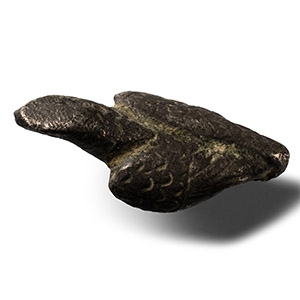
Roman Silver Eagle Statuette
1st-4th century A.D.Sold for (Inc. bp): £65
Modelled in the round with wings folded flat against the sides, legs bent, feet absent. 6.48 grams, 30 mm
From an English collection formed before 2000. This lot is accompanied by an illustrated lot declaration signed by the Head of the Antiquities Department, Dr Raffaele D’Amato.
Possibly a fitting from a vessel. -

Roman Bronze Phallic Pendant
1st-2nd century A.D.Sold for (Inc. bp): £780
Amuletic fascinum formed as a crescent with phallus to the right, hand in the fica gesture to the left and male genitals below; each with a loop beneath for attachment of another pendant; large loop above and attachment strap with stud. 81.5 grams, 68 mm
Acquired in Europe in 1990s. European private collection. This lot is accompanied by an illustrated lot declaration signed by the Head of the Antiquities Department, Dr Raffaele D’Amato. -
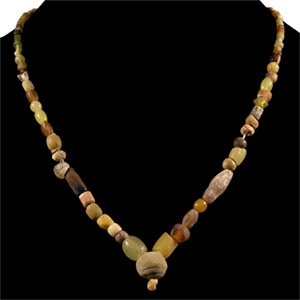
Roman Yellow Glass Bead Necklace String
1st-4th century A.D. and laterSold for (Inc. bp): £65
A designer necklace composed of mainly oblate and barrel-shaped beads, central feature composed of a large spherical bead with a small annular bead below. 35.5 grams, 41.5 cm
Acquired 1980-2015. Ex Abelita family collection. This lot is accompanied by an illustrated lot declaration signed by the Head of the Antiquities Department, Dr Raffaele D’Amato.
