
Loading, please wait...


LOT 0623
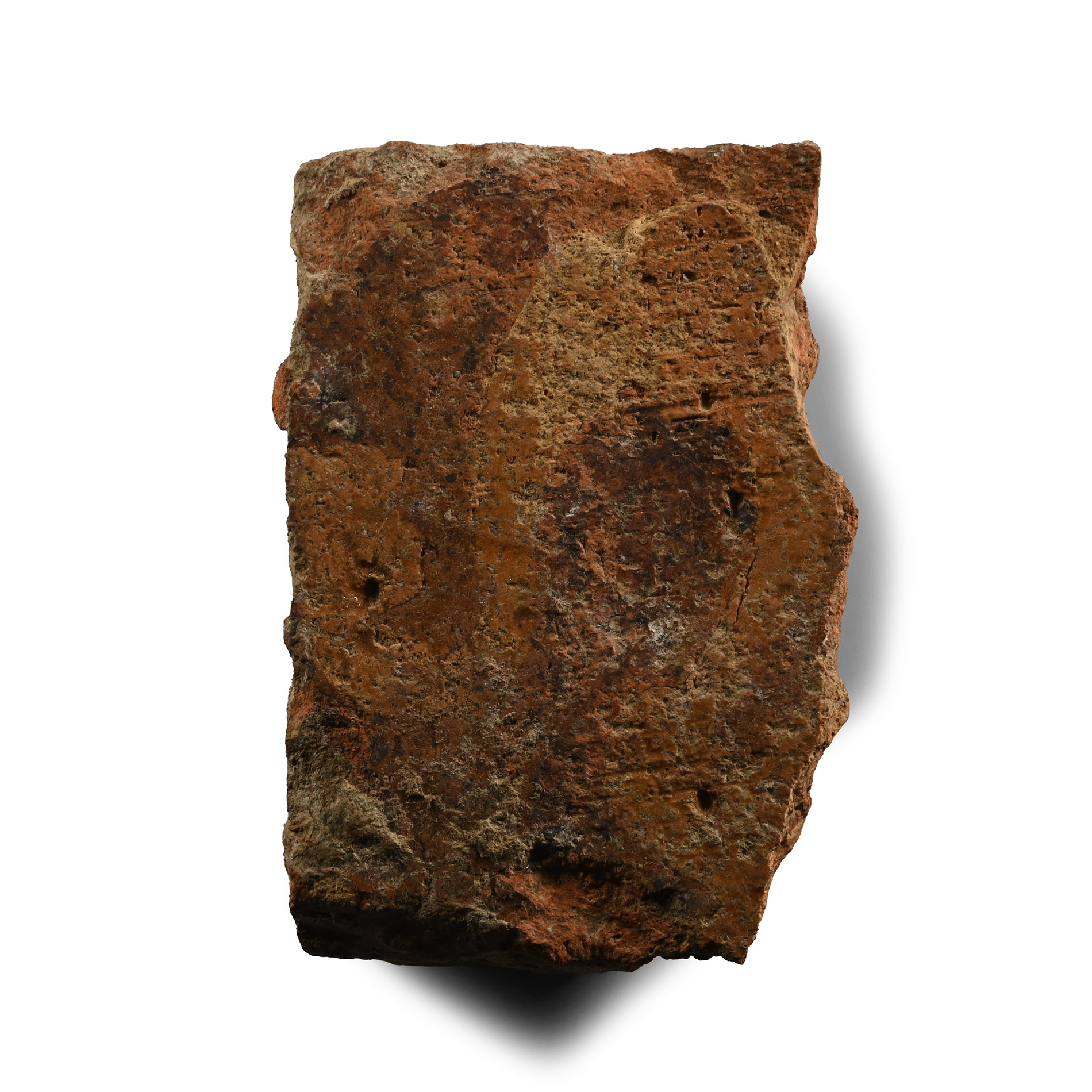
Romano-British Fresco Painted on Tile Fragment
3RD-4TH CENTURY A.D.
3 1/2 in. (215 grams, 88 mm).
Rectangular tegula fragment with painted detailing to the dressed face. [No Reserve]
ProvenanceFound Leicestershire, UK.
Acquired from a collector in 2012.
Ian Wilkinson collection, Nottinghamshire, UK, formed since 1985.
This lot is accompanied by an illustrated lot declaration signed by the Head of the Antiquities Department, Dr Raffaele D’Amato.
TimeLine Auctions follows a vetting process to ensure the authenticity and legality of all items, reinforcing our commitment to integrity and responsible trading. Each antiquity, antique, and coin lot undergoes thorough examination by a vetting committee of at least ten external specialists, professional trade association members, scientists, and archaeologists: Our Vetting Process
AUCTIONS:
TimeLine is a leading auction house specialising in antiquities, ancient art, collectables, natural history, coins, medals, and books. Our auctions offer museums, collectors, historians, and enthusiasts the opportunity to acquire unique and historically significant pieces.
-
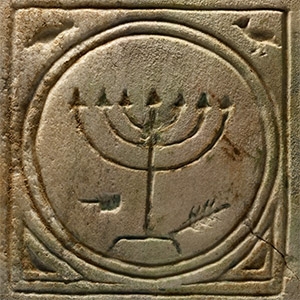
Late Roman Menorah Tile with Traces of Original Pigment
4th-6th century A.D.Sold for (Inc. bp): £22,100
Octagonal in plan with chamfered edges to the marble surface; engraved central square with birds in the upper corners and spandrels below, enclosing a bilinear ring with menorah on a stand between etrog and lulav; mounted on a custom-made stand. 577 grams total, 14.2 cm including stand
From an important UK collection, London, 1970-1990s. Ex London, UK, collection. This lot has been checked against the Interpol Database of stolen works of art and is accompanied by a search certificate number no.12527-231879. This lot has been cleared against the Art Loss Register database, and is accompanied by an illustrated lot declaration signed by the Head of the Antiquities Department, Dr Raffaele D’Amato.
An extremely rare and fine example of the type. The menorah is first mentioned in the Book of Exodus (25:31–40), according to which the design of the lamp was revealed to Moses by God on Mount Sinai. The candlestick was to be forged out of a single piece of gold and was to have six branches, ‘three on one side, and three on the other’, There are no extant images of the menorah from the First Temple period, but many examples dating from the Second Temple period have been recorded. The menorah was often depicted flanked by symbolic ritual objects. Here, with what appear to be the etrog (citron) and lulav (date-palm branch) of the festival of Sukkot (Feast of Tabernacles). A new Menorah was installed in the Second Temple, built after the return from exile in Babylon. This was looted by Antiochos Epiphanes in 169 BCE when he desecrated the Temple. With tragic wit, the Jews named him Epimanes, or ‘the madman’, when it became apparent that his policies were violently anti-Jewish. However, after the Maccabean Revolt (167-160 BCE) Judas Maccabeus ordered the construction of a new seven-branched candelabra to be placed in the Temple. The rededication is still celebrated with the festival of Hanukkah (‘to dedicate’). According to rabbinic tradition, the victorious Maccabees could only find a small jug of pure olive oil uncontaminated by virtue of a seal, and although it only contained enough oil to sustain the Menorah for one day, it miraculously lasted for eight days, by which time further oil had been found. The Menorah was subject to Roman plunder after the destruction of the Second Temple in 70 CE; according to Josephus, it was displayed during the Roman triumphal march, the scene of which is famously depicted in a frieze on the Arch of Titus along with other spoils of the destroyed temple. For centuries, the Menorah and the other temple treasures were displayed as war booty in the Templum Pacis in Rome or in the Imperial Palace and was still there when the city was sacked by the Vandals in 455 CE. Although the Menorah disappeared and the Talmud forbade its reconstruction, it became a popular symbol signifying Judaism. Representations of the Menorah often decorated tombs, walls, floors of synagogues and amulets. -
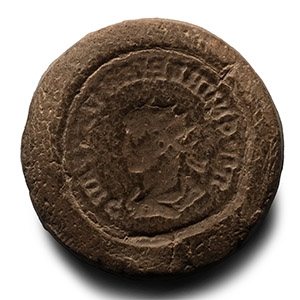
Roman Bifacial Terracotta Forger's Coin Mould
3rd century A.D.Sold for (Inc. bp): £247
Discoid in plan, one side with profile bust of an emperor wearing a radiate crown, legend surrounding; the reverse with two facing figures on a baseline. 3.4 grams, 26 mm
From the collection of a gentleman, acquired on the London art market in the 1990s. This lot is accompanied by an illustrated lot declaration signed by the Head of the Antiquities Department, Dr Raffaele D’Amato. -
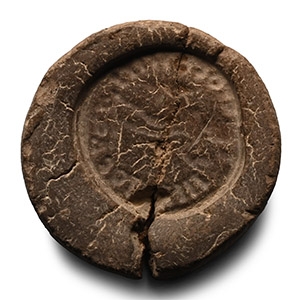
Roman Bifacial Terracotta Forger's Coin Mould
3rd century A.D.Sold for (Inc. bp): £85
Discoid in plan, both sides with a standing figure, legend surrounding. 5.21 grams, 27 mm
From the collection of a gentleman, acquired on the London art market in the 1990s. This lot is accompanied by an illustrated lot declaration signed by the Head of the Antiquities Department, Dr Raffaele D’Amato.
