
Loading, please wait...
LOT 1068
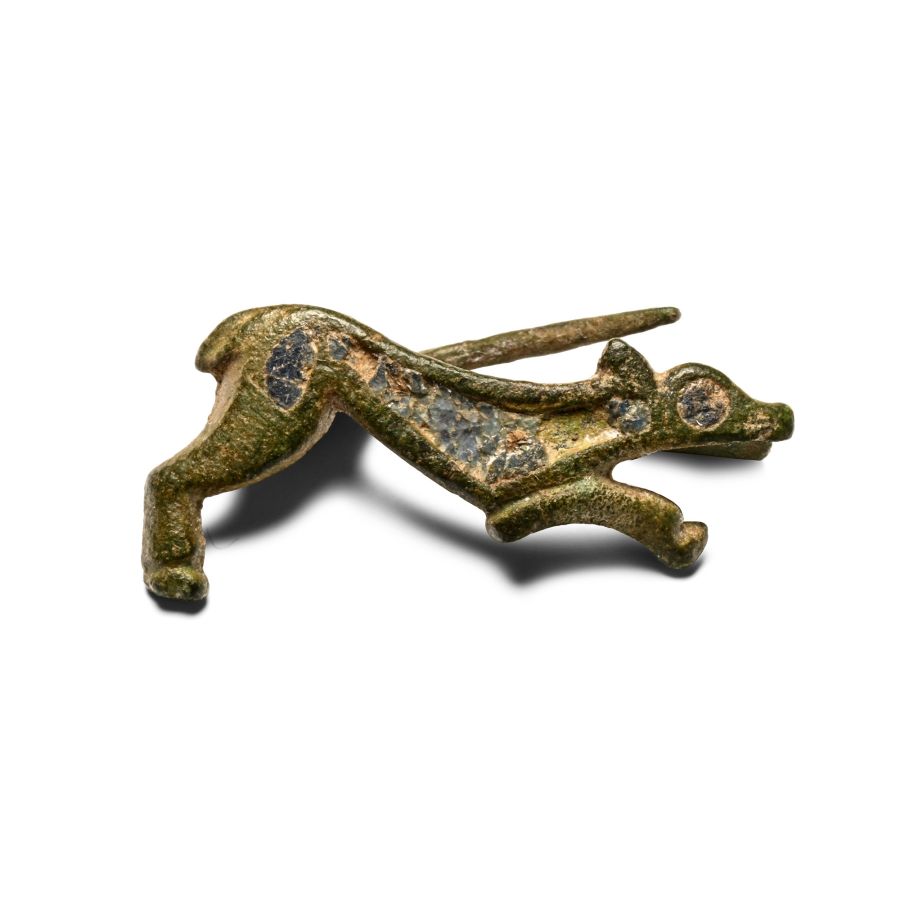
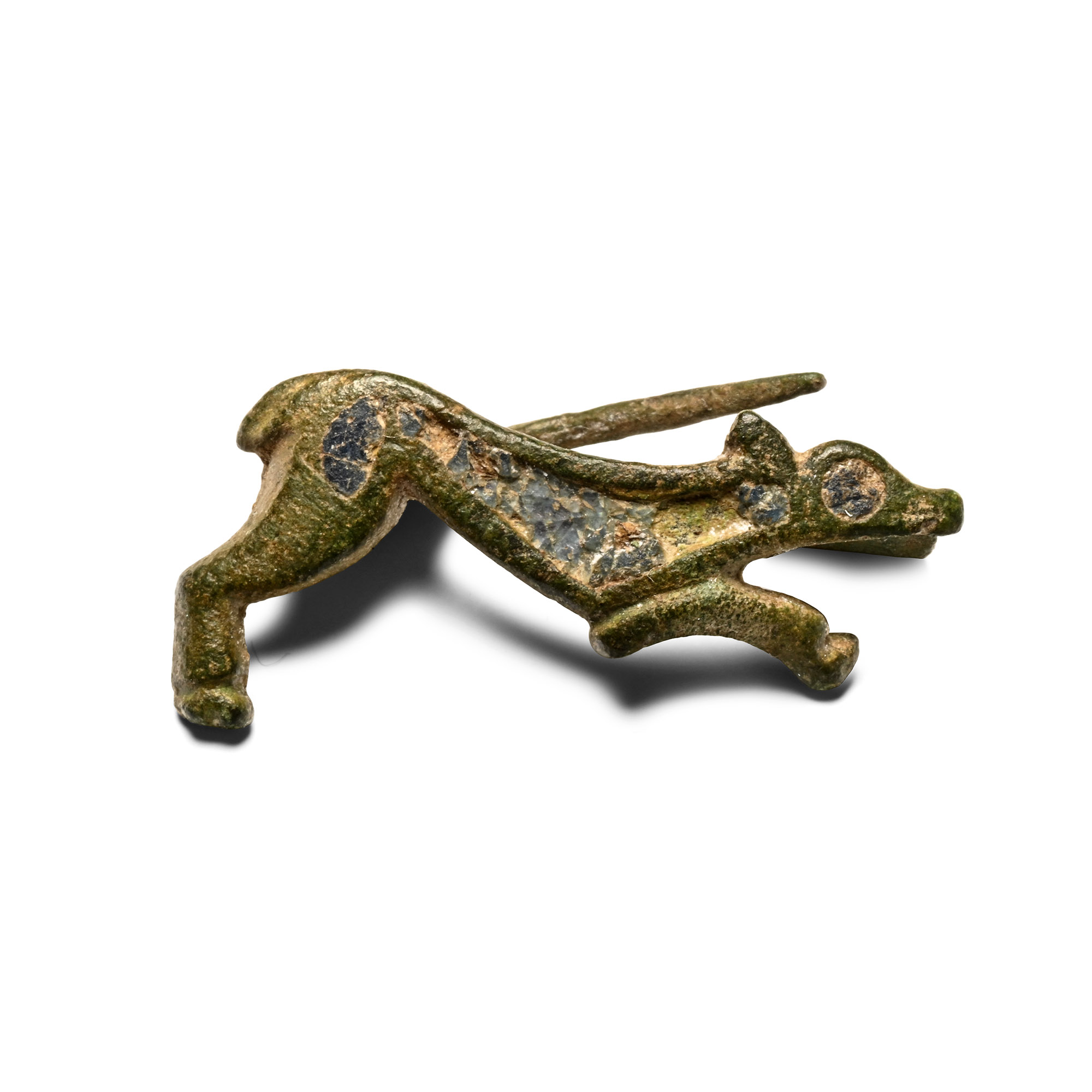
Romano-British Enamelled Bronze Running Dog Brooch
CIRCA 2ND CENTURY A.D.
1 1/4 in. (4.44 grams, 33.4 mm).
Formed as a hound running right with panels to the body with remains of blue enamel; pin and catchplate to reverse.
ProvenanceAcquired on the UK art market in the 1980s.
From an East Anglian private collection.
TimeLine Auctions follows a vetting process to ensure the authenticity and legality of all items, reinforcing our commitment to integrity and responsible trading. Each antiquity, antique, and coin lot undergoes thorough examination by a vetting committee of at least ten external specialists, professional trade association members, scientists, and archaeologists: Our Vetting Process
AUCTIONS:
TimeLine is a leading auction house specialising in antiquities, ancient art, collectables, natural history, coins, medals, and books. Our auctions offer museums, collectors, historians, and enthusiasts the opportunity to acquire unique and historically significant pieces.
LOT 1068
Romano-British Enamelled Bronze Running Dog Brooch
Estimate £120 - 140€140 - 160 (for guidance only)$160 - 190 (for guidance only)
-
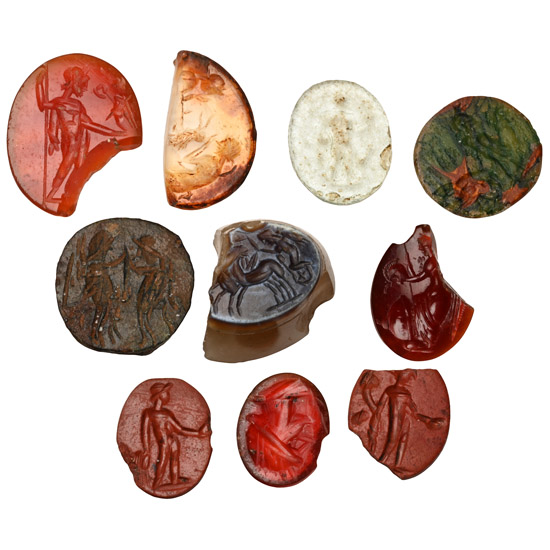
Roman Stone and Glass Gem Collection
2nd-3rd century A.D. or laterEstimate: £150 - 200 (+bp*)
Bids: 2 | Current Bid: £10
Including Minerva holding a victoriola, Fortuna with a cornucopia, standing Mars and other types; each supplied with a museum-quality impression. 5.78 grams total, 10-15 mm
From the private collection of a European gentleman (1942-2024), formed since the 1970s. -
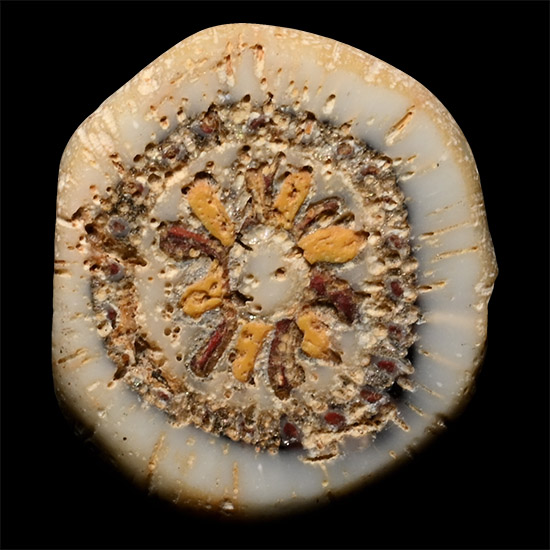
Roman Mosaic Glass Wheel Bead
Circa 1st century B.C.-1st century A.D.Estimate: £200 - 300 (+bp*)
Opening Bid: £100
Discoid in plan, millefiori type with transverse drilled hole. 0.87 grams, 12 mm
From a private collection, acquired from l'Art Ancien, Montreal, Canada, 5th June 1987. Anonymous sale, Bonhams, London, UK, 8 December 2022, no.63 (part). -
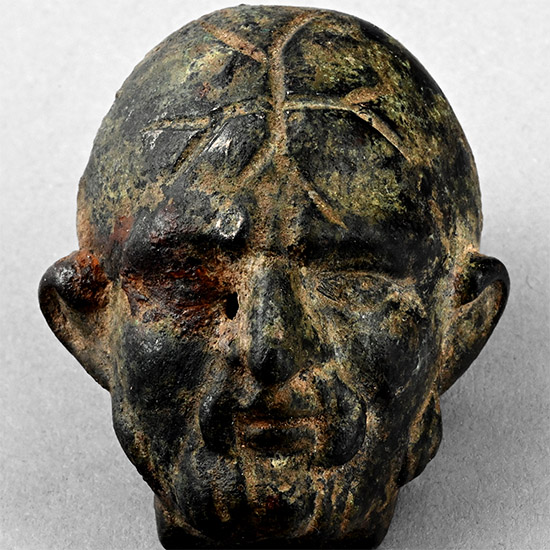
Roman Bronze Head with Cross Fourchee
4th century A.D.Estimate: £1,800 - 2,400 (‡+bp*)
Opening Bid: £950
Hollow-formed model male head with aperture to underside used as a 'money box'; with short beard and incised expanding-arm cross to the brow. 89 grams, 54 mm
German private collection, 1980s. with Artemis Gallery, 1990s. Private collection, acquired in 1999. This lot has been checked against the Interpol Database of stolen works of art and is accompanied by a search certificate number no.12866-241640.
Money boxes in the Roman Empire, particularly in the 4th century A.D., were used as practical containers for storing coins in everyday life. They were often made from pottery or metal, and while many examples had to be broken open, others were made with small doors or openings to allow access to the contents.
