
Loading, please wait...
LOT 0701
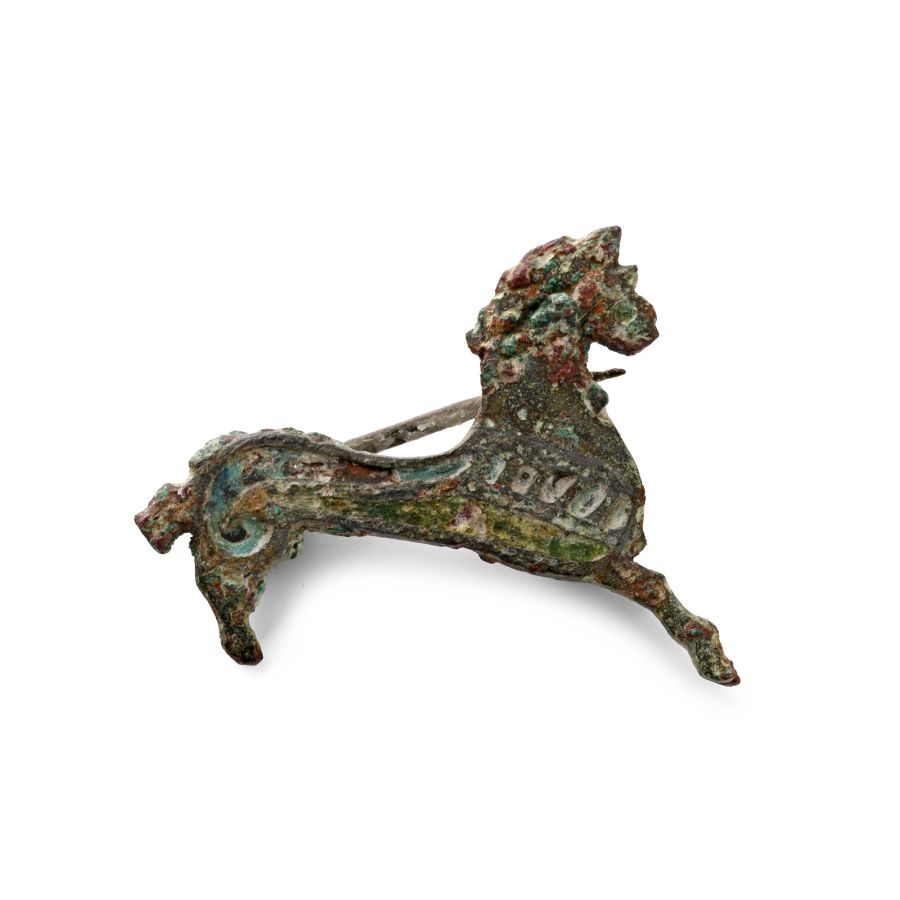
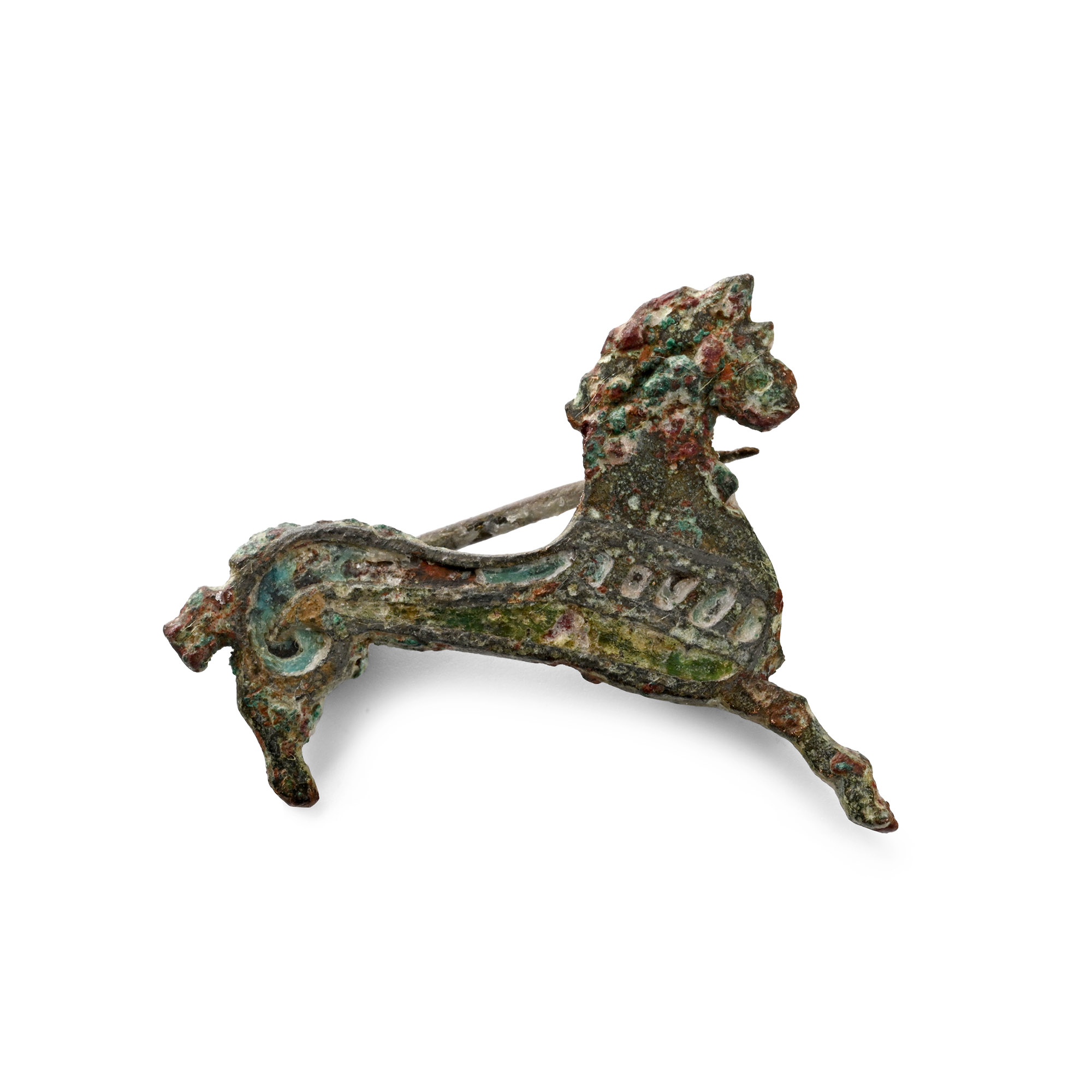
Romano-British Enamelled Bronze Horse Brooch
2ND CENTURY A.D.
1 1/4 in. (4.28 grams, 32 mm).
Modelled with erect head and slender legs, recessed cells on the body to accept enamel with some blue enamel remaining; pin and remains of catchplate on the reverse. [No Reserve]
ProvenanceFound East Anglia, UK.
This lot is accompanied by an illustrated lot declaration signed by the Head of the Antiquities Department, Dr Raffaele D'Amato.
TimeLine Auctions follows a vetting process to ensure the authenticity and legality of all items, reinforcing our commitment to integrity and responsible trading. Each antiquity, antique, and coin lot undergoes thorough examination by a vetting committee of at least ten external specialists, professional trade association members, scientists, and archaeologists: Our Vetting Process
AUCTIONS:
TimeLine is a leading auction house specialising in antiquities, ancient art, collectables, natural history, coins, medals, and books. Our auctions offer museums, collectors, historians, and enthusiasts the opportunity to acquire unique and historically significant pieces.
-

Roman Bronze Key
1st-4th century A.D.Sold for (Inc. bp): £98
Comprising a broad ring and cranked shank, bits cut into the leading edge of the ward. 33.9 grams, 59 mm
Ex London, UK, gentleman 1980-1990s. This lot is accompanied by an illustrated lot declaration signed by the Head of the Antiquities Department, Dr Raffaele D'Amato. -
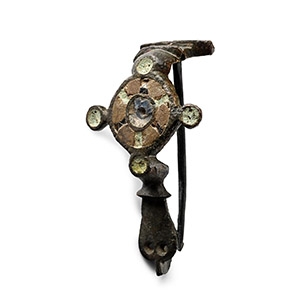
Roman Enamelled Bronze Brooch
2nd-3rd century A.D.Sold for (Inc. bp): £156
Bow brooch with enamelled plate to the bow, stepped headplate with hinged pin, catch to reverse of foot. 11.8 grams, 50 mm
Ex German art market, 2000s. Acquired from an EU collector living in London. From the collection of a Surrey, UK, gentleman. This lot is accompanied by an illustrated lot declaration signed by the Head of the Antiquities Department, Dr Raffaele D'Amato. -
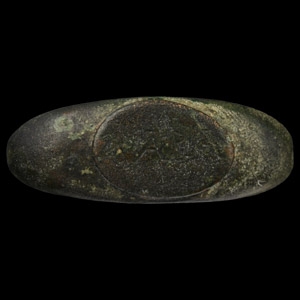
Roman Bronze Ring with APA
2nd-3rd century A.D.Sold for (Inc. bp): £91
Keeled hoop with angled shoulders, oval bezel with incised legend 'APA[I]', probably an abbreviated personal name. 7.43 grams, 26.67 mm overall, 18.25 x 13.32 mm internal diameter (approximate size British H, USA 3 3/4, Europe 6.18, Japan 6)
Acquired on the London art market in the late 1980s-1990s. From the family collection of an East London, UK, gentleman. This lot is accompanied by an illustrated lot declaration signed by the Head of the Antiquities Department, Dr Raffaele D'Amato.
