
Loading, please wait...
LOT 0791
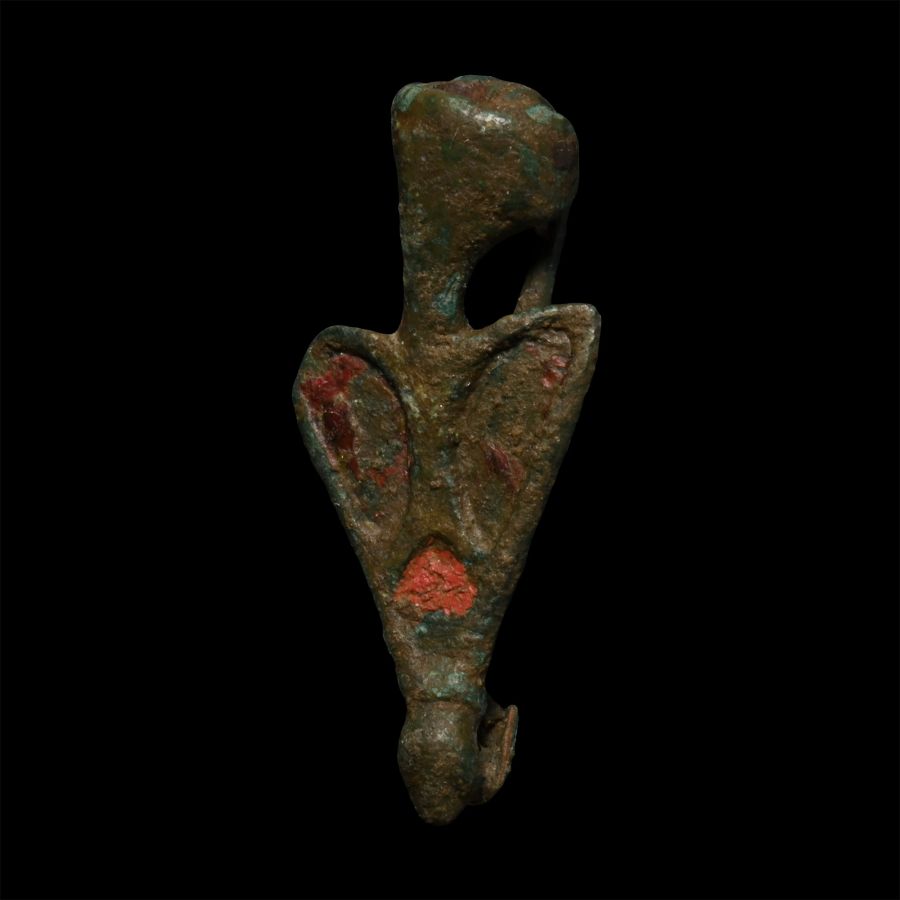
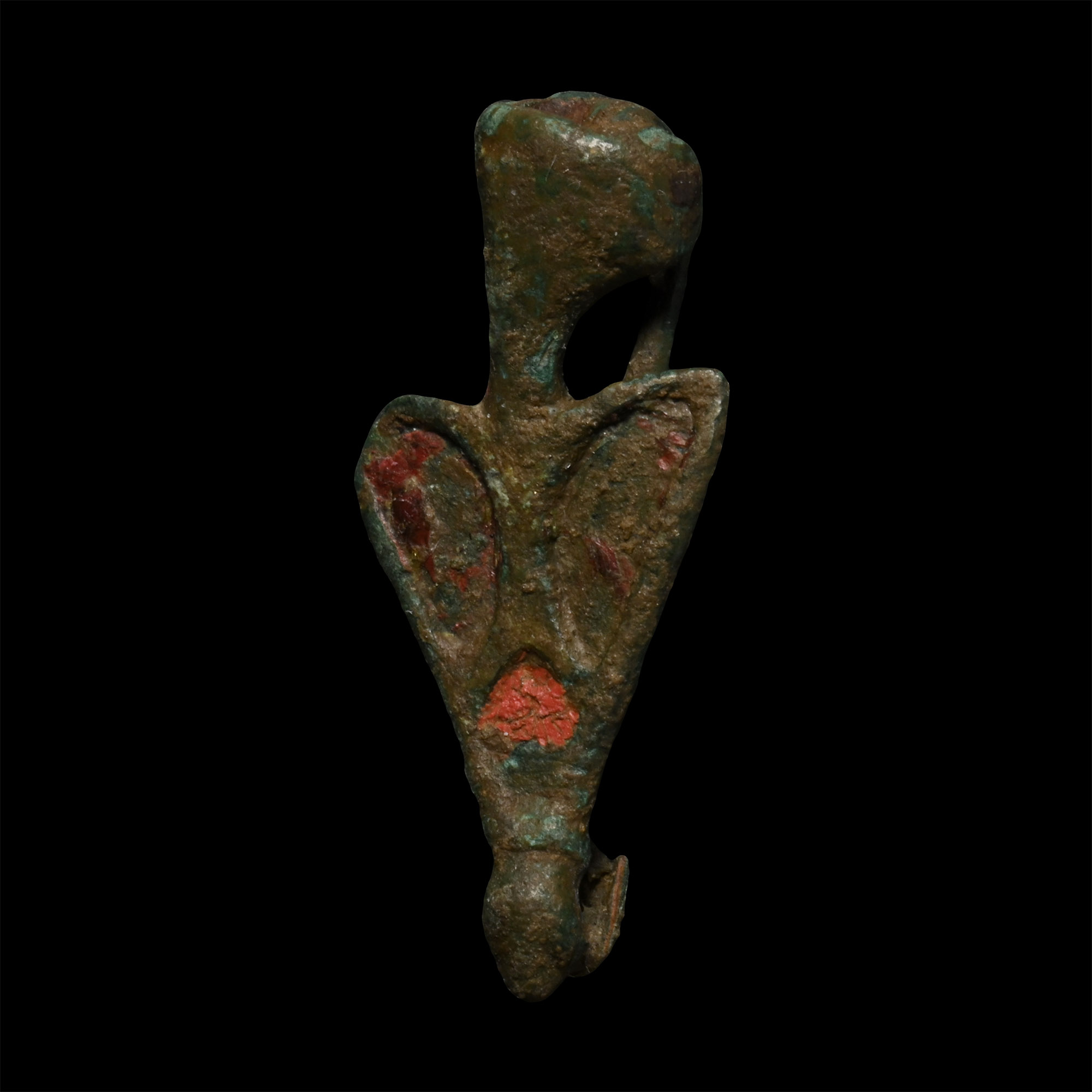
Romano-British Enamelled Bronze Fly Brooch
CIRCA 2ND CENTURY A.D.
1 1/4 in. (2.94 grams, 32 mm).
With open wings and head formed as a rounded knob; pin, spring and catch to the reverse. [No Reserve]
ProvenanceAcquired on the UK art market before 2000.
Property of an Essex, UK, gentleman.
Cf. Hattatt, R., Iron Age and Roman Brooches, Oxford, 1985, item 459.
CONDITIONTimeLine Auctions follows a vetting process to ensure the authenticity and legality of all items, reinforcing our commitment to integrity and responsible trading. Each antiquity, antique, and coin lot undergoes thorough examination by a vetting committee of at least ten external specialists, professional trade association members, scientists, and archaeologists: Our Vetting Process
AUCTIONS:
TimeLine is a leading auction house specialising in antiquities, ancient art, collectables, natural history, coins, medals, and books. Our auctions offer museums, collectors, historians, and enthusiasts the opportunity to acquire unique and historically significant pieces.
-
Roman Gemstone Collection
1st-2nd century A.D.Estimate: £350 - 450 (+bp*)
Opening Bid: £189
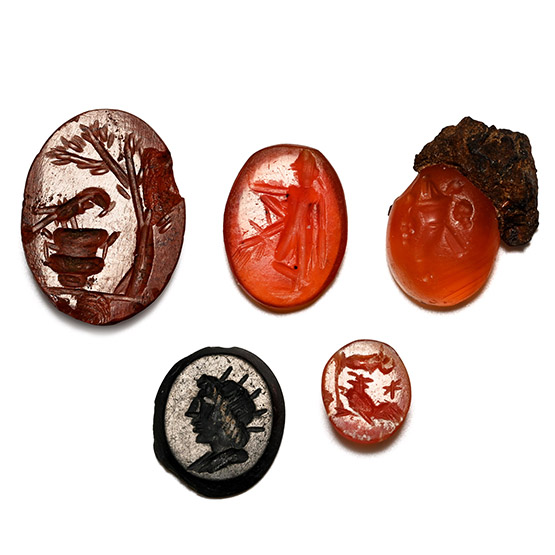
Mixed group including a standing female, a perching bird and others; each supplied with a museum-quality impression. 2.66 grams total, 7-16 mm
From the collection of a gentleman, acquired on the London art market in the 1990s.
Two of the gemstones in this collection show cockerels. The motif of fighting or individual cockerels was very popular in the classical world, and individual cockerels (the animal often associated with gods, such as Mercury or Sol/Helios) were also often depicted in a standing position. Another gemstone appears to represent a nude figure of Dionysus/Bacchus draped in a long cloak, and another shows Helios with a radiate crown. -
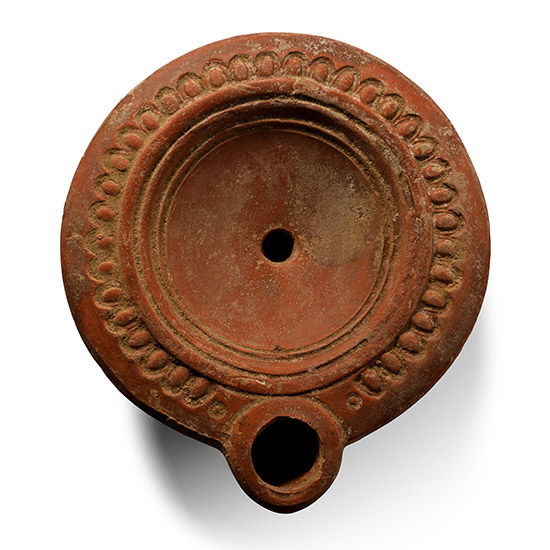
Roman Terracotta Oil Lamp
Cyprus, circa 2nd century A.D.Sold for (Inc. bp): £221
Round body with plain discus with pelletted border, label on the base '2nd c. AD M10'. 45.1 grams, 86 mm
Private collection, Oxfordshire, UK, by direct descent from the collection of Judge George Cyril Griffith-Williams (1893-1983), Supreme Court Judge of the Colony of Cyprus; items having been collected in the 1930s and 1940s in Cyprus during his tenure there. -
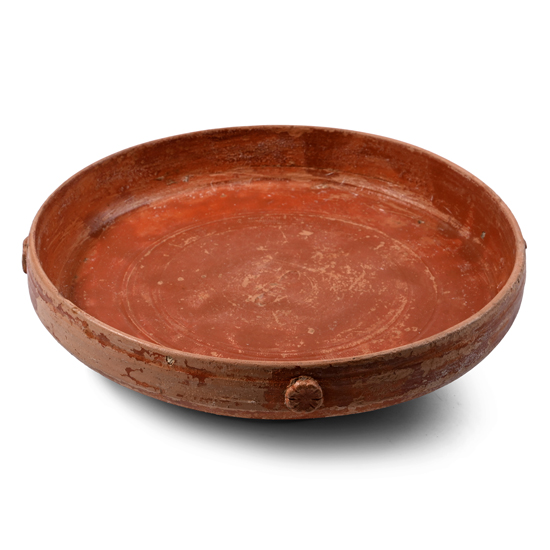
Roman Arretine Red Slip Terra Sigillata Cup with Rosettes and Rabbits and SEX.M.D. Maker's Mark
Augustan, early 1st century A.D.Sold for (Inc. bp): £650
Squat bowl with carinated profile and low foot; to the rim, applied rosettes and hares; stamped to the centre, a sandaled foot with legend 'SEX.M.D' legend. 285 grams, 16.5 cm
From the private collection of Mr Brian Edwards, New Malden, Surrey, UK, formed from the late 1970s-early 1980s; thence by descent. Accompanied by the original collector's data sheet with reference no.A4.
