
Loading, please wait...
LOT 0831
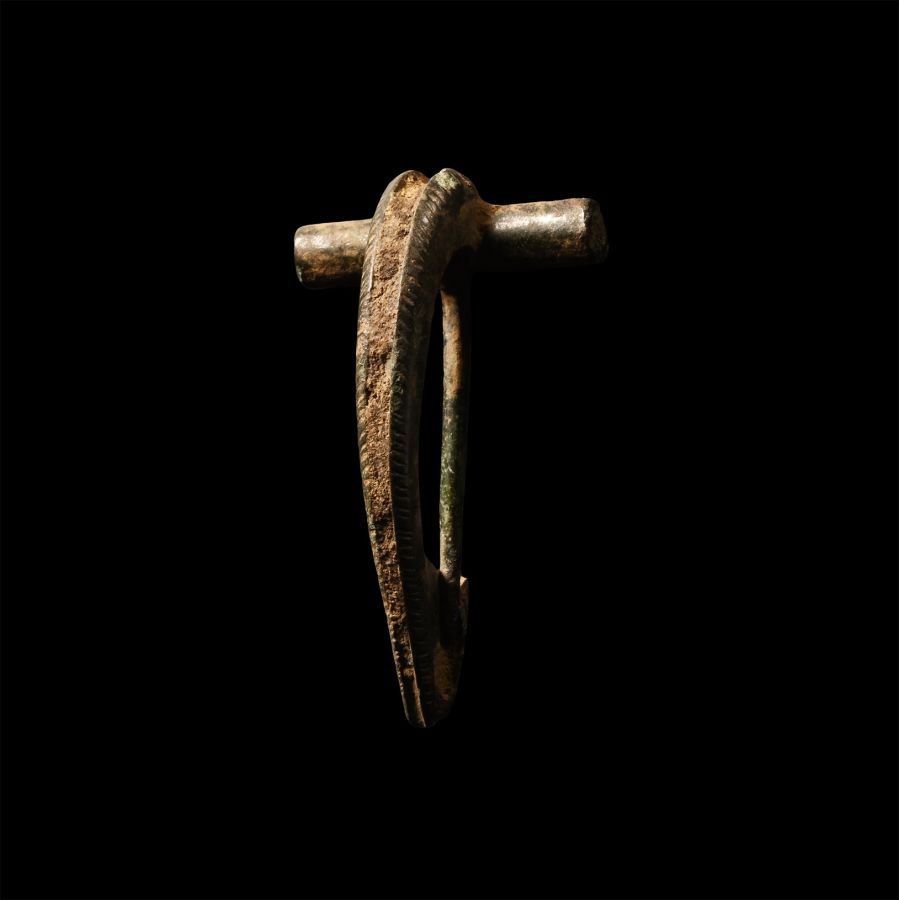
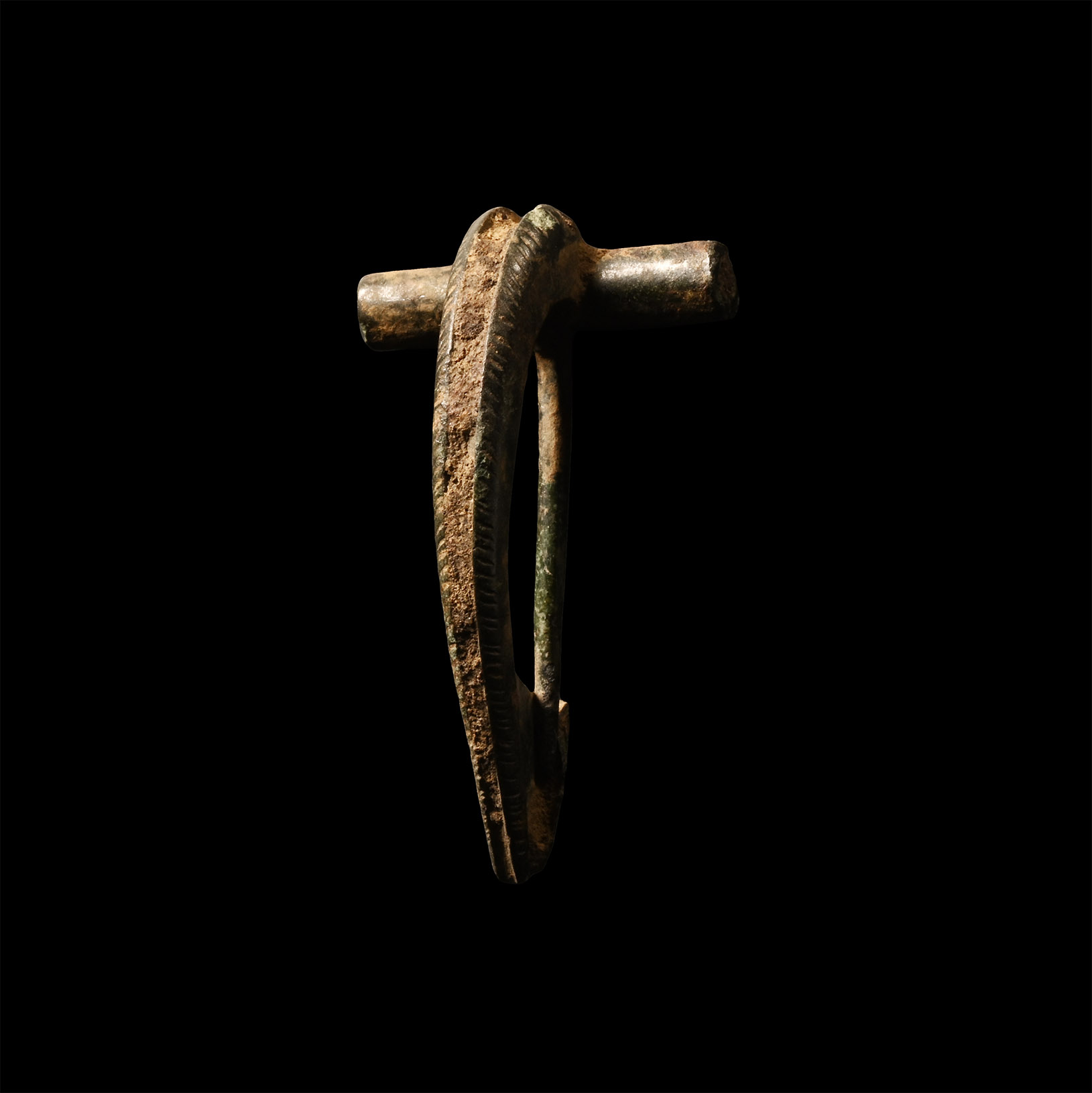
Romano-British Colchester-Derivative Bow Brooch
CIRCA 1ST-2ND CENTURY A.D.
1 7/8 in. (12.9 grams, 47 mm).
With hinge at the cross-bar and pin beneath, deep bow with vertical channel; notched detailing. [No Reserve]
ProvenanceFound East Lindsey, Lincolnshire, UK.
Ex private Merseyside, UK, collection.
Accompanied by a copy of the British Museum's Portable Antiquities Scheme report no.SWOR-A26E93.
Cf. Bayley, J. & Butcher, S., Roman Brooches in Britain: A Technological and Typological Study based on the Richborough Collection, London, 2004, p.157.
CONDITIONTimeLine Auctions follows a vetting process to ensure the authenticity and legality of all items, reinforcing our commitment to integrity and responsible trading. Each antiquity, antique, and coin lot undergoes thorough examination by a vetting committee of at least ten external specialists, professional trade association members, scientists, and archaeologists: Our Vetting Process
AUCTIONS:
TimeLine is a leading auction house specialising in antiquities, ancient art, collectables, natural history, coins, medals, and books. Our auctions offer museums, collectors, historians, and enthusiasts the opportunity to acquire unique and historically significant pieces.
-
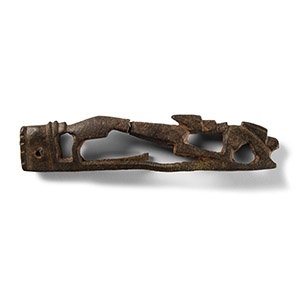
Roman Bronze Hound Chasing Hare Folding Knife Handle
Circa 2nd century A.D.Sold for (Inc. bp): £98
The openwork body displaying a stylised hunting scene and decoratively notched collar to one end. 12.8 grams, 68 mm
Found Cambridgeshire, UK. -
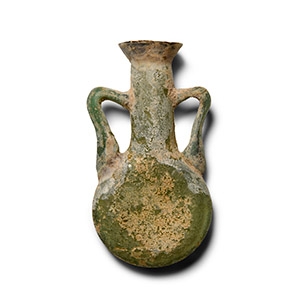
Roman Green Glass Pilgrim's Flask
1st century A.D.Sold for (Inc. bp): £98
Amphoriskos with flat disc-shaped body, tubular neck with flared rim, two lateral knee-shaped handles to the shoulder. 12.4 grams, 58 mm
Acquired 1970s-1996. Property of a North American collector. London collection, 2016. -
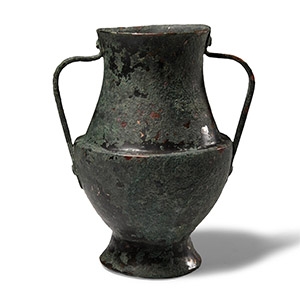
Roman Bronze Amphora
1st-2nd century A.D.Sold for (Inc. bp): £208
With carinated profile to the shoulder and tapering neck, two riveted strap handles. 169 grams, 13 cm
Ex old English collection. London art market, 1980s.
