
Loading, please wait...
LOT 0834
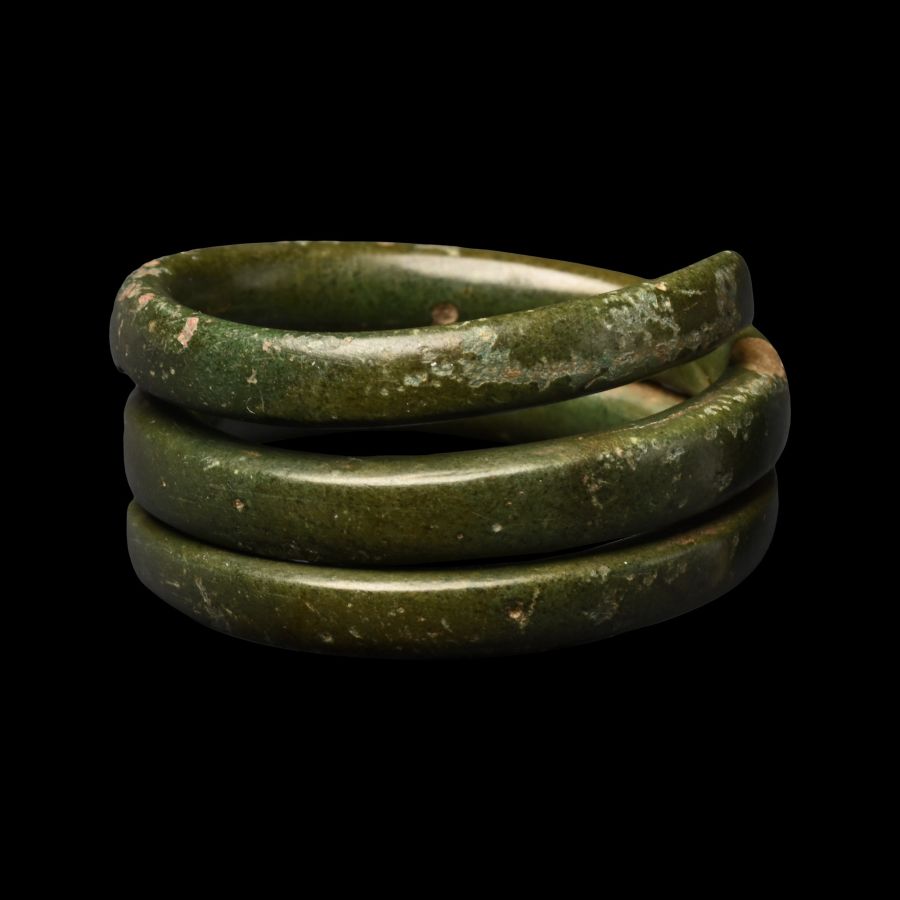
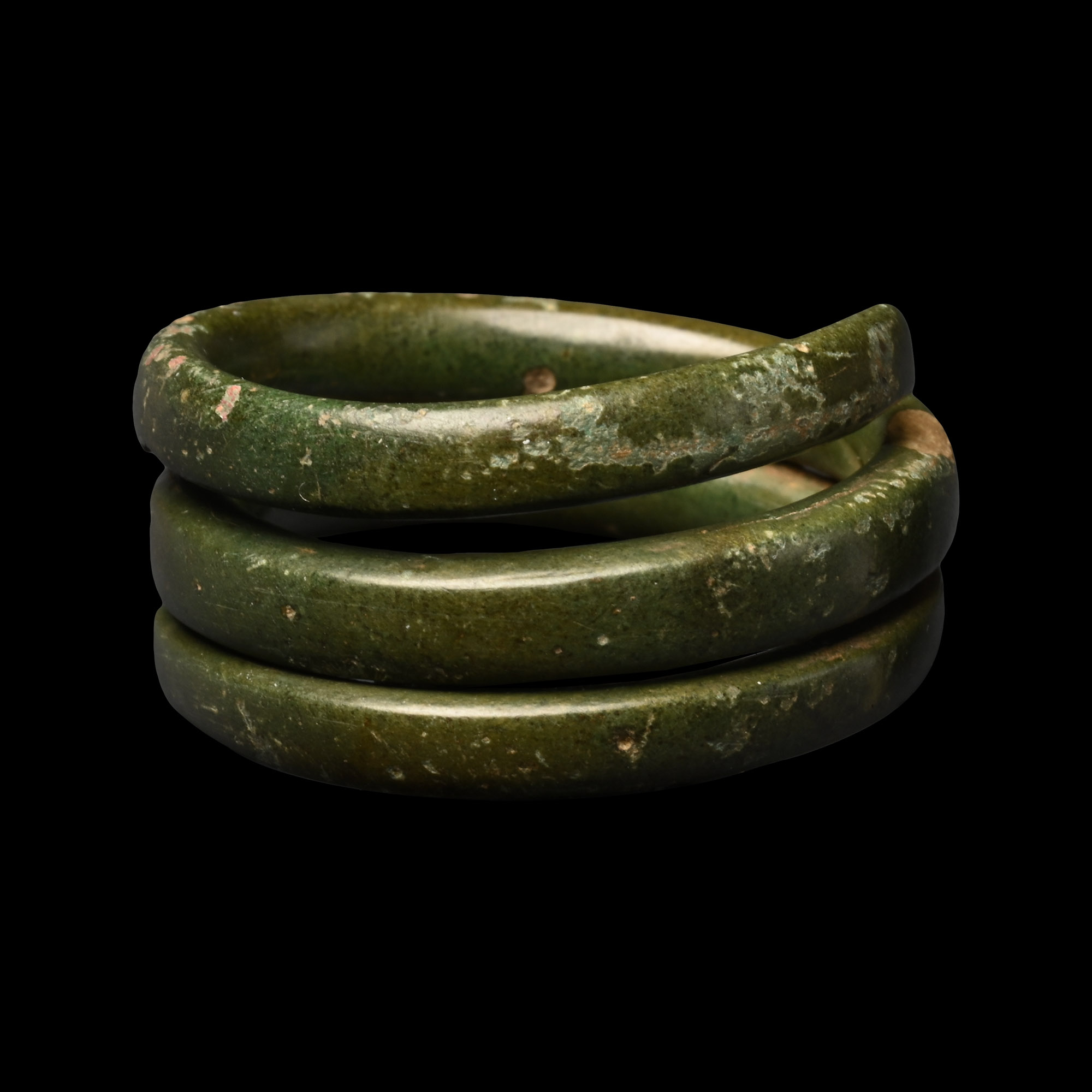
Romano-British Coiled Ring
1ST CENTURY A.D.
1 1/8 in. (17.46 grams, 28.89 mm overall, 21.26 mm internal diameter (approximate size British V 1/2, USA 10 3/4, Europe 24.4, Japan 23)).
Formed from a tightly coiled rectangular-section bar. [No Reserve]
ProvenanceFound near Cambridge, UK.
Acquired on the UK and EU art market before 2000.
From the private collection of a Surrey, UK, gentleman.
Cf. Henkel, F., Die Romische Fingerringe der Rheinlande, Berlin, 1913, item 317, pl.XVI, and 690-691, pl. XXVIII, for the type.
FootnotesSpiral type rings have been found in the northern Provinces of the Empire, and a very similar specimen, but in silver, was found near Sitten in 1888, inside a Roman grave of Muraz la Sierre. Bronze examples came from the Germanic Limes. They continued models and typologies of Celtic fashion.
CONDITIONTimeLine Auctions follows a vetting process to ensure the authenticity and legality of all items, reinforcing our commitment to integrity and responsible trading. Each antiquity, antique, and coin lot undergoes thorough examination by a vetting committee of at least ten external specialists, professional trade association members, scientists, and archaeologists: Our Vetting Process
AUCTIONS:
TimeLine is a leading auction house specialising in antiquities, ancient art, collectables, natural history, coins, medals, and books. Our auctions offer museums, collectors, historians, and enthusiasts the opportunity to acquire unique and historically significant pieces.
-
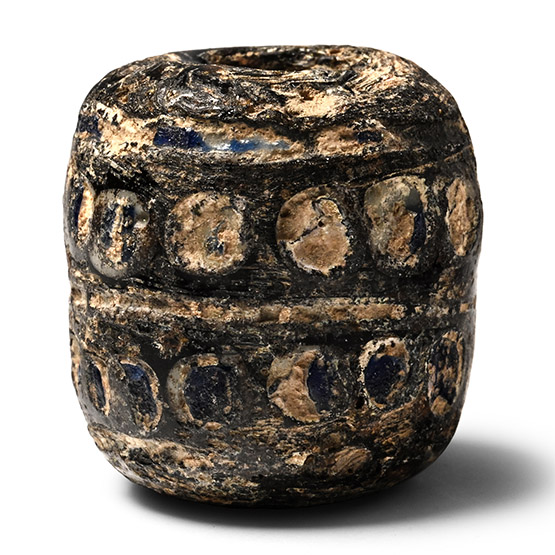
Roman Mosaic Glass Dots Bead
1st-3rd century A.D.Sold for (Inc. bp): £65
Barrel-shaped in profile with two circumferential bands of impressed pellets. 16.87 grams, 24 mm
London collection, 1979-1983. -
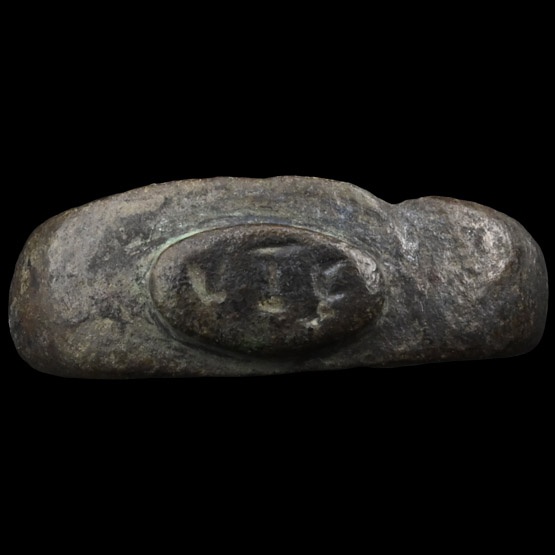
Roman Bronze Ring with VTF
2nd-3rd century A.D.Sold for (Inc. bp): £33
Broad shoulders and ellipsoid bezel with 'VTF' legend for Utere Felix (use this with good luck). 3.04 grams, 22.17 mm overall, 18.97 mm internal diameter (approximate size British M 1/2, USA 6 1/4, Europe 13.09, Japan 12)
Ex German art market, 2000s. Acquired from an EU collector living in London. From the collection of a Surrey, UK, gentleman. -
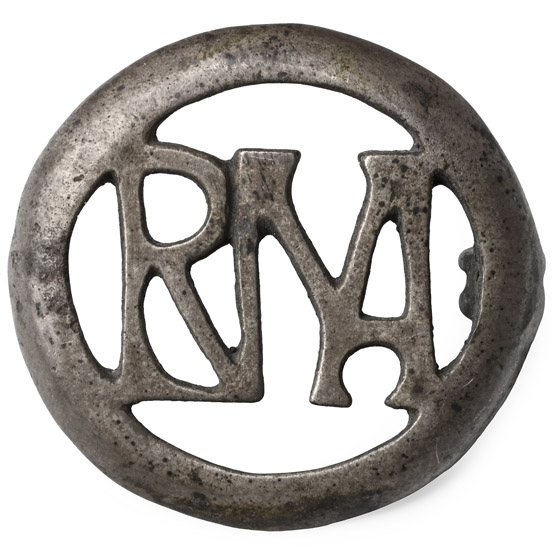
Roman Silver 'ROMA' Plate Brooch
2nd century A.D.Sold for (Inc. bp): £182
With openwork monogram of 'ROMA', hinge and catchplate to the reverse. 8.71 grams, 31 mm
Acquired on the UK art market. Private collection, England.
