
Loading, please wait...
LOT 0598
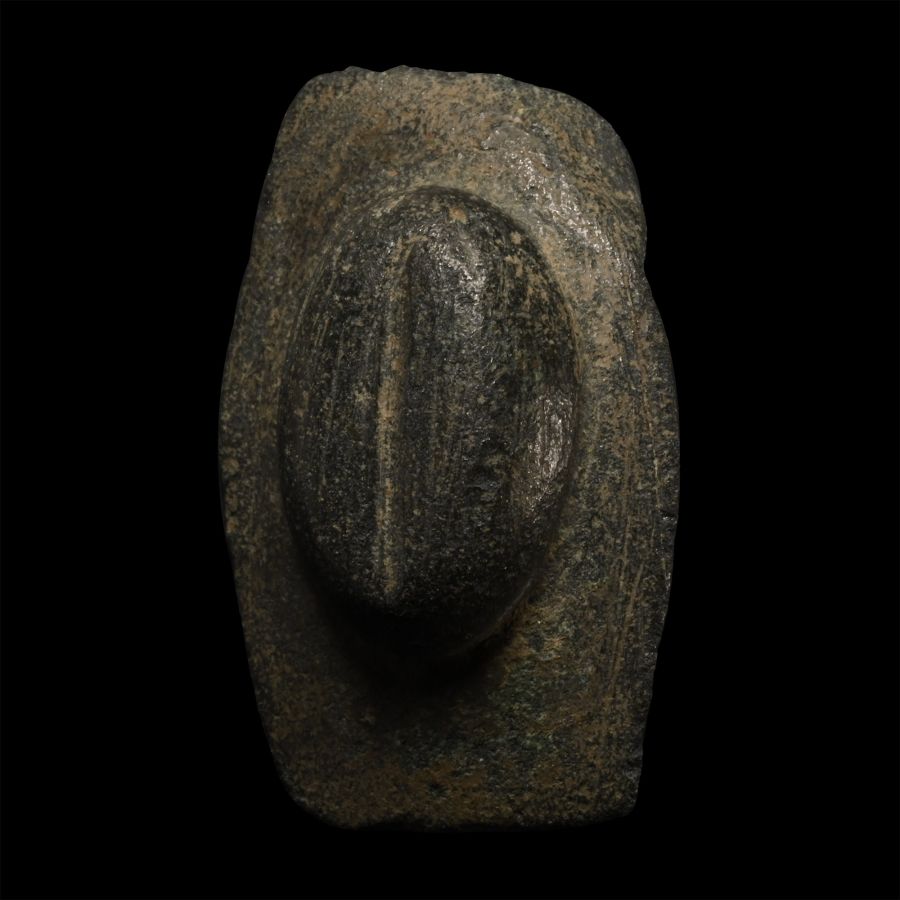
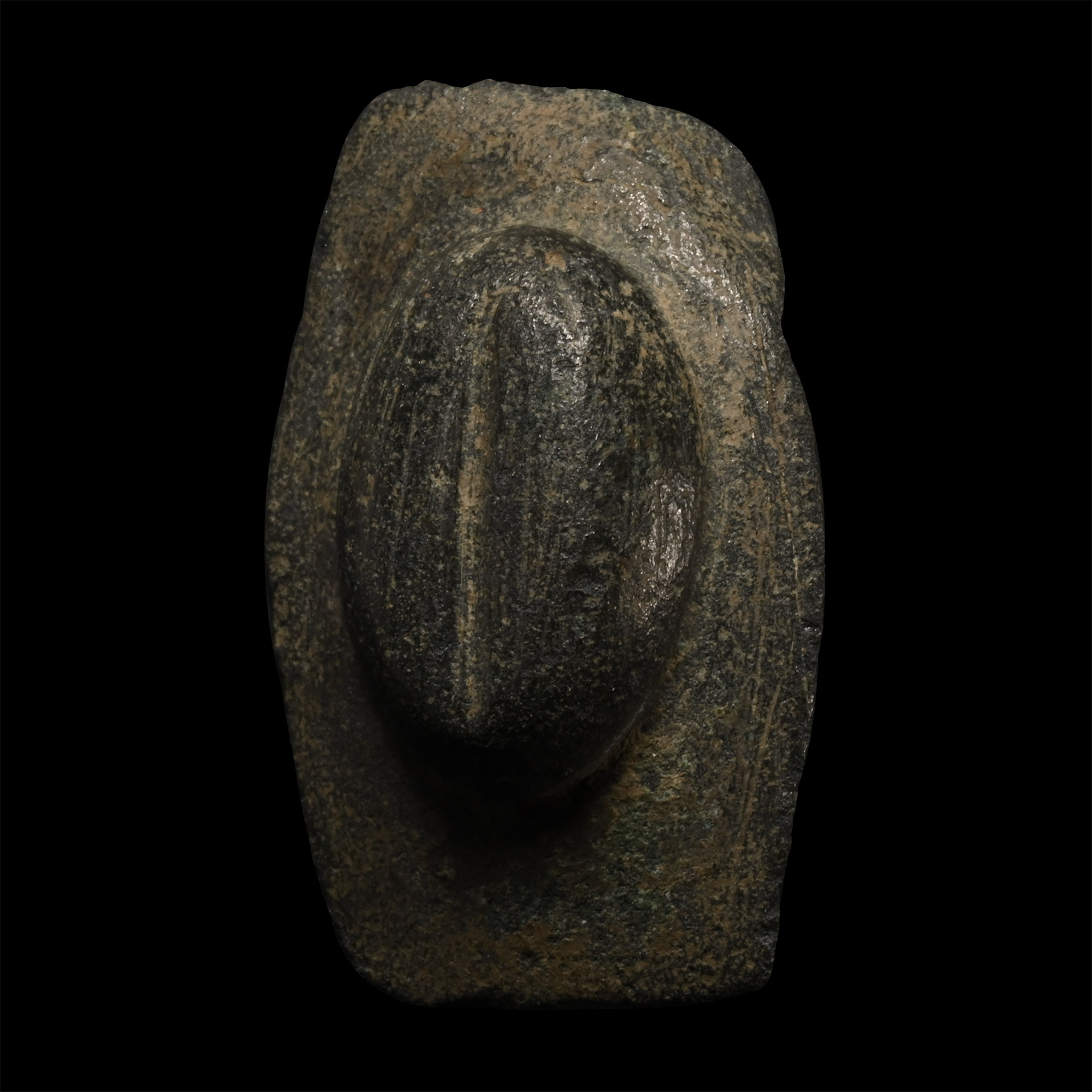
Romano-British Bronze Vulva Mount
1ST-2ND CENTURY A.D.
1 in. (8.54 grams, 27 mm).
Rectangular panel with curved long edges, raised boss with vertical slit representing a vulva, two mounting lugs to reverse. [No Reserve]
ProvenanceFound Essex, UK.
This lot is accompanied by an illustrated lot declaration signed by the Head of the Antiquities Department, Dr Raffaele D’Amato.
Cf. Portable Antiquities Scheme, record id.SF-44A9A3; Appels, A. & Laycock, S., Roman Buckles and Military Fittings, Witham, 2007, p.125, for similar 'vulva' motif on a belt mount AA14.43.
CONDITIONTimeLine Auctions follows a vetting process to ensure the authenticity and legality of all items, reinforcing our commitment to integrity and responsible trading. Each antiquity, antique, and coin lot undergoes thorough examination by a vetting committee of at least ten external specialists, professional trade association members, scientists, and archaeologists: Our Vetting Process
AUCTIONS:
TimeLine is a leading auction house specialising in antiquities, ancient art, collectables, natural history, coins, medals, and books. Our auctions offer museums, collectors, historians, and enthusiasts the opportunity to acquire unique and historically significant pieces.
-
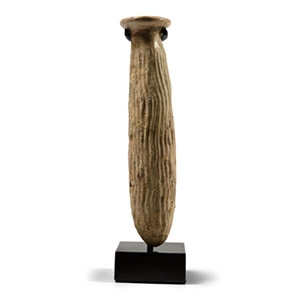
Roman White Elongated Glass Date Flask
1st century A.D.Estimate: £800 - 1,000 (+bp*)
Opening Bid: £400
Mould-blown with elliptical body, short neck and thick everted rim, with modelled wrinkles. 13 grams, 10.5 cm (46 grams total, 12 cm including stand)
From an important glass collection, London, UK, 1980-1990. This lot is accompanied by an illustrated lot declaration signed by the Head of the Antiquities Department, Dr Raffaele D’Amato. -
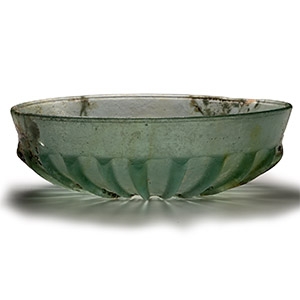
Roman Glass Ribbed Vessel
Eastern Mediterranean, 1st century B.C.-1st century A.D.Sold for (Inc. bp): £572
Flat, thick-walled bowl, mould-made with 22 large ribs to the outer face below the rim extending to the middle of the base; reassembled from fragments. 140 grams, 11.1 cm wide
Ex Martin Wunsch, New York 1980s-1990s. Accompanied by a copy of an Art Loss Register certificate no.S00098335. This lot is accompanied by an illustrated lot declaration signed by the Head of the Antiquities Department, Dr Raffaele D’Amato. -
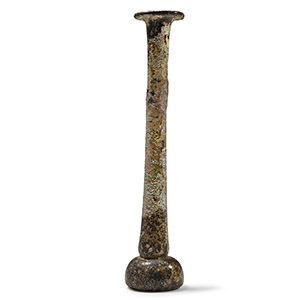
Roman Tall Glass Unguentarium
2nd-3rd century A.DSold for (Inc. bp): £104
Tall iridescent vessel with wide foot and dimpled base, tapering stem and flared rim, two small holes, repaired. 12.5 grams, 14.5 cm
Ex London art market 1990s. From a London, UK, collection. This lot is accompanied by an illustrated lot declaration signed by the Head of the Antiquities Department, Dr Raffaele D’Amato.
