
Loading, please wait...
LOT 0556
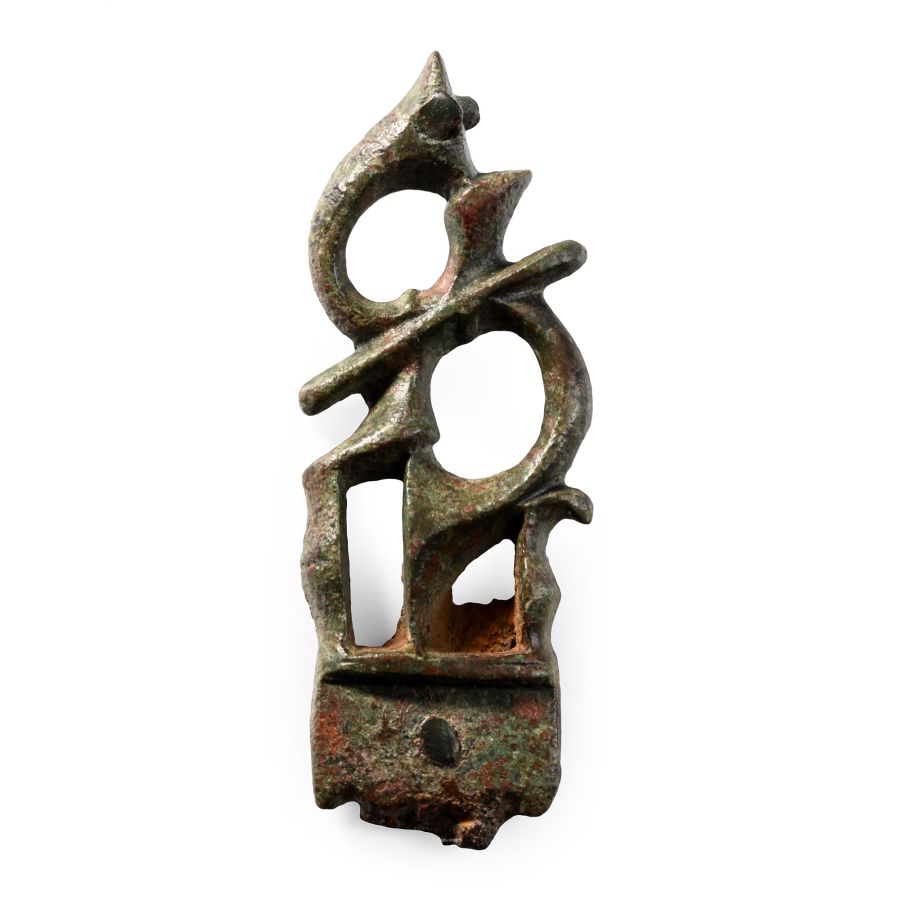
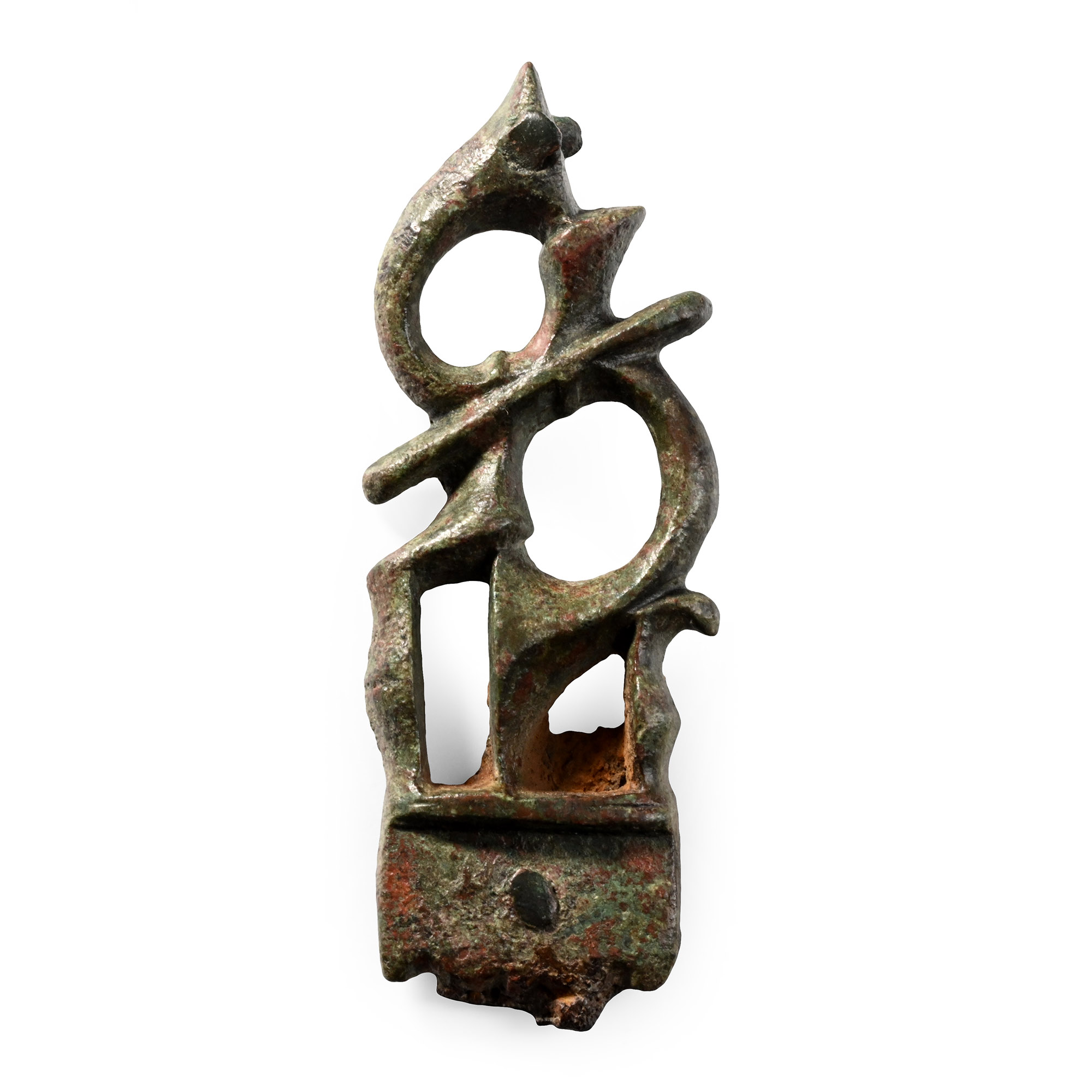
Romano-British Bronze Trumpet-Whorl Knife Handle
1ST-2ND CENTURY A.D.
2 1/4 in. (14.8 grams, 58 mm).
Openwork handle formed of curving trumpet-whorls, rectangular bar with a single rivet below. [No Reserve]
ProvenanceFrom the private coin collection of a West London, UK, gentleman, formed since the mid 1980s.
CONDITIONTimeLine Auctions follows a vetting process to ensure the authenticity and legality of all items, reinforcing our commitment to integrity and responsible trading. Each antiquity, antique, and coin lot undergoes thorough examination by a vetting committee of at least ten external specialists, professional trade association members, scientists, and archaeologists: Our Vetting Process
AUCTIONS:
TimeLine is a leading auction house specialising in antiquities, ancient art, collectables, natural history, coins, medals, and books. Our auctions offer museums, collectors, historians, and enthusiasts the opportunity to acquire unique and historically significant pieces.
-
.jpg)
Roman Bronze Gnostic Ring with Chnoubis
3rd-4th century A.D.Sold for (Inc. bp): £416
With a D-section hoop and an oval bezel with the solar deity Chnoubis, its snake-body coiled and its lion head surrounded by seven rays of light. 5.35 grams, 22.96 mm overall, 19.07 mm internal diameter (approximate size British S, USA 9, Europe 20, Japan 19)
Ex German art market, 2000s. Acquired from an EU collector living in London. From the collection of a Surrey, UK, gentleman. -
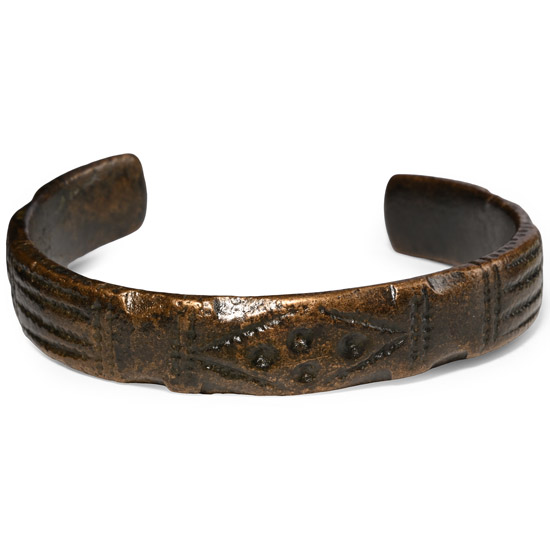
Late Roman Bronze Decorated Bracelet
5th-6th century A.D.Sold for (Inc. bp): £85
Penannular bracelet with the upper face decorated with bands of linear and pellet decoration. 42.8 grams, 63 mm
Ex German art market, 2000s. Acquired from an EU collector living in London. From the collection of a Surrey, UK, gentleman. -
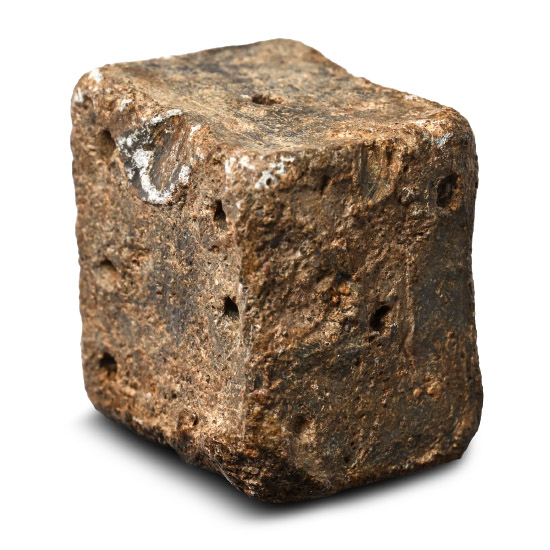
Large Roman Lead Gaming Die
1st-4th century A.D.Sold for (Inc. bp): £33
Eccentric cuboid type with bevelled edges and corners; depression to centre of one broad face from shrinkage in the mould; punched-point markings disposed 1:2, 3:4, 5:6; some abrasion. 50.7 grams, 19 mm
From the private collection of Mr Brian Edwards, New Malden, Surrey, UK, formed from the late 1970s-early 1980s; thence by descent. Accompanied by the original collector's data sheet(s) with reference no.A13.
