
Loading, please wait...
LOT 0840
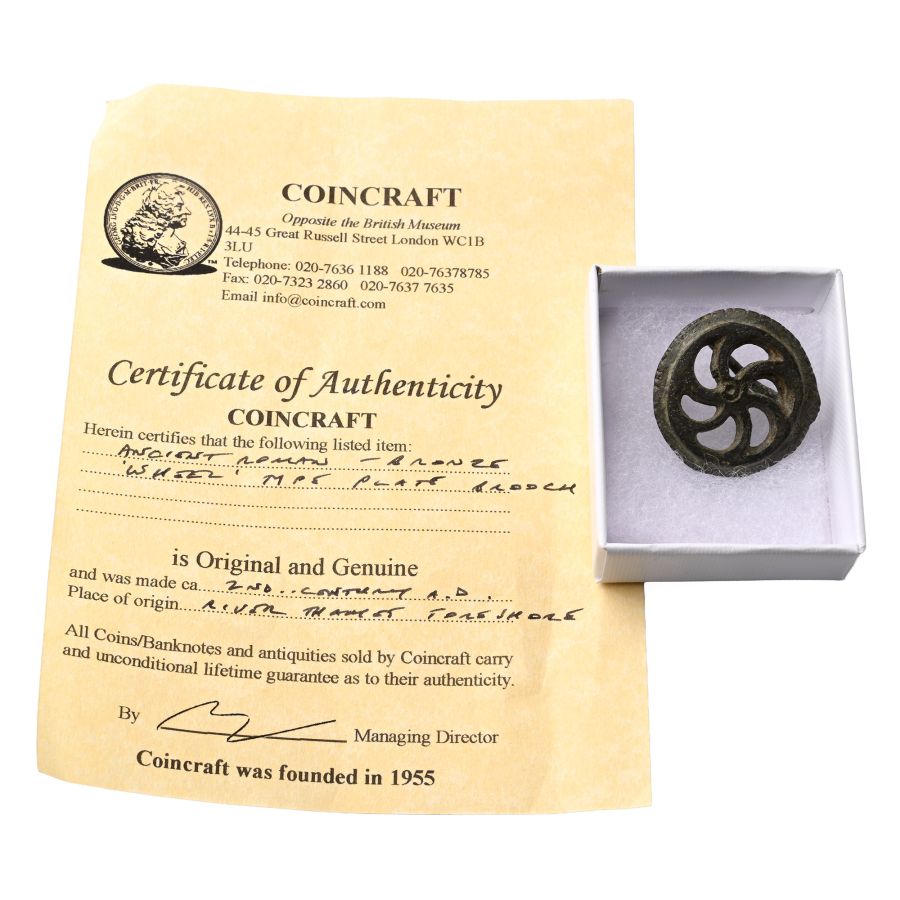
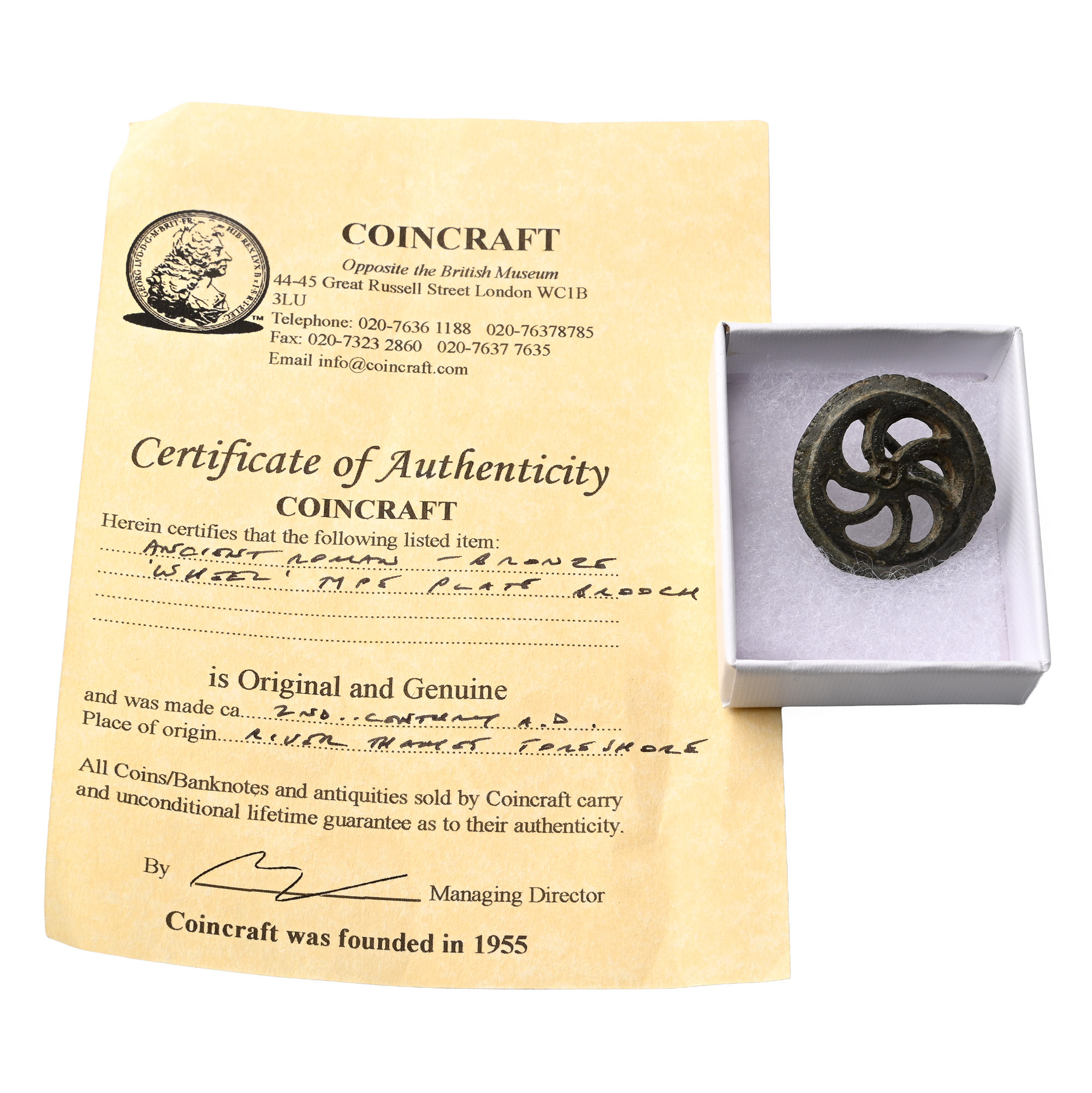
Romano-British Bronze Sun Wheel Plate Brooch
2ND CENTURY A.D.
1 1/4 in. (13.1 grams, 30 mm).
With stepped rim, openwork radiating cured arms from a central hub; pin, pin-lugs, and catch to the reverse. [No Reserve]
ProvenanceFound Thames foreshore, London, UK.
Acquired from Coincraft, London, UK.
From the private collection of Kenneth Machin (1936-2020), Buckinghamshire, UK; his collection of antiquities and natural history was formed since 1948; thence by descent.
Accompanied by a Coincraft certificate of authenticity.
This lot is accompanied by an illustrated lot declaration signed by the Head of the Antiquities Department, Dr Raffaele D'Amato.
Cf. Hattatt, R., Ancient Brooches and Other Artefacts, Oxford, 1989, item 1696, for type.
CONDITIONTimeLine Auctions follows a vetting process to ensure the authenticity and legality of all items, reinforcing our commitment to integrity and responsible trading. Each antiquity, antique, and coin lot undergoes thorough examination by a vetting committee of at least ten external specialists, professional trade association members, scientists, and archaeologists: Our Vetting Process
AUCTIONS:
TimeLine is a leading auction house specialising in antiquities, ancient art, collectables, natural history, coins, medals, and books. Our auctions offer museums, collectors, historians, and enthusiasts the opportunity to acquire unique and historically significant pieces.
-
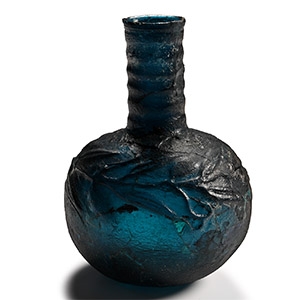
Roman Deep Blue Bottle with Relief Decoration
1st-3rd century A.D.Sold for (Inc. bp): £715
Mould-blown with spherical, squat body and dimple base; low-relief encircling laurel branch with fruit below the shoulder; tubular neck with offset rings flared towards the mouth; restored. 48.8 grams, 89 mm
with Rosebery's London, 3 May 2019, no.165. This lot is accompanied by an illustrated lot declaration signed by the Head of the Antiquities Department, Dr Raffaele D’Amato. This lot is accompanied by an illustrated lot declaration signed by the Head of the Antiquities Department, Dr Raffaele D'Amato. -
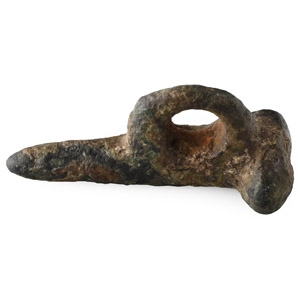
Roman Bronze Phallic Pendant
1st-2nd century A.D.Sold for (Inc. bp): £59
Formed as a stylised phallus with rounded testes and large suspension loop above. 15.1 grams, 38 mm
Acquired on the UK art market during the late 20th century. From the private collection of David King (1940-2024), Hoddesdon, Hertfordshire, UK. This lot is accompanied by an illustrated lot declaration signed by the Head of the Antiquities Department, Dr Raffaele D'Amato. -
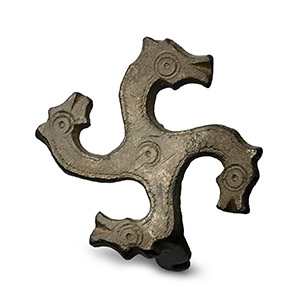
Roman Bronze Horse-Head Fylfot Plate Brooch
3rd-4th century A.D.Sold for (Inc. bp): £338
With horse-head finials and central ring-and-dot motif; pin and catchplate on the reverse. 16.5 grams, 43 mm
Ex German art market, 2000s. Acquired from an EU collector living in London. From the collection of a Surrey, UK, gentleman. This lot is accompanied by an illustrated lot declaration signed by the Head of the Antiquities Department, Dr Raffaele D'Amato.
