
Loading, please wait...
LOT 0632
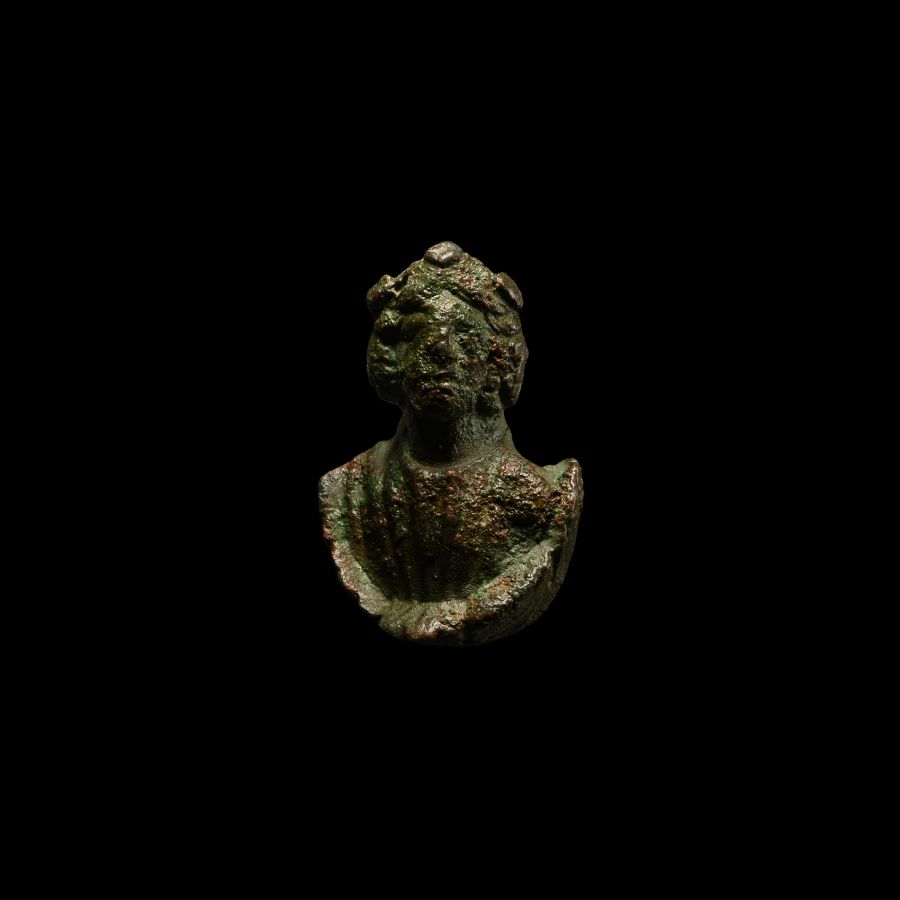
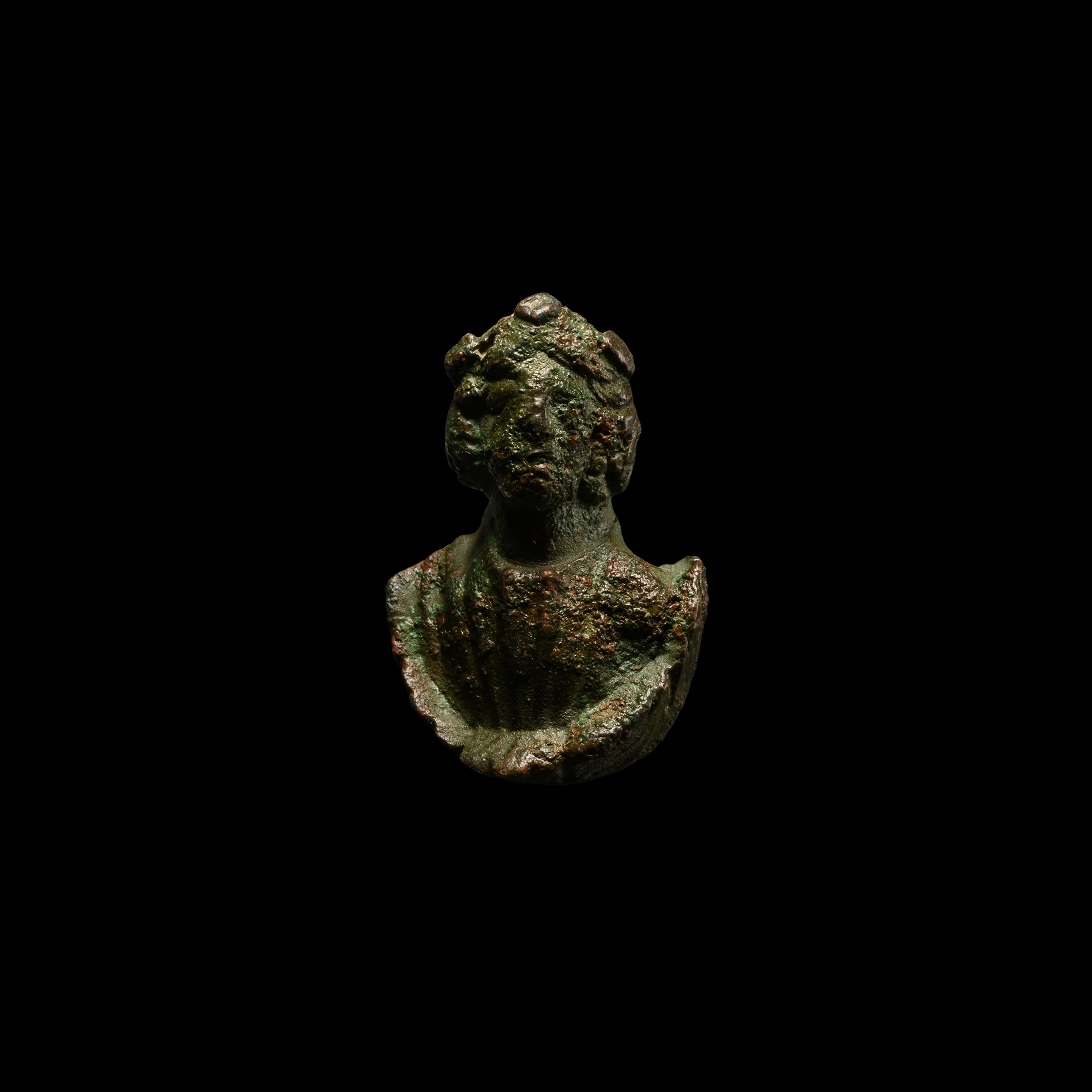
Romano-British Bronze Mount of Dionysus
2ND-3RD CENTURY A.D.
1 3/4 in. (42.8 grams, 45 mm high).
Formed as a bust of within foliate crescent, wearing a floral diadem and pleated tunic; rectangular mounting lug to reverse. [No Reserve]
ProvenanceFound near Colchester, Essex, 2005.
CONDITIONTimeLine Auctions follows a vetting process to ensure the authenticity and legality of all items, reinforcing our commitment to integrity and responsible trading. Each antiquity, antique, and coin lot undergoes thorough examination by a vetting committee of at least ten external specialists, professional trade association members, scientists, and archaeologists: Our Vetting Process
AUCTIONS:
TimeLine is a leading auction house specialising in antiquities, ancient art, collectables, natural history, coins, medals, and books. Our auctions offer museums, collectors, historians, and enthusiasts the opportunity to acquire unique and historically significant pieces.
-
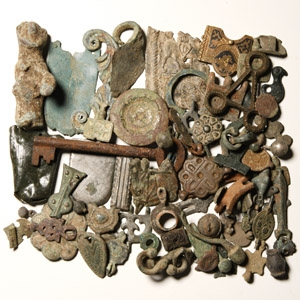
Roman and Later Artefact Group
1st-20th century A.D.Sold for (Inc. bp): £91
Comprising complete and incomplete artefacts of various types from a range of time periods, including: chapes; buttons; pendants; keys; fitting and other items. many displaying decorative motifs. 464 grams total, 11-88 mm
Acquired on the UK art market. Property of a Ruislip, UK, gentleman, by inheritance. -
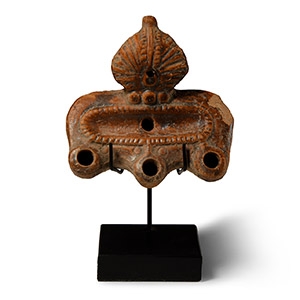
Roman Terracotta Triple-Spouted Lamp
Circa 2nd-1st millennium B.C.Sold for (Inc. bp): £598
An oblong vessel with three spouts and palmette reflector handle with pierced lug below to reverse; raised and notched discus; accompanied by a custom-made display stand. 209 grams total, 15 cm high including stand
From the collection of the German specialist Arno Jumpertz, Leverkusen, Germany, 1924-1984. Most of the collection was exhibited at Neus museum in 1985. -
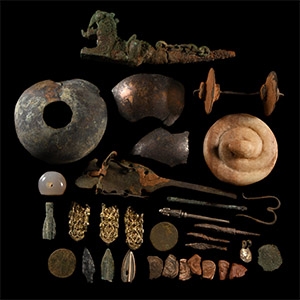
Roman and Other Artefact Group
1st-20th century A.D.Sold for (Inc. bp): £182
Comprising a variety of artefacts including: gilt fittings; coiled stone snake; figural pin finial; token; beads; seals and other miscellaneous items. 544 grams total, 0.3-15 cm
UK gallery, early 2000s.
