Loading, please wait...
LOT 0922
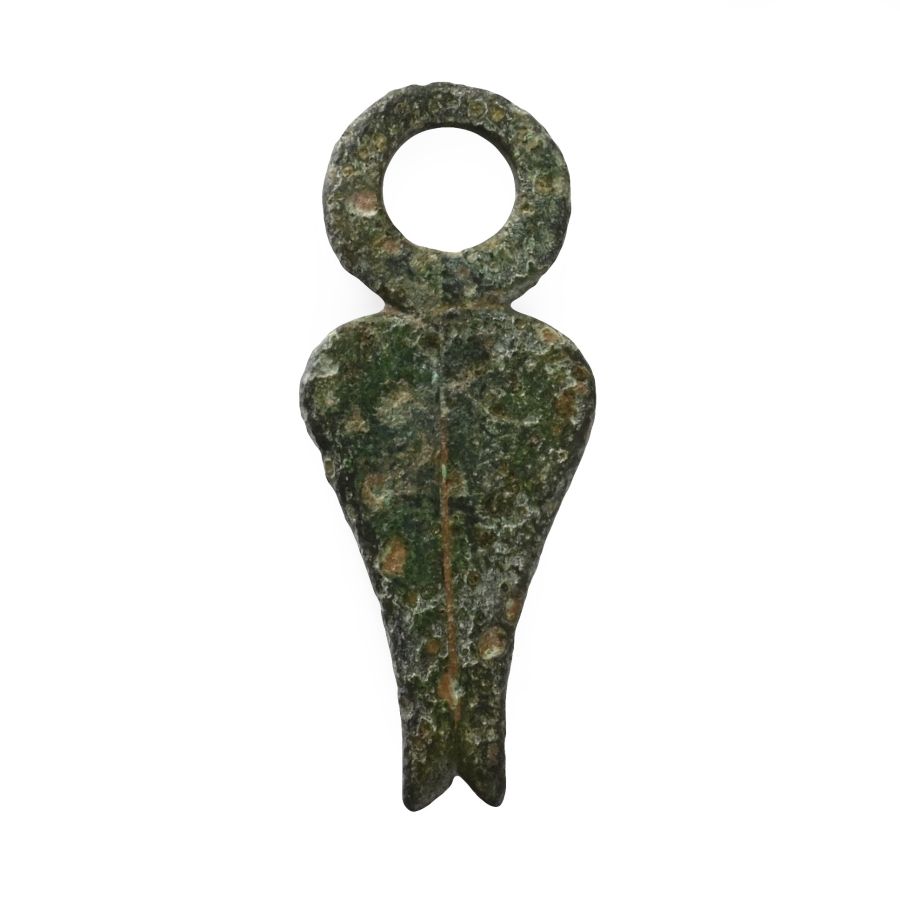
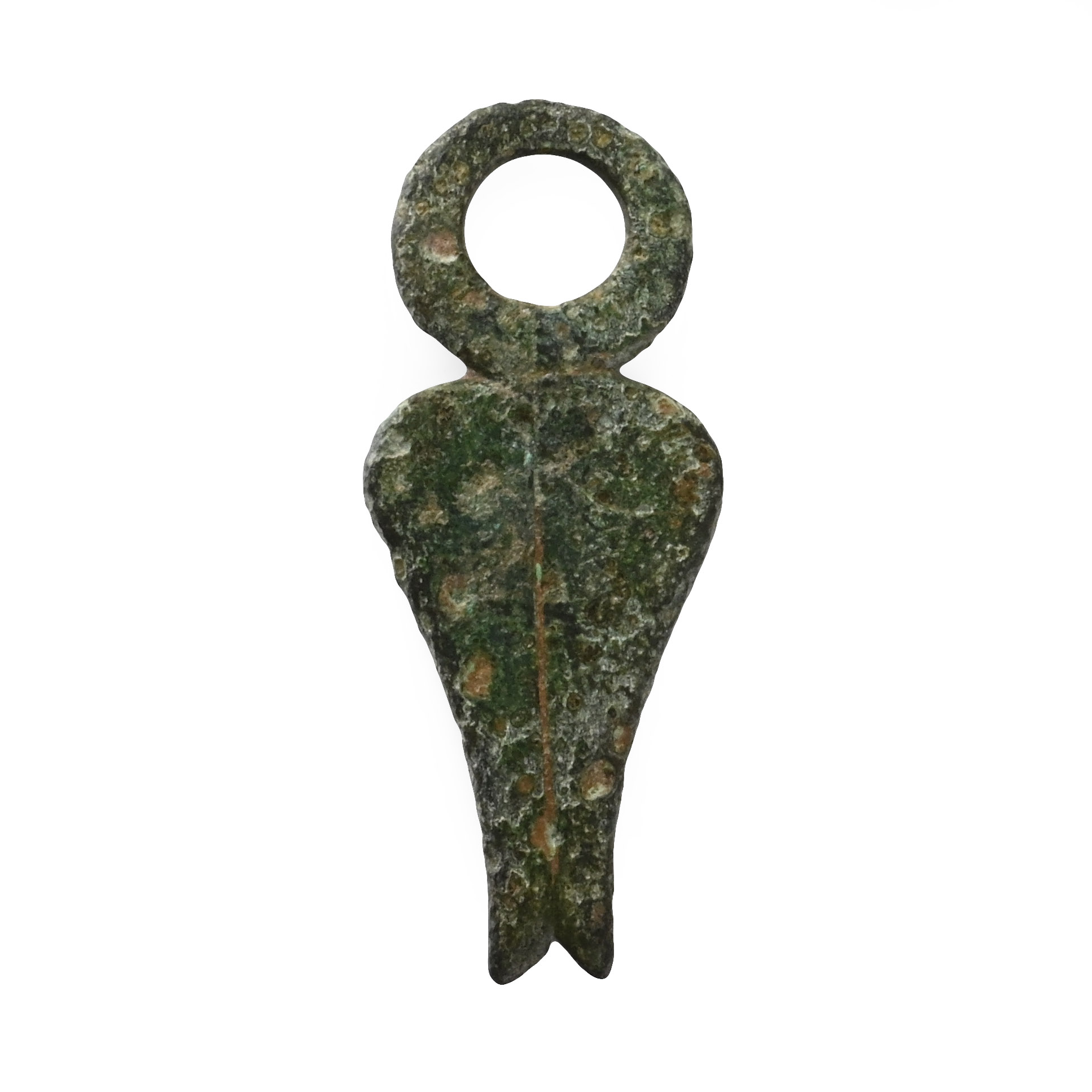
Romano-British Bronze Cosmetic Nail Cleaner
43-410 A.D.
1 1/2 in. (2.66 grams, 37 mm).
Flat teardrop-shaped with round loop to the top, narrow bifurcated tip. [No Reserve]
ProvenanceFound near Bainton, East Riding of Yorkshire, UK, on Monday 23rd August 2021.
Accompanied by a copy of the British Museum's Portable Antiquities Scheme (PAS) report no.NLM-7712AE.
This lot is accompanied by an illustrated lot declaration signed by the Head of the Antiquities Department, Dr Raffaele D'Amato.
TimeLine Auctions follows a vetting process to ensure the authenticity and legality of all items, reinforcing our commitment to integrity and responsible trading. Each antiquity, antique, and coin lot undergoes thorough examination by a vetting committee of at least ten external specialists, professional trade association members, scientists, and archaeologists: Our Vetting Process
AUCTIONS:
TimeLine is a leading auction house specialising in antiquities, ancient art, collectables, natural history, coins, medals, and books. Our auctions offer museums, collectors, historians, and enthusiasts the opportunity to acquire unique and historically significant pieces.
-
Roman Marble Portrait Bust of an Aristocratic Woman
Julio-Claudian Period, circa 50-60 A.D.Sold for (Inc. bp): £31,200
A life-size bust showing the head turned slightly to the left, an expression of dignity on her face with broad cheeks and pronounced cheekbones, heavy eyelids with narrow eyes, gentle depressions around the full lips; hair arranged in tight curls leaving the ears exposed, small braids gathered and tied at the back with a double thong with two corkscrew curls falling on each side of the neck; the lower part of the neck framed by delicate folds of a tunic, palla covering her left shoulder; mounted on a custom-made display stand. 37.35 kg total, 43.5 cm including stand
Professor Elia Volpi (1858-1938) collection, Florence, prior to 1910. Vente de la Collection Elie Volpi; Hotel de Ventes Jandolo & Tavazzi, Florence, 25 April-3 May 1910, no.53, pl. XCII (illustrated). Private collection, France, likely Château de Beaumesnil, near Rouen. Provenant du Château de Beaumesnil et du Château de T...Objets d'Art et de Bel Ameublement Principalement du XVIIIe, Palais des Congres, Rouen, 20 February 1983. Anonymous sale; Hindman, Chicago, 25 May 2023, no,194. Acquired by the present owner at the above sale. Accompanied by an academic report by Dr Raffaele D'Amato. This lot has been checked against the Interpol Database of stolen works of art and is accompanied by search certificate number no.12768-237645. This lot has been cleared against the Art Loss Register database, and is accompanied by an illustrated lot declaration signed by the Head of the Antiquities Department, Dr Raffaele D'Amato.
This portrait is striking due to the delicate yet exotic features of the subject and her elaborate coiffure. The sculpture was produced during a formative and highly sophisticated phase of Roman art, and during a time when portraits of women are much less common than those from later Imperial times. The preparation for a patch at the back of the head is seemingly ancient. Although she remains anonymous, given the sculpture's scale and scope, one can assume it portrays a person of note, who wished to be represented with the ideal and distinctive features of a Roman aristocrat. For a comparable portrait bust, see Agrippina Minor at the NY Carlsberg Glyptotek, Copenhagen (Acc. no.755). -
Roman Gold 'Bunched Grape' Jewellery Set
1st century A.D.Sold for (Inc. bp): £5,200
Group of three gold pendants comprising: two formed as a cluster of granules with three lobes, larger granule to each apex and coiled wire suspension; one of similar profile, larger with filigree lines and coils to both faces, trumpet-shaped finial with loop; two repaired; housed in a custom-made display case. 8.83 grams total, 24-32 mm
Acquired in the late 1980s-early 1990s. Private collection, London, UK. This lot has been checked against the Interpol Database of stolen works of art and is accompanied by search certificate number no.12812-241415. This lot has been cleared against the Art Loss Register database, and is accompanied by an illustrated lot declaration signed by the Head of the Antiquities Department, Dr Raffaele D'Amato.
Typologically related earrings were particularly common in the Caucasus, where they have been dated by archaeologists to the first centuries A.D. This was mainly a product of Hellenised workers of the area of Pontus or Asia Minor, and the material culture of the Greek cities of the North Pontus region was completely absorbed by their new Roman rulers and largely diffused in style and orientation in the Eastern Roman provinces. -
Roman Bronze Rat-Tailed Spoon
1st-4th century A.D.Sold for (Inc. bp): £85
With broad, gently curved bowl, tapering handle with transverse hatching at the junction with the bowl. 10.9 grams, 15.5 cm
Acquired on the UK art market during the late 20th century. From the private collection of David King (1940-2024), Hoddesdon, Hertfordshire, UK. This lot is accompanied by an illustrated lot declaration signed by the Head of the Antiquities Department, Dr Raffaele D'Amato.