
Loading, please wait...
LOT 0935
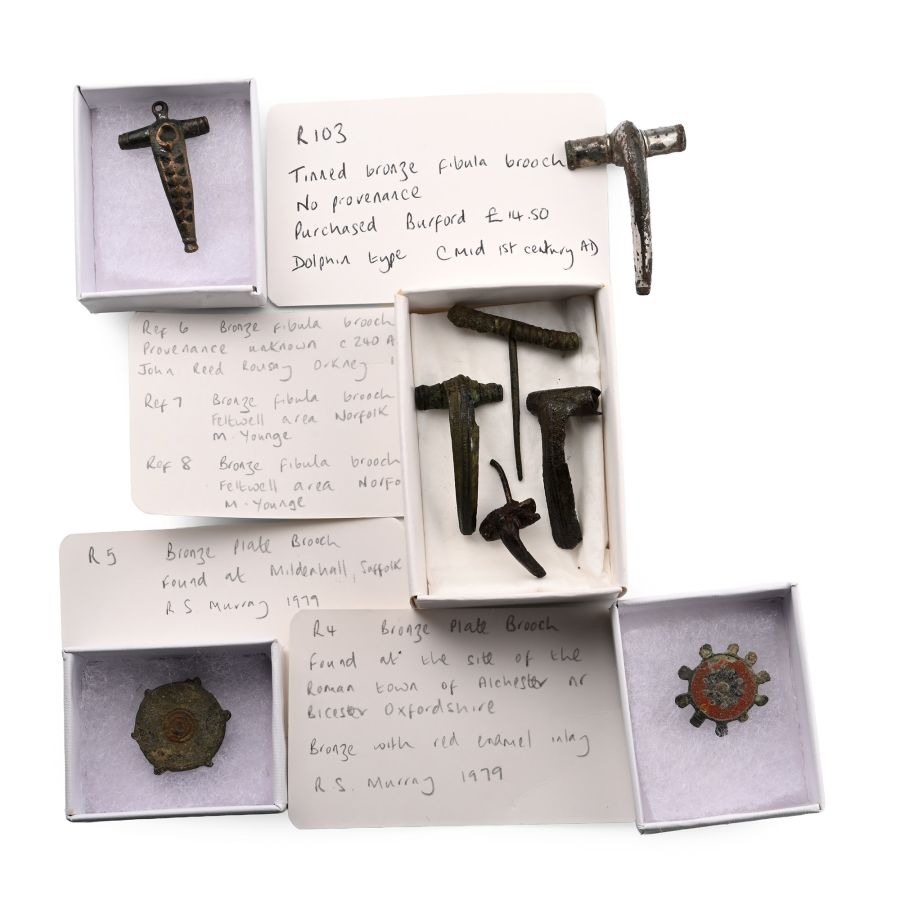
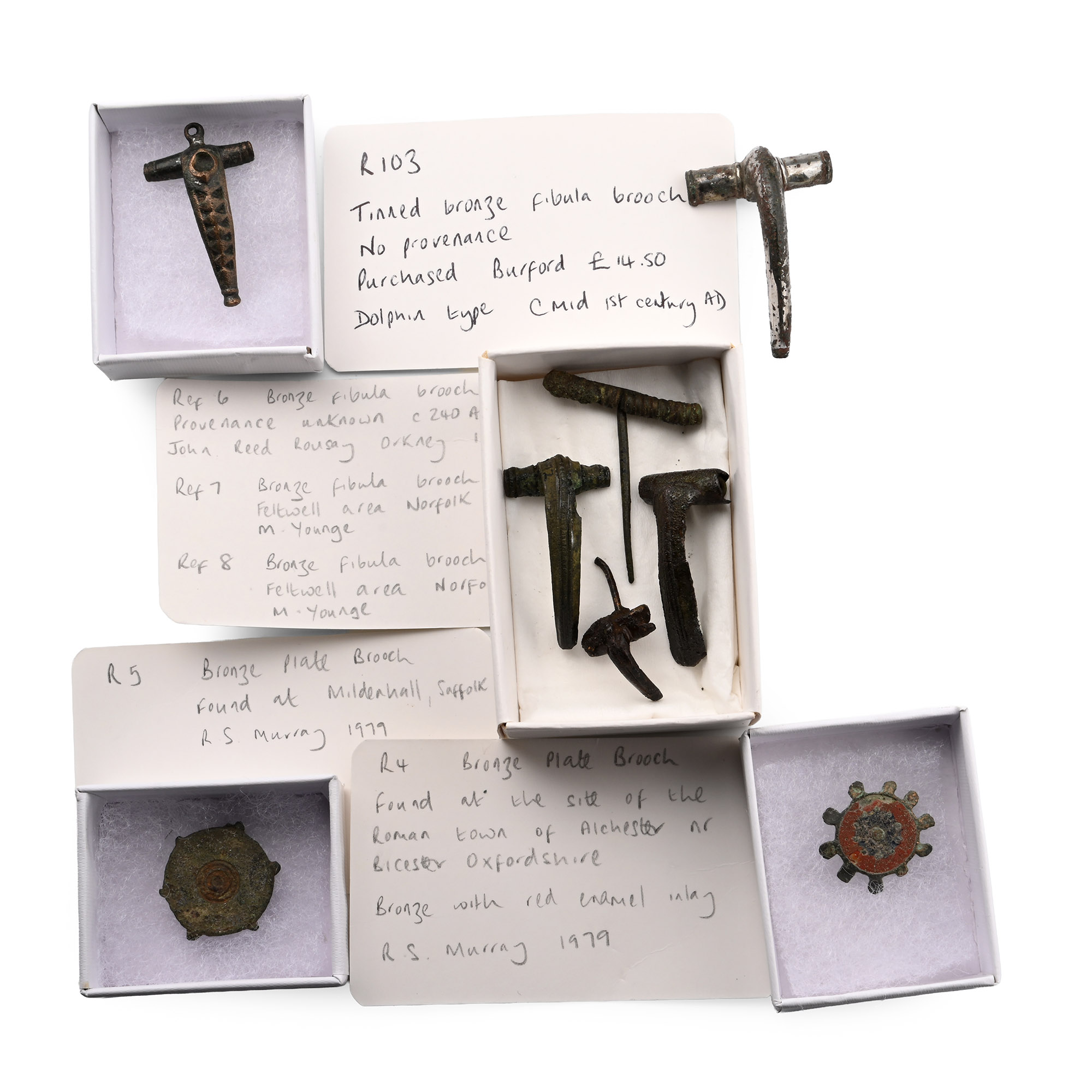
Romano-British Bronze Brooch Collection
1ST-3RD CENTURY A.D.
7/8 - 1 3/4 in. (90 grams total, 22-44 mm).
Including T-shaped, disc, Colchester-type and other types in card trays with handwritten collector's cards. [8, No Reserve]
ProvenanceFound various sites, Suffolk, Norfolk and Oxfordshire, UK.From the private collection of Kenneth Machin (1936-2020), Buckinghamshire, UK; his collection of antiquities and natural history was formed since 1948; thence by descent.
This lot is accompanied by an illustrated lot declaration signed by the Head of the Antiquities Department, Dr Raffaele D'Amato.
TimeLine Auctions follows a vetting process to ensure the authenticity and legality of all items, reinforcing our commitment to integrity and responsible trading. Each antiquity, antique, and coin lot undergoes thorough examination by a vetting committee of at least ten external specialists, professional trade association members, scientists, and archaeologists: Our Vetting Process
AUCTIONS:
TimeLine is a leading auction house specialising in antiquities, ancient art, collectables, natural history, coins, medals, and books. Our auctions offer museums, collectors, historians, and enthusiasts the opportunity to acquire unique and historically significant pieces.
-
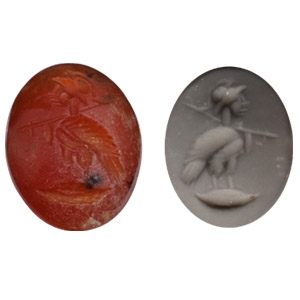
Roman Carnelian Intaglio with Harpy
1st-5th century A.D.Sold for (Inc. bp): £234
Intaglio harpy figure on a baseline; supplied with a museum-quality impression. 0.65 grams, 11 mm
Acquired in 1992. Private collection, thence by descent. Private collection, since the late 1990s. This lot is accompanied by an illustrated lot declaration signed by the Head of the Antiquities Department, Dr Raffaele D'Amato. -
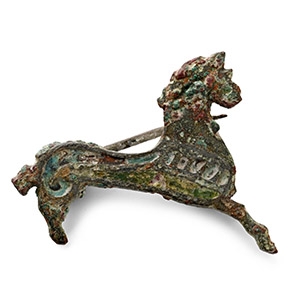
Romano-British Enamelled Bronze Horse Brooch
2nd century A.D.Sold for (Inc. bp): £104
Modelled with erect head and slender legs, recessed cells on the body to accept enamel with some blue enamel remaining; pin and remains of catchplate on the reverse. 4.28 grams, 32 mm
Found East Anglia, UK. This lot is accompanied by an illustrated lot declaration signed by the Head of the Antiquities Department, Dr Raffaele D'Amato. -
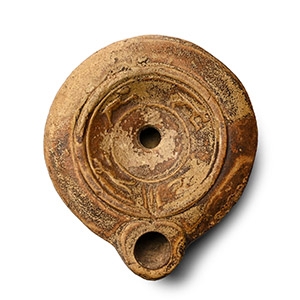
Roman Terracotta Oil Lamp with Running Dogs
2nd century A.D.Sold for (Inc. bp): £195
Discoid in plan with short nozzle, broad shoulder, discus with frieze of four chasing hounds. 48 grams, 85 mm
From the private collection of a Canadian gentleman living in Essex, UK, formed since the 1920s-circa 1990. Property of an Essex lady until the late 1990s; thence by descent. From the private collection of an Essex gentleman since the late 1990s. This lot is accompanied by an illustrated lot declaration signed by the Head of the Antiquities Department, Dr Raffaele D'Amato.
The lamp seems to belong to the type Bussière form D I 3, related to the Claudian to Trajanic period. Scholars collocated such lamps in this category due to the absence of a handle. They are all mould made, with a central filling hole and flat shoulders.
