
Loading, please wait...
LOT 0129
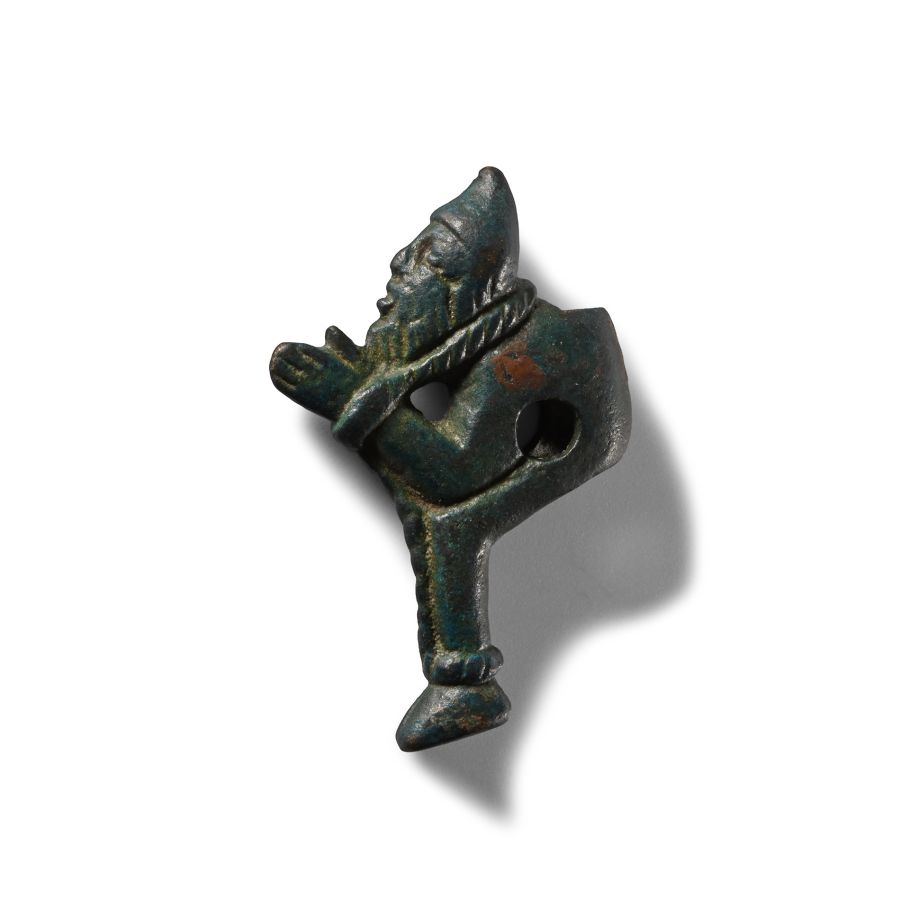
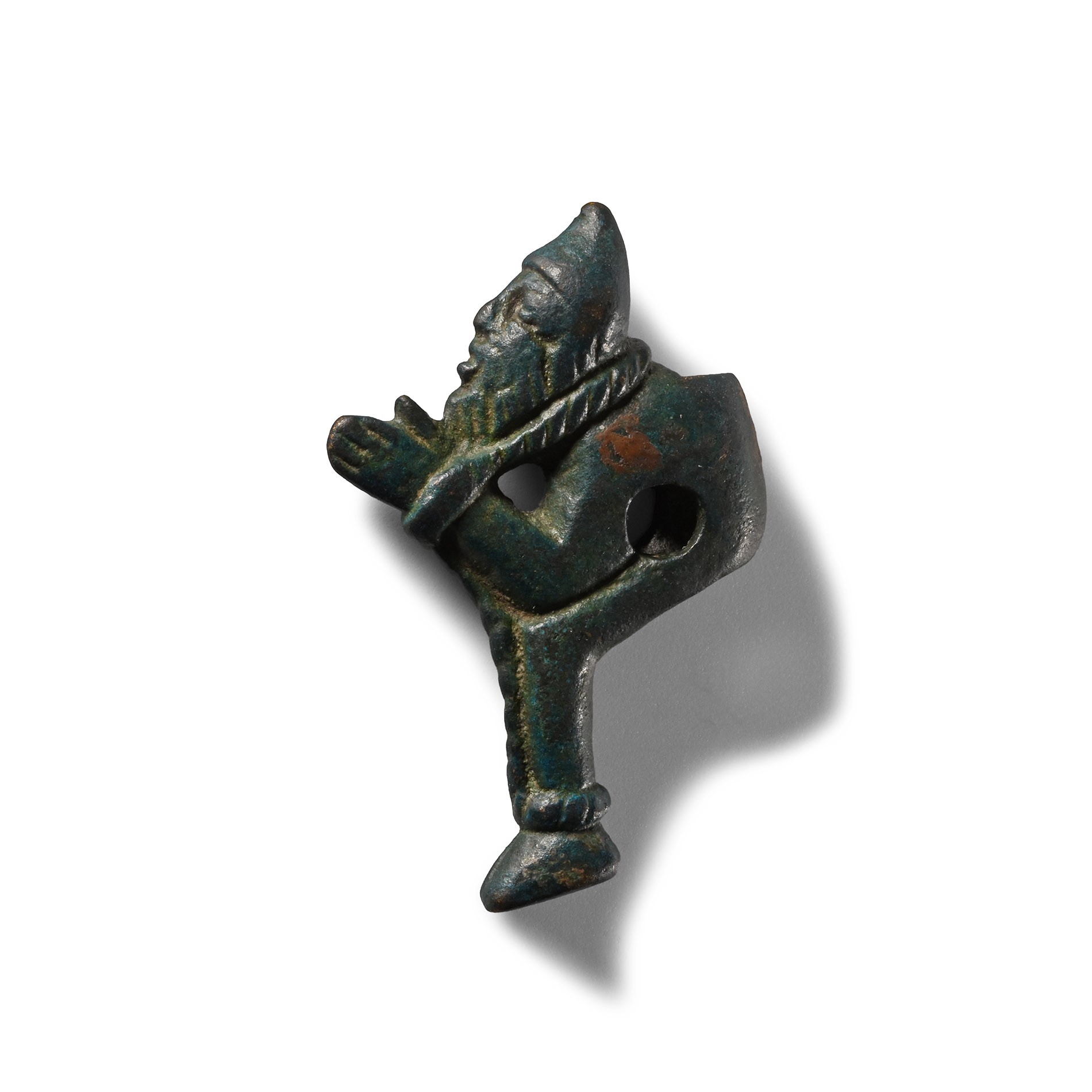
Romano-British Bronze Bound Bearded Captive Mount
1ST-2ND CENTURY A.D.
2 in. (28 grams, 51 mm).
Depicted as a bearded man from the Eastern Empire, seated and naked apart from a pointed cap on his head, with rope binding the hands together and extending around the neck, feet also bound; hole through the back and side for attachment.
ProvenanceFound Southern England.
Acquired on the UK art market in the 1980s.
From an East Anglian private collection.
Cf. Beutler, F. et al., Der Adler Roms. Carnuntum und der Armee der Cäsaren, Bad-Deutsch Altenberg, 2017, item 1007.
CONDITIONTimeLine Auctions follows a vetting process to ensure the authenticity and legality of all items, reinforcing our commitment to integrity and responsible trading. Each antiquity, antique, and coin lot undergoes thorough examination by a vetting committee of at least ten external specialists, professional trade association members, scientists, and archaeologists: Our Vetting Process
AUCTIONS:
TimeLine is a leading auction house specialising in antiquities, ancient art, collectables, natural history, coins, medals, and books. Our auctions offer museums, collectors, historians, and enthusiasts the opportunity to acquire unique and historically significant pieces.
-
.jpg)
Roman Bronze Dancing Sol Statuette
Circa 1st-2nd century A.D.Sold for (Inc. bp): £2,340
Standing nude on one leg on a cuboid socle base, the other leg raised and extended, right arm raised and bent, hand open to accept a sceptre, left arm extended with patera in the open hand, short mantle to the shoulders, hair and rays framing the face. 57 grams, 72 mm including stand
Acquired on the German art market before 2000. From an EU collection before 2020. -
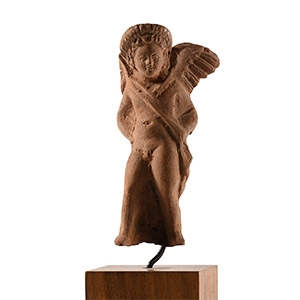
Roman Terracotta Figurine of Eros
Circa 1st century B.C.Sold for (Inc. bp): £338
Represented nude and winged, with detailed head crowned by dressed locks and a low petasos, the face beautifully modelled with delicate features; accompanied by a custom-made display stand. 49 grams total, 11.5 cm including stand
Fine brown clay, grey core.
Ex P. A., Hertfordshire, UK, specialist collection of Greek art, 1980-1990s.
These figurines were often deposited inside the graves of children. In Thessaloniki, a winged Eros very similar to this was deposited in a grave. From the small size of the skeleton, with a maximum length of 1,10 m, and from the grave offerings, the archaeologists deduced that it belonged to a boy who was accompanied by his beloved and necessary possessions, but also by those providing escort and entertainment beyond this world. Unguentaria were placed on either side of the femoral bones, two on one and a single one on the other, two strigils along the eastern side of the grave near the head, a coin on the chest, and several terracotta figurines near the north-eastern corner near the head, while a handle-less bowl was placed very close to the face. -
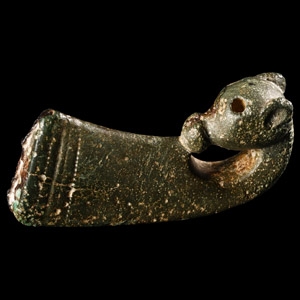
Romano-British 'Essex' Bronze Dragon Knife Handle
Circa 1st century A.D.Sold for (Inc. bp): £208
With a series of pointillé bands at the base, terminal in the form of a stylised beast with neck curling to form a loop and the head facing back towards the blade; ferrous remains to the broad end. 40.7 grams, 46 mm
Found Essex, UK. Property of an East Sussex, UK, private collector. Recorded with the British Museum's Portable Antiquities Scheme (PAS) with record no.ESS-AC745B.
